Peptide Calculator: Complete Guide to Laboratory Concentration, Molecular Weight and Research Calculations
A peptide calculator is a scientific tool used to calculate quantities related to peptide chemistry, molecular weight, molar concentration, laboratory dilution, and analytical sample preparation.
Peptides are important research materials studied in biotechnology, biochemistry, molecular biology, and pharmaceutical science. Accurate calculations help researchers understand how much material is present in a laboratory sample and how peptide concentration relates to molecular properties.
However, peptide calculations require careful interpretation.
Different peptides have different molecular weights, chemical structures, salt forms, purity characteristics, and formulation requirements. A calculation based on incorrect information can produce misleading results.
At Axion Peptide Lab, researchers can explore educational resources concerning peptide science, molecular characterization, and laboratory quality.
This guide explains how peptide calculators work, the mathematical principles behind common calculations, and ten important considerations for improving calculation accuracy in scientific laboratories.
It also discusses the limitations of online peptide calculators and why research-use-only calculations should not be confused with medical dosing instructions.
For Research Use Only – Not for human consumption.
What Is a Peptide Calculator?
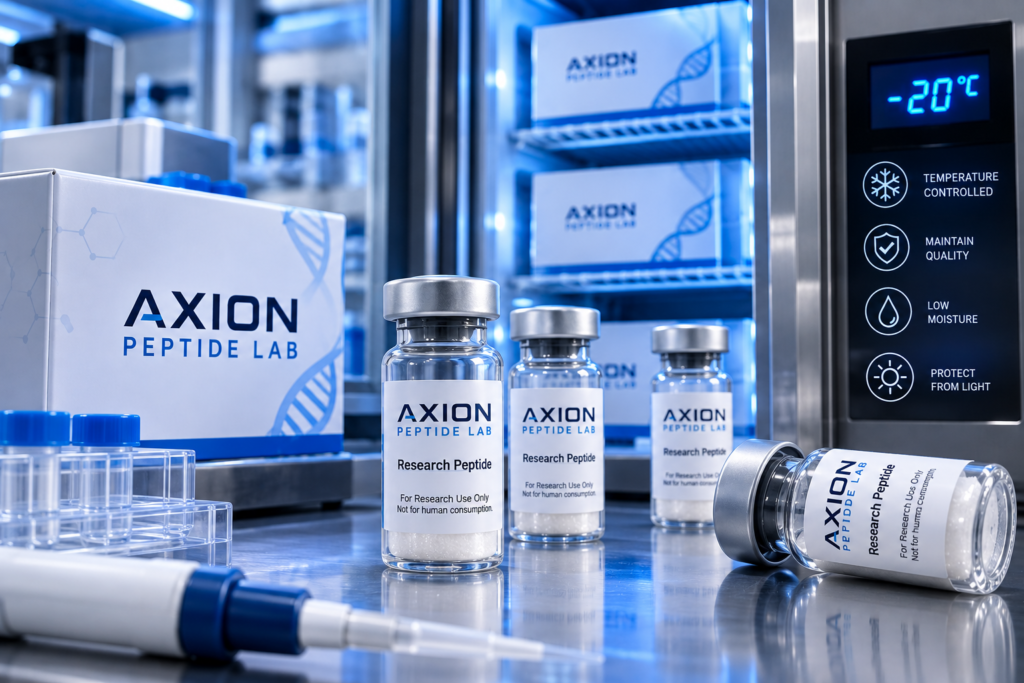
A peptide calculator is a mathematical tool designed to simplify calculations involving peptide-related laboratory measurements.
Depending on its features, a calculator may help researchers determine:
- Molecular weight
- Molar concentration
- Mass concentration
- Sample volume
- Dilution factor
- Required analytical standard mass
- Unit conversions
- Peptide quantity in moles
- Concentration after dilution
- Theoretical composition
These calculations are relevant to chemical analysis, molecular research, and laboratory sample preparation.
Some peptide calculators focus on molecular structure, while others provide concentration and dilution calculations.
The intended purpose of the calculator should be clearly identified before use.
Why Peptide Calculations Matter
Laboratory experiments often require accurately defined quantities of chemical materials.
Researchers may need to compare different samples, prepare analytical standards, or interpret concentration-dependent experimental results.
Reliable calculations support:
- Consistent scientific measurements
- Reproducible experiments
- Accurate laboratory documentation
- Appropriate analytical comparisons
- Better understanding of molecular quantities
However, mathematical accuracy does not establish that a research material is chemically pure, correctly identified, sterile, or appropriate for a particular experiment.
How Does a Peptide Calculator Work?
Most peptide calculators apply standard mathematical relationships involving mass, volume, molecular weight, and concentration.
The user enters relevant measurements, and the calculator performs the selected operation.
For example, a laboratory concentration calculator may use:
Concentration = Mass ÷ Volume
A molarity calculator uses molecular weight to convert a mass quantity into moles.
A dilution calculator uses the relationship between initial and final concentrations and volumes.
The reliability of the output depends on the accuracy of the supplied information.
Input Data Used by Peptide Calculators
Typical inputs include:
- Peptide molecular weight
- Sample mass
- Solution volume
- Starting concentration
- Target analytical concentration
- Dilution factor
- Measurement units
A calculator cannot independently verify that these values are correct.
Researchers should obtain molecular information from appropriate chemical documentation and use validated laboratory measurements.
Understanding Peptide Molecular Weight
Molecular weight is an important characteristic in peptide chemistry.
It describes the relative molecular mass of a substance.
For practical laboratory calculations, molar mass is commonly expressed in grams per mole (g/mol).
Why Molecular Weight Matters
Molecular weight allows researchers to convert between mass and amount of substance.
Two different peptides may have identical masses but contain different numbers of molecules because their molecular weights differ.
This distinction is important when comparing molar concentrations.
How Molecular Weight Is Determined
The molecular mass of a peptide depends on its amino acid sequence and chemical composition.
Additional modifications can influence molecular weight.
These may include:
- Chemical substitutions
- Terminal modifications
- Attached molecular groups
- Isotopic labeling
- Other structural changes
The molecular weight used in a calculation should correspond to the exact chemical form being investigated.
Molecular Weight Versus Molecular Identity
A molecular weight value does not independently establish the identity of a peptide.
Different molecules can have similar or identical nominal masses.
Analytical methods such as mass spectrometry may provide additional information supporting molecular identification.
Peptide Concentration Calculator Explained
A peptide concentration calculator determines the quantity of a substance relative to a specified volume.
Concentration may be expressed using different units depending on the scientific application.
Mass Concentration
Mass concentration describes the mass of a substance per unit volume.
A common laboratory expression is:
Mass concentration = Mass / Volume
For example, a nonclinical analytical standard containing 2 mg of material in a total solution volume of 10 mL has a nominal mass concentration of:
2 mg ÷ 10 mL = 0.2 mg/mL
This calculation describes nominal mass concentration.
It does not independently verify the actual chemical content of the solution.
Common Concentration Units
Researchers may encounter:
| Unit | Meaning |
|---|---|
| mg/mL | Milligrams per milliliter |
| µg/mL | Micrograms per milliliter |
| g/L | Grams per liter |
| mol/L | Moles per liter |
| mmol/L | Millimoles per liter |
| µmol/L | Micromoles per liter |
| nmol/L | Nanomoles per liter |
The appropriate unit depends on the experimental context.
Why Unit Consistency Matters
Unit errors are a common source of laboratory calculation mistakes.
Researchers should confirm that mass and volume measurements use compatible units before performing calculations.
Peptide Molarity Calculator

Molarity describes the amount of substance per unit volume.
It is commonly expressed in moles per liter.
The formula is:
Molarity = Moles of solute ÷ Volume in liters
When mass and molecular weight are known:
Moles = Mass in grams ÷ Molar mass in g/mol
These relationships are fundamental to chemical laboratory calculations.
Example of a Molarity Calculation
Consider a hypothetical analytical compound with a molar mass of 1,000 g/mol.
If a laboratory has 0.001 g of the compound:
Moles = 0.001 ÷ 1,000
Moles = 0.000001 mol
If the total analytical solution volume is 1 liter:
Molarity = 0.000001 mol/L
This equals 1 µmol/L.
The example demonstrates the mathematical relationship between molecular weight, mass, and molar concentration.
It is not a preparation instruction for any specific experimental peptide or medicine.
Peptide Dilution Calculator for Analytical Laboratories
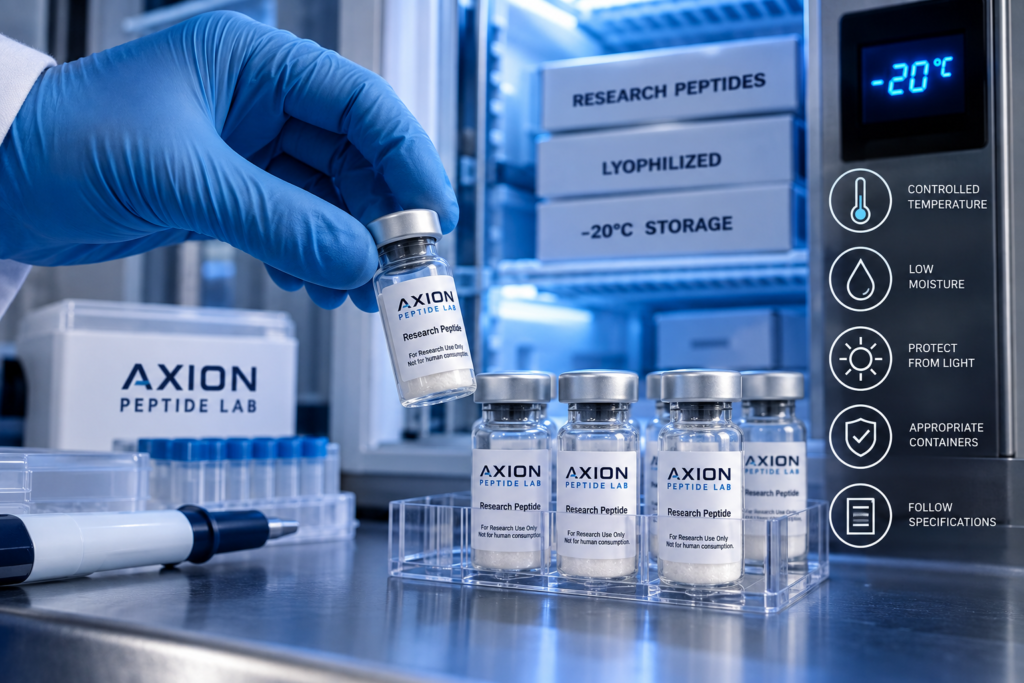
Dilution calculations are commonly used in analytical chemistry.
A dilution reduces the concentration of a solution by increasing its total volume while maintaining the amount of solute, assuming no loss or chemical reaction occurs.
The standard relationship is:
C₁V₁ = C₂V₂
Where:
- C₁ = Initial concentration
- V₁ = Initial volume
- C₂ = Final concentration
- V₂ = Final volume
This equation is applicable when the assumptions underlying the calculation are satisfied.
Understanding Dilution Factors
A dilution factor describes the relationship between the initial and final concentrations.
For a simple dilution:
Dilution factor = Initial concentration ÷ Final concentration
Alternatively, when appropriate:
Dilution factor = Final volume ÷ Initial aliquot volume
These expressions are useful for planning analytical measurements and interpreting laboratory results.
Limitations of Dilution Calculators
A mathematical dilution calculator does not account for every possible laboratory variable.
Potential considerations include:
- Measurement uncertainty
- Chemical stability
- Solubility
- Adsorption to containers
- Analytical recovery
- Changes in sample composition
Researchers should use validated procedures and appropriate quality controls.
10 Essential Peptide Calculator Considerations
1. Verify the Molecular Weight
Always confirm that the molecular weight corresponds to the actual compound.
Chemical modifications and different molecular forms can affect the correct value.
2. Use Consistent Units
Mass, volume, and molar concentration units must be converted consistently.
A calculator may produce a mathematically correct result from incorrectly entered units.
3. Distinguish Nominal From Measured Concentration
Nominal concentration is calculated from assumed material quantities.
Measured concentration is determined through an analytical procedure.
The two values may differ.
4. Consider Material Purity
The weighed mass of a research material may not consist entirely of the target peptide.
Purity and assay information can influence interpretation.
A chromatographic purity percentage should not automatically be treated as a mass fraction.
5. Confirm the Chemical Form
Salt forms, counterions, and other components may influence the mass associated with a peptide preparation.
The appropriate molecular information should be confirmed.
6. Understand Calculator Assumptions
Some calculators assume ideal mixing, complete dissolution, and no chemical degradation.
These assumptions may not hold for every sample.
7. Check Significant Figures
Laboratory calculations should reflect the precision of the original measurements.
Excessive decimal places can create a misleading impression of accuracy.
8. Record Calculation Inputs
Documenting inputs allows calculations to be reviewed and reproduced.
This is especially useful when multiple researchers work on the same project.
9. Validate Important Results
For critical laboratory applications, results should be independently checked.
A second calculation method or verified spreadsheet may help identify mistakes.
10. Avoid Using Laboratory Calculators for Medical Dosing
A research peptide calculator does not determine whether a compound is safe for human administration.
It cannot establish appropriate medical dosing, pharmaceutical quality, or clinical suitability.
Research-use-only compounds should not be used for self-medication.
Peptide Calculator Versus Peptide Reconstitution Calculator
The term peptide calculator is sometimes used broadly to describe several different types of tools.
A scientific laboratory calculator may focus on molarity, molecular weight, and analytical concentrations.
A peptide reconstitution calculator may instead be marketed for calculating quantities related to dissolving peptide materials.
These tools should not be confused with validated pharmaceutical instructions.
Why the Difference Matters
Research materials can vary in:
- Chemical composition
- Purity
- Solubility
- Stability
- Formulation
- Intended application
- Regulatory status
A numerical calculation does not establish that a material can be safely prepared or administered to a person.
For approved medicines, preparation and dosing must follow authorized product information and qualified medical guidance.
How Peptide Purity Affects Laboratory Calculations
Purity is relevant because the total mass of a research material may include substances other than the target peptide.
These may include chemical impurities, residual solvents, moisture, counterions, or other formulation components.
Chromatographic Purity
High-performance liquid chromatography is frequently used to evaluate peptide purity.
A chromatographic purity percentage may represent the relative area of a detected peak.
However, this does not necessarily equal the percentage of peptide by total sample mass.
Assay Versus Purity
An assay measures the quantity or content of a specified component according to a defined analytical method.
This can differ from chromatographic purity.
Researchers should distinguish these concepts when interpreting calculations.
Why Documentation Matters
A Certificate of Analysis may provide relevant information about material identity and selected analytical characteristics.
Laboratories should evaluate whether the reported methods and specifications are appropriate for their intended application.
Common Peptide Calculator Mistakes
Incorrect Unit Conversion
Confusing milligrams with micrograms or milliliters with liters can create substantial calculation errors.
Using the Wrong Molecular Weight
An incorrect molecular weight affects conversions between mass and molar quantity.
Ignoring Chemical Modifications
Chemical modifications can change the molecular properties of a peptide.
Assuming Purity Equals Content
Chromatographic purity does not necessarily establish the total mass fraction of the target compound.
Rounding Too Early
Premature rounding can introduce errors into multi-step calculations.
Confusing Nominal and Actual Values
Calculated concentration may differ from analytically measured concentration.
Using Unverified Online Calculators
Researchers should review the mathematical formulas and assumptions used by a calculator.
Peptide Calculator Applications in Scientific Research
Analytical Chemistry
Calculators help researchers express concentrations and interpret quantitative measurements.
Molecular Biology
Molar concentration is relevant when comparing molecular quantities in controlled experiments.
Peptide Chemistry
Molecular weight calculations support chemical characterization and theoretical analysis.
Pharmaceutical Research
Calculations are used in laboratory investigations involving molecular properties and formulation science.
Biotechnology
Peptide-related calculations contribute to scientific data analysis and experimental planning.
Choosing a Reliable Peptide Calculator Online
A useful scientific calculator should clearly identify the formulas it uses.
It should also specify accepted units and explain the meaning of each input.
Features to Look For
A well-designed calculator may include:
- Clear unit labels
- Automatic unit conversion
- Molecular weight input
- Mass concentration calculation
- Molarity calculation
- Analytical dilution calculations
- Error checking
- Formula explanations
- Appropriate scientific disclaimers
Accuracy and Validation
A calculator should be tested against independently verified examples.
Researchers should not assume that an online tool is accurate simply because it provides immediate results.
Data Privacy
Laboratories should consider whether entering experimental information into an online service creates confidentiality concerns.
For sensitive research, locally validated calculation tools may be preferable.
Peptide Calculator and Laboratory Documentation
Accurate laboratory records help researchers reproduce experiments and interpret results.
A calculation record may include:
| Record | Purpose |
|---|---|
| Compound name | Identifies material |
| Molecular weight | Supports molar calculations |
| Lot number | Provides traceability |
| Material mass | Records measured quantity |
| Total volume | Documents volume basis |
| Calculated concentration | Records theoretical result |
| Analytical result | Provides measured value |
| Calculation date | Supports documentation |
| Researcher | Identifies responsible personnel |
| Method reference | Supports reproducibility |
These records can support laboratory quality management.
Research Peptides and Regulatory Considerations
Research peptides are not automatically approved pharmaceutical products.
Some peptide molecules are associated with regulated prescription medicines, while others remain experimental.
The regulatory status of a material depends on the compound, jurisdiction, intended use, and applicable laws.
Research-use-only labeling does not automatically exempt a product from pharmaceutical regulation.
A peptide calculator should therefore be treated as a scientific mathematical tool, not a source of medical treatment instructions.
Explore Peptide Research Information at Axion Peptide Lab
Axion Peptide Lab provides research-use-only peptide catalogue information and educational resources concerning peptide chemistry and laboratory quality.
Researchers can explore topics such as molecular characterization, analytical testing, peptide purity, and scientific research applications.
When evaluating research materials, laboratories should verify product-specific specifications, analytical documentation, purchasing eligibility, and applicable regulations.
Website: https://axionpeptidelab.com/
Research enquiries: order@axionpeptidelab.com
For Research Use Only – Not for human consumption.
Frequently Asked Questions About Peptide Calculators
What Is a Peptide Calculator?
A peptide calculator is a mathematical tool used to perform calculations involving peptide molecular weight, mass, concentration, molarity, or analytical dilution.
It helps researchers apply standard chemical formulas to laboratory measurements.
Its accuracy depends on the correctness of the input data and the assumptions used.
How Does a Peptide Calculator Work?
A peptide calculator applies mathematical formulas to values entered by the user.
For example, a concentration calculator may divide mass by volume.
A molarity calculator uses molecular weight to convert mass into moles.
Researchers should verify the formulas and units before relying on the results.
What Is a Peptide Molarity Calculator?
A peptide molarity calculator determines the amount of substance per unit volume.
Molarity is expressed in moles per liter.
It is useful in laboratory research when molecular quantities must be compared.
What Is the Difference Between Molarity and Mass Concentration?
Mass concentration expresses mass per unit volume.
Molarity expresses the amount of substance in moles per unit volume.
Molecular weight is needed to convert between the two.
Why Is Molecular Weight Important?
Molecular weight determines the relationship between mass and amount of substance.
Different peptides may contain different numbers of molecules even when their masses are identical.
Accurate molecular weight information is essential for molar calculations.
Can a Peptide Calculator Determine Purity?
No. A calculator cannot independently determine peptide purity.
Purity requires appropriate analytical testing.
A calculator may use a verified assay value as an input, but it does not replace laboratory analysis.
What Is a Peptide Dilution Calculator?
A peptide dilution calculator applies mathematical relationships between initial and final concentrations and volumes.
These calculations are useful in analytical laboratory settings.
The results depend on correct inputs and appropriate assumptions.
Are Online Peptide Calculators Accurate?
Some online calculators can perform standard mathematical operations accurately.
However, errors may arise from incorrect units, molecular weights, assumptions, or software implementation.
Important results should be independently verified.
Can a Peptide Calculator Determine Human Dosage?
No. A laboratory peptide calculator does not establish safe or effective human dosing.
Medical dosing requires clinical evidence, authorized product information, and qualified healthcare guidance.
Research-use-only compounds are not intended for self-administration.
What Is the Difference Between a Peptide Calculator and a Reconstitution Calculator?
A general peptide calculator may focus on molecular weight, molarity, and analytical concentrations.
A reconstitution calculator may focus on quantities involved in dissolving a material.
Neither type of calculator independently establishes pharmaceutical safety or suitability for human administration.
Why Do Peptide Calculations Sometimes Produce Different Results?
Differences may arise from inconsistent units, molecular weight values, chemical forms, rounding, or assumptions about sample composition.
Researchers should review the input data and calculation methods.
What Information Is Needed for Peptide Molarity Calculations?
Typical inputs include the mass of the material, its molar mass, and the relevant solution volume.
The calculation also assumes that the material’s chemical identity and composition are appropriately understood.
How Does Peptide Purity Influence Concentration?
The weighed mass of a material may include components other than the target peptide.
This can create a difference between nominal and actual analyte concentration.
Appropriate assay data may be necessary for accurate interpretation.
Why Are Unit Conversions Important?
Scientific measurements frequently use different mass and volume units.
Incorrect conversions can produce major numerical errors.
Researchers should ensure consistent units throughout each calculation.
What Is the Best Peptide Calculator for Laboratory Research?
The best calculator depends on the scientific task.
A reliable tool should display its formulas, identify units clearly, explain assumptions, and produce results that can be independently verified.
For critical research, validated laboratory software may be preferable to an unverified online calculator.
Conclusion: Understanding Peptide Calculator Accuracy in Laboratory Research
A peptide calculator is a useful mathematical resource for researchers working with peptide-related measurements.
It can simplify calculations involving molecular weight, mass concentration, molarity, dilution factors, and scientific unit conversions.
These calculations are important in analytical chemistry, biotechnology, molecular biology, and peptide research.
However, accurate numerical results depend on reliable input data.
Researchers should verify molecular weight, use consistent units, distinguish nominal from measured concentration, and consider the chemical composition of the material.
Analytical techniques such as HPLC and mass spectrometry provide information that mathematical calculators cannot independently determine.
Laboratories should also maintain appropriate calculation records and validate important results.
At Axion Peptide Lab, researchers can explore educational information about peptide science and research-use-only materials.
By combining correct mathematical methods with appropriate analytical characterization and scientific documentation, laboratories can improve the reliability and reproducibility of their research calculations.
For Research Use Only – Not for human consumption.
Scientific References and External Resources
PubChem – Chemical Compound Information
https://pubchem.ncbi.nlm.nih.gov
Chemical structures, molecular formulas, and compound information relevant to molecular weight calculations.
NIST – Reference on SI Units
https://physics.nist.gov/cuu/Units
Information about internationally recognized measurement units and scientific unit conventions.
PubMed – Peptide Analytical Chemistry
https://pubmed.ncbi.nlm.nih.gov/?term=peptide+analytical+chemistry
Scientific literature covering peptide characterization and analytical methods.
Nature Portfolio – Peptides
https://www.nature.com/subjects/peptides
Scientific research covering peptide chemistry, structure, and molecular applications.
FDA – Drug Information
Regulatory information concerning pharmaceutical products and drug development.