Peptides: What Are They? Potential Benefits, Safety Concerns and Weight-Loss Research
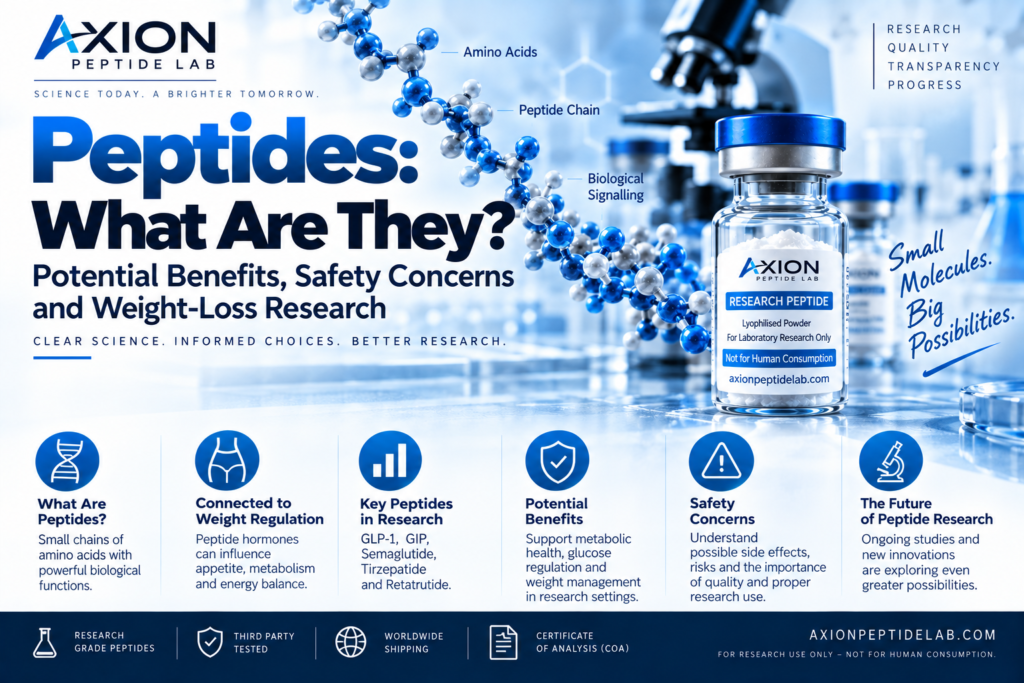
Peptides have become one of the most discussed areas of modern biomedical research. They appear in conversations about metabolism, diabetes, weight regulation, hormone signalling, skin science, immune function, drug discovery and many other areas.
But what are peptides, what are their potential benefits, and what safety concerns should people understand regarding peptides what are they and potential benefits and safety concerns?
Understanding peptides what are they and potential benefits and safety concerns can help individuals make informed health decisions.
Exploring the question of peptides what are they and potential benefits and safety concerns is crucial in the realm of modern medicine.
For those interested in peptide therapies, understanding peptides what are they and potential benefits and safety concerns is essential.
Understanding peptides what are they and potential benefits and safety concerns can help individuals navigate the complexities surrounding their use.
Knowledge about peptides what are they and potential benefits and safety concerns is vital for making educated choices in health management.
As the field evolves, discussing peptides what are they and potential benefits and safety concerns becomes increasingly relevant.
The topic of peptides what are they and potential benefits and safety concerns is crucial for anyone considering peptide therapies.
Peptides what are they and potential benefits and safety concerns are vital topics in modern biomedical discussions, as they explore how various peptides influence health and wellness.
Knowledge of peptides what are they and potential benefits and safety concerns ensures informed decisions regarding health interventions.
Thus, the discussion of peptides what are they and potential benefits and safety concerns becomes increasingly relevant as research progresses.
The answer is more complicated than simply describing peptides as “small proteins.”
Therefore, it is essential to address peptides what are they and potential benefits and safety concerns for better public awareness.
Understanding peptides what are they and potential benefits and safety concerns can help individuals make informed decisions about their health.
Ultimately, the discussion around peptides what are they and potential benefits and safety concerns emphasizes the importance of scientific literacy in health matters.
Furthermore, discussing peptides what are they and potential benefits and safety concerns aids in demystifying this field.
In summary, exploring peptides what are they and potential benefits and safety concerns is crucial for anyone interested in health.
Peptides are chains of amino acids that can function as signalling molecules, hormones, research tools and, in some cases, approved medicines. Different peptides can have completely different biological effects depending on their amino-acid sequence, molecular structure, receptor targets and formulation.
It is essential to address peptides what are they and potential benefits and safety concerns to enhance public understanding.
The discussion on peptides what are they and potential benefits and safety concerns is essential for informed healthcare practices.
Some peptide-based medicines have decades of clinical use behind them. Insulin is one of the most familiar examples. Other peptide medicines are used in areas including diabetes, obesity, endocrinology and other medical conditions. At the same time, many compounds discussed online remain investigational, preclinical or intended strictly for laboratory research.
Modern reviews describe therapeutic peptides as an established and expanding pharmaceutical class, with applications across metabolic disease, endocrinology, cancer and other areas of medicine. Advances in chemistry, molecular biology and drug-delivery technologies continue to expand what peptide-based medicines can potentially do.
The significance of peptides what are they and potential benefits and safety concerns continues to grow as research advances.
Therefore, ongoing education about peptides what are they and potential benefits and safety concerns remains crucial for both patients and healthcare providers.
This distinction is essential:
To summarize, exploring peptides what are they and potential benefits and safety concerns is paramount for effective health practices.
Furthermore, understanding peptides what are they and potential benefits and safety concerns aids in demystifying the science behind them.
A molecule being called a peptide does not automatically make it safe, effective, approved or appropriate for human use.
This guide explains what peptides are, how they work, their potential benefits, major safety concerns, why peptides are connected with weight regulation, and how semaglutide, tirzepatide and investigational retatrutide differ.
It also explains the difference between approved prescription medicines and laboratory research peptides.
Products designated for research use by Axion Peptide Lab are intended for laboratory research only and should not be interpreted as medicines or products intended for human consumption.
What Are Peptides?
Peptides are molecules made from amino acids connected through chemical bonds known as peptide bonds.
Amino acids are the fundamental building blocks used by living organisms to construct peptides and proteins.
The distinction between a peptide and a protein is not always defined by one universally accepted number of amino acids. In practical scientific use, peptides are generally shorter amino-acid chains, while proteins are typically larger molecules that can form more complex three-dimensional structures.
The sequence of amino acids matters enormously.
Changing even a small part of a peptide sequence can change:
- which receptor the molecule interacts with
- how strongly it interacts
- how quickly it is broken down
- how long it remains active
- how it behaves in laboratory systems
- its potential biological effects
This is one reason peptide science is so diverse.
A peptide involved in metabolic signalling is fundamentally different from one involved in immune signalling or another physiological pathway.
Are Peptides Naturally Found in the Body?
Yes.
The human body naturally produces many peptides.
Peptide hormones and signalling molecules help coordinate communication between different tissues and organs.
Examples of biological processes influenced by peptide signalling include:
appetite and satiety,
blood-glucose regulation,
insulin secretion,
digestion,
growth,
reproductive signalling,
stress responses,
immune communication,
and cardiovascular regulation.
Researchers often begin with these naturally occurring systems and then investigate whether modified peptide molecules can produce longer-lasting, more selective or otherwise useful effects.
This has played an important role in pharmaceutical development.
Insulin, oxytocin and several incretin-related medicines illustrate how natural biological signalling pathways can become the foundation for peptide therapeutics. Modern reviews report that more than 80 peptide drugs have reached global markets across numerous therapeutic areas.
How Do Peptides Work?
Peptides often work by interacting with receptors.
A receptor is a biological structure that can recognise particular molecules and trigger cellular responses.
A useful simplified analogy is a key interacting with a lock.
The peptide acts as the signalling molecule.
The receptor recognises it.
The interaction then triggers downstream biological activity.
This can influence numerous processes depending on the receptor involved.
For example, metabolic peptides may influence appetite or insulin signalling, while peptides involved in another physiological system may act on entirely different receptors.
Modern drug-development research increasingly uses peptides to investigate G-protein-coupled receptors and other biologically important targets. Advances in peptide design have expanded their role as both research tools and potential medicines.
What Are the Potential Benefits of Peptides?
There is no single universal “benefit of peptides.”
The potential effects depend entirely on the specific molecule.
This is one of the most important things to understand when reading online claims.
It would be scientifically inaccurate to say simply that “peptides improve health” because different peptides have different biological functions, and many experimental peptides have not been proven to provide clinical benefits.
However, peptide-based drug development has several scientifically interesting characteristics.
Target Specificity
Peptides can often be designed to interact selectively with particular biological receptors or molecular targets.
Greater target specificity can be useful in drug development because researchers may be able to focus biological activity on a particular pathway.
This does not mean every peptide is perfectly selective or free from adverse effects.
It simply helps explain why peptides have become attractive pharmaceutical platforms.
Strong Biological Activity
Many natural peptides act as potent biological signalling molecules.
Researchers can sometimes modify these molecules to produce longer-lasting therapeutic analogues.
Modern pharmaceutical development has used this approach successfully in several areas.
Metabolic and Endocrine Medicine
Peptide-based medicines already play important roles in metabolic and endocrine treatment.
Insulin is an obvious historical example.
GLP-1-related medicines have more recently transformed treatment approaches for certain people with type 2 diabetes and obesity.
Current scientific reviews describe obesity and diabetes as major areas of therapeutic peptide development.
Other Areas of Peptide Therapeutics
Peptide drugs have also been developed or investigated across areas including:
endocrine disorders,
osteoporosis,
cancer,
chronic pain,
infectious disease,
and immune-related conditions.
This does not mean any random peptide sold online has been proven useful for these conditions.
It means specific peptide medicines have undergone specific development and regulatory processes for particular indications.
The importance of understanding peptides what are they and potential benefits and safety concerns cannot be overstated.
Why Are Peptides Connected to Weight Regulation?
Interest in peptides for weight loss has increased dramatically because several important metabolic hormones are peptides.
The digestive system does much more than break down food.
It also communicates with the pancreas, brain, liver and other tissues through hormonal signals.
Some of these signals tell the body that food has arrived.
They can influence:
appetite,
satiety,
insulin secretion,
glucagon activity,
gastric emptying,
and blood-glucose regulation.
Two particularly important hormones in modern metabolic research are:
GLP-1
and
GIP.
Research into these systems helped produce semaglutide and tirzepatide, while newer research is investigating multi-receptor compounds including retatrutide.
How Metabolic Peptide Pathways Work
Human metabolism is regulated by an interconnected network rather than one single hormone.
After food is consumed, gastrointestinal hormones participate in signalling processes that help coordinate nutrient handling.
The pancreas responds to glucose and hormonal signals.
The brain receives information relating to hunger and satiety.
The stomach and intestines influence the rate at which nutrients progress through digestion.
The liver, adipose tissue and other organs also participate in energy regulation.
Peptide researchers investigate how individual receptors contribute to these processes.
This has produced several broad drug-development strategies.
Some compounds primarily target one receptor.
Others target two.
Newer investigational compounds can target three or more signalling pathways.
What Is GLP-1?
GLP-1 means glucagon-like peptide-1.
It is a naturally occurring incretin hormone released after eating.
GLP-1 participates in several metabolic processes, including glucose-dependent insulin secretion and appetite signalling.
Pharmaceutical researchers developed molecules that activate the GLP-1 receptor while remaining active for much longer than naturally occurring GLP-1.
These compounds are called GLP-1 receptor agonists.
Semaglutide is one prominent example.
The NHS explains that prescription semaglutide can reduce appetite, increase feelings of fullness and help regulate blood glucose depending on the indication and branded formulation.
What Is GIP?
GIP means glucose-dependent insulinotropic polypeptide.
It is another hormone involved in nutrient-responsive metabolic signalling.
Like GLP-1, GIP participates in insulin-related physiology.
Modern pharmaceutical research has examined whether targeting both GIP and GLP-1 simultaneously might create different metabolic effects than targeting GLP-1 alone.
That strategy led to tirzepatide, a dual GIP/GLP-1 receptor agonist.
Peptide-Based Compounds Commonly Discussed in Weight-Loss Research
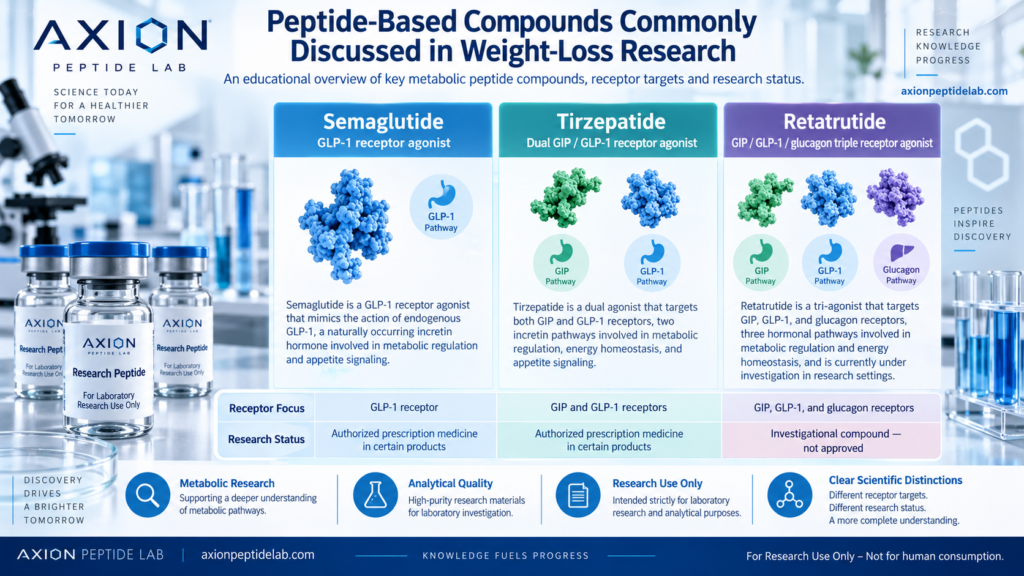
Three compounds dominate many current discussions about peptide-based metabolic research:
semaglutide, tirzepatide and retatrutide.
They should not be treated as interchangeable.
Their receptor profiles differ.
Their clinical evidence differs.
Most importantly, their regulatory status differs.
Semaglutide and tirzepatide are active ingredients in authorised prescription medicines for defined uses.
Retatrutide remains investigational as of September 2026.
Semaglutide
Semaglutide is a GLP-1 receptor agonist.
It was developed to mimic important aspects of GLP-1 signalling while remaining active much longer than naturally occurring GLP-1.
Different authorised semaglutide pharmaceutical products have different indications.
For example, the NHS identifies Wegovy as a prescription semaglutide medicine used in obesity treatment under appropriate medical supervision, while Ozempic and Rybelsus have diabetes-related uses.
In the United States, the FDA has authorised Wegovy for specific weight-management indications. In March 2026, the FDA also approved a higher-dose 7.2 mg Wegovy formulation for certain adults with obesity or overweight plus an associated weight-related condition.
Semaglutide therefore should not be described simply as an “experimental peptide.”
Authorised semaglutide pharmaceutical products are established prescription medicines.
However, that does not mean an unrelated vial sold online as “research semaglutide” is equivalent to Wegovy.
Regulatory approval applies to the authorised pharmaceutical product, formulation, manufacturing process and intended use.
Tirzepatide
Tirzepatide differs from semaglutide because it activates both:
GIP receptors
and
GLP-1 receptors.
This makes tirzepatide a dual receptor agonist.
The FDA approved Zepbound containing tirzepatide for chronic weight management in eligible adults in November 2023. FDA trial summaries reported significantly greater average weight reduction with tirzepatide than placebo over the studied period, with results varying according to dose and whether participants had type 2 diabetes.
In the United Kingdom, NICE recommends tirzepatide as an option for weight management for people who meet specified eligibility and healthcare-service criteria. Its implementation guidance was updated in January 2026.
Again, prescription tirzepatide products should not be confused with research-use materials containing a similarly named compound.
Retatrutide
Retatrutide represents a newer research strategy.
It acts at three receptor systems:
GIP
GLP-1
and
glucagon.
This is why retatrutide is often called a triple hormone receptor agonist.
The compound has generated considerable attention because of its clinical-trial results in obesity research.
Lilly reported multiple Phase 3 topline results during 2026 following earlier Phase 2 research.
However, the distinction between promising clinical trials and regulatory approval is critical.
As of September 2026, Lilly states that retatrutide remains investigational and has not been approved by any regulatory agency. It remains part of the company’s clinical development programme.
The FDA also states that retatrutide is not a component of an FDA-approved drug and has not been found safe and effective by the FDA for any condition.
Retatrutide therefore should not be marketed or described as an approved weight-loss medicine.
As research on peptides what are they and potential benefits and safety concerns expands, public education must keep pace.
Semaglutide vs Tirzepatide vs Retatrutide
The simplest scientific distinction is their receptor profile.
Semaglutide
Semaglutide primarily activates the GLP-1 receptor.
It is an active ingredient in authorised prescription medicines.
Tirzepatide
Tirzepatide activates GIP and GLP-1 receptors.
It is also an active ingredient in authorised prescription medicines.
Retatrutide
Retatrutide activates GIP, GLP-1 and glucagon receptors.
It remains investigational as of September 2026.
These compounds should therefore not be grouped together under a vague label such as “weight-loss peptides” without explaining their regulatory and scientific differences.
Thus, the integration of knowledge on peptides what are they and potential benefits and safety concerns is essential for healthcare professionals.
What Does Clinical Research Actually Show?
Clinical research should be interpreted carefully.
A clinical trial does not simply ask whether a compound “works.”
Researchers assess questions including:
who participated,
how participants were selected,
what dose or formulation was studied,
how long treatment continued,
what comparator was used,
what endpoints were measured,
what adverse events occurred,
how many people discontinued treatment,
and how statistically robust the results were.
This matters especially when discussing metabolic peptides.
A result from a regulated clinical trial using pharmaceutical-grade investigational material cannot automatically be applied to unrelated research material purchased elsewhere.
Manufacturing, formulation, purity, sterility, storage, dosing and quality controls may all differ.
Peer-reviewed studies and official regulatory documents should therefore be prioritised over social-media claims, anonymous testimonials or supplier marketing.
What Are the Main Potential Benefits of Peptide Medicines?
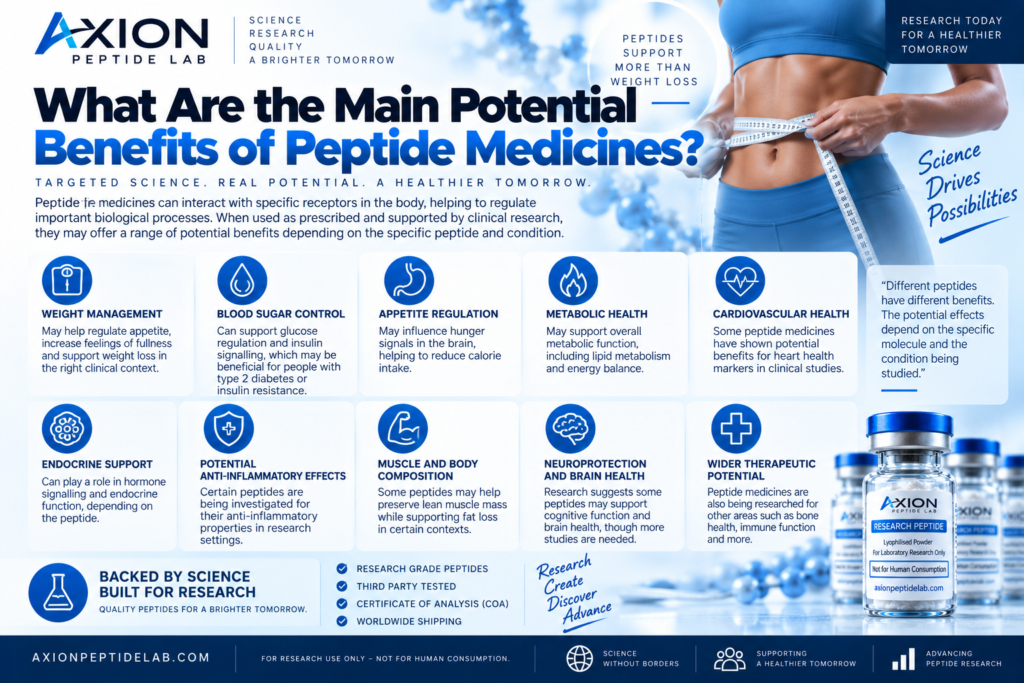
For approved peptide medicines, benefits depend on the individual medicine and its authorised indication.
In metabolic medicine, certain peptide-related prescription products can provide clinically meaningful improvements in:
blood-glucose control,
appetite regulation,
body weight,
and certain obesity-related health outcomes in appropriately selected patients.
Other approved peptide medicines work in completely different therapeutic fields.
This diversity illustrates why “peptides” should never be treated as one treatment category with one common benefit.
The relevant question is:
Which peptide, for which condition, supported by what evidence?
What Are the Safety Concerns With Peptides?
Safety varies dramatically from one peptide to another.
A natural molecule or short amino-acid chain is not automatically harmless.
Biological signalling molecules can produce powerful physiological effects.
Safety questions can broadly be divided into two categories:
risks from the molecule itself
and
risks from the product containing it.
Pharmacological Side Effects
Approved peptide medicines can cause adverse effects because they actively alter biological pathways.
For example, common adverse effects associated with prescription semaglutide include nausea, vomiting, diarrhoea and constipation.
The NHS also lists less common but potentially serious concerns including pancreatitis, severe allergic reactions, diabetic retinopathy complications and low blood glucose in certain circumstances.
FDA information for tirzepatide describes common gastrointestinal adverse effects including nausea, diarrhoea, vomiting and constipation, while its prescribing information contains additional warnings and contraindications.
This demonstrates a crucial principle:
A medicine can be effective and still have risks.
Clinical prescribing therefore involves balancing benefits against risks for an individual patient.
Purity and Impurities
A different safety issue relates to product quality.
Synthetic peptide manufacturing can generate peptide-related impurities.
These impurities may result from incomplete synthesis, degradation or chemical modification.
Modern regulatory research notes that peptide-related impurities can be analytically and toxicologically complex and may require careful characterisation rather than being treated exactly like impurities in conventional small-molecule drugs.
This is why analytical testing matters in legitimate laboratory and pharmaceutical development.
Sterility and Microbial Contamination
Chemical purity is not the same as sterility.
A peptide can show very high chromatographic purity and still fail microbiological requirements.
HPLC purity tells researchers about detectable chemical components under a defined chromatographic method.
It does not prove that a material contains no viable microorganisms.
Sterility requires separate testing.
Endotoxins
Endotoxin status is also separate from peptide purity.
Endotoxins can arise from certain bacteria.
HPLC analysis does not automatically determine endotoxin levels.
A sample reported as “99% pure” should therefore not be interpreted as being 99% sterile or endotoxin-free.
Different tests answer different questions.
What Does Peptide Purity Mean?
Research peptide suppliers often advertise values such as:
98% purity
99% purity
or
99.5% purity.
These percentages commonly refer to chromatographic purity measured by HPLC.
A result of 99% HPLC purity generally means that approximately 99% of the relevant integrated chromatographic response was assigned to the primary peptide peak under that particular analytical method.
It does not necessarily mean that 99% of everything physically inside the vial consists of peptide by weight.
Peptide content, purity, sterility, identity and endotoxin status are separate analytical concepts.
Researchers should review the complete Certificate of Analysis rather than focusing only on one headline percentage.
What Is a Peptide COA?
A Certificate of Analysis, or COA, contains analytical information associated with a particular laboratory sample or production batch.
Depending on the testing performed, a peptide COA may include:
compound identity,
batch number,
analysis date,
HPLC purity,
mass spectrometry,
molecular weight,
appearance,
peptide content,
and other relevant laboratory tests.
Researchers should check whether the batch number on the certificate matches the material being supplied.
A historic COA from another lot does not automatically establish the quality of a new production batch.
Research Peptides vs Prescription Medicines
This distinction cannot be overstated.
A prescription medicine has been reviewed within a regulatory framework for specific indications, manufacturing standards, formulations and populations.
A research peptide is a laboratory material intended for scientific or analytical investigation.
A laboratory research product does not become a prescription medicine because:
it contains the same named molecule,
it has high HPLC purity,
it comes with a Certificate of Analysis,
or research has been published about the molecule.
Researchers looking for laboratory materials can review research-specific products at AxionPeptideLab.com, while maintaining this clear separation between scientific materials and human medicines.
For Research Use Only – Not for human consumption.
Why “Research Use Only” Must Be Genuine
A “Research Use Only” statement does not automatically override contradictory marketing.
This point has become especially important in the United States.
During 2026, FDA issued multiple warning letters involving websites selling peptides labelled “research use only” while surrounding content indicated an intended human use.
FDA stated in these cases that claims relating to treatment or physiological effects could establish intended drug use despite research disclaimers.
FDA also warns consumers about unapproved semaglutide, tirzepatide and retatrutide products falsely presented as research products while being sold for human use.
For genuine research suppliers, the message is straightforward:
research positioning should remain consistent across product pages, images, FAQs, educational content and marketing.
UK Regulatory Considerations
The United Kingdom has its own medicines framework.
The MHRA determines whether a product may be considered a medicinal product based partly on factors including intended function and how the product is presented.
The agency’s updated July 2026 guidance on borderline products explains that regulatory classification is not determined simply by what a company calls a product.
For prescription weight-management medicines specifically, UK users should rely on authorised healthcare channels and official information.
The MHRA identifies licensed medicines including semaglutide and tirzepatide while stressing that not every GLP-1-related product is authorised for weight management.
Research-use materials should therefore avoid presentation implying that they are substitutes for prescription medicines.
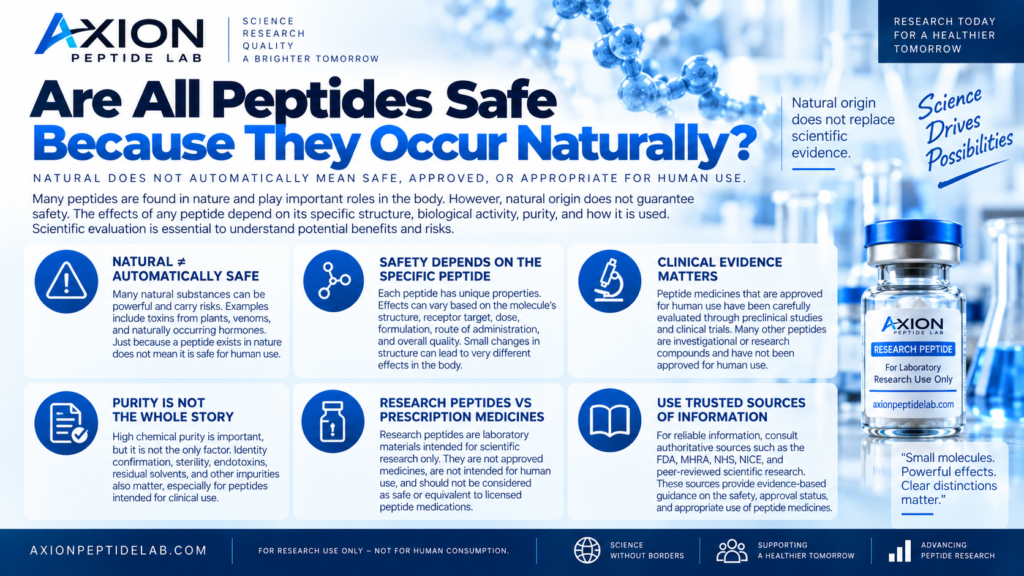
Are All Peptides Safe Because They Occur Naturally?
No.
The phrase “naturally occurring” is not a safety guarantee.
Many powerful biological substances occur naturally.
What matters is:
the specific molecule,
the dose,
the route of exposure,
the individual’s health circumstances,
possible interactions,
product quality,
and evidence from appropriate studies.
Synthetic analogues may also differ substantially from the natural peptides on which they were based.
They may be chemically modified specifically to alter half-life, receptor activity or stability.
Safety therefore has to be assessed compound by compound.
Why Peptide Delivery Can Be Difficult
Peptides present pharmaceutical challenges that small-molecule drugs do not always face.
Many peptides can be broken down rapidly by enzymes.
They may also cross biological membranes poorly.
Oral delivery can be difficult because the gastrointestinal tract is designed to digest proteins and peptides.
A recent review describes enzymatic degradation, poor membrane permeability and low bioavailability as major limitations in peptide and protein therapeutics, which is why researchers continue investigating new oral, transdermal and other delivery technologies.
These challenges help explain why many established peptide medicines historically required injection, although newer formulation technologies are expanding delivery possibilities.
Current and Future Peptide Research
Peptide science continues to develop rapidly.
One major research direction involves engineering molecules that remain active longer.
Another involves targeting several receptors with one molecule.
Metabolic research provides a clear example of this progression:
GLP-1 receptor agonists,
followed by dual GIP/GLP-1 agonists,
followed by investigational triple agonists targeting GIP, GLP-1 and glucagon.
Researchers are also developing new peptide delivery systems, peptide vaccines, targeted peptide therapeutics and computational methods for designing molecules with more desirable properties.
The future of peptide research will therefore depend on more than discovering new amino-acid sequences.
It will also depend on improvements in:
manufacturing,
stability,
delivery,
analytical chemistry,
impurity control,
pharmacology,
and clinical evidence.
Frequently Asked Questions About Peptides
What are peptides?
Peptides are chains of amino acids connected by peptide bonds. They occur naturally throughout biology and can act as hormones, signalling molecules and other functional compounds. Researchers can also manufacture synthetic peptides for laboratory and pharmaceutical research.
Are peptides the same as proteins?
Not exactly. Both are made from amino acids, but peptides are generally shorter chains, while proteins tend to be larger and structurally more complex. There is no single universally accepted length cutoff that separates every peptide from every protein.
What do peptides do in the body?
Different peptides perform different functions. They can participate in hormone signalling, metabolism, digestion, immune communication, reproduction, growth and numerous other biological processes.
What are the potential benefits of peptides?
Potential benefits depend entirely on the specific peptide. Certain peptide medicines have demonstrated clinical benefits in areas such as diabetes, obesity and endocrine disease. Experimental peptides should not be assumed to provide the same benefits without adequate clinical evidence.
Are peptides good for weight loss?
Some authorised peptide-related medicines, particularly GLP-1 receptor agonists and dual GIP/GLP-1 agonists, have demonstrated clinically significant weight-management effects in eligible patients. This does not mean every peptide promotes weight loss or that research peptides should be used as medicines.
What is GLP-1?
GLP-1 is glucagon-like peptide-1, a naturally occurring hormone involved in appetite, glucose and insulin-related signalling. Several approved medicines work by activating GLP-1 receptors.
What is GIP?
GIP is glucose-dependent insulinotropic polypeptide, another metabolic hormone involved in nutrient and insulin signalling. Tirzepatide targets both GIP and GLP-1 receptors.
What is semaglutide?
Semaglutide is a GLP-1 receptor agonist and the active ingredient in several authorised prescription medicines. Specific semaglutide products have approvals for diabetes or weight-management indications depending on the formulation and jurisdiction.
What is tirzepatide?
Tirzepatide is a dual GIP/GLP-1 receptor agonist. Authorised pharmaceutical products containing tirzepatide include Zepbound in the United States and Mounjaro in relevant UK indications.
What is retatrutide?
Retatrutide is an investigational triple agonist targeting GIP, GLP-1 and glucagon receptors. As of September 2026, it remains under clinical development and has not been approved by a regulatory agency.
What are the main safety concerns with peptides?
Safety concerns depend on the molecule but may include pharmacological side effects, allergic reactions, unwanted receptor effects, interactions, impurities and product-quality problems. Unapproved products may create additional risks because their safety, effectiveness and quality may not have been reviewed by regulators.
Does 99% peptide purity mean the product is safe?
In summary, understanding peptides what are they and potential benefits and safety concerns is essential for navigating the complexities of peptide therapies.
No. HPLC purity is an analytical measurement and does not establish clinical safety, sterility, endotoxin status or biological suitability.
What is a peptide Certificate of Analysis?
A peptide COA is an analytical document associated with a tested sample or batch. It may include information such as identity, HPLC purity, molecular weight and mass-spectrometry results.
Are research peptides prescription medicines?
No. Research-use materials are intended for laboratory work. Prescription medicines have undergone regulatory evaluation for defined medical uses, formulations and patient populations.
Where should people obtain peptide medicines?
Engagement with the topic of peptides what are they and potential benefits and safety concerns is vital for informed decision-making.
People seeking treatment should use authorised healthcare professionals and regulated pharmacies. Research suppliers are intended to serve legitimate laboratory research rather than provide substitutes for prescription medicines.
Final Thoughts: Peptides, Potential Benefits and Safety Concerns
Peptides are one of the most versatile classes of biological molecules studied in modern science.
They are involved in fundamental processes throughout the body and have also become valuable tools in pharmaceutical research.
Some peptide-based medicines have already demonstrated major clinical value.
Others are still being investigated.
And many research peptides have little or no reliable clinical evidence supporting human use.
That is why the question “What are peptides and what are their benefits?” cannot be answered with a single list of positive effects.
The better questions are:
What specific peptide is being discussed?
What receptor or biological pathway does it affect?
In conclusion, understanding peptides what are they and potential benefits and safety concerns should be a priority for anyone interested in health.
Has it been studied in humans?
Ultimately, the discourse surrounding peptides what are they and potential benefits and safety concerns will shape future developments in medicine.
Has it completed adequate clinical trials?
Is there an authorised medicine containing it?
What adverse effects have been identified?
What is the quality and regulatory status of the actual product?
These questions are especially important in weight-regulation research.
Semaglutide represents a GLP-1-based approach with authorised prescription products.
Tirzepatide represents a dual GIP/GLP-1 approach with authorised prescription products.
Retatrutide represents an emerging triple-receptor approach that remains investigational as of September 2026.
Their similarities should not obscure their differences.
For researchers, the same principle applies to laboratory products.
Identity, HPLC purity, batch traceability, mass spectrometry and Certificates of Analysis can provide valuable analytical information.
But none of those tests automatically establish human safety or turn a research material into a medicine.
Researchers interested in laboratory-use peptide materials can explore the research catalogue at AxionPeptideLab.com, while maintaining the distinction between scientific research products and regulated pharmaceutical treatments.
Ultimately, the discourse surrounding peptides what are they and potential benefits and safety concerns will shape future developments.
For Research Use Only – Not for human consumption.
References and Further Reading
At the intersection of science and health lies the inquiry into peptides what are they and potential benefits and safety concerns.
Nature / Signal Transduction and Targeted Therapy — Therapeutic Peptides: Current Applications and Future Directions. Comprehensive review of peptide drug development, applications and future technologies.
Nature Reviews Drug Discovery — Trends in Peptide Drug Discovery. Overview of peptide therapeutics and the development of peptide medicines across multiple therapeutic areas.
PubMed — Peptide Drugs: Current Status and Applications in the Treatment of Various Diseases. 2024 review covering peptide-based therapeutics across several disease areas.
NHS — Semaglutide. UK patient information covering authorised semaglutide uses and reported adverse effects.
FDA — Zepbound Approval. Official US information on tirzepatide for chronic weight management.
FDA — Higher-Dose Wegovy Approval, March 2026. Current US regulatory information concerning semaglutide for weight management.
NICE — Tirzepatide for Managing Overweight and Obesity. Current UK recommendations and implementation guidance.
MHRA — GLP-1 Medicines for Weight Loss and Diabetes. Current UK regulatory and safety information covering authorised semaglutide and tirzepatide products.
FDA — Concerns With Unapproved GLP-1 Drugs Used for Weight Loss. Current FDA information concerning unapproved products, retatrutide and products falsely sold as research materials.
Eli Lilly — What to Know About Retatrutide. Current development status of investigational retatrutide as of July 2026.
MHRA — Borderline Products: How to Tell if Your Product Is a Medicine. Current UK guidance regarding product presentation and medicinal classification.
PubMed — Quality and Safety Assessment of Peptide Therapeutics and Peptide-Related Impurities. Regulatory perspective on analytical and safety considerations for therapeutic peptides.
One Response