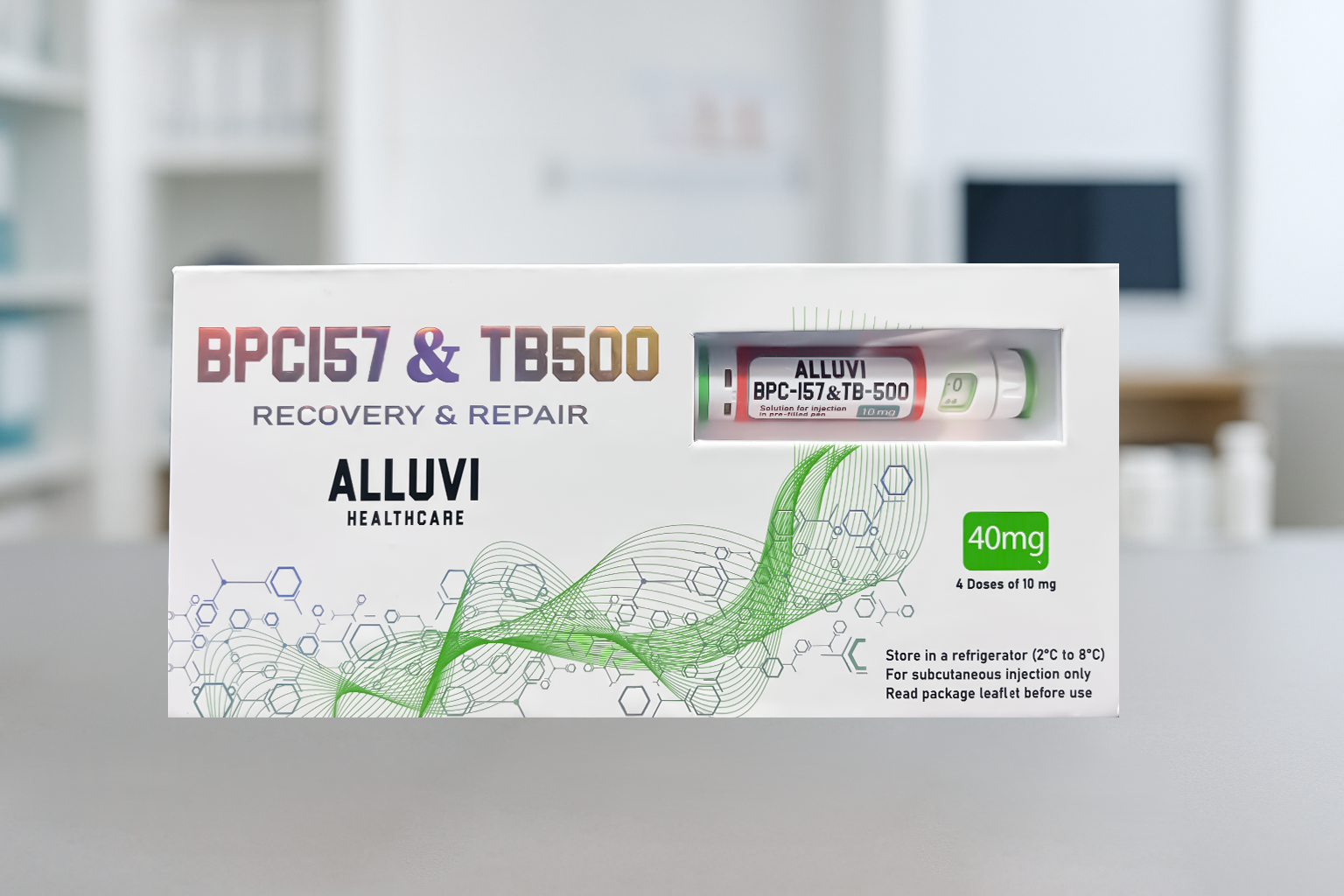
BPC-157 & TB-500 40mg is a combined laboratory research material intended exclusively for qualified research and development environments. The clearly identified 40mg format brings two distinct research peptides into a single R&D configuration for appropriately designed analytical and experimental investigations. Researchers should verify the exact component quantities, specifications and available documentation associated with the current product before laboratory use. Strictly for research purposes only and not intended for human or veterinary use.
$190.78 Original price was: $190.78.$175.91Current price is: $175.91.
The BPC-157 & TB-500 40mg format combines two distinct research peptides within a single laboratory product intended for controlled R&D applications.
BPC-157 and TB-500 are separate substances with different molecular characteristics. Researchers should therefore avoid treating them as interchangeable materials or assuming that scientific findings concerning one component automatically apply to the other.
The 40mg designation describes the stated overall product quantity. It should not be interpreted as a dosage recommendation or administration instruction.
Researchers should verify the documented quantity of each individual component before designing experiments around the combined format.
BPC-157 is a synthetic peptide consisting of 15 amino acids. Scientific interest surrounding this molecule has primarily developed through experimental and preclinical research.
Research involving BPC-157 has examined various biological processes under controlled conditions.
However, researchers should distinguish observations produced in laboratory or animal studies from evidence demonstrating safety and effectiveness in humans.
The existence of published research also does not independently verify the identity, composition or characteristics of a particular commercially supplied material.
Product-specific specifications remain important when evaluating any research material for experimental work.
TB-500 is associated with research concerning a fragment related to thymosin beta-4.
Researchers should exercise particular care with terminology when reviewing scientific literature because TB-500 and full-length thymosin beta-4 should not automatically be treated as identical substances.
This distinction can affect literature searches and interpretation of experimental evidence.
Researchers evaluating a combined material should confirm the documented identity of the TB-500 component and ensure that scientific references used to support an experimental protocol concern the appropriate substance.
The BPC-157 & TB-500 40mg configuration provides laboratories with both research materials within one combined format.
This may simplify product identification and inventory organization where an experimental design specifically requires a combined material.
Researchers should nevertheless verify how the total stated quantity is divided between the individual components.
A 40mg total does not automatically mean that the product contains 20mg of each substance.
The current product specifications should identify the actual composition. If they do not, researchers should obtain clarification before relying on an assumed ratio.
Combining two research substances does not establish that they produce complementary or synergistic effects.
Each material has its own research history, and evidence concerning individual compounds should remain distinct from evidence concerning a combination.
Researchers should therefore avoid assuming that observations reported for BPC-157 or TB-500 individually will occur when the substances are studied together.
A combined research material should be evaluated according to the scientific question, experimental design and available evidence relevant to the combination itself.
This distinction is essential for accurate scientific communication.
Researchers evaluating BPC-157 & TB-500 40mg should review the documentation associated with the actual material.
Relevant information may include product identification, stated quantity, component composition and batch or lot details where available.
Laboratories operating under formal research procedures may also maintain internal records connecting particular materials with individual experiments.
These records can improve traceability when experiments are repeated or subsequently reviewed.
Researchers should never assume that particular analytical certificates or testing standards apply unless they are explicitly documented for the current product or batch.
Material traceability is particularly important when evaluating BPC-157 & TB-500 40mg within organized and reproducible laboratory research.
Research teams may record the product identifier, receiving information, batch or lot information where supplied and references to the experiments in which a material was incorporated.
This becomes especially useful when different lots or batches are used across a longer research program.
Accurate records allow researchers to associate observations with the materials actually used rather than relying on incomplete notes.
Combined research products can make this particularly important because researchers may need to track information relating to multiple components within one product.
Before incorporating this research blend into laboratory work, qualified researchers should determine whether its documented characteristics correspond with their experimental requirements.
When evaluating BPC-157 & TB-500 40mg, researchers should compare the available product documentation with the requirements of their specific experimental protocol.
The product name and stated quantity alone cannot establish suitability.
Appropriate laboratory procedures should be followed when handling experimental materials.
Access should be restricted to trained research personnel, and materials should remain clearly identified to minimize accidental misuse.
Researchers should consult documentation accompanying the actual product for applicable storage information.
General recommendations from unrelated websites should not replace product-specific instructions because material characteristics and formulations can vary.
Laboratories should also follow their established procedures for receiving, documenting, storing and handling R&D materials.
Scientific research involving peptides occurs across laboratories and academic environments worldwide.
However, regulatory requirements concerning research materials can vary significantly between jurisdictions.
A product being designated for research use does not automatically mean that acquisition, importation, possession or use is permitted in every country.
Researchers and institutions are responsible for determining which requirements apply within their jurisdiction before obtaining or working with a particular material.
For this reason, the term “worldwide” should describe the international research context rather than imply guaranteed availability or unrestricted legality in every country.
Product information for BPC-157 & TB-500 40mg should clearly distinguish scientific observations from established therapeutic evidence.
Experimental findings involving BPC-157 or TB-500 should not automatically be transformed into claims concerning treatment, recovery, performance enhancement or disease management.
Likewise, a combined product should not be described as producing synergy unless appropriate evidence demonstrates that effect.
Responsible product information should instead identify the material accurately, explain its scientific context and clearly communicate its research-only designation.
This provides researchers with useful information without overstating what current evidence establishes.
BPC-157 & TB-500 40mg is presented exclusively as a research and development material.
It is not intended for human consumption, self-administration, diagnosis, treatment, disease prevention, supplementation or veterinary applications.
The 40mg designation identifies the stated overall laboratory product quantity and should not be interpreted as medical dosing information.
Qualified researchers should verify current specifications and ensure that acquisition, possession and experimental activities comply with applicable institutional requirements and laws.
BPC-157 is one of the two research peptides included in the BPC-157 & TB-500 40mg laboratory research format.
Researchers evaluating BPC-157 & TB-500 40mg should consider each component separately when reviewing relevant scientific literature.
Appropriate laboratory procedures should be followed when handling BPC-157 & TB-500 40mg and other experimental research materials.
Laboratories evaluating BPC-157 & TB-500 40mg should also consider the regulatory and institutional requirements applicable within their jurisdiction.
TB-500 should not be presented as an approved human therapeutic product. Human safety and efficacy evidence remains insufficient.
No. This material is designated strictly for laboratory research and is not intended for human or veterinary consumption or administration.
No. Combining two substances into a single research product does not establish a synergistic effect. Such an effect would require appropriate experimental evidence.
Researchers should follow the product-specific storage information accompanying the actual material rather than relying on generalized recommendations.
Applicable rules vary between countries and institutions. Researchers should verify local requirements concerning acquisition, importation, possession and laboratory use.
Only appropriately trained laboratory and research personnel should handle the material using established scientific and institutional procedures.