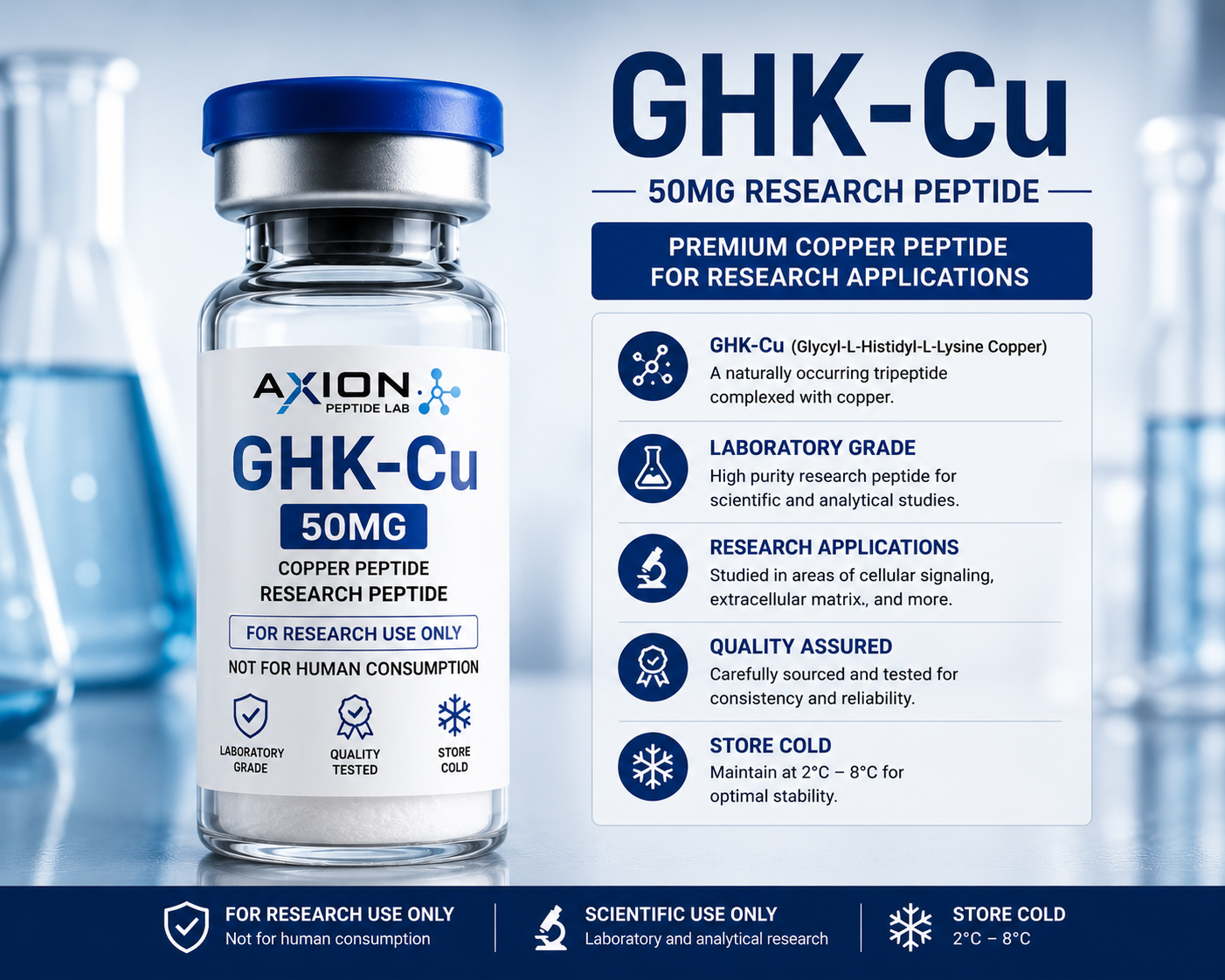
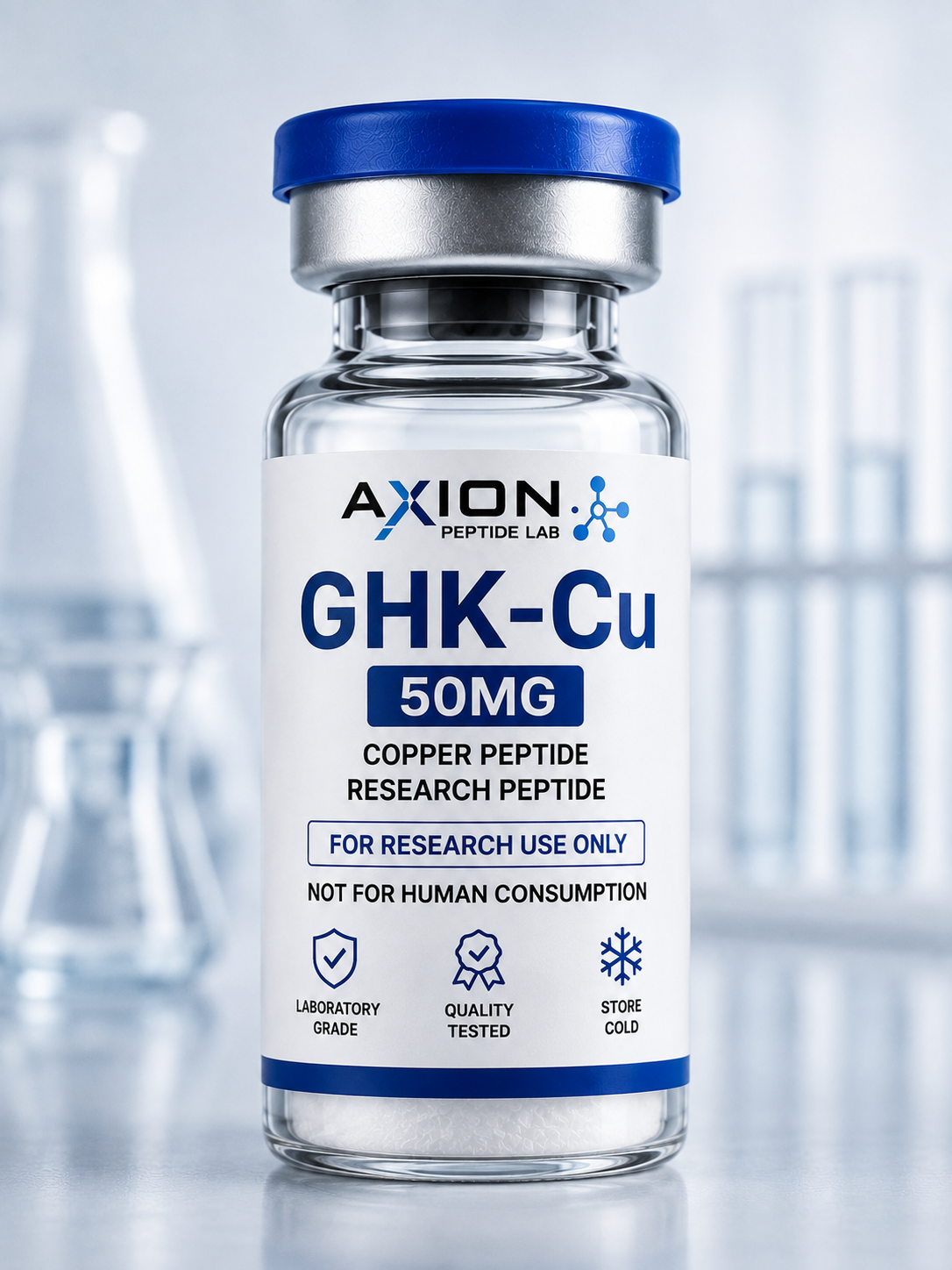
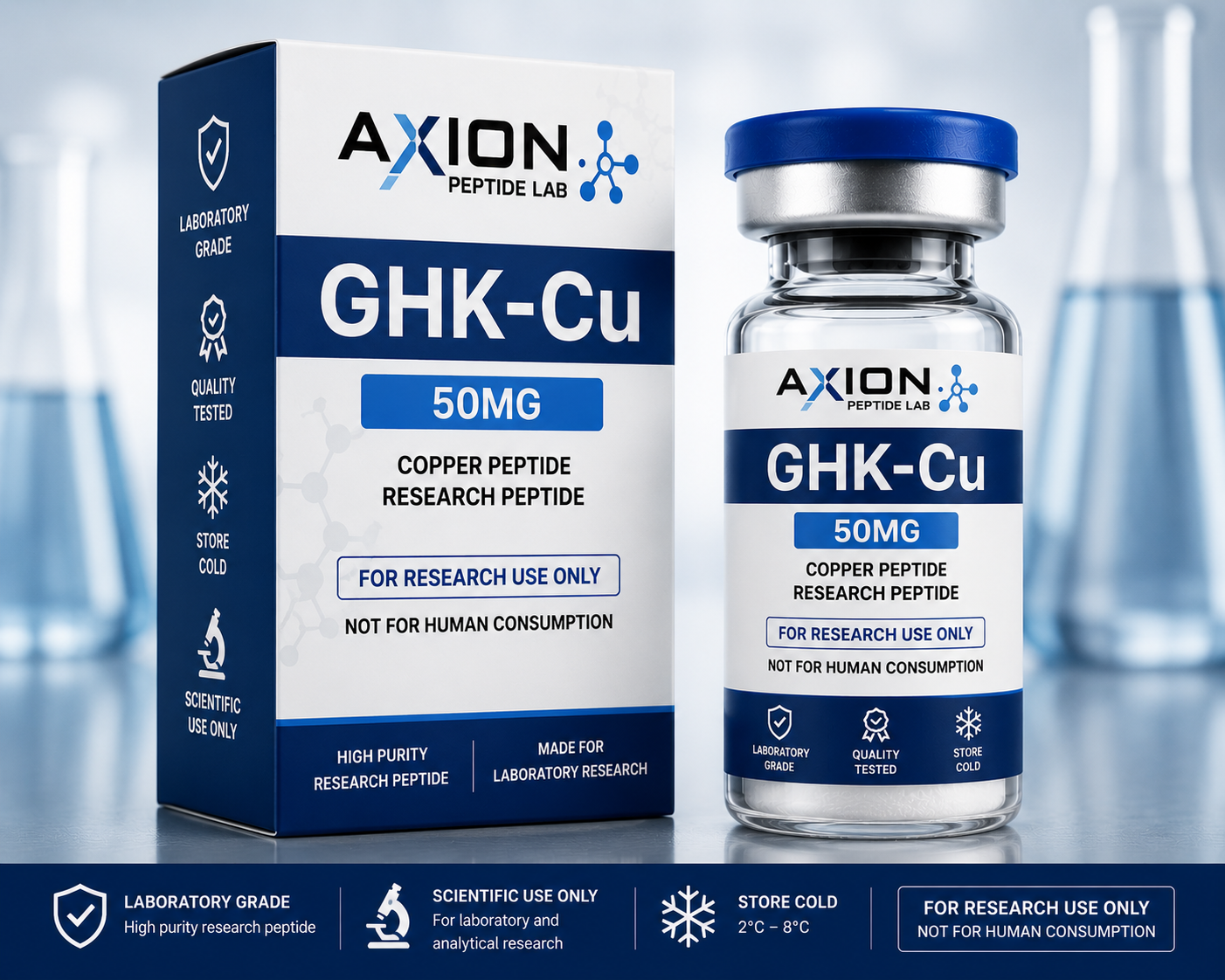
GHK-Cu 50mg Research Peptide is a specialised copper-peptide material consisting of the tripeptide glycyl-L-histidyl-L-lysine complexed with copper.
Designed for controlled laboratory investigation involving peptide-metal interactions, extracellular-matrix biology, molecular signalling, biochemical analysis and related scientific research.
For Research Use Only – Not for human or veterinary consumption.
$47.36
GHK-Cu 50mg Research Peptide is a specialised copper-peptide material intended for controlled scientific, biochemical and analytical research. Known for its distinctive copper-binding properties, GHK-Cu has become an established subject of peptide research involving molecular signalling, peptide-metal interactions, extracellular-matrix biology and related cellular processes.
GHK-Cu consists of the naturally occurring tripeptide glycyl-L-histidyl-L-lysine complexed with copper. Its compact three-amino-acid structure and ability to coordinate copper make it particularly interesting for researchers studying relationships between peptides, trace metals and biochemical systems.
Axion Peptide Lab supplies the 50mg format for qualified laboratory and research applications where clearly identified experimental materials are required.
For Research Use Only – Not for human consumption.
GHK stands for glycyl-L-histidyl-L-lysine, representing the three amino acids glycine, histidine and lysine.
GHK is a naturally occurring peptide that has been identified in biological fluids. When the molecule coordinates a copper ion, it forms the complex commonly abbreviated GHK-Cu.
Copper is an essential trace element involved in numerous biochemical processes, while peptides can interact with metal ions in highly specific ways. This relationship has made the GHK-Cu complex an interesting model for studying peptide-metal coordination and associated molecular mechanisms.
Scientists have investigated GHK and its copper complex for decades, producing a substantial body of laboratory literature covering its chemical characteristics and biological activity.
GHK-Cu attracts scientific interest across several areas of molecular and cellular research.
Published experimental investigations have examined its relationship with extracellular-matrix components, fibroblast activity, cellular signalling, metalloproteinases and copper-associated biochemical processes.
Researchers have also explored how GHK-Cu interacts with systems involved in collagen and glycosaminoglycan regulation.
These observations make the molecule relevant to laboratory investigations examining how peptide signalling and metal coordination may influence cellular environments.
However, findings depend on experimental models, concentrations, methodologies and other conditions.
Research observations should therefore be interpreted within their original scientific context rather than automatically treated as established therapeutic outcomes.
One important area of GHK-Cu research concerns the extracellular matrix.
The extracellular matrix is a complex network surrounding cells and contains structural and biochemical components including collagen, elastin, glycoproteins, proteoglycans and glycosaminoglycans.
Rather than simply providing structural support, this environment participates in cellular communication and tissue organisation.
Experimental GHK-Cu research has examined its relationship with extracellular-matrix synthesis and remodelling.
This provides scientists with opportunities to investigate connections between peptide signalling, copper coordination, fibroblast behaviour and matrix-associated processes under controlled conditions.
Such investigations may involve cell cultures, biochemical assays or other suitable laboratory models.
The interaction between GHK and copper represents another important research area.
Metal-binding peptides are scientifically valuable because interactions between amino-acid residues and metal ions can influence molecular structure, chemical behaviour and biological activity.
GHK’s histidine residue plays an important role in its copper-binding characteristics.
Researchers investigating coordination chemistry can examine how environmental conditions influence these interactions and compare GHK-Cu with other peptide-metal complexes.
Studies may involve spectroscopy, chromatography or other analytical techniques selected according to the objectives and equipment available within the laboratory.
This makes GHK-Cu relevant beyond cellular biology, extending its usefulness into analytical chemistry and molecular research.
The 50mg format provides laboratories with a clearly stated quantity for research planning, inventory organisation and experimental recordkeeping. GHK-Cu 50mg Research Peptide
Researchers can incorporate the material into appropriately designed workflows according to their individual scientific requirements.
The 50mg designation describes the stated quantity of research material supplied.
It should not be interpreted as a recommended dose, concentration or administration protocol.
Researchers are responsible for determining appropriate experimental concentrations, controls and analytical procedures according to their methodology.
Axion Peptide Lab does not provide human dosing, injection or therapeutic-use instructions for this research material. GHK-Cu 50mg Research Peptide
GHK-Cu can be investigated using a variety of analytical approaches depending on the scientific question being studied.
Potential laboratory objectives include molecular identification, peptide-metal coordination, stability assessment, degradation profiling and comparative molecular analysis.
Researchers may also investigate:
The appropriate experimental methodology should always be established by qualified researchers.
Research quality depends heavily on controlling experimental variables.
Differences in material identity, storage conditions, contamination, preparation or analytical characteristics can influence laboratory observations.
Researchers should therefore examine the specifications and documentation supplied with their actual research material. GHK-Cu 50mg Research Peptide
Maintaining batch information and accurate laboratory records can also improve traceability when experiments are repeated or compared.
Published information concerning the GHK-Cu molecule should not automatically be interpreted as verification of the purity, identity or performance characteristics of an individual commercial batch.
Product-specific conclusions should always be based on appropriate documentation and analysis. GHK-Cu 50mg Research Peptide
Research peptides should be handled according to suitable laboratory procedures.
Environmental conditions such as temperature, moisture, contamination and light exposure may influence peptide stability.
Researchers should follow the storage information supplied with their specific product and maintain appropriate records where required.
GHK-Cu should remain clearly labelled and stored separately from medicines, foods, dietary supplements and products intended for personal consumption.
Only appropriately trained personnel should handle laboratory research materials.
Applicable institutional procedures, personal protective equipment requirements and laboratory safety standards should always be followed. GHK-Cu 50mg Research Peptide
Axion Peptide Lab focuses on specialised materials intended for scientific, analytical and laboratory research.
Our research-focused approach emphasises clearly identified materials and responsible product information rather than unsupported therapeutic claims.
Researchers sourcing GHK-Cu can expect an emphasis on:
Researchers requiring specific analytical documentation should confirm what is available for the current product or batch before purchasing. GHK-Cu 50mg Research Peptide
Qualified laboratories, researchers, analytical facilities, biotechnology organisations and scientific institutions can source GHK-Cu 50mg from Axion Peptide Lab for legitimate research applications.
Before purchasing, researchers should verify that the product specifications meet the requirements of their intended experimental workflow.
Customers should also ensure that acquisition, possession, importation and research activities comply with applicable requirements within their jurisdiction.
Product availability and delivery eligibility may vary by destination.
GHK-Cu 50mg provides researchers with a convenient format for investigating one of the most established copper-peptide complexes in modern peptide science.
GHK-Cu 50mg is supplied strictly as a laboratory research material.
It is not marketed as a pharmaceutical product, injectable treatment, dietary supplement or consumer healthcare product.
Information presented here describes scientific research contexts and should not be interpreted as medical advice or evidence that this product can diagnose, prevent, treat, mitigate or cure any disease or medical condition. GHK-Cu 50mg Research Peptide
For Research Use Only – Not for human or veterinary consumption.
GHK-Cu 50mg is a laboratory research format of the copper complex formed by the tripeptide glycyl-L-histidyl-L-lysine and copper.
GHK represents glycine, histidine and lysine. GHK-Cu describes the copper complex formed when this tripeptide coordinates copper.
Scientists have investigated GHK-Cu in areas including peptide-metal coordination, extracellular-matrix biology, cellular signalling and other molecular processes.
Yes. GHK-Cu is commonly classified as a copper peptide because GHK coordinates a copper ion to form the complex.
The 50mg designation describes the stated quantity of research material supplied. It is not a recommended human dosage. GHK-Cu 50mg Research Peptide
GHK consists of three amino acids: glycine, histidine and lysine. GHK-Cu 50mg Research Peptide
No. This Axion Peptide Lab product is intended exclusively for laboratory and analytical research and is not intended for human or veterinary consumption.
No. Human administration, injection and dosing instructions are not provided for research-only laboratory materials. GHK-Cu 50mg Research Peptide
Researchers should follow the product-specific storage information supplied with the material and maintain appropriate laboratory environmental controls. GHK-Cu 50mg Research Peptide
Qualified research customers can purchase GHK-Cu 50mg from AxionPeptideLab.com, subject to availability, destination eligibility and applicable requirements. GHK-Cu 50mg Research Peptide