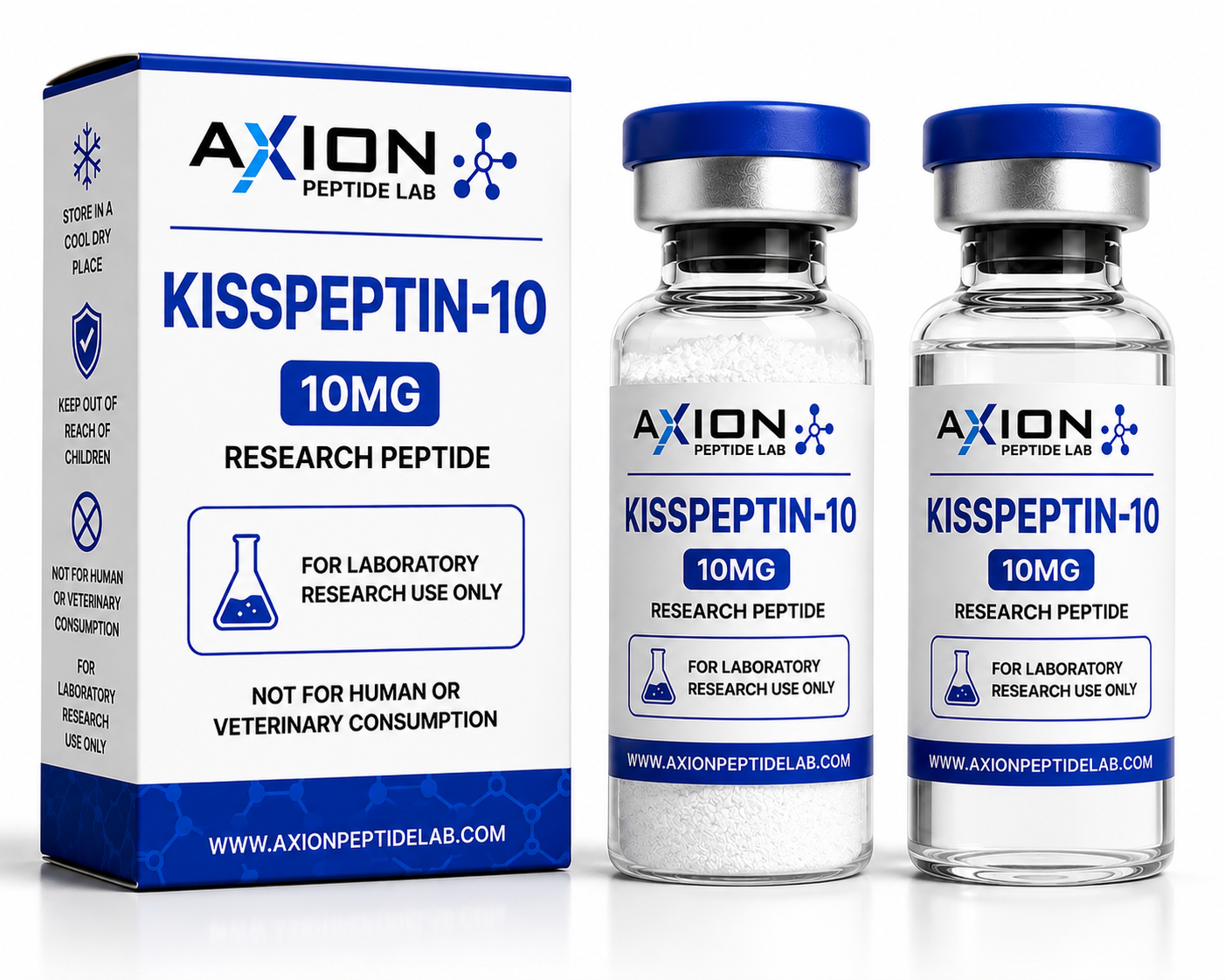
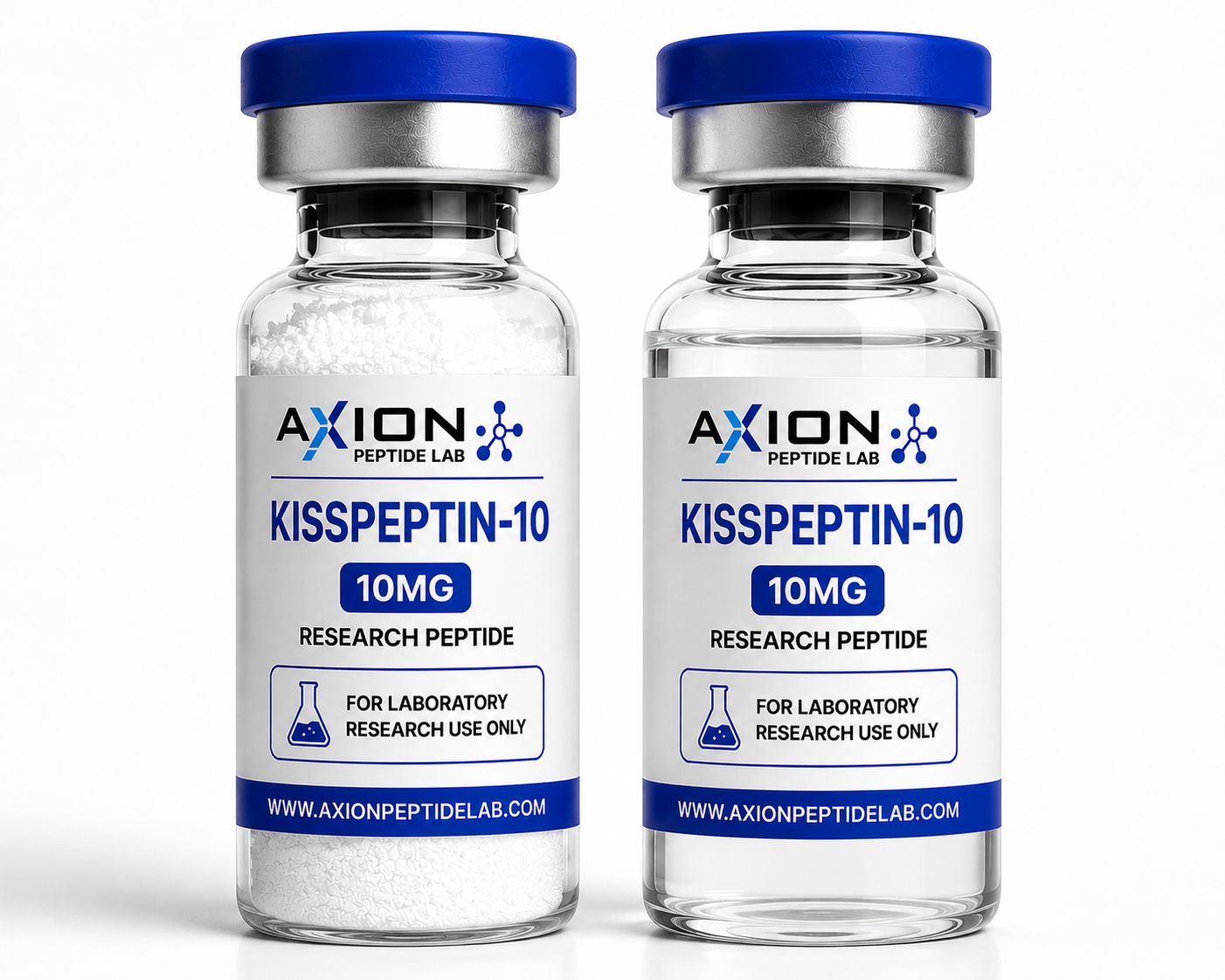
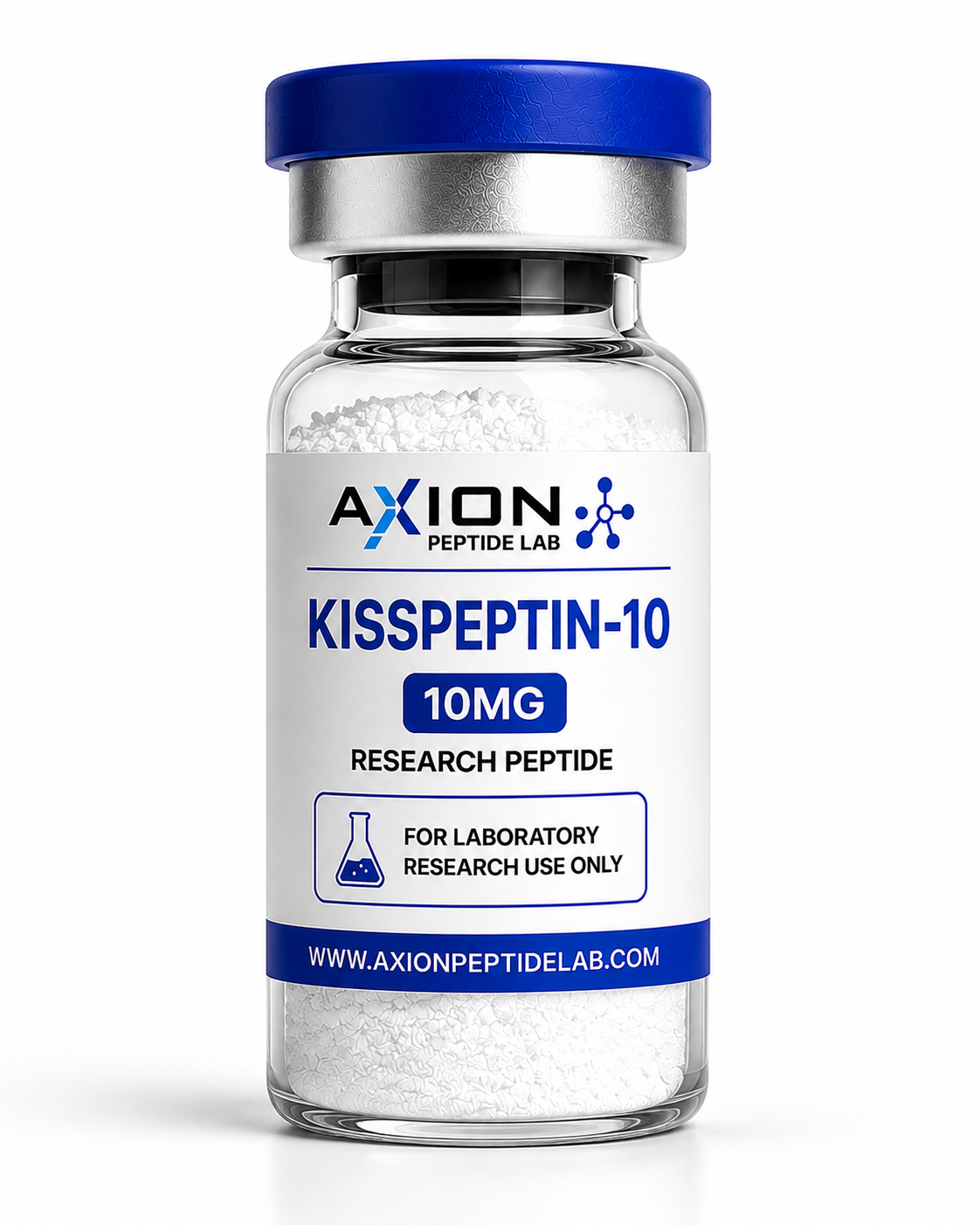
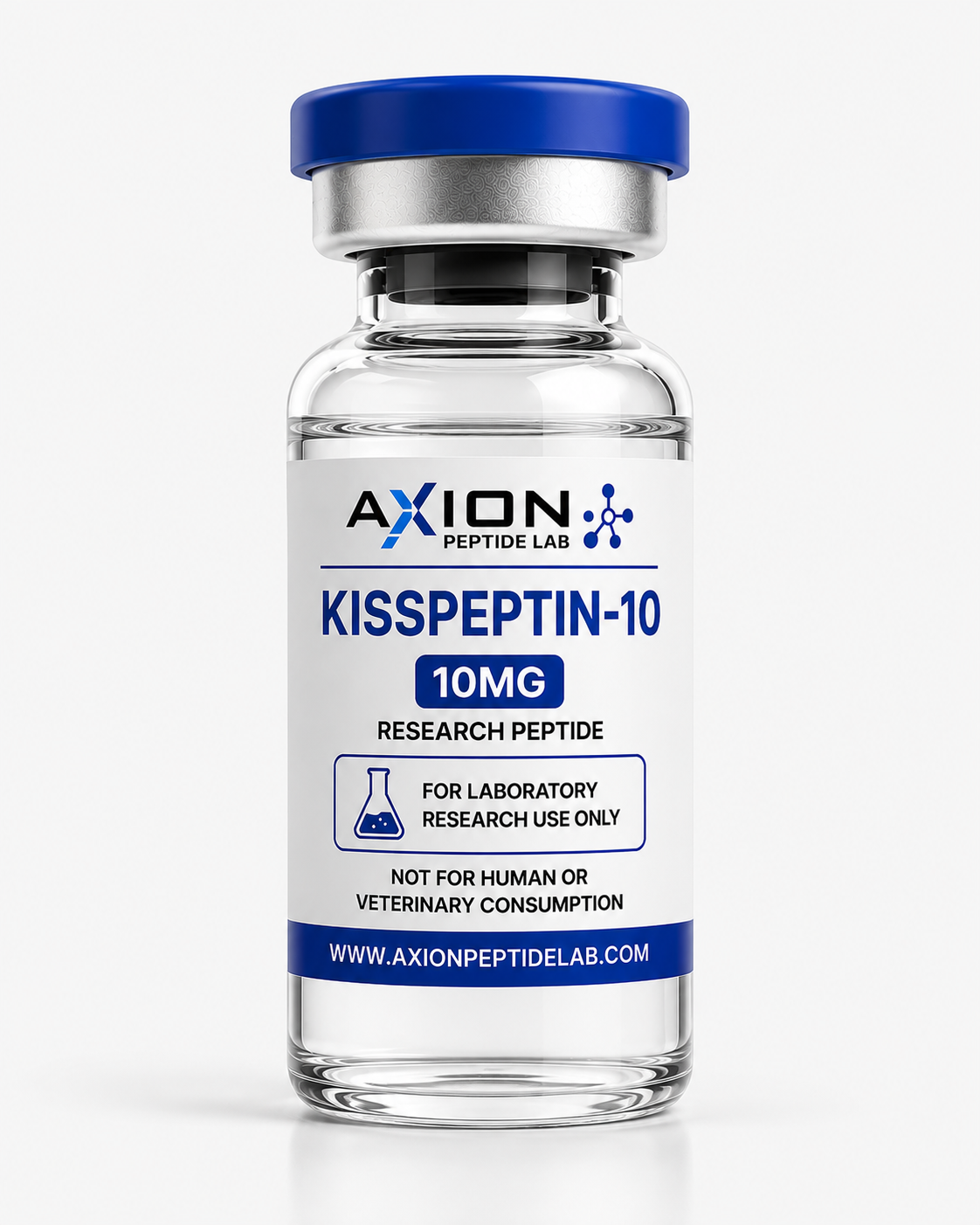
Kisspeptin-10 10mg Research Peptide is a synthetic decapeptide represented by the sequence Tyr-Asn-Trp-Asn-Ser-Phe-Gly-Leu-Arg-Phe-NH₂ (YNWNSFGLRF-NH₂). It is supplied for controlled laboratory research involving KISS1R/GPR54 receptor biology, peptide–receptor interactions, neuroendocrine signalling, GnRH pathways, and related molecular research.
The 10mg designation represents the stated quantity of research material and is not a dosage recommendation.
For Research Use Only – Not for human or veterinary consumption.
$60.90
Kisspeptin-10 10mg Research Peptide from Axion Peptide Lab is a synthetic decapeptide supplied for controlled laboratory, biochemical, and analytical research. Also known as KP-10 or metastin 45–54, Kisspeptin-10 corresponds to the C-terminal decapeptide region of human kisspeptin and is widely studied in peptide signalling and receptor biology.
The peptide sequence is Tyr-Asn-Trp-Asn-Ser-Phe-Gly-Leu-Arg-Phe-NH₂, abbreviated as YNWNSFGLRF-NH₂.
Kisspeptin biology is an important area of research because kisspeptin peptides interact with the kisspeptin receptor, commonly known as KISS1R and historically as GPR54.
Kisspeptin-10 may be used as an experimental molecule in studies involving receptor activation, neuroendocrine signalling, peptide–receptor interactions, and related molecular pathways.
The 10mg designation identifies the stated quantity of research material supplied. It is not a dosage or administration recommendation.
For Research Use Only – Not for human or veterinary consumption.
Kisspeptin-10 is a synthetic peptide containing ten amino-acid residues and is therefore classified as a decapeptide.
It corresponds to the conserved C-terminal region found in longer kisspeptin peptides derived from the KISS1 precursor.
Kisspeptin peptides were initially studied in relation to the KISS1 gene and later became particularly important in research involving receptor signalling and neuroendocrine biology.
The 10-residue fragment remains scientifically relevant because its C-terminal sequence contributes to interaction with the kisspeptin receptor.
Researchers may use Kisspeptin-10 as an experimental tool when investigating KISS1R-dependent molecular processes.
The Axion Peptide Lab product is supplied solely as laboratory research material and is not a consumer, pharmaceutical, or therapeutic product.
Human Kisspeptin-10 has the amino-acid sequence:
Tyr-Asn-Trp-Asn-Ser-Phe-Gly-Leu-Arg-Phe-NH₂
The corresponding one-letter sequence is:
YNWNSFGLRF-NH₂
The parent peptide is commonly represented by the molecular formula C63H83N17O14 and has a molecular weight of approximately 1302.4 g/mol.
Its CAS Registry Number is 374675-21-5.
Researchers should distinguish the parent peptide from specific salt forms or formulations. Exact composition, purity, and other analytical specifications should always be confirmed using documentation for the specific product and batch.
One of the primary research applications of Kisspeptin-10 is the investigation of KISS1R, historically known as GPR54.
KISS1R is a G-protein-coupled receptor that is widely studied in molecular and neuroendocrine research.
Kisspeptin-10 may be used experimentally to examine receptor activation and downstream signalling.
Laboratories may investigate receptor binding, signalling responses, concentration–response relationships, and other molecular endpoints using appropriately designed experimental systems.
Such studies can improve understanding of how peptide ligands interact with G-protein-coupled receptors.
Experimental receptor activity should not be interpreted as evidence that a commercial research product provides a particular health benefit or therapeutic effect.
Kisspeptin signalling is extensively studied in experimental neuroendocrinology.
Researchers have examined relationships between kisspeptin pathways and hypothalamic signalling systems.
In particular, the kisspeptin/KISS1R system is studied in connection with the upstream regulation of gonadotropin-releasing hormone signalling.
This provides opportunities to investigate how peptide–receptor systems participate in complex signalling networks.
Laboratory experiments may examine cellular responses, receptor activation, signalling molecules, and other biochemical markers.
These investigations require carefully controlled methodologies because biological signalling networks contain numerous interacting components.
A major area of kisspeptin research involves the relationship between KISS1R signalling and gonadotropin-releasing hormone (GnRH) pathways.
Kisspeptin signalling is an established experimental component of research examining the molecular regulation of GnRH neurons.
Kisspeptin-10 may therefore be useful in appropriately designed receptor, cellular, and preclinical experiments focused on these pathways.
Researchers may investigate signalling responses or compare results across different peptide fragments and receptor models.
These research applications do not mean that Kisspeptin-10 10mg supplied by Axion Peptide Lab is intended for fertility treatment or any other medical purpose.
It remains strictly a research peptide.
The hypothalamic–pituitary–gonadal, or HPG, axis is another major research area associated with kisspeptin biology.
This signalling network involves complex interactions among the hypothalamus, pituitary gland, and gonads.
Kisspeptin research has helped scientists investigate upstream regulatory mechanisms within this network.
Researchers may use Kisspeptin-10 in controlled experimental models to study receptor-mediated signalling and associated molecular pathways.
Studies involving the HPG axis should distinguish between molecular observations, preclinical findings, and clinically validated applications.
Axion Peptide Lab does not market Kisspeptin-10 as a reproductive treatment.
Kisspeptin-10 may also serve as an experimental model for broader peptide–receptor research.
Understanding how peptide ligands recognise and activate receptors is important in molecular pharmacology and cell biology.
Researchers may examine binding characteristics, structural determinants, and downstream signalling associated with Kisspeptin-10 and KISS1R.
Comparative experiments may investigate Kisspeptin-10 alongside longer kisspeptin fragments or structurally modified analogues.
These studies can help researchers understand how peptide length and amino-acid composition influence receptor interactions.
The compact, 10-residue structure of Kisspeptin-10 makes it relevant to peptide structure–function studies.
Researchers may investigate which molecular characteristics are important for receptor recognition and experimental activity.
Comparative research may involve changes to amino-acid residues, peptide length, or terminal modifications.
Laboratories may then assess whether structural differences correspond to measurable changes in receptor interaction, stability, or molecular signalling.
Such research contributes to a broader understanding of the relationship between peptide structure and biological activity.
Stability is an important consideration when studying synthetic peptides.
Researchers may investigate Kisspeptin-10 under controlled conditions to determine how environmental variables influence peptide integrity.
Experiments may examine degradation patterns, molecular changes, and analytical characteristics over time.
Variables may include temperature, solution composition, storage duration, and other protocol-specific conditions.
Researchers should document experimental conditions carefully and follow the storage information provided for the actual product and batch.
Storage specifications published for another supplier’s Kisspeptin-10 should not automatically be applied to Axion Peptide Lab material.
Kisspeptin-10 may also be used in analytical research focused on the physical and chemical characteristics of the peptide.
Depending on laboratory capabilities, researchers may investigate molecular identity, chromatographic behaviour, peptide integrity, and degradation products.
Analytical characterisation is particularly important when researchers need to understand the material incorporated into an experimental system.
Specific purity, salt form, and analytical characteristics should be confirmed using documentation for the actual product and batch.
Generic information about Kisspeptin-10 does not establish the analytical specifications of an individual commercial product.
The Kisspeptin-10 10mg Research Peptide format provides a clearly identified quantity of experimental peptide material.
The 10mg designation describes the stated amount supplied with the product.
It does not represent a recommended human dose.
Researchers should determine experimental quantities according to validated laboratory protocols, institutional procedures, and the objectives of their research.
Axion Peptide Lab does not provide human dosing, self-administration, or therapeutic-use instructions.
Kisspeptin-10 may be relevant to appropriately designed research involving:
These are scientific research categories, not medical indications.
Reliable research requires accurate documentation.
Researchers working with Kisspeptin-10 should record the product identity, relevant batch information, experimental conditions, and analytical procedures.
Good traceability allows results to be compared more effectively across experiments.
The availability of Certificates of Analysis and independent testing may vary by product and batch.
Researchers requiring specific purity, identity, or analytical specifications should review the available documentation before beginning experimental work.
No technical specification should be inferred solely from information published for another supplier’s product.
Kisspeptin-10 10mg should be handled by appropriately trained personnel in suitable research environments.
Research materials should remain clearly labelled and separated from medicines, foods, supplements, and other consumer products.
Laboratories should follow appropriate procedures designed to maintain material integrity and minimise contamination.
Researchers should follow the storage and handling requirements provided with the specific product.
Customers are responsible for determining whether purchase, possession, importation, and experimental use comply with applicable laws and institutional policies.
Axion Peptide Lab supplies specialised research peptides and laboratory compounds for controlled scientific and analytical applications.
Kisspeptin-10 10mg provides qualified researchers with a clearly identified decapeptide format for legitimate laboratory investigation.
Researchers can review available product specifications and supporting documentation when determining whether the material is appropriate for a particular experimental workflow.
The product is clearly distinguished from medicines and consumer products through its research-use-only designation.
Qualified researchers, laboratories, and scientific organisations can buy Kisspeptin-10 10mg Research Peptide from Axion Peptide Lab for controlled laboratory, biochemical, and analytical research.
Researchers should review the relevant product information and determine whether the material meets the requirements of their intended experimental protocol before purchasing.
Product availability and delivery eligibility may depend on the destination and applicable regulations.
Kisspeptin-10 10mg is supplied exclusively as research material and should not be represented as a medicine, fertility product, or consumer health supplement.
For Research Use Only – Not for human or veterinary consumption.
Kisspeptin-10 10mg is a stated quantity of the synthetic decapeptide Kisspeptin-10 supplied for controlled laboratory, biochemical, and analytical research.
Human Kisspeptin-10 has the sequence Tyr-Asn-Trp-Asn-Ser-Phe-Gly-Leu-Arg-Phe-NH₂, abbreviated as YNWNSFGLRF-NH₂.
Yes. Kisspeptin-10 contains ten amino-acid residues and is therefore classified as a decapeptide.
Kisspeptin-10 is primarily investigated as a ligand for the kisspeptin receptor KISS1R, historically known as GPR54.
Research areas include KISS1R/GPR54 signalling, GnRH pathways, neuroendocrine biology, HPG-axis research, peptide–receptor interactions, and molecular signalling.
The 10mg designation identifies the stated quantity of research material. It is not a recommended human dose.
The parent human Kisspeptin-10 peptide has a molecular weight of approximately 1302.4 g/mol.
Human Kisspeptin-10 is commonly identified by CAS Registry Number 374675-21-5.
No. Kisspeptin-10 is supplied strictly as research material, and Axion Peptide Lab does not provide human dosing or self-administration instructions.
Qualified research customers can purchase Kisspeptin-10 10mg Research Peptide from Axion Peptide Lab for legitimate scientific and analytical research, subject to availability and applicable requirements.