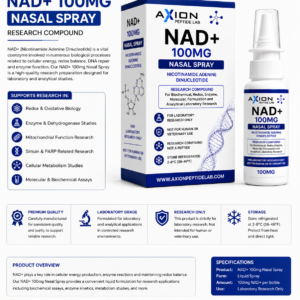
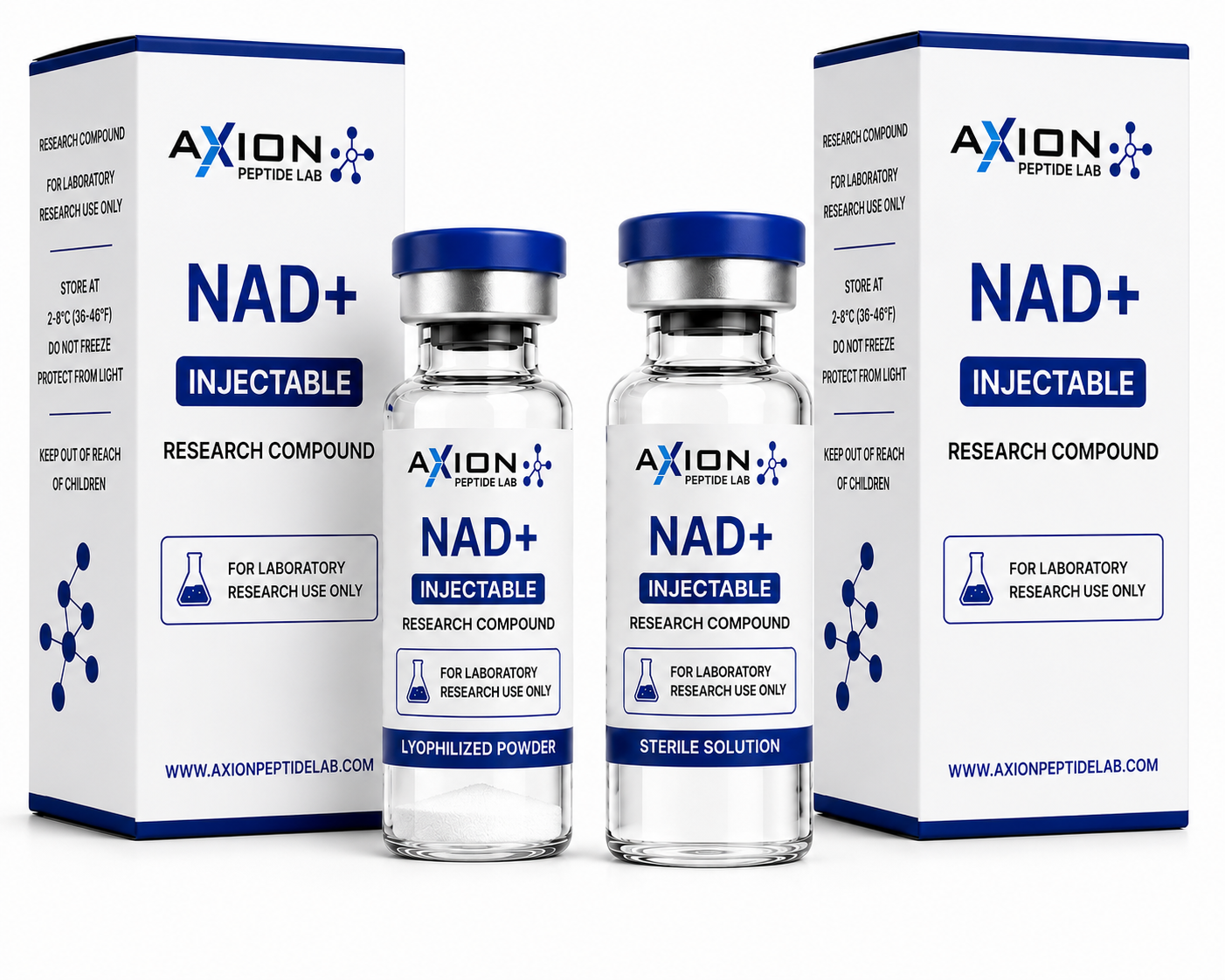
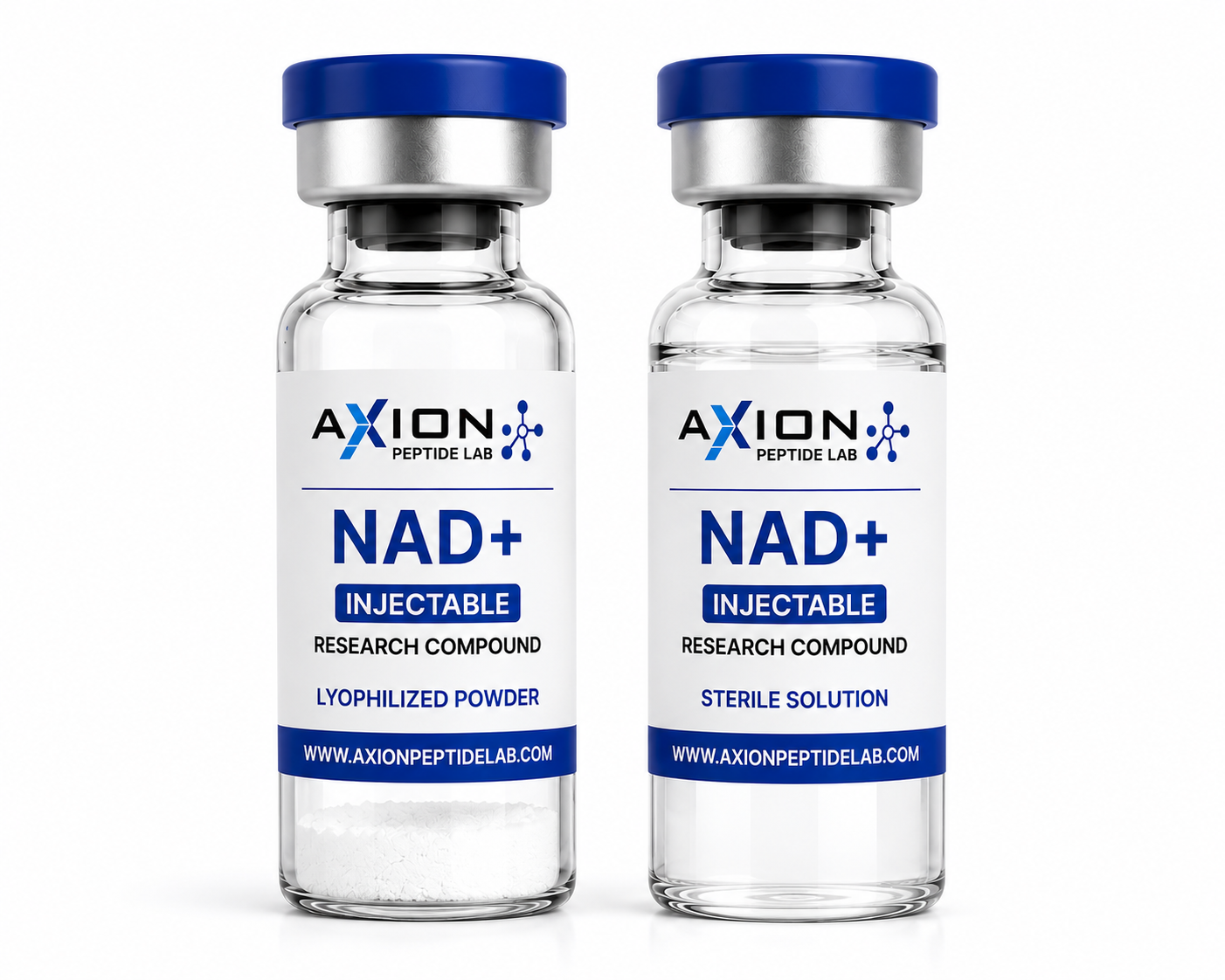
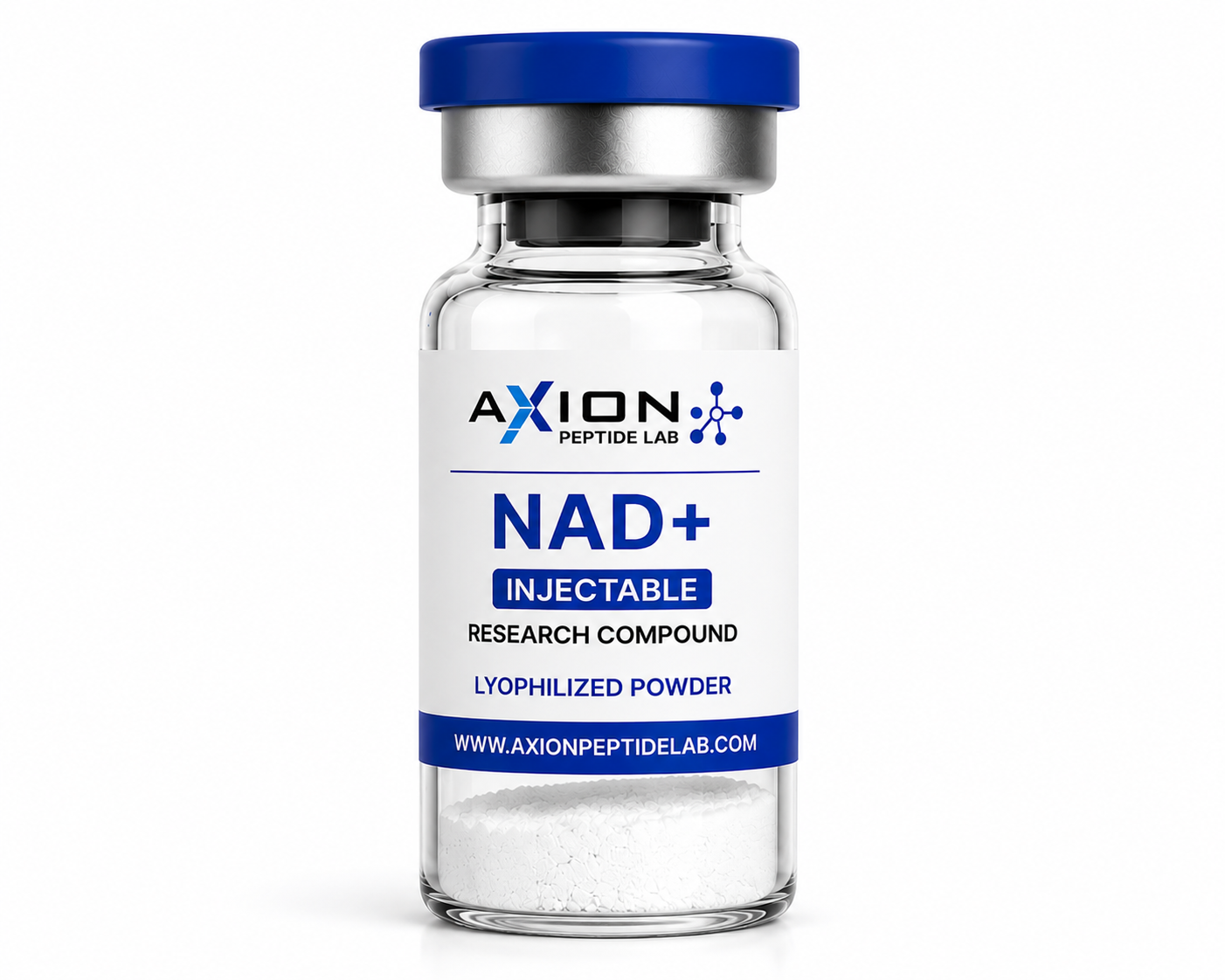
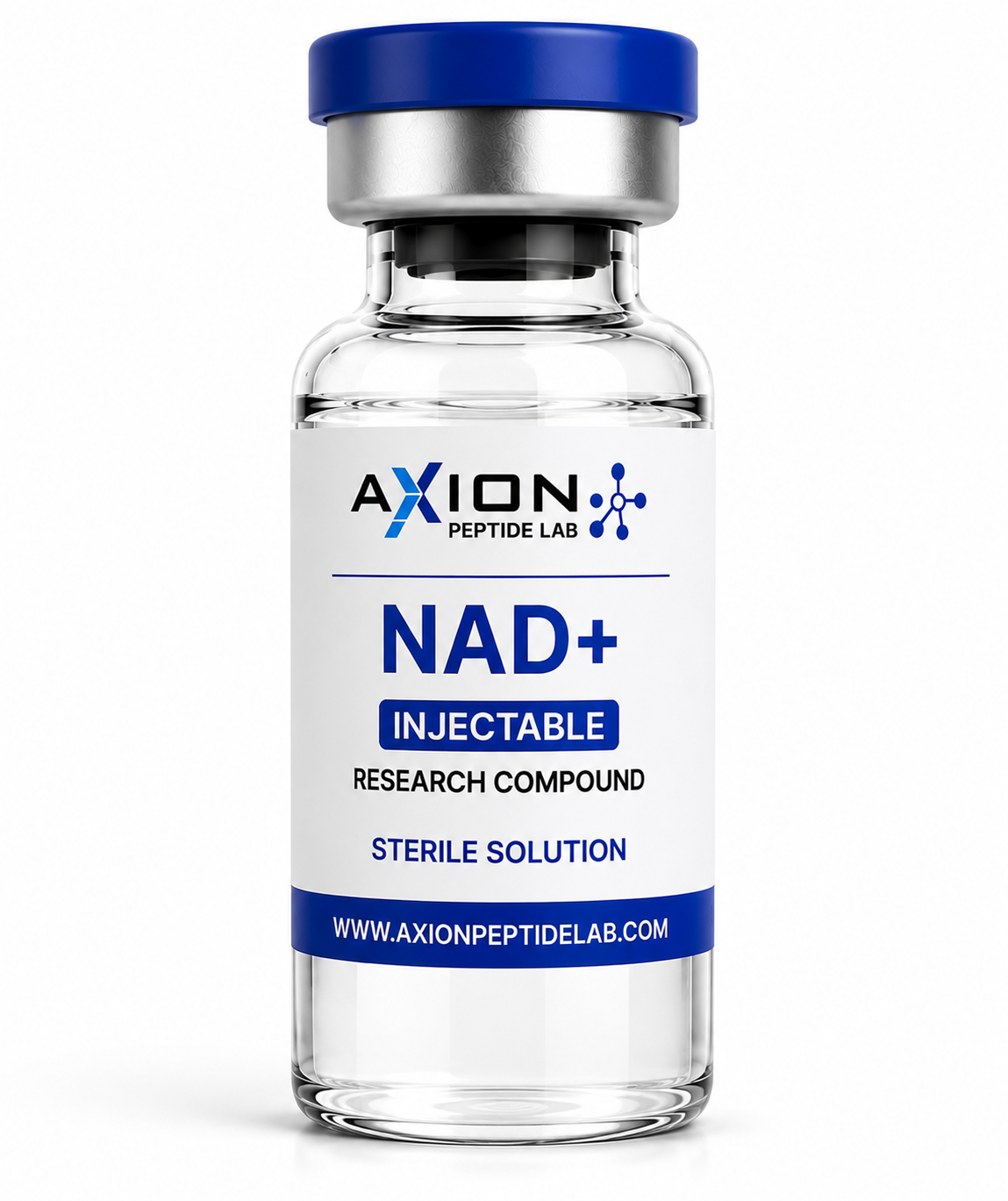
NAD+ Injectable Research Compound is a nicotinamide adenine dinucleotide research formulation intended for controlled biochemical, mitochondrial and analytical investigation. NAD+ is an essential cellular coenzyme studied in redox metabolism, NAD+/NADH chemistry, mitochondrial pathways and NAD+-dependent enzyme systems including sirtuins, PARPs and CD38.
“Injectable” describes the product presentation and is not an administration recommendation.
For Research Use Only – Not for human or veterinary consumption or administration.
$115.05 – $142.12Price range: $115.05 through $142.12
NAD+ Injectable Research Compound from Axion Peptide Lab is a specialised research formulation supplied for controlled laboratory, biochemical and analytical investigation. NAD+, or nicotinamide adenine dinucleotide, is a naturally occurring coenzyme found throughout living cells and plays a central role in cellular redox chemistry and energy metabolism.
Despite frequently appearing alongside peptides in research catalogues, NAD+ is not a peptide. It is a dinucleotide coenzyme composed of nucleotide components linked through phosphate groups.
NAD+ is widely investigated in molecular biology, mitochondrial research, cellular metabolism, enzymology, redox chemistry and biochemical signalling.
The term “injectable” describes the product presentation only and does not represent permission, instructions or a recommendation for administration to humans or animals.
For Research Use Only – Not for human or veterinary consumption or administration.
NAD+ stands for nicotinamide adenine dinucleotide, with the plus sign identifying its oxidised state.
NAD exists principally as an oxidised/reduced redox pair:
NAD+ ⇌ NADH
NAD+ accepts electrons during biochemical reactions and can be reduced to NADH. NADH can subsequently participate in reactions that regenerate NAD+.
This reversible relationship makes the NAD+/NADH system fundamental to cellular redox chemistry.
Researchers use NAD+ when investigating metabolic reactions, mitochondrial pathways, enzyme activity and cellular biochemical processes.
Correct product classification is important for scientific accuracy and SEO.
NAD+ should be described as a research compound, dinucleotide or coenzyme, rather than a research peptide.
Peptides consist of amino acids connected through peptide bonds. NAD+ instead contains nicotinamide- and adenine-containing nucleotide components connected through phosphate chemistry.
This structural distinction influences its chemical behaviour and biological functions.
For this reason, the recommended category for this product is Research Compounds rather than Research Peptides.
One of the most established functions of NAD+ is its participation in oxidation-reduction reactions.
Cells constantly transfer electrons between molecules during metabolism. NAD+ acts as an electron acceptor in numerous enzyme-catalysed reactions.
When NAD+ accepts reducing equivalents, it forms NADH.
Researchers may examine the NAD+/NADH relationship as part of experiments involving cellular redox balance, metabolic flux, enzyme activity and mitochondrial function.
The ratio between oxidised and reduced forms can provide useful experimental information about cellular metabolic conditions.
Mitochondria are central to cellular energy metabolism, making NAD+ particularly relevant to mitochondrial research.
NAD-linked reactions occur across major metabolic pathways associated with cellular energy production.
NADH generated through metabolic reactions can transfer reducing equivalents into mitochondrial oxidative phosphorylation.
Researchers may therefore incorporate NAD+ into controlled experimental systems investigating mitochondrial metabolism, respiratory processes, cellular bioenergetics and metabolic pathway interactions.
These established biochemical functions should not be interpreted as evidence that the Axion research material provides energy, performance or wellness benefits in humans.
NAD+ also participates in glycolysis, the biochemical pathway responsible for converting glucose-derived molecules through a sequence of enzyme-catalysed reactions.
During glycolysis, NAD+ participates in redox chemistry and is converted to NADH during specific reactions.
Researchers investigating glucose metabolism may examine changes in NAD+, NADH and related metabolites under controlled experimental conditions.
This provides opportunities to study relationships between redox balance and metabolic pathway activity.
The tricarboxylic acid cycle, also known as the citric acid or Krebs cycle, includes several NAD+-dependent reactions.
These reactions contribute to the formation of NADH, which subsequently participates in mitochondrial energy metabolism.
Laboratories investigating mitochondrial biochemistry may examine NAD-associated enzymes, substrates and metabolites to understand metabolic pathway behaviour.
NAD+ therefore provides a relevant research compound for experiments involving cellular respiration and mitochondrial metabolic networks.
Beyond redox chemistry, NAD+ acts as a required substrate for several enzyme families.
One prominent example is the sirtuin family.
Mammals possess multiple sirtuins, generally designated SIRT1 through SIRT7, located across different cellular compartments.
Because sirtuin activity depends on NAD+, researchers investigate relationships among NAD+ availability, sirtuin enzyme activity and downstream molecular events.
These studies may involve protein modification, transcriptional regulation, mitochondrial biology and cellular stress-response pathways.
This represents mechanistic laboratory research and should not be converted into claims that an NAD+ research product slows or reverses human ageing.
Poly(ADP-ribose) polymerases, commonly known as PARPs, represent another important family of NAD+-consuming enzymes.
PARP enzymes participate in ADP-ribosylation processes and are extensively investigated in molecular biology.
NAD+ serves as a substrate during these reactions.
Researchers may investigate relationships between NAD+ availability, PARP activity and cellular responses using controlled experimental models.
This makes NAD+ relevant to biochemical studies involving ADP-ribosylation and molecular signalling.
CD38 is another major NAD+-consuming enzyme studied in cellular and molecular research.
Research has examined how CD38 contributes to NAD+ metabolism and influences intracellular NAD-associated pathways.
Laboratories may investigate CD38 activity, NAD+ turnover and associated metabolites under defined experimental conditions.
Comparative experiments may also examine how different cellular environments affect NAD+ consumption.
Together with sirtuins and PARPs, CD38 demonstrates that NAD+ functions as more than an electron carrier.
NAD+ metabolism is highly organised within cells.
Important NAD+ pools exist in compartments including the cytoplasm, nucleus and mitochondria.
Researchers increasingly investigate how these pools are generated, maintained and exchanged.
Compartment-specific experiments can provide insight into how NAD+ metabolism differs across cellular environments.
This is particularly relevant when investigating mitochondrial biology, nuclear enzyme systems and metabolic regulation.
NAD+ and NADH represent oxidised and reduced forms of the nicotinamide adenine dinucleotide system.
Researchers should distinguish between them when designing experiments because they have different oxidation states and molecular properties.
The NAD+/NADH redox pair is widely used to investigate biochemical reaction pathways.
Experimental studies may measure changes in either compound to examine metabolic state, enzymatic reactions or redox conditions.
Correctly identifying the required form is therefore essential when selecting material for laboratory work.
NAD+ can be incorporated into analytical workflows designed to investigate identity, concentration, stability and degradation.
Depending on laboratory capabilities and experimental objectives, researchers may use chromatographic, spectrometric, biochemical or enzymatic techniques.
NAD+ may also be examined alongside NADH, nicotinamide and related metabolites.
Because NAD+ exists in different chemical and salt forms, exact molecular specifications should always be taken from documentation associated with the supplied product and batch.
Researchers should not assume that specifications from an unrelated NAD+ material automatically apply to the Axion product.
The liquid presentation provides researchers with a prepared format for appropriate laboratory workflows.
Researchers may use a solution-based format where their validated analytical or experimental protocol requires liquid research material.
However, the word “injectable” in the commercial product name should not be interpreted as a human-use direction.
Exact concentration, solvent composition, pH, preservatives, sterility status and container volume should be confirmed from product-specific documentation rather than assumed.
If sterility has not been specifically validated, the material should be described simply as a research solution.
Laboratory investigation may include:
These are scientific research categories rather than therapeutic indications.
Reproducible laboratory work requires accurate product documentation.
Researchers should record product identity, concentration, batch information, experimental conditions and analytical methods.
Available batch documentation should be reviewed before the compound is incorporated into an experimental workflow.
Certificate of Analysis and independent analytical testing availability can vary by product and batch.
Researchers requiring particular purity, concentration or formulation characteristics should verify those specifications from the relevant documentation.
NAD+ Injectable Research Compound should be handled only by appropriately trained personnel in controlled research environments.
The material should remain clearly labelled and separated from medicines, supplements, foods and consumer products.
Storage and handling procedures should follow the documentation supplied with the specific product.
Researchers are responsible for complying with applicable laws, institutional requirements and laboratory safety procedures.
Axion Peptide Lab does not provide personal dosing, injection, infusion, administration or self-experimentation instructions.
Axion Peptide Lab supplies research compounds and related laboratory materials for controlled scientific and analytical applications.
The NAD+ research format is intended to support appropriately designed laboratory studies involving cellular metabolism, redox systems, mitochondrial pathways and NAD+-dependent enzymes.
Researchers should review available specifications and supporting documentation to determine whether the product is suitable for their intended experimental workflow. NAD+ Injectable Research Compound
Qualified researchers, laboratories and scientific organisations can buy NAD+ Injectable Research Compound from Axion Peptide Lab for legitimate scientific and analytical investigation.
NAD+’s central position in cellular redox chemistry and its role as a substrate for NAD+-dependent enzymes make it an important compound across biochemical and molecular research.
The product must not be marketed as an anti-ageing injection, energy booster, wellness treatment, IV therapy or therapeutic product. NAD+ Injectable Research Compound
For Research Use Only – Not for human or veterinary consumption or administration.
It is a NAD+ research formulation supplied for controlled laboratory, biochemical and analytical investigation. “Injectable” identifies the commercial presentation and is not a human-use instruction.
NAD+ stands for nicotinamide adenine dinucleotide, with the plus sign identifying the oxidised form.
No. NAD+ is a dinucleotide coenzyme rather than a peptide. NAD+ Injectable Research Compound
NAD+ is the oxidised form, while NADH is the reduced form. Together they form an important cellular redox pair.
Research areas include redox chemistry, mitochondrial metabolism, cellular bioenergetics, sirtuin activity, PARP pathways, CD38 biology and analytical chemistry.
Yes. NAD+/NADH chemistry is fundamental to numerous metabolic reactions associated with mitochondrial energy metabolism. NAD+ Injectable Research Compound
Sirtuins are NAD+-dependent enzymes, making NAD+ availability and metabolism relevant to experimental studies of sirtuin activity.
Yes. PARP enzymes consume NAD+ as part of ADP-ribosylation reactions, making the compound relevant to controlled PARP-associated research. NAD+ Injectable Research Compound
No. This product is restricted to laboratory and analytical research. The terminology does not constitute instructions or approval for human or veterinary administration.
Qualified research customers can purchase NAD+ research material from Axion Peptide Lab for legitimate laboratory and analytical applications, subject to availability and applicable requirements.