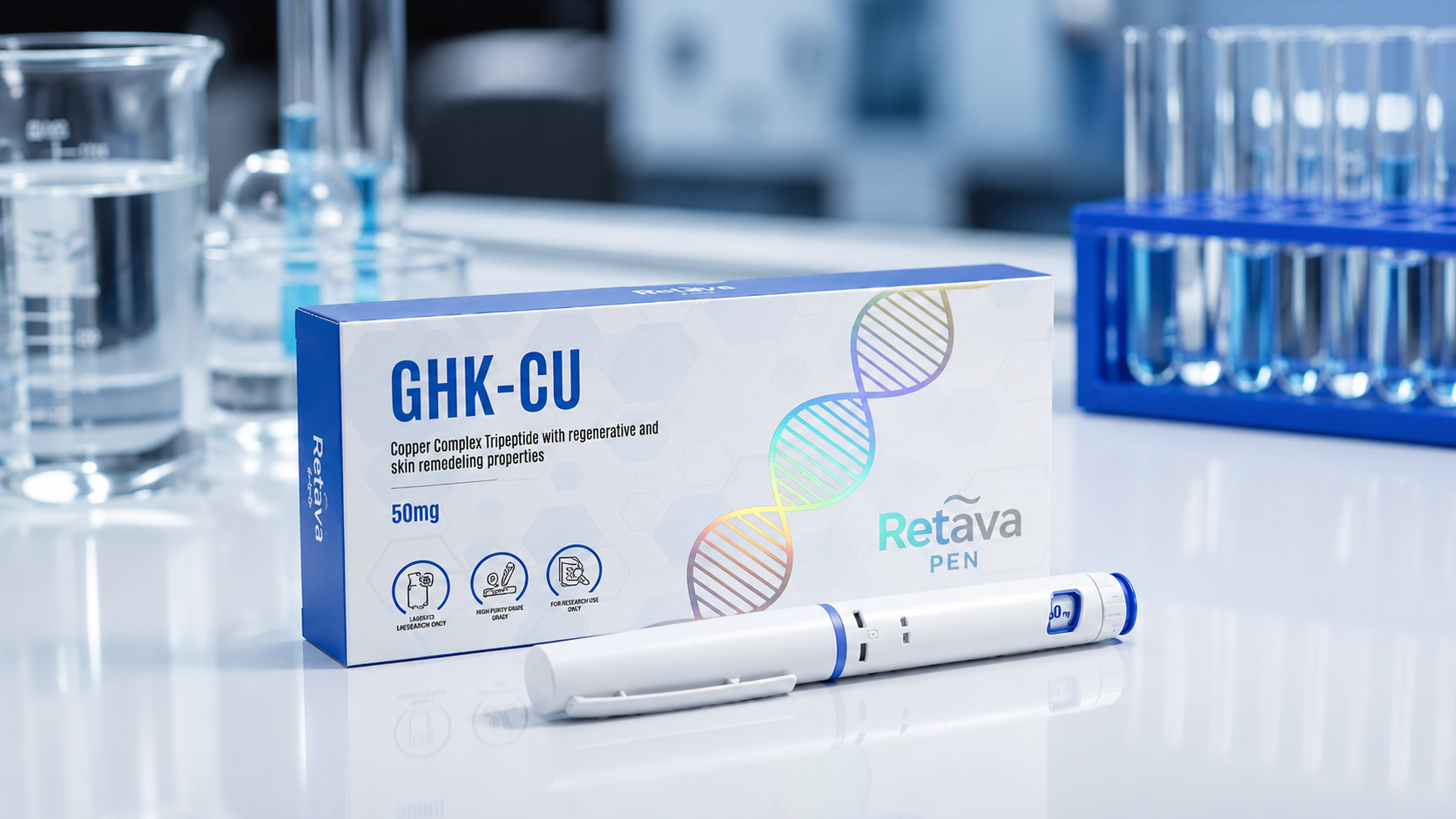
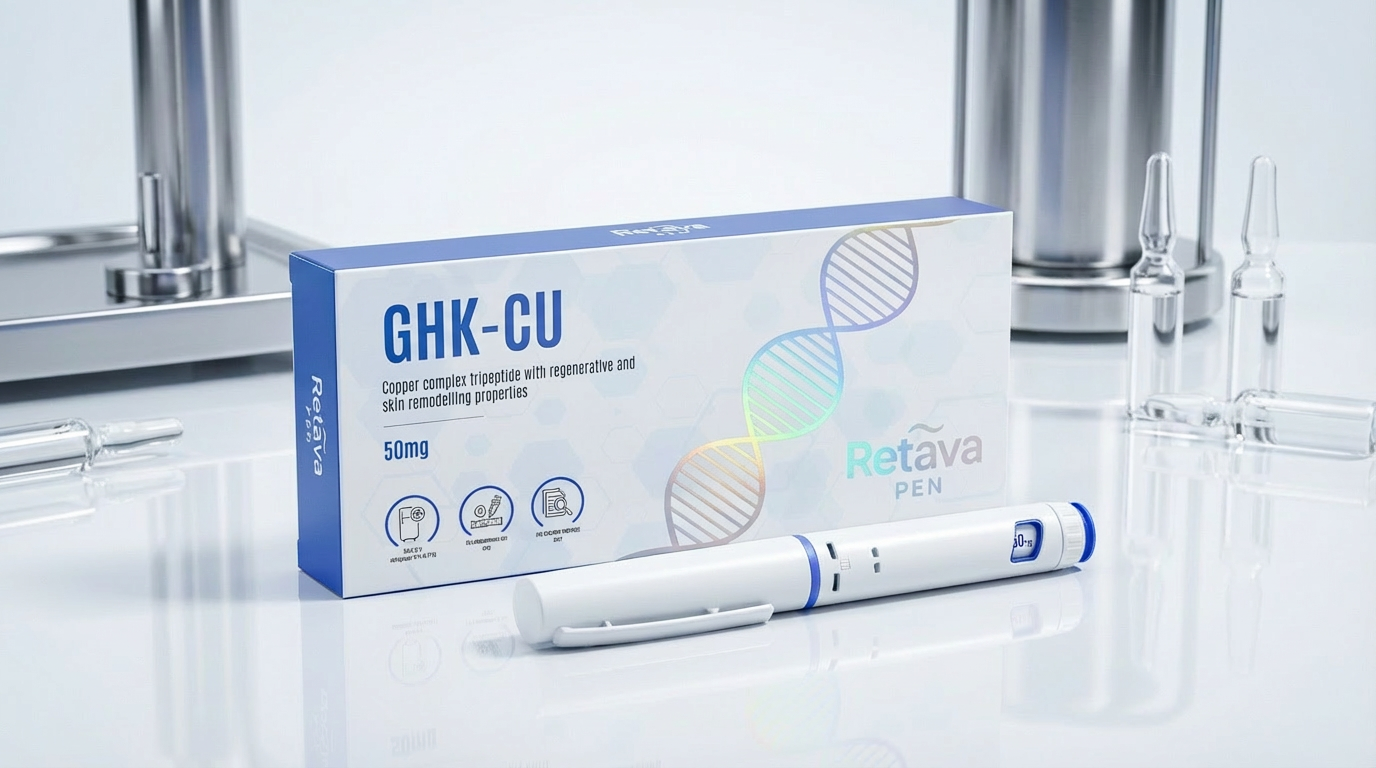
GHK-Cu 50mg is a copper peptide material intended for qualified laboratory research and development environments. GHK-Cu consists of the tripeptide glycyl-L-histidyl-L-lysine complexed with copper and has been extensively investigated across cellular, biochemical and tissue-remodeling research. The clearly identified 50mg format supports controlled experimental planning and laboratory inventory management. Researchers should verify current specifications and product documentation before use.
$122.33 Original price was: $122.33.$116.90Current price is: $116.90.
GHK-Cu 50mg is a copper peptide research material intended for controlled scientific, analytical, and laboratory R&D applications.
GHK-Cu is the copper complex of the naturally occurring tripeptide glycyl-L-histidyl-L-lysine, commonly abbreviated as GHK. Its ability to coordinate copper has made the molecule an established subject of biochemical, molecular, and peptide research.
Scientific investigations have examined GHK-Cu in areas including peptide-metal interactions, extracellular-matrix biology, cellular signaling, and related molecular processes.
Researchers evaluating GHK-Cu 50mg should review the specifications and documentation supplied with the actual material. Published research concerning the GHK-Cu molecule does not independently establish the characteristics of a specific laboratory product.
GHK is a small tripeptide composed of three amino acids: glycine, histidine, and lysine.
The peptide has an affinity for copper ions and can form the copper complex commonly abbreviated as GHK-Cu. Scientific literature describes GHK as a naturally occurring peptide found in biological fluids.
The copper-binding characteristics of GHK have received considerable scientific attention because they provide researchers with an interesting model for studying peptide-metal coordination.
Structural investigations have examined how copper interacts with different sites within the peptide, including regions associated with histidine and the peptide backbone.
These molecular characteristics make GHK-Cu relevant to research involving coordination chemistry, peptide biology, cellular signaling, and biochemical interactions.
The GHK-Cu 50mg format provides laboratories with a clearly identified stated quantity for inventory organization, experimental planning, and research recordkeeping.
A defined research format can help laboratory teams maintain consistent material records across multiple projects and experimental stages.
The 50mg designation describes the stated quantity of research material. Researchers should independently determine whether this format is suitable for their specific experimental objectives.
Quantity alone does not establish identity, purity, concentration after preparation, analytical performance, or suitability for a particular assay.
Those characteristics should be evaluated using applicable product documentation and laboratory-specific acceptance criteria.
GHK-Cu has been investigated across several areas of biological and biochemical research.
Published laboratory and preclinical studies have examined topics including extracellular-matrix remodeling, fibroblast biology, collagen-associated processes, glycosaminoglycan synthesis, oxidative-stress pathways, and cellular signaling.
These areas of investigation help explain why copper peptides continue to attract scientific interest across molecular and cellular research.
Researchers should interpret individual findings within the methodology and experimental model used in the original study.
Results obtained from cell culture, laboratory models, or animal research should not automatically be interpreted as demonstrating the same outcome in humans.
One established area of scientific interest surrounding GHK-Cu concerns the extracellular matrix.
Research has examined its relationship with collagen-associated processes, glycosaminoglycans, fibroblast activity, and mechanisms involved in tissue remodeling.
The extracellular matrix provides structural and biochemical support around cells and is continually modified through synthesis, organization, and degradation.
Studying molecules associated with these processes can help researchers better understand the biochemical mechanisms involved in matrix regulation.
GHK-Cu consequently remains an interesting research subject for laboratories investigating connections between peptide signaling, copper coordination, and extracellular-matrix biology.
The interaction between GHK and copper is fundamental to the scientific identity of the GHK-Cu complex.
Copper is an essential trace element involved in numerous biological processes. At the same time, uncontrolled copper chemistry can participate in oxidative reactions.
GHK’s ability to coordinate copper has therefore attracted scientific interest in research concerning metal binding, redox chemistry, peptide structure, and molecular signaling.
The GHK-Cu 50mg research format may be relevant to appropriately designed investigations examining copper-peptide interactions under controlled laboratory conditions.
Researchers should establish suitable controls, analytical methodologies, and acceptance criteria for their individual experimental objectives.
GHK-Cu 50mg provides a clearly identified research format for laboratories investigating how peptide structures and amino-acid residues interact with copper under controlled experimental conditions.
Product documentation is an important consideration when evaluating any laboratory research material.
Researchers should review information supplied with the actual product rather than assuming that specifications published for another GHK-Cu material apply to every laboratory product.
Where available, laboratories may record material identity, stated quantity, batch or lot information, receiving information, and relevant analytical details.
Maintaining accurate records can improve traceability when experiments are repeated or compared over time.
Researchers should verify which documents accompany the current product rather than assuming that a particular certificate, purity percentage, analytical technique, or testing standard is provided.
Before incorporating GHK-Cu 50mg into laboratory work, researchers should determine whether the documented characteristics correspond with their experimental requirements.
The product name and stated quantity alone cannot establish suitability for a particular research application.
Relevant considerations may include material identity, analytical characteristics, available documentation, experimental methodology, research model, and laboratory-specific acceptance criteria.
Scientific literature can provide valuable background concerning the GHK-Cu molecule.
However, published research cannot independently verify the composition or characteristics of a specific commercially supplied laboratory material.
Maintaining this distinction supports more accurate experimental planning and responsible scientific communication.
Research materials should be handled according to appropriate laboratory procedures.
Access should be limited to suitably trained personnel, and research materials should remain clearly identified throughout storage and experimental activities.
Researchers should consult documentation supplied with the actual product when determining appropriate storage and handling conditions.
Generalized instructions from unrelated products or websites should not replace product-specific information.
Laboratories should also follow their established institutional procedures for receiving, recording, storing, and handling research materials.
Accurate recordkeeping can contribute to organized and reproducible scientific work.
Laboratories working with GHK-Cu 50mg may record product identifiers, stated quantity, receiving information, and batch or lot details where supplied.
Researchers can then associate experimental observations with the specific material used during an investigation.
This becomes particularly useful during longer research projects involving repeated experiments or multiple material lots.
Consistent documentation also helps distinguish product-specific observations from general findings reported elsewhere in scientific literature.
GHK-Cu has an established scientific literature, but individual claims should always reflect the strength and type of evidence available.
Laboratory, cell-culture, animal, and human research represent different categories of scientific evidence.
Findings from one experimental category should not automatically be presented as established results in another.
Researchers should describe GHK-Cu according to the context and limitations of the studies being discussed rather than transforming preliminary findings into unsupported therapeutic conclusions.
Product-specific statements should likewise be based on documentation associated with the actual material rather than assumptions derived solely from the molecular name.
GHK-Cu 50mg offers researchers a clearly identified copper peptide format for appropriately designed laboratory investigations.
Its combination of a compact tripeptide sequence and copper coordination makes GHK-Cu an interesting subject across molecular, biochemical, analytical, and cellular research.
Researchers should verify current product specifications before beginning experimental work and determine whether the material satisfies their laboratory requirements.
The stated product quantity should be interpreted as a material specification rather than evidence of performance or suitability for a particular research outcome.
GHK-Cu 50mg is a stated 50mg research format of the copper peptide GHK-Cu intended for appropriately designed scientific and laboratory applications.
GHK refers to glycyl-L-histidyl-L-lysine, a peptide composed of three amino acids. GHK-Cu refers to the copper complex formed when GHK coordinates a copper ion.
Researchers have investigated GHK-Cu across areas including copper coordination, extracellular-matrix biology, cellular signaling, peptide-metal interactions, and redox-related processes.
Yes. GHK-Cu is commonly described as a copper peptide because the GHK tripeptide forms a coordination complex with copper.
The 50mg designation identifies the stated amount of material in this research format. It should not be interpreted as dosing or administration guidance.
GHK consists of glycine, histidine, and lysine and is commonly written as glycyl-L-histidyl-L-lysine.
Researchers should review current product specifications, identity information, available analytical documentation, storage information, and applicable laboratory requirements.
Researchers should follow the product-specific storage information supplied with the actual material rather than assuming recommendations for another formulation apply.
Batch or lot traceability can help researchers identify which material was associated with a particular experiment and support consistent laboratory documentation.
Research material should be handled by appropriately trained laboratory personnel using established institutional and scientific procedures.
Research Notice: Product information should be interpreted within an appropriate laboratory research context. Researchers should review current product documentation and applicable institutional requirements before experimental use.