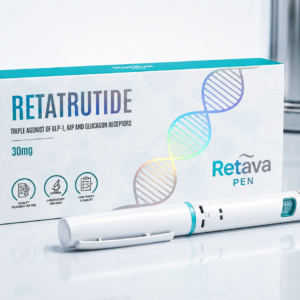
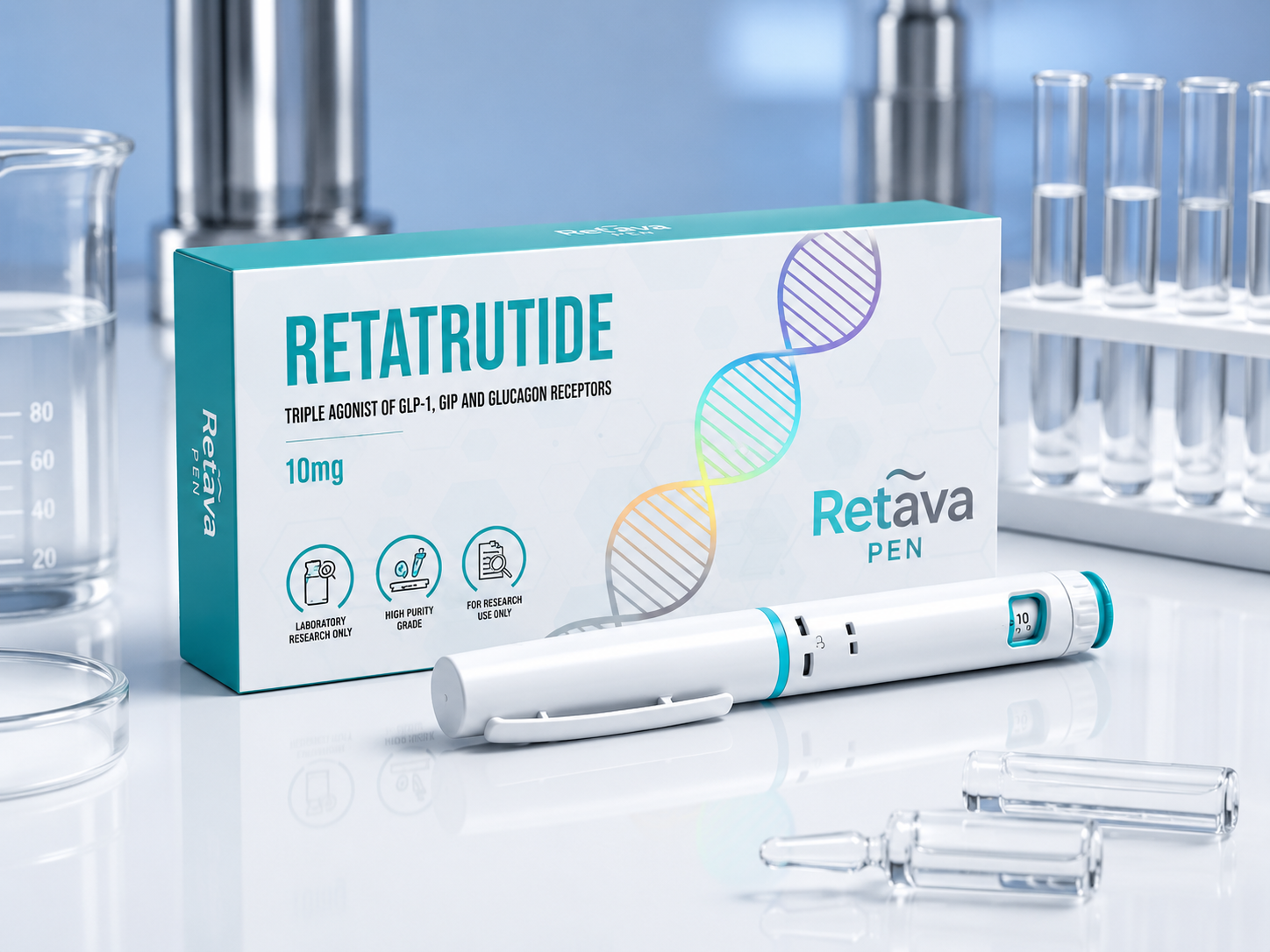
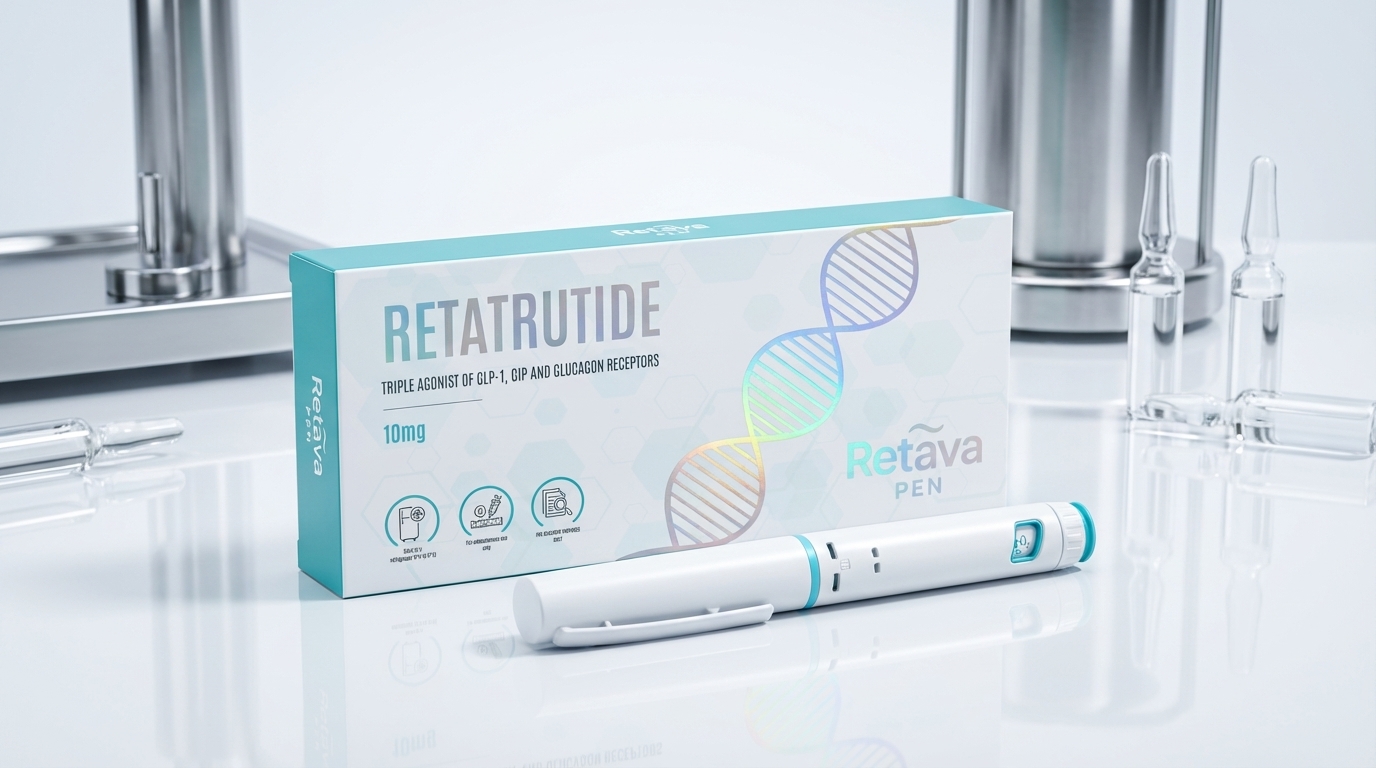

Retatrutide 10 mg is a peptide research material intended for controlled laboratory, analytical, and scientific research applications. Retatrutide (LY3437943) is an investigational triple receptor agonist studied for activity at the GIP, GLP-1, and glucagon receptors.
Researchers interested in Retatrutide 10 mg should evaluate the specifications, documentation, storage information, and testing information supplied with the individual research product.
For laboratory research purposes only. Not approved for human consumption, diagnosis, treatment, or therapeutic use.
$176.98 Original price was: $176.98.$175.60Current price is: $175.60.
Retatrutide has become a prominent subject within metabolic and peptide research because of its distinctive triple-receptor pharmacology. Also identified in scientific literature as LY3437943, retatrutide has been developed as a single molecule capable of agonist activity at three metabolically relevant receptors: glucose-dependent insulinotropic polypeptide (GIP), glucagon-like peptide-1 (GLP-1), and glucagon receptors.
The Retatrutide 10 mg research product available through Axion Peptide Lab is intended to support controlled laboratory and analytical research.
Researchers should distinguish between published findings concerning the retatrutide molecule and the characteristics of any individual research product. Published clinical findings do not independently establish the identity, concentration, purity, or performance of material supplied by a third-party laboratory supplier.
Retatrutide is an investigational peptide also known by the development identifier LY3437943.
Its primary scientific distinction is its activity across three receptor systems. Retatrutide is described in peer-reviewed literature as an agonist of the GIP receptor, GLP-1 receptor, and glucagon receptor.
This triple-agonist mechanism has generated substantial scientific interest and differentiates retatrutide from compounds that primarily target one or two incretin-related receptor pathways.
Retatrutide remains investigational. Researchers should therefore avoid interpreting experimental or clinical findings as evidence that commercially available research materials are approved medicines.
Scientific interest in retatrutide centers largely on its multi-receptor mechanism.
GIP and GLP-1 are incretin hormones associated with metabolic signaling, while glucagon participates in glucose and energy metabolism. Combining activity across these receptors within a single molecule provides researchers with an interesting model for examining multi-pathway receptor signaling.
Published research has investigated retatrutide in metabolic contexts, including obesity and type 2 diabetes. Research programs have also investigated additional obesity-associated conditions.
These areas describe the scientific literature surrounding the molecule and should not be interpreted as intended uses for this Retatrutide 10 mg laboratory product.
Retatrutide is sometimes informally described online using terms such as “GLP-3.” This terminology can be misleading.
There is no separate GLP-3 receptor involved in retatrutide’s established mechanism. A scientifically more accurate description is a GIP, GLP-1, and glucagon receptor triple agonist.
Maintaining accurate terminology is particularly important for laboratory suppliers, researchers, and scientific organizations communicating information about investigational compounds.
Retatrutide has progressed through extensive clinical investigation.
A randomized Phase 2 obesity trial published in the New England Journal of Medicine evaluated multiple retatrutide doses. Subsequent Phase 3 development has continued evaluating the investigational molecule across obesity, type 2 diabetes, and related areas.
These studies are important when understanding the scientific background of retatrutide, but clinical study results should not be used to imply that a third-party research product provides the same characteristics or outcomes.
Product-specific characteristics should instead be established through appropriate analytical documentation and testing applicable to the actual material supplied.
The 10 mg format provides researchers with a clearly identified quantity for appropriately designed laboratory protocols.
Depending on the research setting and institutional requirements, researchers may evaluate peptide identity, physicochemical properties, receptor interactions, analytical characteristics, or other experimental parameters.
Experimental design, preparation, handling, concentration calculations, controls, and analytical methodology should always be determined by qualified researchers according to their laboratory protocols.
Axion Peptide Lab does not present Retatrutide 10 mg as an approved pharmaceutical product.
When selecting any peptide research material, researchers should consider more than the compound name printed on the product.
Important considerations can include:
Where analytical documentation is supplied, researchers should examine the documentation associated specifically with the batch or lot being purchased rather than assuming that published literature validates a third-party product.
Peptides can be sensitive to environmental conditions, including temperature, moisture, light, and repeated handling.
Researchers should follow the storage and handling conditions provided with the specific Retatrutide 10 mg product and its accompanying documentation. Laboratory materials should remain clearly labeled and appropriately secured within a controlled research environment.
Avoid substituting generalized online storage advice for product-specific documentation where the supplier provides defined storage requirements.
Retatrutide remains an investigational compound and has not been approved by the FDA for public therapeutic use.
Retatrutide 10 mg supplied as a research material is intended strictly for legitimate laboratory, analytical, and scientific research. It is not intended for human consumption, self-administration, veterinary use, diagnosis, prevention, or treatment of any disease or medical condition.
Nothing on this product page should be interpreted as medical advice or instructions for administration.
Retatrutide 10 mg refers to a research-format quantity of the investigational peptide retatrutide, also identified as LY3437943. The product described here is intended for laboratory research rather than therapeutic use.
Scientific literature describes retatrutide as a triple agonist with activity at the GIP, GLP-1, and glucagon receptors.
Not exactly. Although retatrutide has GLP-1 receptor activity, it also targets GIP and glucagon receptors, giving it a triple-receptor mechanism.
No. “GLP-3” is an informal term sometimes used online. Retatrutide is more accurately described as a GIP, GLP-1, and glucagon receptor triple agonist.
No. Retatrutide remains investigational and is not currently FDA-approved for public therapeutic use.
LY3437943 is the development identifier associated with retatrutide in scientific and clinical research.
This product is positioned for legitimate laboratory, analytical, and scientific research applications only and not for human or veterinary use.
Researchers should follow the storage conditions stated on the product documentation and packaging supplied with the specific material. Peptide storage requirements can vary according to formulation and physical state.
This research product is not an approved weight-loss medication and should not be promoted or used for self-treatment. Published clinical research into retatrutide does not convert third-party research material into an approved medicine.
Researchers considering material from Axion Peptide Lab should review the product listing, specifications, available analytical documentation, research-use restrictions, and other information supplied for the specific product before ordering.