
Tirzepatide Peptide for Sale for Research | Complete Guide
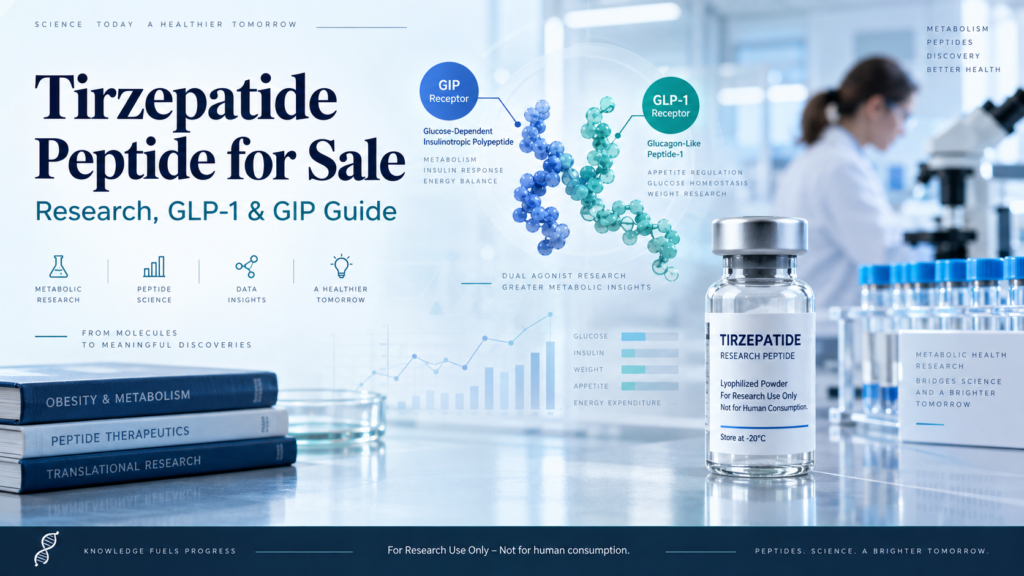
What Are Peptides and How Are They Connected to Weight Regulation?
Peptides are short chains of amino acids linked together by peptide bonds. They occur naturally throughout biological systems and can act as hormones, signalling molecules and regulators of cellular activity.
Scientists also produce synthetic peptides in laboratory settings to study receptor behaviour, molecular interactions and biochemical pathways.
This is why peptides are important across fields such as endocrinology, metabolism, pharmacology and molecular biology.
For researchers interested in tirzepatide peptide for sale for legitimate laboratory use, understanding basic peptide biology is important because tirzepatide belongs to a broader class of peptide-based compounds studied for their interaction with metabolic receptors.
What Are Peptides?
A peptide forms when amino acids are joined together in a specific sequence.
The sequence and structure of a peptide influence how it behaves, including which receptors it may bind to and what signalling pathways it may activate.
Peptides differ from proteins mainly in size and structural complexity. Proteins are generally larger and may contain hundreds or thousands of amino acids folded into complex structures, while peptides are usually shorter chains.
Peptides can function as:
- hormones
- neurotransmitter-related molecules
- signalling compounds
- receptor ligands
- metabolic regulators
- research tools
Not all peptides perform the same role.
Some are involved in metabolic signalling, while others may be studied in completely different areas such as immune function, connective tissue, neurological signalling or mitochondrial biology.
Natural Peptides vs Synthetic Peptides
Naturally occurring peptides are produced by living organisms.
Synthetic peptides are created using laboratory methods.
Scientists may synthesize a peptide to reproduce a naturally occurring molecule or modify its structure to investigate how changes affect:
- receptor affinity
- stability
- duration of activity
- molecular interactions
- signalling strength
- biological response
Synthetic peptide research has played an important role in the development of compounds targeting specific metabolic pathways.
Tirzepatide is an example of a synthetic peptide-based compound designed to interact with more than one metabolic receptor.
How Are Peptides Connected to Weight Regulation?
The connection between peptides and weight regulation comes primarily from specific peptide hormones involved in appetite, digestion, glucose regulation and energy balance.
The body continuously exchanges metabolic information between the:
- gastrointestinal tract
- pancreas
- brain
- liver
- adipose tissue
- other metabolic tissues
Peptide hormones help carry some of these signals.
After food is consumed, specialised cells in the gastrointestinal tract can release hormones that communicate with the pancreas and nervous system.
These signals can contribute to changes in:
- hunger
- satiety
- food intake
- glucose levels
- insulin secretion
- digestion
- nutrient storage
- energy utilisation
This complex communication network explains why peptide-based metabolic pathways have become major targets in modern weight-regulation research.
Appetite and Satiety
Appetite is influenced by several interacting systems rather than by a single hormone.
The brain receives information about nutrient intake and energy availability from the gastrointestinal tract and other tissues.
Some peptide hormones can contribute to satiety signalling, which helps the nervous system register feelings of fullness after food intake.
Researchers therefore examine how specific receptor pathways influence:
- hunger signalling
- satiety
- food-seeking behaviour
- meal size
- gastrointestinal activity
GLP-1 signalling has received particularly significant attention in this area.
Glucose Regulation
Metabolic peptides are also involved in glucose regulation.
Following food intake, the body needs to coordinate the release and activity of hormones involved in maintaining glucose balance.
Two especially important peptide hormones are:
GLP-1 — glucagon-like peptide-1
and
GIP — glucose-dependent insulinotropic polypeptide
Both are classified as incretin hormones.
These hormones are released in response to nutrients and participate in glucose-dependent insulin signalling.
Their biological roles helped create the scientific foundation for compounds such as semaglutide and tirzepatide.
Why Tirzepatide Is Relevant to Peptide Research
Tirzepatide is particularly interesting because it does not target only one incretin pathway.
Instead, it activates both:
GIP receptors
and
GLP-1 receptors
This dual receptor activity allows researchers to study how two related metabolic pathways may interact.
Scientific research involving tirzepatide has examined areas such as:
- glucose regulation
- appetite signalling
- obesity
- body-weight regulation
- metabolic health
- cardiometabolic outcomes
This dual mechanism distinguishes tirzepatide from semaglutide, which primarily targets GLP-1 receptors.
It also distinguishes tirzepatide from investigational retatrutide, which targets three receptor systems.
Why “Peptides for Weight Loss” Is a Broad Term
The phrase peptides for weight loss is widely searched online, but scientifically it can oversimplify peptide biology.
Not every peptide affects appetite, metabolism or body weight.
Only certain peptide hormones and receptor systems are directly involved in current obesity and metabolic research.
Relevant examples include:
- GLP-1
- GIP
- glucagon
- related receptor agonists
- multi-receptor compounds
For this reason, researchers should focus on the mechanism and evidence behind each individual compound rather than treating all peptides as equivalent.
Research Peptides vs Medicines
Another essential distinction is the difference between laboratory research peptides and licensed pharmaceutical medicines.
A research peptide is supplied for laboratory, analytical or scientific investigation.
A licensed medicine has undergone regulatory review for specific medical uses.
A compound may exist in both scientific research and pharmaceutical contexts, but that does not make the products interchangeable.
For example, research-use tirzepatide should not automatically be treated as equivalent to regulated prescription products such as Mounjaro or Zepbound.
Products supplied through AxionPeptideLab.com are intended for legitimate laboratory, analytical and scientific research.
For Research Use Only – Not for human consumption.
Understanding this distinction is important before exploring how GLP-1 and GIP pathways work and why tirzepatide has become such an important compound in metabolic peptide research.
How Metabolic Peptide Pathways Work: GLP-1 and GIP
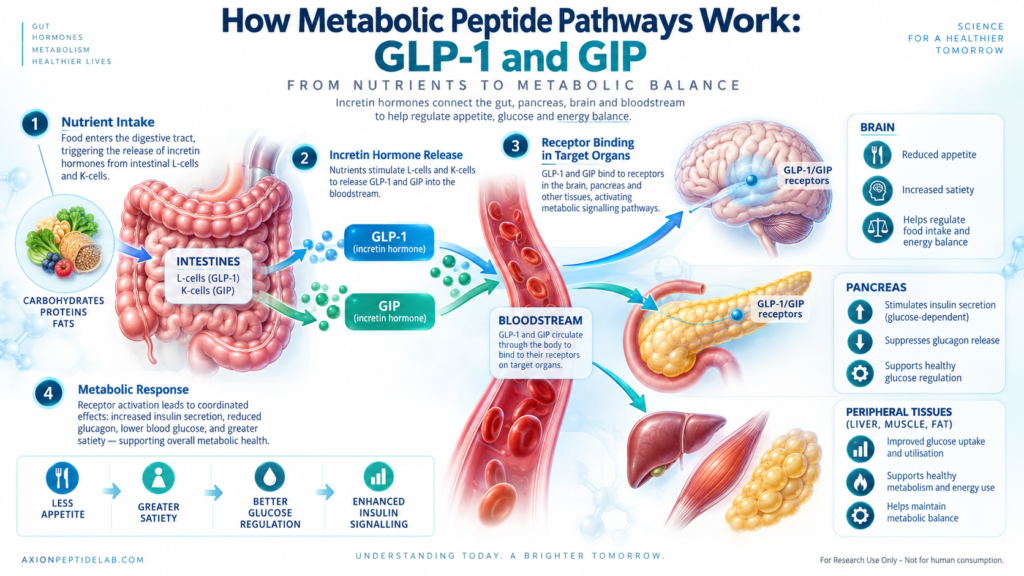
Metabolic peptide pathways are biological communication systems that help coordinate appetite, digestion, glucose regulation, insulin secretion and energy balance. These pathways depend on peptide hormones binding to specific receptors located on cells throughout the body.
For researchers studying tirzepatide peptide and related metabolic compounds, two of the most important pathways are GLP-1 and GIP.
Both hormones belong to a group known as incretins, which are released from the gastrointestinal tract after nutrient intake. Their activity helps connect what happens in the gut with responses in the pancreas, brain and other metabolic tissues.
Understanding these two pathways is essential because tirzepatide was specifically designed to activate both the GIP receptor and GLP-1 receptor.
How Peptide Receptor Signalling Works
Peptide hormones generally produce their effects by binding to receptors.
A simplified metabolic signalling process looks like this:
Nutrient intake → peptide hormone release → receptor binding → intracellular signalling → metabolic response
After nutrients enter the gastrointestinal tract, specialised cells can release peptide hormones into the bloodstream.
Those hormones travel to tissues containing compatible receptors.
When a peptide binds to its receptor, it triggers biochemical signalling inside the cell. These signals may then influence hormone secretion, appetite-related pathways, glucose regulation or other metabolic processes.
The response depends on several factors, including:
- which receptor is activated
- where the receptor is located
- how strongly the compound activates it
- how long receptor activation lasts
- which downstream signalling pathways are triggered
This receptor specificity is one reason researchers study individual peptide compounds separately rather than treating all peptides as interchangeable.
The Gut-Brain-Pancreas Connection
Metabolic regulation involves constant communication between several organs.
The gut senses incoming nutrients and releases hormones.
The pancreas helps regulate insulin and glucagon secretion.
The brain receives signals related to hunger, fullness and nutrient availability.
Other tissues, including the liver and adipose tissue, participate in nutrient storage and energy metabolism.
Peptide hormones help connect these systems.
This communication network is often discussed as part of the gut-brain axis.
In metabolic research, scientists study how signals originating in the gastrointestinal tract can influence both pancreatic hormone responses and neural pathways associated with appetite.
This is particularly relevant to incretin hormones such as GLP-1 and GIP.
What Is the Incretin Effect?
The incretin effect describes the enhanced insulin response that occurs when glucose or nutrients are consumed orally compared with an equivalent glucose stimulus delivered directly into the bloodstream.
Part of this difference is caused by hormones released from the gastrointestinal tract.
The two principal incretin hormones are:
GLP-1 — glucagon-like peptide-1
and
GIP — glucose-dependent insulinotropic polypeptide
Both can enhance insulin secretion in a glucose-dependent manner.
This means their insulin-related effects are linked to glucose availability.
The incretin system therefore provides an important connection between nutrient intake and pancreatic hormone signalling.
What Is GLP-1?
GLP-1 is a naturally occurring peptide hormone produced primarily by specialised intestinal cells after food intake.
It binds to the GLP-1 receptor, often abbreviated as GLP-1R.
GLP-1 signalling has been studied in connection with:
- glucose-dependent insulin secretion
- glucagon regulation
- appetite
- satiety
- gastrointestinal activity
- food intake
- gut-brain communication
GLP-1 has attracted considerable scientific attention because its receptor is expressed in multiple tissues involved in metabolic regulation.
Naturally occurring GLP-1 is broken down relatively quickly in the body.
This helped drive research into synthetic GLP-1 receptor agonists designed to remain active longer and provide more sustained receptor signalling.
Semaglutide is one well-known example of this approach.
What Is GIP?
GIP is another naturally occurring incretin hormone released in response to nutrient intake.
It binds to the GIP receptor, or GIPR.
GIP has been studied in relation to:
- glucose-dependent insulin secretion
- pancreatic beta-cell signalling
- nutrient sensing
- lipid metabolism
- adipose-tissue biology
- broader metabolic regulation
Although GIP and GLP-1 share several biological functions, they interact with different receptors and can produce different effects across tissues.
This is why GIP is not simply another name for GLP-1.
Researchers are particularly interested in understanding whether GIP receptor activation can complement GLP-1 receptor signalling.
GLP-1 vs GIP
A simple comparison helps show why the two pathways are studied together:
| Feature | GLP-1 | GIP |
| Full name | Glucagon-like peptide-1 | Glucose-dependent insulinotropic polypeptide |
| Main receptor | GLP-1 receptor | GIP receptor |
| Released after nutrients | Yes | Yes |
| Incretin hormone | Yes | Yes |
| Supports glucose-dependent insulin signalling | Yes | Yes |
| Studied in appetite regulation | Strong research interest | Growing research interest |
| Used in multi-receptor research | Yes | Yes |
Their overlapping but distinct physiological roles provided the scientific basis for developing compounds capable of activating both receptor systems.
Why Researchers Study GLP-1 and GIP Together
For many years, metabolic drug development focused heavily on GLP-1 receptor activation.
Researchers later began asking whether activating GIP and GLP-1 receptors simultaneously could produce a different metabolic response.
This strategy is known as dual agonism.
The scientific questions include:
- whether the pathways act synergistically
- how combined signalling affects appetite
- how glucose regulation changes
- whether insulin-related responses differ
- whether body-weight outcomes change
- whether adverse-effect profiles differ from GLP-1-only approaches
Tirzepatide is one of the most important examples of this research strategy.
How Tirzepatide Fits Into These Pathways
Tirzepatide is designed to activate both:
GIP receptor + GLP-1 receptor
This makes it a dual GIP/GLP-1 receptor agonist.
Rather than simply reproducing the effect of one naturally occurring hormone, tirzepatide combines activity at two receptor systems within one molecule.
This mechanism has made tirzepatide particularly important in research involving:
- glucose metabolism
- appetite signalling
- food intake
- obesity
- weight regulation
- cardiometabolic health
From a research perspective, tirzepatide helps scientists examine how coordinated activation of two incretin pathways differs from single-receptor GLP-1 agonism.
Single, Dual and Triple Receptor Research
Tirzepatide also sits within a broader progression in metabolic peptide science.
Single agonist:
Semaglutide → GLP-1 receptor
Dual agonist:
Tirzepatide → GIP + GLP-1 receptors
Triple agonist:
Retatrutide → GIP + GLP-1 + glucagon receptors
This progression demonstrates how scientists are exploring increasingly complex combinations of metabolic receptor activity.
However, more receptor targets do not automatically mean greater effectiveness or safety.
Those conclusions require controlled laboratory studies, clinical trials and regulatory evaluation.
Why These Pathways Matter for Tirzepatide Research
Understanding GLP-1 and GIP provides the biological foundation for understanding why tirzepatide is different from older single-receptor compounds.
Researchers studying tirzepatide may investigate questions such as:
- how strongly it activates each receptor
- how GIP and GLP-1 signalling interact
- how receptor activity changes over time
- how different tissues respond
- how metabolic signalling compares with GLP-1-only compounds
- how structural modifications influence receptor behaviour
These questions help explain why tirzepatide peptide research has become an important area of metabolic science.
Researchers interested in studying GLP-1, GIP and dual-receptor signalling can explore appropriate laboratory research materials through AxionPeptideLab.com.
For Research Use Only – Not for human consumption.
Tirzepatide Peptide Research: Mechanism, Uses in Research & Sourcing
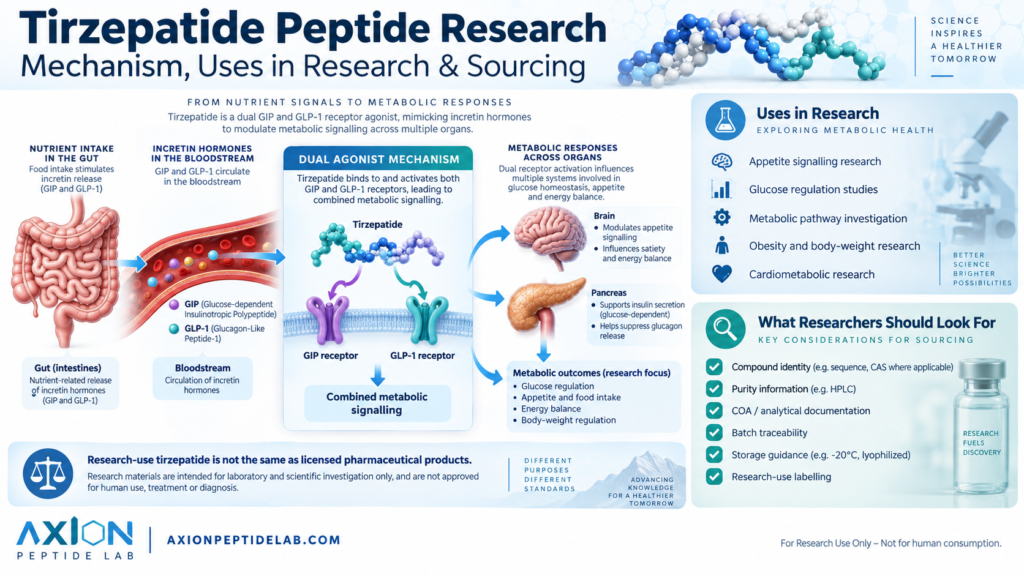
Tirzepatide has become one of the most discussed compounds in modern metabolic peptide research because it combines activity at two important incretin receptors: the GIP receptor and the GLP-1 receptor.
For researchers searching for tirzepatide peptide for sale in a legitimate laboratory context, it is important to understand what tirzepatide is, how its dual-receptor mechanism works, what clinical research has examined, and how research-use material differs from regulated medicines such as Mounjaro and Zepbound.
Tirzepatide should not simply be viewed as another GLP-1 compound. Its dual activity gives it a distinct pharmacological profile and has made it an important model for studying how multiple metabolic pathways can be activated within a single molecule.
What Is Tirzepatide?
Tirzepatide is a synthetic peptide-based compound designed to activate two metabolic receptors:
GIP receptor — glucose-dependent insulinotropic polypeptide receptor
and
GLP-1 receptor — glucagon-like peptide-1 receptor
Because it activates both pathways, tirzepatide is commonly described as a dual GIP/GLP-1 receptor agonist.
Both GLP-1 and GIP are naturally occurring incretin hormones released in response to nutrient intake.
Their biological activity helps connect the digestive system with pancreatic hormone signalling and other metabolic responses.
Tirzepatide combines activity at both receptor systems within one molecule, giving researchers a way to investigate how dual incretin signalling differs from GLP-1 receptor agonism alone.
How Does Tirzepatide Work?
Tirzepatide binds to both GIP and GLP-1 receptors.
Once the receptors are activated, intracellular signalling pathways are triggered.
These pathways are involved in several aspects of metabolic biology, including:
- glucose-dependent insulin signalling
- glucagon-related regulation
- appetite signalling
- satiety
- food intake
- gastrointestinal function
- nutrient handling
- broader metabolic regulation
The FDA describes Zepbound, the approved pharmaceutical product containing tirzepatide, as activating receptors for both GIP and GLP-1 and notes that this activity can reduce appetite and food intake in its authorised medical use.
For laboratory research, the scientific importance lies in studying how these two receptor systems interact rather than treating tirzepatide simply as a “weight-loss compound.”
Why Dual Receptor Agonism Matters
Before tirzepatide, much of the most visible metabolic peptide development focused on GLP-1 receptor agonism.
Researchers then became increasingly interested in whether adding GIP receptor activity could change the biological response.
This led to several important scientific questions:
- Does dual receptor activation change appetite signalling?
- Does GIP complement GLP-1 activity?
- How does combined signalling affect glucose regulation?
- Can different tissues respond differently to the two pathways?
- Does dual agonism alter cardiometabolic outcomes?
- How does the safety profile compare with GLP-1-only compounds?
These questions helped make tirzepatide a major subject in metabolic and obesity research.
What Has Tirzepatide Research Examined?
Tirzepatide has been studied extensively in clinical research involving obesity, overweight, type 2 diabetes and broader metabolic health.
One of the most important obesity studies was SURMOUNT-1, a Phase 3 randomised controlled trial involving 2,539 adults with obesity or overweight plus at least one weight-related complication who did not have diabetes.
Participants received tirzepatide or placebo for 72 weeks.
The study found substantial and sustained reductions in body weight in the tirzepatide groups, along with improvements in prespecified cardiometabolic measures. The most common adverse events were gastrointestinal and were generally mild to moderate, particularly during dose escalation.
These clinical results helped establish tirzepatide as one of the most significant dual-incretin compounds studied to date.
However, clinical trial findings involving regulated pharmaceutical material should not automatically be applied to independently supplied research-use products.
Tirzepatide and Weight-Regulation Research
Tirzepatide receives significant attention in discussions about peptides for weight loss, but the underlying science is broader than body weight alone.
Researchers study tirzepatide because its receptor activity can influence several connected systems.
These include:
Appetite-related signalling
GLP-1 receptor activation has been strongly associated with satiety and reduced food intake.
Glucose regulation
Both GIP and GLP-1 participate in glucose-dependent insulin signalling.
Nutrient sensing
Incretin pathways help communicate information about nutrient intake between the gastrointestinal system and pancreas.
Cardiometabolic biology
Clinical studies have also examined blood pressure, lipids, glucose-related markers and other metabolic outcomes.
This broader perspective is important because body-weight changes arise from multiple interacting biological systems.
Tirzepatide vs Semaglutide
Semaglutide and tirzepatide are often compared because both involve GLP-1 receptor activity.
The key difference is:
Semaglutide → GLP-1 receptor
Tirzepatide → GIP + GLP-1 receptors
This means tirzepatide combines two incretin pathways within one molecule.
The difference in receptor profile has made tirzepatide especially important in research comparing single- and dual-receptor metabolic strategies.
A separate section of this article can compare semaglutide, tirzepatide and retatrutide in greater detail.
Tirzepatide vs Retatrutide
Tirzepatide is also different from retatrutide.
Tirzepatide targets:
GIP + GLP-1
Retatrutide targets:
GIP + GLP-1 + glucagon
Retatrutide therefore represents a triple-receptor approach, while tirzepatide represents dual agonism.
Their regulatory status also differs.
Specific tirzepatide medicines are authorised for defined indications, while retatrutide remains investigational.
Tirzepatide Peptide for Sale: What Researchers Should Evaluate
When legitimate researchers search for tirzepatide peptide for sale, price should not be the only factor considered.
Important laboratory sourcing criteria can include:
- clear compound identification
- stated peptide quantity
- available purity information
- batch or lot number
- Certificate of Analysis
- HPLC information where applicable
- mass-spectrometry data where available
- appropriate packaging
- storage guidance
- research-use labelling
- supplier transparency
Good research depends on knowing what material is being studied.
For this reason, researchers should review available analytical documentation rather than relying solely on marketing phrases such as “high purity” or “research grade.”
Why a Certificate of Analysis Matters
A Certificate of Analysis, or COA, may provide useful information about a particular peptide batch.
Depending on the supplier and testing procedure, a COA may contain:
- compound name
- lot or batch number
- stated purity
- testing date
- analytical method
- molecular mass information
- laboratory details
A COA does not automatically prove every aspect of quality, but it can provide useful information for evaluating research material.
Batch-specific documentation is generally more informative than a generic certificate that cannot clearly be linked to the material being supplied.
HPLC and Mass Spectrometry
Two common analytical approaches used in peptide research are high-performance liquid chromatography (HPLC) and mass spectrometry.
HPLC may be used to separate components in a sample and estimate relative purity.
Mass spectrometry can provide information about molecular mass and support compound identification.
Because these methods answer different questions, researchers may look for multiple forms of analytical evidence when evaluating a peptide material.
Batch Traceability
Batch or lot identification is another important factor.
Researchers may need to reproduce experiments or compare results across different stages of a project.
A clear batch number helps connect a particular sample with its corresponding documentation.
Useful traceability information can include:
- lot number
- testing documentation
- product quantity
- storage information
- manufacturing or packaging records where available
This can help improve experimental organisation and reproducibility.
Research Tirzepatide vs Mounjaro and Zepbound
This distinction is essential.
Mounjaro and Zepbound are regulated pharmaceutical products containing tirzepatide.
In the United States, the FDA approved Zepbound in November 2023 for chronic weight management in specified adults with obesity or overweight plus at least one weight-related condition. Tirzepatide had already been approved under the Mounjaro brand for improving blood glucose control in adults with type 2 diabetes.
In the UK, the MHRA authorised Mounjaro for weight management in adults meeting defined eligibility criteria in November 2023.
Current MHRA guidance continues to list tirzepatide under the Mounjaro brand as a licensed UK medicine for specific uses.
A research-use tirzepatide peptide, however, is a laboratory material.
It should not be represented as:
- Mounjaro
- Zepbound
- an FDA-approved medicine
- an MHRA-authorised medicine
- a prescription treatment
- a substitute for a regulated pharmaceutical product
Sharing the same compound name does not make the products equivalent.
Regulatory Status Matters
Researchers should also be aware that regulatory authorities continue to monitor the market for unapproved and unverified GLP-1-related ingredients.
In September 2025, the FDA established an import alert approach aimed at preventing potentially dangerous GLP-1 active pharmaceutical ingredients from unverified foreign sources from entering the US market. The agency specifically referenced semaglutide and tirzepatide while distinguishing FDA-approved drugs from unapproved versions.
This reinforces the importance of keeping laboratory research materials clearly separated from pharmaceutical products intended for patients.
Sourcing Tirzepatide for Legitimate Laboratory Research
Researchers studying dual GIP/GLP-1 receptor signalling may require laboratory materials for analytical or experimental applications.
When evaluating a supplier, researchers should consider:
- transparency
- product identity
- analytical documentation
- batch consistency
- appropriate storage information
- research-use designation
Legitimate researchers can explore suitable laboratory research products and available product information through AxionPeptideLab.com.
Research material should always be selected according to the needs of the scientific project and applicable regulatory and institutional requirements.
For Research Use Only – Not for human consumption.
Tirzepatide’s importance in metabolic research comes from its dual GIP and GLP-1 receptor activity. Understanding this mechanism—and clearly separating research materials from licensed medicines—is essential when evaluating tirzepatide peptide products for legitimate laboratory study.
Semaglutide vs Tirzepatide vs Retatrutide: How Do They Differ?
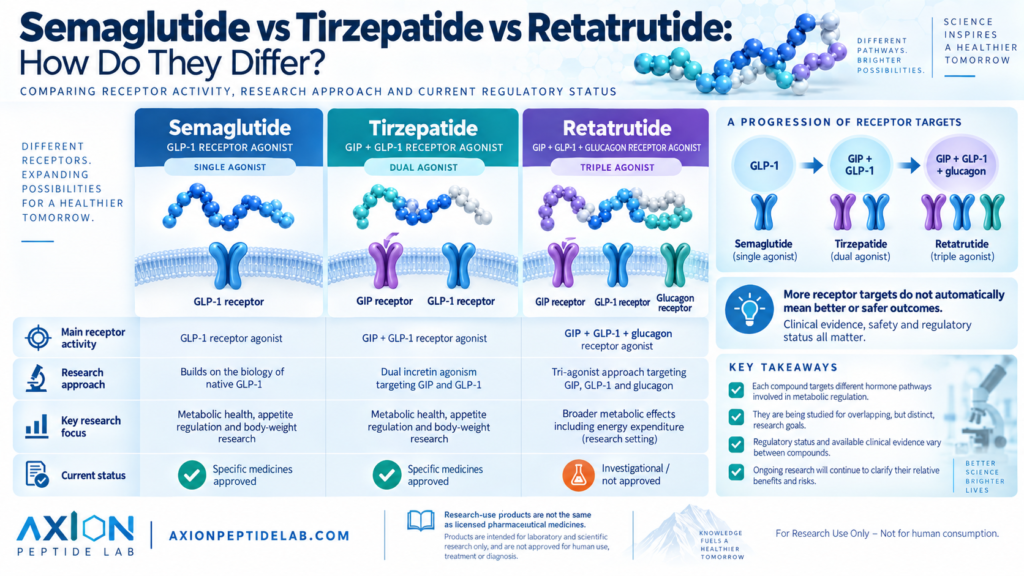
Semaglutide, tirzepatide and retatrutide are frequently discussed together in conversations about peptides for weight loss and metabolic research. However, they are different molecules with different receptor targets, evidence bases and regulatory positions.
The simplest way to understand the difference is through their primary receptor activity:
Semaglutide → GLP-1
Tirzepatide → GIP + GLP-1
Retatrutide → GIP + GLP-1 + glucagon
This progression from single to dual and triple receptor agonism demonstrates how metabolic peptide research has evolved toward studying combinations of hormonal pathways.
However, targeting more receptors does not automatically mean a compound is more effective, safer or clinically superior. Those conclusions require controlled comparative trials, safety monitoring and regulatory assessment.
Semaglutide: GLP-1 Receptor Agonism
Semaglutide primarily activates the GLP-1 receptor.
GLP-1 is a naturally occurring incretin hormone involved in post-meal metabolic signalling. Researchers have studied GLP-1 receptor activation in connection with glucose-dependent insulin secretion, appetite, satiety, gastrointestinal activity and cardiometabolic health.
Semaglutide is designed to produce more sustained GLP-1 receptor activity than naturally occurring GLP-1.
This has made it an important compound in research involving:
- obesity
- appetite regulation
- glucose metabolism
- type 2 diabetes
- cardiovascular outcomes
- metabolic health
Specific pharmaceutical products containing semaglutide are authorised medicines for defined indications.
In the United States, Wegovy is an FDA-approved semaglutide medicine for weight management in eligible populations, and the FDA approved a higher-dose Wegovy formulation in March 2026.
In the UK, the MHRA lists specific semaglutide medicines as licensed products, while making clear that not every GLP-1 medicine is authorised for weight loss.
A laboratory research material labelled semaglutide should therefore not automatically be represented as Wegovy or another licensed pharmaceutical product.
Tirzepatide: GIP + GLP-1 Dual Agonism
Tirzepatide differs from semaglutide because it activates both the:
GIP receptor
and
GLP-1 receptor
This is known as dual receptor agonism.
The addition of GIP receptor activity allows researchers to study whether simultaneous activation of two incretin pathways produces a different metabolic response from GLP-1 receptor activation alone.
Tirzepatide has been studied in areas including:
- appetite signalling
- food intake
- glucose regulation
- obesity
- type 2 diabetes
- cardiometabolic outcomes
In the United States, the FDA approved Zepbound, containing tirzepatide, for chronic weight management in specified adults in November 2023. Tirzepatide was already approved under the Mounjaro brand for type 2 diabetes.
In the UK, Mounjaro is authorised for weight management in eligible adults, and NICE recommends tirzepatide under defined criteria for managing overweight and obesity.
Again, those approvals belong to specific regulated pharmaceutical products.
A research-use tirzepatide material is not automatically Mounjaro or Zepbound simply because the active compound has the same name.
Retatrutide: GIP + GLP-1 + Glucagon Triple Agonism
Retatrutide extends the multi-receptor concept further.
It is designed to activate three receptor systems:
GIP + GLP-1 + glucagon
This makes retatrutide a triple receptor agonist.
The additional glucagon receptor activity is one of the main characteristics distinguishing retatrutide from tirzepatide.
Researchers are investigating whether combining these three pathways may influence:
- appetite
- glucose regulation
- energy expenditure
- lipid metabolism
- nutrient utilisation
- broader metabolic signalling
Retatrutide has generated significant scientific interest, but its regulatory status is fundamentally different from semaglutide and tirzepatide.
As of September 2026, retatrutide remains investigational and has not been approved by the FDA or any other regulatory authority for public use. Lilly continues to describe retatrutide as a molecule undergoing Phase 3 clinical development.
It should therefore not be described as an approved weight-loss medicine.
Semaglutide vs Tirzepatide vs Retatrutide at a Glance
| Feature | Semaglutide | Tirzepatide | Retatrutide |
| Main receptor activity | GLP-1 | GIP + GLP-1 | GIP + GLP-1 + glucagon |
| Research strategy | Single agonist | Dual agonist | Triple agonist |
| Incretin pathways involved | GLP-1 | GIP + GLP-1 | GIP + GLP-1 |
| Additional glucagon receptor activity | No | No | Yes |
| Specific approved medicines in USA | Yes | Yes | No |
| Licensed pharmaceutical use in UK | Yes, specific products | Yes, specific products | No |
| Current development position | Established medicines + ongoing research | Established medicines + ongoing research | Investigational |
The table illustrates why these compounds should not be treated as interchangeable.
Does Targeting More Receptors Mean Better Results?
Not necessarily.
It can be tempting to assume that:
one receptor < two receptors < three receptors
means that triple agonism must automatically be better.
Biology is more complicated.
Adding another receptor pathway can change multiple physiological processes simultaneously. This could potentially affect both beneficial outcomes and adverse effects.
Researchers therefore need to examine:
- receptor balance
- dose response
- clinical effectiveness
- adverse events
- trial duration
- treatment discontinuation
- cardiovascular outcomes
- longer-term safety
A triple agonist may produce a different biological response from a dual agonist, but receptor count alone cannot establish superiority.
Tirzepatide vs Semaglutide
The main mechanistic difference between tirzepatide and semaglutide is GIP receptor activity.
Semaglutide:
GLP-1 receptor agonist
Tirzepatide:
GIP + GLP-1 receptor agonist
This difference has allowed researchers to investigate whether dual incretin signalling changes metabolic outcomes compared with GLP-1 receptor agonism alone.
Clinical comparisons should rely on direct head-to-head evidence where possible rather than comparing headline numbers from unrelated studies.
Tirzepatide vs Retatrutide
The main difference between tirzepatide and retatrutide is the additional glucagon receptor activity of retatrutide.
Tirzepatide:
GIP + GLP-1
Retatrutide:
GIP + GLP-1 + glucagon
The compounds also differ importantly in regulatory status.
Tirzepatide is the active ingredient in specific approved pharmaceutical medicines, while retatrutide remains investigational.
This means retatrutide should not be promoted as an approved replacement, upgrade or successor to tirzepatide.
Why These Differences Matter for Researchers
For laboratory researchers, understanding receptor profiles is essential when selecting compounds for experimental study.
Researchers may investigate:
- receptor affinity
- signalling potency
- receptor selectivity
- molecular stability
- pathway interactions
- structural differences
- biological responses
A researcher comparing semaglutide, tirzepatide and retatrutide should therefore consider the specific experimental question rather than assuming that one molecule is universally preferable.
Legitimate researchers interested in GLP-1, GIP and multi-receptor metabolic pathways can explore appropriate laboratory research materials through AxionPeptideLab.com.
Research products should remain clearly separated from licensed medicines and investigational clinical-trial products.
For Research Use Only – Not for human consumption.
Semaglutide, tirzepatide and retatrutide ultimately represent three different stages in the evolution of metabolic receptor research: single GLP-1 agonism, dual GIP/GLP-1 agonism and investigational triple GIP/GLP-1/glucagon agonism.
What Does Clinical Research Actually Show?
Clinical research is essential for understanding tirzepatide, semaglutide and newer investigational compounds such as retatrutide. Laboratory studies can help scientists understand receptor activity and biological mechanisms, but only carefully designed clinical trials can determine how a pharmaceutical or investigational compound performs in people under controlled conditions.
This distinction is especially important when discussing tirzepatide peptide research. Clinical-trial results involving regulated pharmaceutical tirzepatide should not automatically be attributed to independently supplied laboratory research materials.
High-quality clinical trials typically evaluate much more than body-weight change. Researchers may also examine:
- glucose regulation
- waist circumference
- blood pressure
- lipid measures
- cardiovascular outcomes
- treatment discontinuation
- adverse events
- longer-term metabolic health
Understanding study design is therefore just as important as reading headline percentages.
What Did the SURMOUNT-1 Tirzepatide Trial Show?
One of the most important studies involving tirzepatide and obesity was SURMOUNT-1, published in the New England Journal of Medicine.
The Phase 3 randomised, double-blind trial enrolled 2,539 adults with obesity, or overweight plus at least one weight-related complication, who did not have diabetes. Participants received tirzepatide at different dose levels or placebo for 72 weeks.
Reported mean body-weight changes at 72 weeks were approximately:
- −15.0% with 5 mg tirzepatide
- −19.5% with 10 mg
- −20.9% with 15 mg
- −3.1% with placebo
The trial also reported improvements in prespecified cardiometabolic measures.
These findings provided strong evidence that dual GIP + GLP-1 receptor agonism could produce substantial body-weight changes in the population studied.
However, the percentages are averages. They do not mean every participant experienced the same response.
Some individuals lost more weight, some lost less, and some discontinued treatment.
Tirzepatide Research Beyond 72 Weeks
Researchers have also examined tirzepatide over longer periods.
An extended SURMOUNT-1 analysis investigated adults with obesity and prediabetes over approximately three years. The study evaluated sustained body-weight changes and progression toward type 2 diabetes.
The results supported continued research into tirzepatide not only for weight reduction but also for longer-term metabolic outcomes.
Long-duration trials are particularly important because obesity and metabolic disease are chronic conditions.
Researchers need to understand:
- whether changes are maintained
- whether safety findings change with longer exposure
- what happens when treatment is discontinued
- whether metabolic benefits extend beyond body weight
- how different populations respond over time
Tirzepatide vs Semaglutide: What Does Direct Research Show?
One of the most useful comparisons between tirzepatide and semaglutide comes from the SURMOUNT-5 trial, published in 2025.
Unlike comparisons based on separate studies, SURMOUNT-5 directly randomised participants to receive either tirzepatide or semaglutide under the same trial framework.
The Phase 3b study included 751 adults with obesity who did not have type 2 diabetes and followed them for 72 weeks.
Participants received the maximum tolerated dose of tirzepatide or semaglutide.
Mean body-weight change at week 72 was:
−20.2% with tirzepatide
compared with:
−13.7% with semaglutide
Waist circumference decreased by an average of 18.4 cm with tirzepatide compared with 13.0 cm with semaglutide.
In that specific trial population and protocol, tirzepatide produced greater average reductions in body weight and waist circumference than semaglutide.
This is much stronger comparative evidence than simply placing results from SURMOUNT-1 and STEP 1 beside each other.
Why Head-to-Head Trials Matter
Suppose one study reports a 15% average change and another reports 20%.
It may be tempting to conclude immediately that the second compound is “better.”
But separate trials may differ in:
- participant characteristics
- baseline body weight
- diabetes status
- treatment duration
- dose
- dose-escalation schedule
- lifestyle intervention
- statistical methods
- discontinuation rates
- study endpoints
A direct head-to-head study reduces many of these differences because the compounds are tested under the same protocol.
This is why the SURMOUNT-5 comparison provides stronger evidence about tirzepatide versus semaglutide than unrelated trials alone.
Even then, the findings apply specifically to the population and treatment conditions that were studied.
What Does Retatrutide Research Show?
Retatrutide represents a different scientific strategy because it activates three receptor pathways:
GIP + GLP-1 + glucagon
The major published Phase 2 obesity trial involved 338 adults and lasted 48 weeks.
The study reported substantial average body-weight reductions across several retatrutide groups and established enough evidence to support larger Phase 3 studies.
Retatrutide has since progressed through a broad Phase 3 programme known as TRIUMPH.
In May 2026, Lilly announced topline results from TRIUMPH-1. The company reported that participants receiving the 12 mg dose had an average body-weight reduction of 28.3% at 80 weeks, compared with 2.2% for placebo in the efficacy analysis.
Additional company-reported Phase 3 findings released in July 2026 included:
- up to 20.8% average weight reduction in TRIUMPH-2 among adults with obesity or overweight and type 2 diabetes
- up to 22.6% average weight reduction in TRIUMPH-3 among adults with severe obesity and established cardiovascular disease, with or without type 2 diabetes.
These findings are important, but they should be described accurately as company-reported Phase 3 topline results where complete peer-reviewed publications are not yet available.
Retatrutide also remains investigational.
Lilly has said it plans to submit a U.S. regulatory application in the first quarter of 2027.
Promising Phase 3 results do not equal regulatory approval.
Why Retatrutide Results Should Not Be Ranked Directly Against Tirzepatide
It would be scientifically inappropriate to look at:
20.2% with tirzepatide in SURMOUNT-5
and
28.3% with retatrutide in TRIUMPH-1
and conclude that retatrutide is automatically superior.
Those results come from different studies.
The trials differ in factors such as:
- participant populations
- treatment duration
- dose
- study design
- comparator
- statistical estimand
- eligibility criteria
A direct comparative trial provides a more reliable way to determine relative effectiveness.
Until sufficient head-to-head evidence is available, researchers should avoid making absolute claims that one investigational compound is definitively superior to another.
Clinical Research Measures More Than Body Weight
Body-weight percentages receive most of the media attention, but they represent only one part of metabolic research.
Clinical trials can also evaluate:
- waist circumference
- fasting glucose
- A1C
- blood pressure
- lipid concentrations
- cardiovascular events
- kidney outcomes
- liver-related markers
- quality of life
- treatment adherence
For example, the 2026 TRIUMPH-2 company results reported improvements in both body weight and A1C among participants with type 2 diabetes.
These broader endpoints help researchers understand whether a compound’s metabolic effects extend beyond weight reduction alone.
Safety and Reported Adverse Effects
Clinical studies must assess safety alongside effectiveness.
In SURMOUNT-1, the most common adverse events associated with tirzepatide were gastrointestinal, and most were described as mild to moderate. They occurred primarily during dose escalation.
Reported adverse effects included:
- nausea
- diarrhoea
- vomiting
- constipation
- gastrointestinal discomfort
Treatment discontinuation because of adverse events occurred in 4.3%, 7.1% and 6.2% of participants receiving 5 mg, 10 mg and 15 mg tirzepatide, respectively, compared with 2.6% receiving placebo.
In SURMOUNT-5, gastrointestinal adverse events were again the most common events with both tirzepatide and semaglutide. Most were mild to moderate and occurred primarily during dose escalation.
Pancreatitis and Current UK Safety Guidance
Regulatory safety information continues to evolve as medicines are used across larger populations.
In January 2026, the UK’s MHRA strengthened product warnings for GLP-1 receptor agonists and dual GLP-1/GIP agonists, including tirzepatide, concerning the small risk of severe acute pancreatitis.
The regulator notes that pancreatitis is a known but infrequent adverse effect and that rare severe, necrotising and fatal cases have been reported.
This is an important example of why post-marketing pharmacovigilance matters.
Even large Phase 3 studies may not detect every rare adverse event before regulatory approval.
Adverse Events Do Not Automatically Prove Causation
An adverse event recorded during a clinical trial does not automatically mean the compound caused the event.
Researchers examine:
- timing
- dose relationship
- frequency compared with placebo
- biological plausibility
- recurrence
- severity
- medical history
Safety conclusions therefore require careful analysis rather than assuming every event reported during treatment was directly caused by the medicine.
Clinical Evidence Does Not Transfer Automatically to Research Products
This distinction is particularly important for an article targeting tirzepatide peptide for sale.
The clinical trials discussed above involved regulated pharmaceutical or investigational products manufactured for clinical research.
An independently supplied research-use material should not automatically be assumed to have:
- identical composition
- identical purity
- identical formulation
- identical stability
- identical quality controls
- identical clinical performance
Clinical studies can explain the science surrounding a molecule, but they should not be used to make therapeutic claims for unrelated laboratory research material.
Products supplied through AxionPeptideLab.com are intended for legitimate laboratory, analytical and scientific research.
For Research Use Only – Not for human consumption.
What Can Researchers Reasonably Conclude?
Current evidence supports several important conclusions.
First, tirzepatide is supported by a substantial clinical research programme investigating dual GIP + GLP-1 receptor agonism.
Second, direct SURMOUNT-5 evidence found greater average weight and waist-circumference reductions with tirzepatide than semaglutide in adults with obesity without type 2 diabetes under that study’s conditions.
Third, retatrutide has produced notable Phase 2 and company-reported Phase 3 results, but it remains an investigational triple agonist awaiting regulatory review.
Finally, meaningful interpretation requires looking at efficacy, safety, trial design, study population, duration and regulatory status together, rather than focusing only on the largest headline percentage.
Research Peptides vs Prescription Medicines: USA & UK Considerations
One of the most important distinctions in any discussion of tirzepatide peptide for sale is the difference between a laboratory research material and a licensed prescription medicine.
The molecular name alone does not determine a product’s regulatory status.
Tirzepatide can be discussed in scientific research, appear as the active ingredient in licensed pharmaceutical medicines, and also be offered as laboratory material. These categories have different intended uses, manufacturing requirements, regulatory controls and legal considerations.
Researchers should therefore avoid treating every product labelled “tirzepatide” as interchangeable.
Research Peptides vs Licensed Medicines
A research-use peptide is material supplied for legitimate laboratory, analytical or scientific investigation.
Research applications may include:
- receptor-binding studies
- analytical chemistry
- molecular-characterisation studies
- peptide stability research
- structure–activity research
- biochemical signalling studies
- experimental laboratory investigations
A licensed prescription medicine, by contrast, is a specific pharmaceutical product that has undergone regulatory evaluation for defined medical indications.
Regulators assess factors such as:
- quality
- manufacturing controls
- safety
- effectiveness
- formulation
- stability
- labelling
- approved indication
This difference is particularly important with tirzepatide.
Mounjaro and Zepbound are regulated pharmaceutical products containing tirzepatide.
A laboratory material identified as tirzepatide is not automatically Mounjaro or Zepbound and should not be marketed as though it carries the approvals belonging to those products.
What Is an Investigational Compound?
A third category is an investigational compound.
Investigational compounds are still being evaluated through clinical development and have not yet received full regulatory approval for public use.
Retatrutide is an important current example.
Although retatrutide has produced notable results in clinical research, it remains investigational as of September 2026.
This means researchers should distinguish carefully between:
licensed medicine → approved for defined uses
investigational compound → still undergoing clinical development
research-use material → intended for laboratory investigation
These categories should never be treated as equivalent simply because they are discussed within the same area of metabolic peptide research.
Tirzepatide Regulation in the United States
In the United States, medicines are regulated by the U.S. Food and Drug Administration (FDA).
The FDA approved Zepbound (tirzepatide) in November 2023 for chronic weight management in specified adults with obesity or overweight plus at least one weight-related condition, alongside reduced-calorie diet and increased physical activity. Tirzepatide had already been approved under the Mounjaro brand for improving blood glucose control in adults with type 2 diabetes.
These approvals relate to specific pharmaceutical products.
They do not mean that every vial or material labelled tirzepatide is FDA-approved.
This distinction is especially important for research peptide suppliers.
“Research Use Only” Does Not Override Intended Use
A label saying “Research Use Only” is important when a product genuinely is supplied for legitimate scientific research, but that wording alone does not automatically determine how regulators will classify a product.
In 2026, the FDA issued warning letters to peptide vendors where products were labelled “Research Use Only” or “not for human consumption,” but other website content indicated that the products were being promoted for human drug use. The FDA stated that such marketing could cause the products to be treated as unapproved drugs despite the research-use disclaimer.
For research suppliers, this means website content should remain consistent.
Research materials should not be accompanied by:
- human dosing instructions
- self-administration guidance
- claims to treat obesity or diabetes
- promises of weight-loss results
- comparisons presenting research products as substitutes for prescription medicines
- consumer-focused medical instructions
A legitimate research-use designation should be reflected throughout the product page, marketing language and supporting documentation.
Tirzepatide Regulation in the UK
In the United Kingdom, medicines are regulated by the Medicines and Healthcare products Regulatory Agency (MHRA).
Current MHRA guidance lists tirzepatide, sold under the Mounjaro brand, among licensed medicines in the UK. The regulator also stresses that not every GLP-1-related medicine is authorised for weight loss and that each product has specific approved uses.
This product-specific approach is important.
A compound name alone does not establish that every version of that compound has been authorised as a medicine.
NICE Guidance for Tirzepatide
The National Institute for Health and Care Excellence (NICE) has a different role from the MHRA.
The MHRA regulates medicines, while NICE evaluates clinical and cost effectiveness and makes recommendations concerning NHS use in England.
NICE recommends tirzepatide as an option for managing overweight and obesity in adults who meet defined criteria, alongside a reduced-calorie diet and increased physical activity.
Current NICE guidance also identifies tirzepatide, semaglutide, liraglutide and orlistat among recommended medicine options for weight management under their respective conditions.
These recommendations concern regulated medicines used within appropriate clinical care.
They do not apply automatically to laboratory research peptides.
Research Tirzepatide Is Not Mounjaro or Zepbound
For clarity:
| Research-use tirzepatide | Mounjaro / Zepbound |
| Laboratory research material | Regulated pharmaceutical medicine |
| Intended for scientific investigation | Approved for defined medical indications |
| Not intended for human consumption | Used under applicable prescribing requirements |
| Research documentation may apply | Official pharmaceutical labelling and regulatory documentation |
| Not a substitute for prescription medicine | Licensed pharmaceutical product |
This distinction should remain clear throughout any article, product page or research catalogue.
Why This Matters for Axion Peptide Lab
For AxionPeptideLab.com, the safest and most scientifically accurate approach is to describe tirzepatide products strictly within their legitimate laboratory-research context.
Researchers evaluating a tirzepatide research peptide should focus on factors such as:
- compound identity
- purity information
- Certificate of Analysis
- batch traceability
- analytical documentation
- appropriate storage information
- clear research-use designation
Commercial language should direct legitimate researchers toward the research catalogue without presenting laboratory compounds as medicines or encouraging self-administration.
Researchers can explore appropriate scientific materials through AxionPeptideLab.com for laboratory, analytical and research applications.
For Research Use Only – Not for human consumption.
Maintaining a clear separation between research materials, investigational compounds and licensed medicines protects scientific accuracy and helps ensure that tirzepatide research is communicated responsibly to both USA and UK audiences.
Current and Future Tirzepatide & Peptide Research
Research involving tirzepatide and other metabolic peptides is expanding beyond body-weight reduction alone. Scientists are increasingly interested in how GIP, GLP-1, glucagon and related pathways may influence cardiovascular health, glucose regulation, sleep-related conditions, body composition and long-term metabolic outcomes.
Tirzepatide is particularly important because it represents the transition from traditional single-receptor GLP-1 agonism toward multi-receptor metabolic research.
The broader progression can be represented as:
GLP-1 → GIP + GLP-1 → GIP + GLP-1 + glucagon
Semaglutide represents a primarily GLP-1-based strategy, tirzepatide combines GIP and GLP-1 receptor activity, and investigational retatrutide extends the concept further by adding glucagon receptor agonism.
For researchers, these developments raise important questions about how multiple hormone pathways interact and whether targeting more than one receptor can change metabolic outcomes.
The Move Toward Multi-Receptor Agonists
Much of the earlier development of peptide-based metabolic medicines focused on the GLP-1 receptor.
Clinical success involving GLP-1 receptor agonism encouraged researchers to investigate whether additional metabolic receptors could be incorporated into the same molecular strategy.
Tirzepatide provided one of the most important demonstrations of this concept.
Its combined GIP + GLP-1 receptor activity allows researchers to study how two incretin pathways work simultaneously.
Investigational compounds such as retatrutide go further by targeting:
GIP + GLP-1 + glucagon
Future metabolic peptide research may continue exploring increasingly sophisticated receptor combinations.
Scientists are particularly interested in questions such as:
- whether receptors act synergistically
- how receptor balance influences appetite
- whether multi-receptor signalling changes energy expenditure
- how glucose regulation differs between compounds
- whether lipid metabolism changes
- how body composition responds
- whether longer-term safety differs from single-receptor approaches
Importantly, increasing the number of receptor targets does not automatically guarantee better outcomes. Each molecule requires independent laboratory investigation, clinical trials and regulatory assessment.
Tirzepatide Research Beyond Body Weight
Although tirzepatide gained public attention primarily through obesity and diabetes research, its scientific investigation extends into broader cardiometabolic areas.
Researchers are examining outcomes involving:
- cardiovascular disease
- glucose control
- progression to type 2 diabetes
- obstructive sleep apnea
- long-term weight maintenance
- kidney-related outcomes
- cardiovascular risk factors
- quality of life
- body composition
This broader research is important because obesity and metabolic disease affect multiple organ systems.
A compound that changes body weight may also influence cardiovascular, respiratory and metabolic outcomes, but these effects need to be studied directly rather than assumed.
Cardiovascular Research
Cardiovascular outcomes have become an important focus of tirzepatide research.
The SURPASS-CVOT programme compared tirzepatide with dulaglutide in people with type 2 diabetes and established atherosclerotic cardiovascular disease.
Published discussion of the study in the New England Journal of Medicine reported that tirzepatide was noninferior to dulaglutide for major adverse cardiovascular events, including cardiovascular death, myocardial infarction and stroke.
This type of research is important because scientists and regulators increasingly want to understand whether metabolic medicines influence outcomes beyond glucose levels or body weight.
Future studies will continue examining how peptide-based metabolic therapies affect cardiovascular risk over longer periods.
Tirzepatide and Obstructive Sleep Apnea Research
Another important research area is obstructive sleep apnea, particularly when it occurs alongside obesity.
A Phase 3 programme registered on ClinicalTrials.gov investigated tirzepatide in adults with obesity and moderate-to-severe obstructive sleep apnea, including individuals using positive airway pressure therapy and those unable or unwilling to use it.
This demonstrates how metabolic peptide research is expanding into obesity-related conditions rather than focusing exclusively on body-weight percentages.
Researchers are increasingly examining whether changes in body weight and metabolic signalling can influence complications associated with obesity.
Long-Term Weight Maintenance
Another major scientific question is what happens after substantial weight reduction has occurred.
Researchers want to know:
- whether body-weight changes can be maintained
- how long metabolic effects persist
- what happens after treatment stops
- whether appetite signalling changes over time
- whether long-term treatment alters safety findings
Tirzepatide has been studied specifically in weight-maintenance research, including a Phase 3 programme examining participants with obesity or overweight who had already achieved initial weight reduction.
Long-term evidence is essential because obesity is generally a chronic condition rather than a short-term biological state.
Future Head-to-Head Research
Direct comparisons between compounds will become increasingly important.
The value of head-to-head trials was demonstrated by research comparing tirzepatide with semaglutide.
Future studies involving newer compounds may examine:
- tirzepatide vs newer dual agonists
- tirzepatide vs triple agonists
- different receptor balances
- different treatment durations
- long-term safety
- cardiovascular outcomes
Direct comparisons are generally more scientifically useful than placing results from unrelated trials side by side.
This is particularly important when evaluating investigational retatrutide.
Retatrutide and the Next Generation of Multi-Receptor Research
Retatrutide is currently one of the most prominent examples of next-generation metabolic peptide research.
It is designed to activate:
GIP + GLP-1 + glucagon receptors
Lilly reported positive Phase 3 topline results from TRIUMPH-1 in May 2026 and additional Phase 3 results from TRIUMPH-2 and TRIUMPH-3 in July 2026. The latter studies included people with obesity and type 2 diabetes and people with severe obesity plus established cardiovascular disease.
Additional 2026 company-reported research has examined obesity-related knee osteoarthritis pain, obstructive sleep apnea and type 2 diabetes.
However, these findings must be interpreted correctly.
Retatrutide remains investigational and has not yet received regulatory approval.
Lilly has stated that it plans to submit a U.S. regulatory application in the first quarter of 2027.
Company-reported topline results should also be distinguished from complete peer-reviewed journal publications.
What Future Peptide Research May Focus On
The next generation of peptide science may explore considerably more than body weight.
Areas receiving growing attention include:
- receptor selectivity
- dual and triple agonists
- longer-acting peptide analogues
- cardiovascular outcomes
- liver metabolism
- kidney health
- body composition
- metabolic inflammation
- insulin sensitivity
- sleep apnea
- osteoarthritis associated with obesity
- longer-term weight maintenance
- treatment discontinuation
- combination metabolic pathways
Researchers may also investigate whether changing the balance of receptor activation within a multi-agonist molecule affects efficacy or adverse-event profiles.
These questions illustrate why peptide research remains a rapidly developing field.
Why Longer-Term Safety Research Matters
Longer follow-up is particularly important for compounds affecting several metabolic receptor systems simultaneously.
Researchers need to understand:
- whether adverse events change over time
- whether cardiovascular signals emerge
- how gastrointestinal tolerability develops
- whether treatment discontinuation affects outcomes
- whether metabolic benefits remain durable
Rare safety signals may not become apparent in early-stage trials.
For this reason, Phase 3 research, regulatory review and post-marketing pharmacovigilance are all important parts of evaluating peptide-based medicines.
Investigational compounds should never be considered established therapies before these processes are complete.
Choosing Tirzepatide Research Materials Responsibly
For laboratory researchers, future peptide research also depends on reliable research materials.
When sourcing tirzepatide peptide for sale for legitimate scientific applications, researchers should evaluate more than price.
Important considerations may include:
- compound identity
- stated purity
- batch or lot traceability
- Certificate of Analysis
- HPLC documentation where available
- mass-spectrometry information where available
- appropriate storage information
- packaging integrity
- research-use labelling
- supplier transparency
The goal is to select material suitable for the intended analytical or laboratory study.
Researchers should also distinguish clearly between a laboratory research product and the pharmaceutical tirzepatide used in regulated clinical studies.
Clinical findings involving Mounjaro, Zepbound or other controlled pharmaceutical preparations should not automatically be attributed to an independently supplied research material.
Research Peptides at Axion Peptide Lab
Legitimate researchers investigating tirzepatide, GLP-1, GIP and related metabolic peptide pathways can explore appropriate laboratory research materials and scientific product information through AxionPeptideLab.com.
Researchers should review available product specifications, analytical documentation and research designations before selecting materials for experimental work.
Axion Peptide Lab research products should not be presented as prescription medicines, consumer weight-loss products or substitutes for regulated pharmaceutical treatments.
For Research Use Only – Not for human consumption.
The future of metabolic peptide research will likely involve increasingly sophisticated combinations of receptor pathways, longer-term outcome studies and direct comparisons between compounds. Tirzepatide’s dual GIP/GLP-1 mechanism has already played an important role in this progression, while newer investigational molecules such as retatrutide illustrate where multi-receptor metabolic research may move next.
Frequently Asked Questions, Conclusion & Further Reading
Frequently Asked Questions About Tirzepatide Peptide Research
1. What is tirzepatide?
Tirzepatide is a synthetic peptide-based compound that activates both the GIP receptor and GLP-1 receptor. This dual-receptor activity is why tirzepatide is often described as a GIP/GLP-1 dual agonist.
Specific pharmaceutical tirzepatide products are authorised medicines for defined indications. In the United States, the FDA approved Zepbound for chronic weight management in specified adults, while tirzepatide is also approved under the Mounjaro brand for type 2 diabetes.
2. Is tirzepatide a peptide?
Yes. Tirzepatide is a peptide-based molecule designed to interact with metabolic receptors involved in incretin signalling.
Its dual GIP and GLP-1 activity distinguishes it from semaglutide, which primarily acts through the GLP-1 receptor.
3. What does tirzepatide do in metabolic research?
Researchers study tirzepatide to better understand how simultaneous GIP and GLP-1 receptor activation influences metabolic processes.
Research areas include:
- glucose regulation
- appetite and satiety signalling
- obesity
- food intake
- cardiometabolic outcomes
- longer-term metabolic health
Clinical evidence involving pharmaceutical tirzepatide should not automatically be applied to independently supplied laboratory research materials.
4. What are GLP-1 and GIP?
GLP-1 stands for glucagon-like peptide-1, while GIP stands for glucose-dependent insulinotropic polypeptide.
Both are naturally occurring incretin hormones released in response to nutrient intake.
They interact with different receptors and participate in metabolic signalling, including glucose-dependent insulin responses.
Tirzepatide is scientifically important because it activates both receptor systems within one molecule.
5. How does tirzepatide differ from semaglutide?
The primary difference is receptor activity.
Semaglutide → GLP-1 receptor
Tirzepatide → GIP + GLP-1 receptors
A direct Phase 3b study published in the New England Journal of Medicine in 2025 found greater average reductions in body weight and waist circumference with tirzepatide than semaglutide among adults with obesity but without type 2 diabetes under that trial’s conditions.
That result should be interpreted within the specific study population and protocol rather than as a universal guarantee for every individual.
6. How does tirzepatide differ from retatrutide?
Tirzepatide activates two receptors:
GIP + GLP-1
Retatrutide is designed to activate three:
GIP + GLP-1 + glucagon
Retatrutide is therefore described as a triple agonist.
Their regulatory status also differs significantly. Specific tirzepatide medicines are already authorised for defined medical uses, whereas retatrutide remains investigational. Lilly states that retatrutide has not been approved by the FDA or any other regulatory agency.
7. What does dual GIP/GLP-1 agonist mean?
A dual agonist is a molecule designed to activate two different receptor systems.
In the case of tirzepatide, those systems are:
- the GIP receptor
- the GLP-1 receptor
Researchers study this dual activity to determine how simultaneous incretin signalling differs from targeting GLP-1 alone.
8. Is tirzepatide FDA approved?
Specific pharmaceutical tirzepatide products are FDA-approved for defined uses.
The FDA approved Zepbound for chronic weight management in eligible adults in November 2023. Tirzepatide was already approved under the Mounjaro brand for improving glucose control in adults with type 2 diabetes.
This does not mean that every material labelled “tirzepatide” is FDA-approved.
Approval belongs to the specific regulated pharmaceutical product.
9. Is tirzepatide approved in the UK?
Yes, specific pharmaceutical tirzepatide products have UK-authorised uses.
NICE recommends tirzepatide as an option for managing overweight and obesity in adults who meet defined eligibility criteria, alongside dietary and physical-activity measures.
Research-use tirzepatide remains a separate category and should not be represented as an authorised prescription medicine.
10. Is research tirzepatide the same as Mounjaro?
No.
Mounjaro is a regulated pharmaceutical product containing tirzepatide.
A laboratory research material labelled tirzepatide is supplied for scientific or analytical investigation and should not automatically be treated as Mounjaro.
The compound name may be the same, but product formulation, manufacturing controls, documentation, intended use and regulatory status can be different.
11. Is research tirzepatide the same as Zepbound?
No.
Zepbound is an FDA-approved pharmaceutical product containing tirzepatide for defined medical indications.
A research-use peptide should not be advertised or presented as Zepbound, nor should it be marketed as a replacement for an approved prescription medicine.
12. What should researchers look for when sourcing tirzepatide peptide?
Legitimate laboratory researchers may consider factors such as:
- compound identity
- stated purity
- Certificate of Analysis
- batch or lot traceability
- analytical documentation
- HPLC data where available
- mass-spectrometry information where available
- storage guidance
- packaging integrity
- research-use labelling
The suitability of any research material should be evaluated according to the requirements of the specific laboratory study.
13. What is a peptide Certificate of Analysis?
A Certificate of Analysis, commonly abbreviated as COA, is a document that may contain analytical information about a particular product or batch.
Depending on the supplier, it may include:
- compound name
- lot number
- purity information
- analytical method
- testing date
- identity-related data
Researchers should examine whether the documentation clearly corresponds to the specific batch being supplied.
14. What does “For Research Use Only” mean?
It means the material is intended for legitimate laboratory, analytical or scientific investigation rather than medical treatment.
A research-use label should be consistent with how the product is marketed and described.
Research materials should not be accompanied by consumer-focused dosing instructions, self-administration guidance or claims that they treat obesity, diabetes or other medical conditions.
15. Can research-use tirzepatide be used for human consumption?
No.
Products designated strictly for laboratory research are not intended for human consumption or self-administration.
Clinical research involving pharmaceutical tirzepatide does not establish the safety or effectiveness of independently supplied research materials.
Conclusion
Tirzepatide has become an important molecule in metabolic peptide research because it combines GIP and GLP-1 receptor agonism within a single compound.
This dual-receptor mechanism distinguishes tirzepatide from semaglutide, which primarily targets GLP-1, and from investigational retatrutide, which targets GIP, GLP-1 and glucagon receptors.
Clinical research has produced a substantial evidence base for pharmaceutical tirzepatide. Direct comparative research has also shown meaningful differences between tirzepatide and semaglutide in specific study populations.
At the same time, researchers and readers should avoid confusing clinical-trial evidence with the characteristics of independently supplied laboratory materials.
A product appearing under the same compound name may differ in:
- formulation
- purity
- analytical documentation
- manufacturing controls
- intended use
- regulatory status
For legitimate scientific work, researchers should evaluate identity, quality documentation, batch traceability and research-use designation when selecting materials.
Researchers interested in tirzepatide, GLP-1, GIP and related metabolic pathways can explore appropriate laboratory research information through AxionPeptideLab.com.
For Research Use Only – Not for human consumption.
The wider field of peptide science continues to evolve from single-receptor GLP-1 research toward increasingly sophisticated dual- and triple-receptor approaches. Tirzepatide already represents a major example of dual incretin research, while compounds such as retatrutide show where next-generation metabolic peptide science may develop.
References and Further Reading
For medical, scientific and regulatory information relating to tirzepatide and metabolic peptide research, prioritise authoritative and peer-reviewed sources.
U.S. Food and Drug Administration (FDA)
Use FDA resources for current US approvals, indications, safety information and pharmaceutical regulatory updates. The FDA’s 2023 announcement documents the approval of Zepbound for chronic weight management in specified adults.
National Institute for Health and Care Excellence (NICE)
NICE guidance provides current recommendations for tirzepatide in managing overweight and obesity in England and explains eligibility criteria and the medicine’s authorised indication.
New England Journal of Medicine
The SURMOUNT-5 trial provides direct comparative clinical evidence involving tirzepatide and semaglutide for obesity treatment.
ClinicalTrials.gov
Use official trial registrations to verify study design, participant populations, endpoints and trial status.
PubMed / MEDLINE
Use PubMed to locate peer-reviewed research relating to tirzepatide, GLP-1, GIP, metabolic peptide signalling and related clinical studies.
MHRA / GOV.UK
Use current UK regulatory and safety guidance for information concerning GLP-1 and dual GIP/GLP-1 medicines.
Eli Lilly – Retatrutide Development Information
For current retatrutide development status, Lilly states that the compound remains investigational, is undergoing Phase 3 clinical research and has not yet been approved by any regulatory agency.
Lilly reported additional Phase 3 topline retatrutide results in July 2026 and said it plans to submit a US regulatory application in the first quarter of 2027. These results should be described as company-reported findings until full peer-reviewed publications are available.