What Are Incretin Hormones? GLP-1, GIP, Weight Regulation and Metabolic Research Explained
What are incretin hormones?
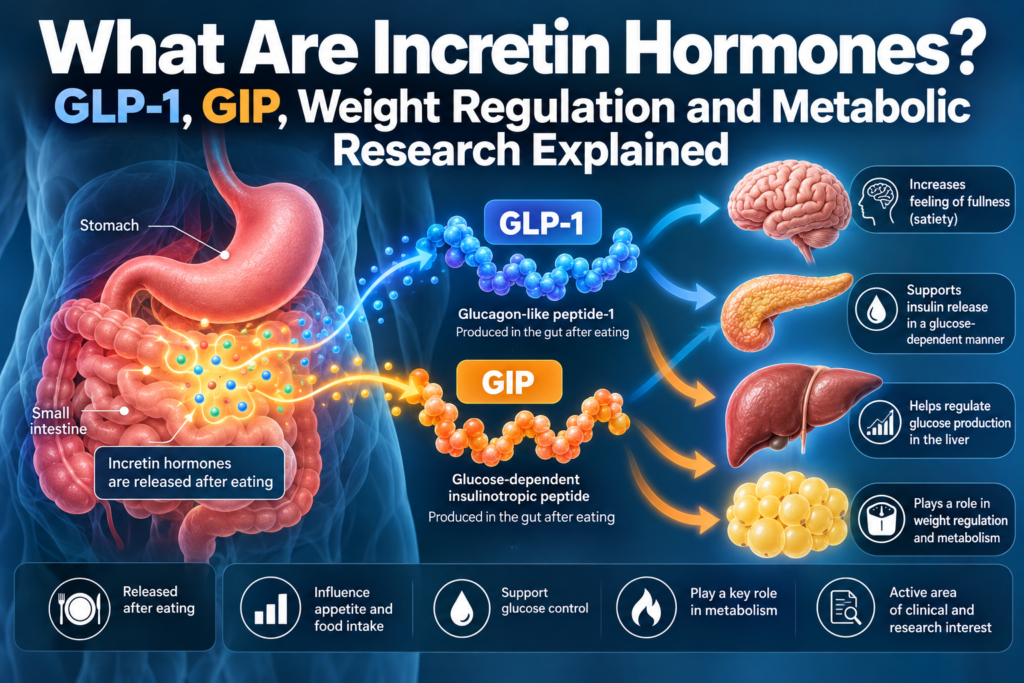
Incretin hormones are gastrointestinal peptide hormones released after food and nutrients enter the digestive system. Their best-known role is to enhance insulin secretion when blood glucose rises after a meal.
The two established incretin hormones are:
- glucagon-like peptide-1, or GLP-1
- glucose-dependent insulinotropic polypeptide, or GIP
These hormones help create what scientists call the incretin effect: oral glucose normally produces a greater insulin response than an equivalent amount of glucose delivered intravenously while producing a similar glucose concentration.
That observation revealed that the digestive system does much more than absorb nutrients. It actively communicates with the pancreas, brain and other organs through hormonal signals.
GIP and GLP-1 are now among the most intensively studied metabolic peptide pathways in modern medicine.
Research into these hormones contributed to the development of GLP-1 receptor agonists such as semaglutide and dual GIP/GLP-1 receptor agonists such as tirzepatide. Scientists are also investigating molecules that combine incretin pathways with glucagon, amylin and other metabolic systems.
The scientific literature recognises GIP and GLP-1 as the two principal incretin hormones. Both are released from enteroendocrine cells after nutrient intake and can stimulate pancreatic beta cells in a glucose-dependent manner.
Understanding incretin hormones is therefore useful for understanding several major areas of modern metabolic research, including:
glucose regulation,
type 2 diabetes,
appetite,
obesity,
gut–brain signalling,
GLP-1 receptor pharmacology,
GIP receptor pharmacology,
dual receptor agonists,
and next-generation metabolic peptides.
This article explains what incretin hormones are, how GLP-1 and GIP differ, how the incretin effect works, why these pathways matter for weight regulation, what current clinical trials actually show and how approved medicines should be distinguished from investigational and laboratory research compounds.
Axion Peptide Lab materials designated for research are intended for laboratory research only. They are not medicines and are not intended for human consumption or self-administration.
What Are Peptides?
Before examining incretin hormones in detail, it helps to understand what a peptide is.
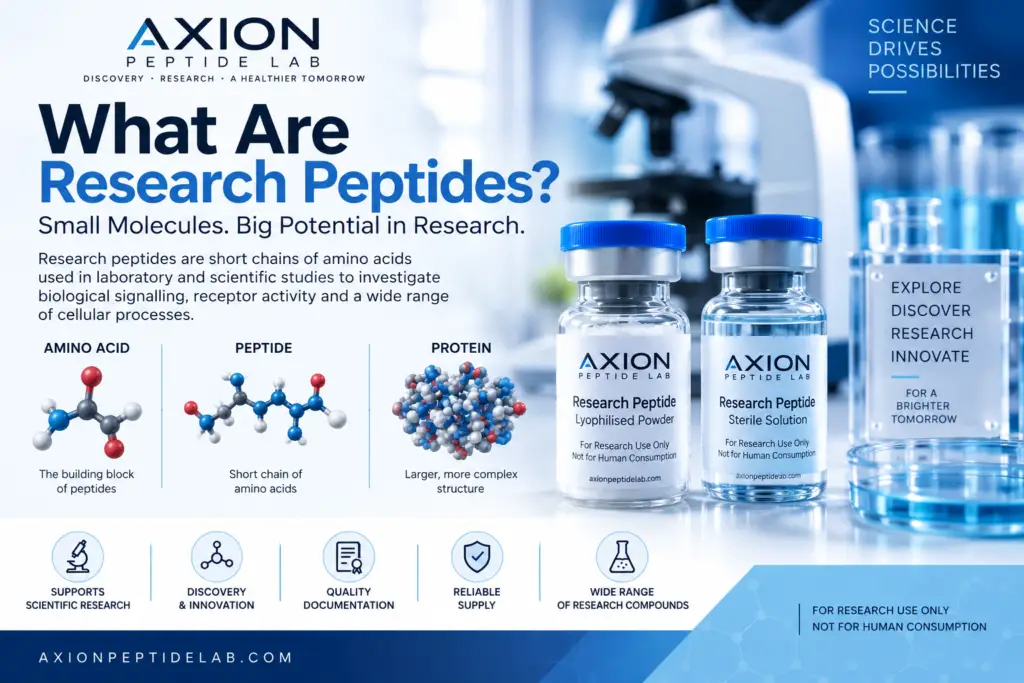
Peptides are molecules made from amino acids joined together through peptide bonds.
Amino acids can be thought of as individual molecular building blocks. When several are linked together in a defined sequence, the resulting molecule can develop biological properties very different from those of the individual amino acids.
Some peptides function as:
hormones,
neurotransmitters,
growth signals,
immune regulators,
enzyme inhibitors,
or metabolic messengers.
GLP-1 and GIP are examples of peptide hormones.
Their amino-acid sequences allow them to interact with highly specific receptors located on target cells.
When these receptors are activated, they initiate intracellular signalling pathways that can alter the behaviour of those cells.
In pancreatic beta cells, for example, incretin-receptor signalling can amplify glucose-dependent insulin secretion.
The precise amino-acid sequence matters because changing even a small part of a peptide can affect:
receptor binding,
enzymatic degradation,
biological half-life,
molecular stability,
and pharmacological activity.
This principle is important in medicine.
Natural GLP-1 is rapidly broken down in the body.
Pharmaceutical scientists therefore developed modified molecules that preserve GLP-1 receptor activity while remaining active for much longer.
Semaglutide is one example.
Tirzepatide illustrates a more complex strategy because one engineered molecule can activate both GIP and GLP-1 receptors.
Retatrutide extends this idea further by activating GIP, GLP-1 and glucagon receptors, although it remains investigational as of September 2026.
What Does “Incretin” Mean?
The term incretin describes gastrointestinal hormones that enhance insulin secretion following nutrient intake.
Scientists discovered that the body does not respond identically to glucose depending on how the glucose reaches the circulation.
When glucose is swallowed, it passes through the digestive tract.
This exposes specialised intestinal cells to nutrients.
Those cells release hormonal signals.
When the same glucose exposure is reproduced intravenously, those gastrointestinal signals are reduced or bypassed.
The result is a different pancreatic insulin response.
This phenomenon became known as the incretin effect.
In healthy individuals, oral glucose produces a substantially greater insulin secretory response than matched intravenous glucose.
Research identified GIP and GLP-1 as the major hormones responsible for this effect.
The discovery changed how researchers understood glucose metabolism.
Previously, post-meal insulin release could be imagined as a relatively simple system:
glucose rises → pancreas detects glucose → insulin rises.
In reality, the process is more coordinated:
food enters the gut → intestinal cells detect nutrients → incretin hormones are released → pancreatic beta cells receive both glucose and hormonal signals → insulin secretion is amplified appropriately.
This gut–pancreas communication system helps the body prepare for and process incoming nutrients.
What Is the Incretin Effect?
The incretin effect refers specifically to the additional insulin response generated by gastrointestinal signals after oral nutrient exposure.
Imagine two experimental conditions.
In the first, a person drinks glucose.
In the second, glucose is infused intravenously in a way that produces a similar blood-glucose profile.
Despite comparable glucose levels, oral glucose normally produces more insulin.
The difference reflects signals generated by the gastrointestinal tract.
GIP and GLP-1 are central to that difference.
This effect is biologically useful because nutrients entering through the mouth and gastrointestinal system indicate that a meal is arriving.
The body can therefore prepare metabolically before all of those nutrients have entered the bloodstream.
The incretin effect is not simply an artificial laboratory curiosity.
It demonstrates how closely the gastrointestinal tract and endocrine pancreas communicate.
Where Are Incretin Hormones Produced?
Incretin hormones are released by specialised enteroendocrine cells within the gastrointestinal tract.
Where Is GIP Produced?
GIP is secreted primarily by enteroendocrine K cells.
These cells are especially associated with the proximal small intestine.
Nutrients such as carbohydrates and fats can stimulate GIP secretion.
Once released, GIP enters the circulation and binds to GIP receptors in several tissues, including pancreatic beta cells.
Where Is GLP-1 Produced?
GLP-1 is produced from the proglucagon precursor and is released primarily by intestinal L cells.
L cells are often associated with more distal regions of the small intestine and colon, although the actual distribution of enteroendocrine cells is more complex than a simple “GIP in the upper intestine, GLP-1 in the lower intestine” model.
Nutrients, neuronal signals and other gastrointestinal factors can influence GLP-1 secretion.
Together, K cells and L cells act as nutrient sensors.
They convert information about food entering the gastrointestinal tract into endocrine signals that communicate with distant organs.
What Is GLP-1?
GLP-1 stands for glucagon-like peptide-1.
It is one of the two major incretin hormones.
After nutrient intake, GLP-1 can contribute to several physiological responses.
One of its most important actions is enhancement of glucose-dependent insulin secretion.
This means GLP-1 can help pancreatic beta cells respond more strongly when glucose is elevated.
It does not simply force insulin release regardless of the metabolic environment.
That glucose dependency is important to normal physiology.
GLP-1 also influences glucagon secretion.
Glucagon is produced by pancreatic alpha cells and helps raise blood glucose when necessary.
After meals, GLP-1 signalling can suppress inappropriate glucagon release.
In addition, GLP-1 affects gastrointestinal motility and central nervous-system pathways associated with appetite and food intake.
These multiple actions made the GLP-1 receptor an attractive pharmaceutical target.
The physiology of GLP-1 includes effects on pancreatic islets, gastrointestinal function, appetite and several extra-pancreatic systems.
How Does GLP-1 Affect Insulin?
Pancreatic beta cells express GLP-1 receptors.
When GLP-1 binds to these receptors in the presence of elevated glucose, intracellular signalling increases the beta cell’s ability to release insulin.
The receptor belongs to the G-protein-coupled receptor family.
Activation increases signalling involving cyclic AMP and related pathways.
The important concept is that GLP-1 acts as an amplifier of glucose-dependent insulin secretion.
This is one reason incretin physiology differs from simply stimulating insulin indiscriminately.
How Does GLP-1 Affect Glucagon?
GLP-1 can suppress glucagon secretion when glucose is elevated.
This is important after meals because excessive glucagon would encourage the liver to continue releasing glucose when dietary glucose is already arriving.
By coordinating insulin and glucagon, incretin pathways help regulate post-meal glucose excursions.
How Does GLP-1 Affect Appetite?
GLP-1 signalling also reaches the nervous system.
Both peripheral and central pathways appear to contribute.
GLP-1 receptor activation can increase feelings of fullness and reduce food intake.
These effects helped make the pathway important not only in diabetes research but also in obesity pharmacology.
However, appetite is not regulated by GLP-1 alone.
It emerges from interaction among multiple systems including:
GLP-1,
GIP,
amylin,
PYY,
CCK,
ghrelin,
leptin,
insulin,
brain reward circuits,
and environmental signals.
What Is GIP?
GIP stands for glucose-dependent insulinotropic polypeptide.
Historically, the abbreviation was associated with the name “gastric inhibitory polypeptide,” but the modern name reflects its important insulinotropic activity.
GIP is the other major established incretin hormone.
Like GLP-1, it is released following nutrient intake and can enhance glucose-dependent insulin secretion.
GIP acts through the GIP receptor, or GIPR.
This receptor is expressed in pancreatic beta cells and several other tissues.
For many years, pharmaceutical interest focused more heavily on GLP-1 than GIP.
One reason was that GIP’s insulinotropic effectiveness is impaired in many people with type 2 diabetes.
However, the development of tirzepatide radically increased interest in GIP pharmacology.
Modern research now examines both GIP receptor agonism and, experimentally, GIP receptor antagonism in different metabolic contexts.
A recent review describes GIP as a pleiotropic hormone with actions extending beyond pancreatic insulin secretion and notes renewed interest generated by modern obesity and diabetes pharmacology.
GLP-1 vs GIP: What Is the Difference?
GLP-1 and GIP belong to the same physiological category, but they are not interchangeable.
Both:
are gastrointestinal peptide hormones,
are released after nutrient intake,
enhance glucose-dependent insulin secretion,
and communicate with pancreatic beta cells.
However, they act through different receptors and have different physiological profiles.
GLP-1
GLP-1 binds the GLP-1 receptor.
It is strongly associated with:
glucose-dependent insulin secretion,
suppression of glucagon under appropriate conditions,
slower gastric emptying,
appetite regulation,
and reduced food intake.
GIP
GIP binds the GIP receptor.
It also strongly affects glucose-dependent insulin secretion.
Its wider physiology involves adipose tissue, bone, nervous-system signalling and other metabolic processes.
The effects of GIP on glucagon can differ depending on metabolic conditions.
The two hormones therefore overlap but are not duplicates.
Research comparing them shows that they share important beta-cell actions while differing in several pancreatic and extra-pancreatic effects.
Are GLP-1 and GIP the Only Incretin Hormones?
In current established physiology, GIP and GLP-1 are considered the two primary incretin hormones.
Many other gastrointestinal peptides influence metabolism and appetite, but that does not automatically make them incretins.
For example:
PYY participates in appetite signalling.
CCK influences digestion and satiation.
Ghrelin is strongly associated with hunger signalling.
Amylin is produced primarily by pancreatic beta cells rather than functioning as a classical intestinal incretin.
Glucagon plays major roles in glucose regulation.
These hormones interact with the same broader metabolic network, but their physiological classifications differ.
How Quickly Are Natural Incretin Hormones Broken Down?
Natural incretin hormones have relatively short active lifetimes.
An important enzyme responsible for their degradation is dipeptidyl peptidase-4, commonly called DPP-4.
DPP-4 rapidly cleaves active GLP-1 and GIP.
This means naturally released incretin signals are tightly controlled.
The hormones rise following nutrient intake and are then rapidly inactivated.
This short duration created a challenge for pharmaceutical development.
Native GLP-1 itself would not make an ideal long-acting medicine because it disappears too rapidly.
Researchers therefore developed two broad therapeutic strategies.
One approach is to inhibit DPP-4, thereby increasing the duration of naturally produced incretin activity.
Another is to develop receptor agonists that resist rapid degradation and remain active much longer.
Modern GLP-1 receptor agonists belong to the second strategy.
Natural GLP-1 Is Not the Same as Semaglutide
This distinction is frequently misunderstood.
GLP-1 is a natural hormone.
Semaglutide is a pharmaceutical GLP-1 receptor agonist engineered to activate the same receptor while possessing very different pharmacokinetic characteristics.
Natural GLP-1 is rapidly degraded.
Semaglutide was engineered for substantially prolonged action.
Therefore, statements about natural GLP-1 physiology should not automatically be interpreted as statements about the duration, potency or clinical effects of semaglutide.
The receptor pathway is related.
The molecules are not identical.
How Do Incretin Hormones Regulate Blood Glucose?
Glucose regulation requires coordination among several organs.
After a meal, carbohydrates are digested and glucose enters the circulation.
Pancreatic beta cells detect rising glucose and release insulin.
At the same time, the gastrointestinal tract releases incretin hormones.
Those hormonal signals increase the beta-cell response to the incoming glucose.
This helps explain why oral nutrient intake triggers a more coordinated insulin response than glucose appearing in the circulation without gastrointestinal exposure.
GLP-1 can additionally suppress inappropriate glucagon release.
Gastric emptying can also affect how rapidly nutrients reach the intestine and appear in the bloodstream.
Thus, incretins influence post-meal glucose through several interconnected mechanisms.
What Happens to the Incretin Effect in Type 2 Diabetes?
The incretin effect is substantially reduced in many people with type 2 diabetes.
This does not mean that no incretin hormones are produced.
Instead, the overall insulin response to these signals is altered.
One important feature is reduced insulinotropic responsiveness to GIP.
GLP-1 activity is also altered, but pharmacological GLP-1 receptor stimulation can retain clinically meaningful glucose-lowering effects.
A systematic review and meta-analysis found the incretin effect significantly reduced in people with type 2 diabetes compared with people with normal glucose tolerance.
Research therefore distinguishes between:
incretin secretion,
incretin receptor responsiveness,
beta-cell function,
and overall glucose tolerance.
These processes are related but are not identical.
Why Does the Reduced Incretin Effect Matter?
If the gut–pancreas signalling system is less effective, pancreatic beta cells receive less useful amplification after meals.
That can contribute to inadequate insulin responses and larger post-meal glucose excursions.
Type 2 diabetes also involves other major abnormalities, including:
insulin resistance,
beta-cell dysfunction,
altered glucagon regulation,
hepatic glucose production,
adipose-tissue dysfunction,
and changes in multiple hormonal systems.
Reduced incretin action is therefore one part of a much more complex disorder.
It should not be presented as the single cause of type 2 diabetes.
How Are Incretin Hormones Connected to Weight Regulation?
The connection between incretin hormones and weight regulation extends beyond insulin.
GLP-1 receptor signalling influences appetite and food intake.
It can help promote satiation—the process that contributes to stopping a meal.
Gastric emptying also influences how nutrients move through the gastrointestinal tract.
These effects create a biological link between nutrient sensing and future food intake.
GIP’s role in body-weight regulation is more complex.
The success of dual GIP/GLP-1 pharmacology demonstrates that manipulating GIP signalling alongside GLP-1 can produce important metabolic effects, but this does not mean natural GIP should simply be described as a “weight-loss hormone.”
Hormonal systems behave differently at physiological versus pharmacological concentrations.
An engineered long-acting receptor agonist can also produce effects different from a short burst of naturally secreted hormone.
The Gut–Brain Axis and Incretin Hormones
The digestive system and brain communicate continuously.
Signals travel through:
circulating hormones,
autonomic nerves,
the vagus nerve,
nutrient sensors,
brainstem circuits,
hypothalamic circuits,
and reward-related pathways.
GLP-1 is part of this gut–brain signalling network.
After nutrient intake, the brain receives information indicating that energy has entered the gastrointestinal tract.
This can alter hunger, satiation and future food-seeking behaviour.
The resulting experience of appetite is not produced by one receptor or hormone.
It is the integrated output of many signals.
How Do Metabolic Peptide Pathways Work Together?
Human metabolism operates as a network rather than a collection of isolated hormones.
After a meal, multiple signals can change simultaneously.
Insulin
Released from pancreatic beta cells and central to glucose disposal and nutrient storage.
Amylin
Co-secreted with insulin and involved in gastric emptying, post-meal glucagon regulation and satiation.
GLP-1
An incretin that supports glucose-dependent insulin secretion and contributes to appetite and gastrointestinal regulation.
GIP
An incretin strongly involved in glucose-dependent insulin secretion with additional actions in multiple tissues.
Glucagon
Produced by pancreatic alpha cells and important for maintaining glucose availability, particularly during fasting.
PYY
A gut-derived peptide associated with satiation and post-meal appetite signalling.
Ghrelin
A gastrointestinal hormone strongly associated with hunger and meal initiation.
The body integrates these pathways rather than using one hormone as an on/off switch.
This complexity helps explain why modern metabolic drug development increasingly investigates multi-receptor compounds.
What Are Incretin-Based Medicines?
Incretin-based medicines are pharmaceutical treatments that make use of incretin biology.
Several categories exist.
GLP-1 Receptor Agonists
These activate the GLP-1 receptor.
Examples include pharmaceutical products containing molecules such as semaglutide and liraglutide.
Dual GIP/GLP-1 Receptor Agonists
These activate both GIP and GLP-1 receptors.
Tirzepatide is the major current example.
DPP-4 Inhibitors
Rather than directly mimicking GLP-1, these inhibit the enzyme responsible for degrading endogenous incretin hormones, thereby prolonging their activity.
Investigational Multi-Receptor Agonists
Research programmes are investigating compounds that activate three or more metabolic receptors.
Retatrutide is a prominent investigational example involving GIP, GLP-1 and glucagon receptor agonism.
Peptide-Based Compounds Commonly Discussed in Weight-Regulation Research
Three names now appear frequently in metabolic peptide discussions:
semaglutide
tirzepatide
and
retatrutide
These molecules illustrate the evolution of metabolic receptor pharmacology.
Semaglutide demonstrates selective GLP-1 receptor agonism.
Tirzepatide combines GIP and GLP-1 receptor agonism.
Retatrutide investigates GIP, GLP-1 and glucagon receptor agonism in one molecule.
They should not be treated as interchangeable substances.
Their receptor profiles, evidence bases and regulatory statuses differ.
What Is Semaglutide?
Semaglutide is a long-acting GLP-1 receptor agonist.
It is not natural GLP-1 itself.
Instead, it is an engineered molecule designed to produce sustained GLP-1 receptor activation.
Specific semaglutide-containing pharmaceutical products have received regulatory approval for defined indications.
In the United States, Wegovy is an FDA-approved semaglutide product used for defined weight-management indications.
In March 2026, the FDA approved a higher 7.2 mg weekly Wegovy injection dose for weight reduction and long-term weight maintenance in certain adults with obesity or overweight plus an associated condition.
That approval applies to the specific regulated pharmaceutical product and its labelled use.
It should not be interpreted as approval for every independently manufactured material described as “semaglutide.”
What Did the STEP 1 Semaglutide Trial Show?
The STEP 1 trial was an important obesity study involving 1,961 adults with overweight or obesity without diabetes.
Participants were assigned to semaglutide 2.4 mg or placebo in addition to lifestyle intervention for 68 weeks.
The mean body-weight change was approximately −14.9% with semaglutide compared with −2.4% with placebo.
This is useful evidence because it comes from a randomized controlled clinical trial.
However, several limitations should be remembered when interpreting any trial percentage.
The figure represents a group average.
Individual responses vary.
Participants were selected according to trial criteria.
The treatment included structured clinical monitoring and lifestyle intervention.
Results from a regulated clinical trial cannot be assumed to apply to unregulated materials marketed with the same molecular name.
What Is Tirzepatide?
Tirzepatide is a dual GIP and GLP-1 receptor agonist.
This means a single engineered molecule can activate both receptor systems.
Tirzepatide is therefore not simply a “stronger GLP-1.”
Its pharmacology intentionally incorporates GIP receptor activity.
Specific tirzepatide pharmaceutical products have regulatory approval.
In November 2023, the FDA approved Zepbound for chronic weight management in defined adults with obesity or overweight plus at least one weight-related condition.
Tirzepatide is also used in another regulated product for type 2 diabetes.
Again, approval is product- and indication-specific.
What Did the SURMOUNT-1 Tirzepatide Trial Show?
SURMOUNT-1 enrolled 2,539 adults with obesity or overweight plus at least one weight-related complication who did not have diabetes.
Participants received different tirzepatide doses or placebo over 72 weeks.
The study demonstrated substantial and sustained weight reductions, with gastrointestinal symptoms among the most frequently reported adverse events.
Longer-term follow-up in participants with obesity and prediabetes also examined progression to type 2 diabetes.
Over the extended study, fewer participants receiving tirzepatide developed type 2 diabetes than those receiving placebo, although interpretation should remain specific to the population and trial design studied.
Tirzepatide vs Semaglutide: What Did the Head-to-Head Trial Show?
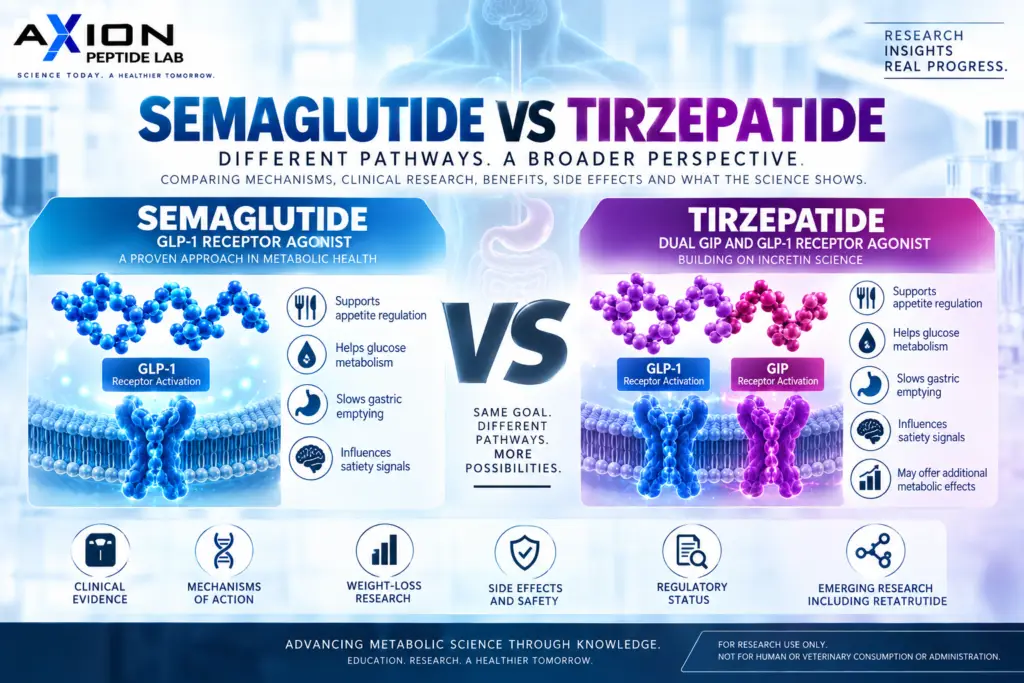
SURMOUNT-5 provided an important direct comparison.
The randomized trial compared maximum tolerated doses of tirzepatide with semaglutide in adults with obesity without diabetes.
At 72 weeks, the mean body-weight change was approximately:
−20.2% with tirzepatide
versus
−13.7% with semaglutide.
The published NEJM trial concluded that tirzepatide was superior to semaglutide for body-weight and waist-circumference reduction in that specific trial population and at the studied regimens.
That finding should not be expanded into a universal statement that one medicine is always preferable for every person.
Different patients have different:
medical histories,
treatment goals,
contraindications,
tolerability,
access,
and clinical needs.
What Is Retatrutide?
Retatrutide is an investigational metabolic molecule developed by Eli Lilly.
It activates three receptor systems:
GIP
GLP-1
and
glucagon.
This makes it a triple hormone receptor agonist.
It is sometimes informally described online as “GLP-3,” but that is not a scientifically accurate name.
Retatrutide does not represent a newly discovered “GLP-3 hormone.”
It is a single engineered molecule designed to activate three existing receptor systems.
Most importantly, retatrutide remains investigational as of September 2026.
Lilly states that it has not been approved by the FDA or any other regulatory agency.
What Did Retatrutide Phase 2 Research Show?
A Phase 2 randomized trial published in the New England Journal of Medicine included 338 adults with obesity or overweight plus a weight-related condition.
At 48 weeks, mean body-weight changes included:
−8.7% in the 1 mg group,
−17.1% in the combined 4 mg group,
−22.8% in the combined 8 mg group,
and
−24.2% in the 12 mg group,
compared with −2.1% with placebo.
The most common adverse events were gastrointestinal.
The study also reported dose-dependent increases in heart rate that peaked earlier in treatment and later declined.
These data were important enough to support continued Phase 3 development, but Phase 2 evidence did not represent regulatory approval.
What Has Retatrutide Phase 3 Research Shown in 2026?
During 2026, Lilly announced topline results from multiple Phase 3 TRIUMPH studies.
In TRIUMPH-1, Lilly reported mean weight reduction of 28.3% at 80 weeks in the 12 mg group under the reported analysis, compared with placebo.
These are sponsor-reported Phase 3 findings and should be distinguished from complete peer-reviewed publication.
In July 2026, Lilly announced TRIUMPH-2 and TRIUMPH-3 topline findings.
TRIUMPH-2 studied adults with obesity or overweight and type 2 diabetes.
At 80 weeks, the company reported mean weight reductions of:
12.7% with 4 mg,
19.1% with 9 mg,
and
20.8% with 12 mg.
TRIUMPH-3 studied adults with severe obesity and established cardiovascular disease and reported weight reduction up to approximately 22.6% in the highest-dose group.
Lilly stated that it plans a US regulatory submission in the first quarter of 2027.
A planned submission is not an approval.
Until regulators complete their review and issue an authorisation, retatrutide remains investigational.
Semaglutide vs Tirzepatide vs Retatrutide
The clearest distinction is their receptor profile and regulatory status.
| Compound | Main receptor activity | Current general status |
|---|---|---|
| Semaglutide | GLP-1 receptor agonist | Specific regulated products are approved for defined indications |
| Tirzepatide | GIP + GLP-1 receptor agonist | Specific regulated products are approved for defined indications |
| Retatrutide | GIP + GLP-1 + glucagon receptor agonist | Investigational as of September 2026 |
These differences matter.
Semaglutide represents selective incretin receptor pharmacology.
Tirzepatide combines the two major incretin receptor pathways.
Retatrutide combines those pathways with glucagon receptor activation.
It would therefore be inaccurate to treat them simply as three doses or generations of the same substance.
Is Retatrutide an Incretin?
Retatrutide is better described as a multi-receptor agonist involving incretin pathways.
Two of its targets—GIP and GLP-1 receptors—are the receptors for the established incretin hormones.
Its third target is the glucagon receptor.
Therefore, calling retatrutide simply an “incretin hormone” would be imprecise.
It is an engineered investigational agonist that includes incretin-receptor activity.
How Is Glucagon Different From GLP-1 and GIP?
Glucagon is produced primarily by pancreatic alpha cells.
Its best-known physiological role is supporting glucose availability, particularly during fasting.
It can stimulate hepatic glucose production.
At first glance, combining glucagon-receptor activation with GLP-1 receptor activation may appear contradictory.
Why activate a receptor associated with raising glucose in a metabolic drug?
The scientific rationale involves broader effects of glucagon signalling on:
energy expenditure,
substrate utilisation,
lipid metabolism,
and hepatic physiology.
Researchers are investigating whether balancing glucagon activity with strong incretin-receptor effects can produce beneficial overall metabolic outcomes.
Retatrutide is one example of this experimental strategy.
What Does Clinical Research Actually Show About Incretin-Based Weight Regulation?
Clinical research demonstrates that manipulating incretin pathways can substantially affect body weight.
However, several principles are essential when interpreting results.
Trial Averages Are Not Individual Predictions
If a clinical trial reports 15% mean weight reduction, this does not mean every participant lost exactly 15%.
Some lose more.
Some lose less.
Some discontinue treatment.
Some do not respond substantially.
Different Trials Cannot Always Be Compared Directly
STEP 1, SURMOUNT-1 and TRIUMPH studies involved different:
populations,
durations,
drug regimens,
dose-escalation procedures,
statistical methods,
and inclusion criteria.
A simple side-by-side comparison of headline percentages can therefore be misleading.
Head-to-Head Trials Are More Informative
SURMOUNT-5 is particularly useful because tirzepatide and semaglutide were directly compared within the same trial.
Even then, the result applies to the studied population, regimens and duration.
Sponsor Topline Results Are Not the Same as Full Peer Review
A company may announce that a Phase 3 trial met its endpoint before the full manuscript is published.
These announcements can provide important information.
However, full peer-reviewed publication usually provides much greater detail about:
subgroups,
missing data,
statistical methods,
adverse events,
protocol deviations,
and limitations.
That distinction is especially important when discussing current retatrutide Phase 3 research.
Do Incretin Medicines Work Only by Reducing Appetite?
No.
Appetite reduction is important, but incretin pharmacology is more complex.
Depending on the molecule and receptor involved, effects may include:
glucose-dependent insulin secretion,
glucagon regulation,
gastric emptying,
central appetite signalling,
food reward,
adipose-tissue biology,
and broader metabolic changes.
Multi-receptor agonists add further complexity.
Tirzepatide cannot be fully understood by describing it only as an appetite suppressant.
Retatrutide cannot be understood merely as “stronger tirzepatide.”
Each molecule has a distinct receptor profile.
Does GLP-1 Permanently Slow the Stomach?
GLP-1 receptor activation can slow gastric emptying.
However, the magnitude and persistence of this effect can vary according to:
the specific compound,
dose,
duration,
individual physiology,
and adaptation over time.
Statements such as “GLP-1 shuts down digestion” are therefore misleading.
The gastrointestinal system continues functioning.
Pharmacological changes in gastric motility are more nuanced.
Safety and Reported Adverse Effects
Incretin-based medicines can cause side effects.
The exact safety profile depends on the specific drug.
Commonly reported adverse effects with GLP-1 receptor agonists and dual GIP/GLP-1 agonists often involve the gastrointestinal system.
These can include:
nausea,
vomiting,
diarrhoea,
constipation,
abdominal discomfort,
and reduced appetite.
In clinical trials, many gastrointestinal events are mild to moderate and occur particularly during dose escalation.
However, clinically significant complications can occur.
Safety information should therefore come from the authorised prescribing information for the specific medicine being used.
Pancreatitis and Incretin Medicines
In January 2026, the UK MHRA strengthened warnings concerning acute pancreatitis for GLP-1 receptor agonists and dual GLP-1/GIP receptor agonists.
The agency described acute pancreatitis as a known but infrequent adverse effect and highlighted rare reports of severe, necrotising and fatal cases.
This is an example of why post-marketing surveillance remains important even after a medicine receives authorisation.
Clinical trials cannot identify every rare event before approval.
Large-scale real-world use provides additional safety information.
Can Incretin Medicines Cause Hypoglycaemia?
GLP-1 and GIP receptor signalling enhances insulin secretion in a glucose-dependent manner.
This reduces—but does not eliminate—the hypoglycaemia issue seen with some other glucose-lowering strategies.
Risk can change significantly when incretin-based medicines are used with other treatments that lower glucose, such as insulin or sulfonylureas.
Therefore, hypoglycaemia risk needs to be interpreted in the context of the complete treatment regimen rather than the incretin molecule alone.
Are Incretin Medicines Safe During Pregnancy?
Pregnancy is a specialised medical situation, and individual products carry specific recommendations concerning pregnancy, discontinuation timing and contraception.
The MHRA has published guidance addressing pregnancy and contraceptive considerations for GLP-1 medicines.
These medicines should not be treated as casual cosmetic weight-loss products.
For individual medical decisions, authorised product information and qualified clinical guidance are required.
Natural Incretin Hormones vs Prescription Incretin Medicines
Natural GIP and GLP-1 are short-lived physiological hormones.
Prescription incretin-based medicines are engineered pharmaceutical compounds.
They differ in:
sequence,
half-life,
molecular modifications,
formulation,
receptor profile,
dose exposure,
manufacturing controls,
and clinical evidence.
This distinction matters for SEO content.
For example:
GLP-1 is a hormone.
Semaglutide is a GLP-1 receptor agonist.
GIP is a hormone.
Tirzepatide is a dual GIP/GLP-1 receptor agonist.
Those terms should not be used interchangeably.
Research Peptides vs Prescription Medicines
Research peptides and prescription medicines occupy very different regulatory categories.
An authorised prescription medicine has undergone formal evaluation of areas such as:
identity,
purity,
manufacturing consistency,
formulation,
stability,
clinical efficacy,
clinical safety,
labelling,
and pharmacovigilance.
A laboratory research material may instead be supplied for analytical or experimental use.
It may have documentation such as:
a Certificate of Analysis,
HPLC data,
mass spectrometry,
batch information,
or molecular identity testing.
Those forms of analytical evidence can be valuable for research.
They do not establish that a research material is an approved medicine.
They also do not establish human safety or clinical efficacy.
Why “99% Purity” Does Not Mean “99% Safe”
This distinction is particularly important in peptide research.
If a COA reports:
99% purity by HPLC
that typically refers to chromatographic purity under the specified analytical method.
It does not mean:
99% biologically active,
99% medically effective,
99% safe,
sterile,
endotoxin-free,
or approved for human administration.
Purity and clinical suitability answer different questions.
A responsible research-focused website should maintain that distinction consistently.
Why Certificates of Analysis Matter in Laboratory Research
For legitimate peptide research, analytical documentation helps researchers understand the material being studied.
A useful COA may include:
batch or lot identification,
compound name,
analytical method,
reported purity,
molecular mass,
test date,
and laboratory information.
HPLC can help assess chromatographic purity.
Mass spectrometry can help assess molecular identity and mass.
Neither one replaces clinical trials.
For researchers evaluating laboratory materials, AxionPeptideLab.com can provide information about its research catalogue and available analytical documentation where applicable.
Research products are for laboratory research only and are not substitutes for prescription medicines.
USA Regulatory Considerations
The United States regulates pharmaceutical products through the FDA.
A key concept is that approval applies to specific drug products and indications.
It does not mean every item containing or claiming to contain the same molecular name is FDA approved.
Specific semaglutide products have authorised uses.
Specific tirzepatide products have authorised uses.
Retatrutide remains investigational.
Lilly states that retatrutide is not currently approved by the FDA and is still being studied in clinical trials.
This distinction should remain clear in educational and commercial content.
UK Regulatory Considerations
The UK regulatory environment involves the MHRA, NICE, the NHS and other authorities.
MHRA
The MHRA regulates medicines and monitors medicine safety.
Its public guidance notes that not every medicine commonly described in the media as a “weight-loss injection” is authorised for weight loss.
NICE
NICE evaluates clinical and cost effectiveness for NHS use.
Current NICE guidance includes defined recommendations for tirzepatide and semaglutide in weight management according to specified criteria and service pathways.
A medicine being scientifically effective does not automatically mean every UK patient is eligible to receive it through the NHS.
Licensing, NICE recommendations and local implementation are related but distinct issues.
Is Semaglutide Approved in the UK?
Specific semaglutide pharmaceutical products are authorised for defined medical indications in the UK.
NICE also has recommendations concerning semaglutide for weight management.
That does not mean every semaglutide-labelled product sold online is an authorised UK medicine.
Regulated pharmaceutical supply and research-material supply must remain clearly separated.
Is Tirzepatide Approved in the UK?
Tirzepatide is available as an authorised medicine for specific indications in the UK.
NICE recommends tirzepatide as an option for weight management for eligible adults under defined criteria, alongside lifestyle measures and subject to NHS implementation arrangements.
Again, authorised pharmaceutical tirzepatide should not be conflated with independently sold research materials.
Is Retatrutide Approved in the UK?
No regulatory approval for retatrutide has been established as of September 2026.
It remains an investigational compound under clinical development.
Claims describing retatrutide as an approved weight-loss medicine are therefore inaccurate at this time.
Why Regulatory Status Changes Over Time
Drug development is dynamic.
A compound may move through:
preclinical research,
Phase 1,
Phase 2,
Phase 3,
regulatory submission,
regulatory review,
and eventual approval or rejection.
A positive Phase 3 study does not automatically create an approved medicine.
A company announcement about a planned submission is also not approval.
For SEO content involving rapidly developing metabolic drugs, regulatory status should therefore be checked regularly.
Current and Future Incretin Research
Incretin science has moved far beyond the original question of how GLP-1 and GIP stimulate insulin.
Modern research explores how these pathways can be combined with other metabolic systems.
Several trends are particularly important.
Dual Receptor Agonists
Tirzepatide demonstrated that one molecule can successfully engage both GIP and GLP-1 receptors.
This helped establish multi-receptor agonism as a major pharmaceutical strategy.
Researchers now ask whether carefully balancing activity at multiple receptors can improve:
weight reduction,
glucose control,
cardiometabolic outcomes,
or tolerability.
Triple Receptor Agonists
Retatrutide extends the dual-agonist concept.
It combines:
GIP receptor activation,
GLP-1 receptor activation,
and
glucagon receptor activation.
Phase 2 and sponsor-reported 2026 Phase 3 findings have kept this strategy at the centre of metabolic research.
However, regulatory review remains necessary before retatrutide can become an approved medicine.
Incretins and Amylin
Another major research direction combines incretin biology with amylin.
Amylin is a pancreatic peptide hormone involved in:
satiation,
gastric emptying,
and post-meal glucagon regulation.
It acts through a different receptor system from GLP-1 and GIP.
This creates the possibility that amylin and incretin pathways could produce complementary effects.
Research involving cagrilintide plus semaglutide and other experimental approaches reflects this broader trend toward multi-hormonal metabolic pharmacology.
Oral Peptide Delivery
Many peptide medicines have traditionally required injection because peptides face major challenges in the gastrointestinal tract.
Digestive enzymes can degrade them.
Their relatively large and polar structures can limit intestinal absorption.
Researchers are therefore investigating:
absorption enhancers,
protective formulations,
engineered peptides,
oral delivery technologies,
and non-peptide molecules capable of stimulating the same receptors.
Successful oral delivery could substantially alter the future of incretin-based medicine.
Longer-Acting Peptide Engineering
Another research objective is extending peptide half-life.
Scientists can modify peptides through strategies such as:
amino-acid substitution,
lipidation,
albumin binding,
molecular conjugation,
and protection from enzymatic degradation.
These changes demonstrate why a therapeutic analogue can behave very differently from the natural hormone on which it is based.
More Selective Receptor Pharmacology
Researchers increasingly study the details of receptor signalling.
Two compounds may activate the same receptor but produce somewhat different intracellular signalling patterns.
Scientists investigate concepts including:
biased agonism,
receptor internalisation,
signal duration,
receptor trafficking,
and tissue-specific effects.
Future incretin drugs may therefore be differentiated not only by which receptor they activate but also by how they activate it.
Incretins and Cardiovascular Research
GLP-1-based medicines are no longer studied only for glucose or weight.
Large clinical programmes investigate cardiovascular outcomes.
The metabolic and cardiovascular consequences of incretin receptor activation may involve:
body-weight reduction,
blood-pressure changes,
lipid metabolism,
inflammation,
endothelial biology,
and direct or indirect cardiovascular mechanisms.
A recent review describes GLP-1 and GIP signalling as relevant to both metabolic and cardiovascular biology.
Clinical cardiovascular claims, however, must remain specific to the exact molecule and trial.
Evidence for one GLP-1 receptor agonist cannot automatically be transferred to every drug targeting the receptor.
Incretins and Kidney Research
Cardiorenal outcomes are another expanding field.
Metabolic diseases frequently overlap with chronic kidney disease.
Researchers therefore examine whether incretin-based therapies affect:
albuminuria,
kidney-function decline,
cardiovascular events,
and metabolic risk factors.
Again, these outcomes must be evaluated molecule by molecule.
“Incretin therapy” is too broad a category to assume one universal kidney effect.
The Future of Weight-Regulation Peptide Research
Modern obesity pharmacology suggests that future medicines may increasingly combine several biological systems.
Potential combinations include:
GLP-1 + GIP,
GLP-1 + glucagon,
GIP + GLP-1 + glucagon,
GLP-1 + amylin,
and other multi-hormonal strategies.
The goal is not simply to make appetite suppression stronger.
Researchers are trying to optimise the balance among:
food intake,
glucose regulation,
energy expenditure,
body composition,
cardiovascular outcomes,
metabolic health,
and tolerability.
The most successful future therapy may therefore depend on balanced pathway activation rather than maximal activation of one receptor.
Frequently Asked Questions About Incretin Hormones
What are incretin hormones?
Incretin hormones are gastrointestinal hormones released after nutrient intake that enhance glucose-dependent insulin secretion. The two primary incretins are GLP-1 and GIP.
What are the two main incretin hormones?
The two established incretin hormones are glucagon-like peptide-1 (GLP-1) and glucose-dependent insulinotropic polypeptide (GIP).
What is the incretin effect?
The incretin effect describes the greater insulin response seen after oral glucose compared with matched intravenous glucose exposure. The difference results largely from gastrointestinal hormonal signalling involving GIP and GLP-1.
Where are incretin hormones produced?
GIP is produced primarily by intestinal K cells, while GLP-1 is produced primarily by intestinal L cells.
What triggers incretin hormone release?
Food and nutrients entering the gastrointestinal tract stimulate enteroendocrine cells. Carbohydrates and fats are important signals, while protein and other nutrient-related pathways can also influence gut-hormone secretion.
Is insulin an incretin hormone?
No. Insulin is a pancreatic hormone.
Incretin hormones help regulate insulin secretion but are produced primarily within the gastrointestinal system.
Is GLP-1 an incretin hormone?
Yes. GLP-1 is one of the two primary established incretin hormones.
Is GIP an incretin hormone?
Yes. GIP is the other primary established incretin hormone.
Is amylin an incretin?
No. Amylin is generally not classified as a classical incretin. It is produced primarily by pancreatic beta cells and co-secreted with insulin.
Is semaglutide an incretin hormone?
Not exactly.
Semaglutide is a pharmaceutical GLP-1 receptor agonist designed to mimic selected actions of the natural incretin pathway.
It is not endogenous human GLP-1.
Is tirzepatide an incretin?
Tirzepatide is an engineered dual GIP/GLP-1 receptor agonist.
It targets receptors for both major incretin hormones but is not itself one of the naturally occurring incretin hormones.
Is retatrutide an incretin hormone?
Retatrutide is an investigational triple GIP/GLP-1/glucagon receptor agonist.
It incorporates two incretin receptor pathways plus glucagon-receptor activity.
It remains investigational as of September 2026.
What enzyme breaks down incretin hormones?
DPP-4 is an important enzyme responsible for rapidly degrading active GLP-1 and GIP.
This short natural half-life helped motivate development of DPP-4 inhibitors and longer-acting receptor agonists.
Why is the incretin effect reduced in type 2 diabetes?
Type 2 diabetes involves reduced effectiveness of the incretin system, particularly impaired GIP-mediated insulin secretion alongside broader beta-cell dysfunction.
The exact pathophysiology is complex and involves more than one defect.
Do incretin hormones control appetite?
GLP-1 clearly contributes to appetite and food-intake regulation.
GIP also has broader metabolic and nervous-system effects, although its role in appetite and obesity is more complex.
Appetite is controlled by many interacting hormones and neural systems.
Final Thoughts: What Are Incretin Hormones?
So, what are incretin hormones?
They are nutrient-responsive gastrointestinal peptide hormones that help coordinate the body’s response to food.
The two established incretins are:
GLP-1
and
GIP.
Their most characteristic shared action is the enhancement of glucose-dependent insulin secretion after nutrient intake.
This helps explain the incretin effect—the observation that oral glucose normally produces a stronger insulin response than an equivalent intravenous glucose challenge.
But modern incretin science extends far beyond insulin.
GLP-1 participates in:
glucagon regulation,
gastric emptying,
appetite,
gut–brain signalling,
and broader metabolic physiology.
GIP influences:
pancreatic beta cells,
adipose biology,
bone,
nervous-system signalling,
and other metabolic systems.
Research into these natural hormones has produced several major pharmaceutical strategies.
Semaglutide selectively targets the GLP-1 receptor.
Tirzepatide combines GIP and GLP-1 receptor agonism.
Retatrutide combines GIP, GLP-1 and glucagon receptor agonism but remains investigational as of September 2026.
The progression from one receptor to two and then three demonstrates how rapidly metabolic peptide research is evolving.
However, receptor count alone does not determine whether a medicine is effective, safe or appropriate.
Each compound requires its own:
clinical trials,
safety evaluation,
manufacturing controls,
regulatory review,
and post-marketing surveillance.
It is equally important to distinguish pharmaceutical medicines from laboratory research materials.
A research peptide accompanied by HPLC data or a Certificate of Analysis may be useful for legitimate laboratory investigation, but analytical documentation does not convert that material into a licensed medicine.
Researchers interested in peptide science can explore educational information and relevant research catalogue materials through AxionPeptideLab.com, subject to applicable laws and institutional research requirements.
For Research Use Only – Not for human consumption.
References and Further Reading
Nauck MA, Meier JJ. Incretin hormones: their role in health and disease. A detailed review of GLP-1, GIP, the incretin effect and metabolic physiology.
GIP and GLP-1, the two incretin hormones: similarities and differences. Review comparing receptor signalling and physiological actions of the two established incretins.
The incretin effect in healthy individuals and those with type 2 diabetes. Review of normal incretin physiology and the impaired effect observed in type 2 diabetes.
Loss of the Incretin Effect in Type 2 Diabetes: A Systematic Review and Meta-analysis. Quantitative analysis of reduced incretin activity in type 2 diabetes.
Wilding JPH et al. Once-Weekly Semaglutide in Adults with Overweight or Obesity. New England Journal of Medicine. STEP 1 randomized trial.
Jastreboff AM et al. Tirzepatide Once Weekly for the Treatment of Obesity. New England Journal of Medicine. SURMOUNT-1 randomized trial.
Aronne LJ et al. Tirzepatide as Compared with Semaglutide for the Treatment of Obesity. New England Journal of Medicine. SURMOUNT-5 direct comparison.
Jastreboff AM et al. Triple-Hormone-Receptor Agonist Retatrutide for Obesity — A Phase 2 Trial. New England Journal of Medicine. Phase 2 evidence on GIP/GLP-1/glucagon triple agonism.
Eli Lilly — What to Know About Retatrutide. Current manufacturer information confirming investigational status as of 2026.
Eli Lilly — TRIUMPH-2 and TRIUMPH-3 Phase 3 topline results, July 2026. Current sponsor-reported Phase 3 findings and planned Q1 2027 regulatory submission.
FDA — Zepbound Approval for Chronic Weight Management. US regulatory information on tirzepatide.
FDA — Higher-Dose Semaglutide Approval, March 2026. US regulatory information concerning the 7.2 mg Wegovy injection dose.
MHRA — GLP-1 Medicines for Weight Loss and Diabetes: What You Need to Know. UK public guidance on authorised medicines, safety and appropriate use.
MHRA — Strengthened Acute Pancreatitis Warnings, January 2026. Current UK safety communication for GLP-1 and dual GIP/GLP-1 receptor agonists.
NICE — Overweight and Obesity Management. Current UK recommendations concerning medicines including tirzepatide and semaglutide.