What Do Peptides Do? Functions, Benefits, Weight Regulation, Safety and Research
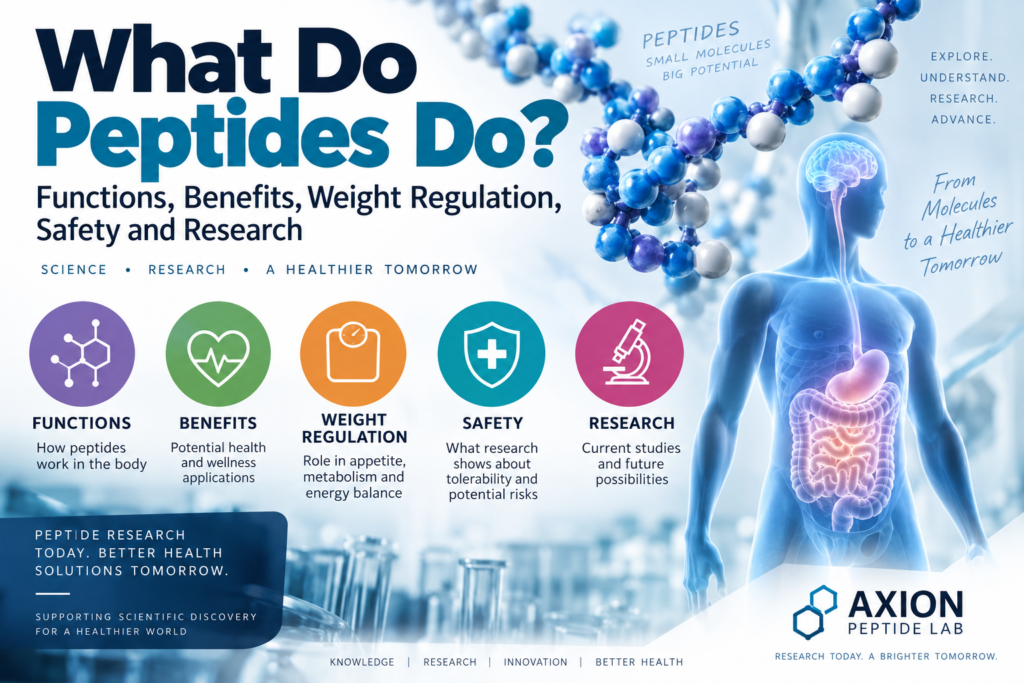
If you have been reading about metabolism, weight management, hormones, skin science, recovery, diabetes or modern drug development, you have probably encountered the word peptides.
But what do peptides do?
There is no single answer because peptides are not one substance with one function.
Peptides are chains of amino acids that can act as biological messengers, hormones, signalling molecules, therapeutic medicines and laboratory research tools. Different peptides can perform completely different jobs depending on their amino-acid sequence, structure, receptors and location in the body.
Some peptides help regulate blood glucose.
Some participate in appetite and satiety.
Others are involved in growth, reproduction, immune communication, cardiovascular regulation or communication between the gut and brain.
Certain peptide-based compounds have also become important prescription medicines.
Semaglutide and tirzepatide are prominent examples in metabolic medicine. Meanwhile, newer compounds such as retatrutide are being investigated to determine whether targeting multiple metabolic receptors simultaneously can produce additional effects.
The scientific importance of peptides extends much further than weight management.
Modern pharmaceutical researchers are investigating peptides for applications spanning metabolic disease, endocrinology, cancer, infectious disease, pain, targeted drug delivery and other fields. Reviews of the modern peptide-drug landscape describe peptides as an increasingly important therapeutic class with diverse physiological and pharmaceutical applications.
However, increasing interest has also created confusion.
A naturally occurring peptide is not automatically safe.
A peptide being investigated in a clinical trial is not automatically an approved medicine.
A laboratory research peptide is not automatically equivalent to a prescription pharmaceutical product.
And a Certificate of Analysis showing high chemical purity does not establish clinical effectiveness or safety.
This comprehensive guide explains what peptides do, how peptide signalling works, what peptides do in metabolism and weight regulation, the science behind GLP-1 and GIP, how semaglutide, tirzepatide and retatrutide differ, what clinical research actually tells us, and the major safety and regulatory distinctions researchers and consumers should understand.
Research materials supplied by Axion Peptide Lab are intended for laboratory research where stated. Research-use-only products are not intended for human consumption and should not be presented as substitutes for authorised prescription medicines.
What Are Peptides?
Peptides are molecules composed of amino acids connected by chemical bonds called peptide bonds.
Amino acids are also the building blocks of proteins. What do peptides do
This sometimes leads to peptides being described simply as “small proteins,” but that explanation is incomplete.
Peptides and proteins can share similar chemistry, yet peptides are generally shorter amino-acid chains and often act as highly specific biological signals.
There is no universally accepted number of amino acids that creates an absolute dividing line between every peptide and every protein.
In practical biology and pharmacology, the distinction often reflects molecular size, structure and function.
A peptide may contain only a handful of amino acids or several dozen.
Its biological behaviour depends not simply on length but on:
- amino-acid sequence
- three-dimensional structure
- chemical modifications
- receptor affinity
- stability
- concentration
- location in the body
- how rapidly it is produced and degraded
Peptide hormones are especially important.
A recent review describes peptide hormones as fundamental regulators of homeostasis and notes that their processing, post-translational modifications and biological activity continue to be active research areas.
This helps explain why the question “what do peptides do?” cannot be answered with one effect.
Their functions depend entirely on which peptide is being discussed.
What Do Peptides Do in the Body?
At the most basic level, many peptides communicate information.
Cells need ways to tell other cells what is happening.
Peptides are one of the tools biology uses to accomplish this.
A peptide can be produced in one tissue, released into circulation or the local cellular environment, bind to a receptor somewhere else and change how the receiving cell behaves.
Depending on the peptide, the resulting signal might influence:
- hormone secretion
- hunger or fullness
- glucose regulation
- digestion
- blood-vessel tone
- reproduction
- immune responses
- pain signalling
- growth
- stress responses
- cellular communication
Scientific reviews describe natural peptide molecules as participating in hormone regulation, neurotransmission, immune modulation and other physiological functions.
This biological diversity is precisely why peptide-based drug discovery has become such a broad field.
Scientists can study naturally occurring peptides, modify their structures or design synthetic analogues intended to interact with specific biological targets.
How Do Peptides Send Signals?
Many peptides work by binding to receptors.
A receptor is a molecular structure that recognises particular signalling molecules.
A simplified analogy is a key and lock.
The peptide acts like a molecular key.
The receptor acts like the lock.
When the peptide binds to the appropriate receptor, the receptor changes its activity and initiates signals inside the cell.
Those internal signals can then alter biological processes.
However, real receptor biology is more complicated than a simple lock-and-key system.
A peptide may bind strongly or weakly.
It may activate a receptor fully or partially.
The receptor may be abundant in one tissue and rare in another.
Other signalling pathways may modify the resulting response.
This is one reason two peptides that appear chemically similar can have very different biological effects.
What Are Peptide Hormones?
Peptide hormones are peptides that function as hormones.
Hormones are chemical messengers that help coordinate physiology across tissues.
The body often produces peptide hormones as larger precursor proteins that are later processed into biologically active molecules.
The processing step itself can be important because one precursor may generate more than one biologically meaningful peptide.
Current peptide-hormone research continues to investigate how precursor processing and post-translational modifications influence biological activity. What do peptides do
Examples of well-known peptide or protein hormones include:
insulin,
glucagon,
GLP-1,
GIP,
oxytocin,
vasopressin,
and various gastrointestinal hormones.
Each performs a different function.
What Do Peptides Do for Metabolism?
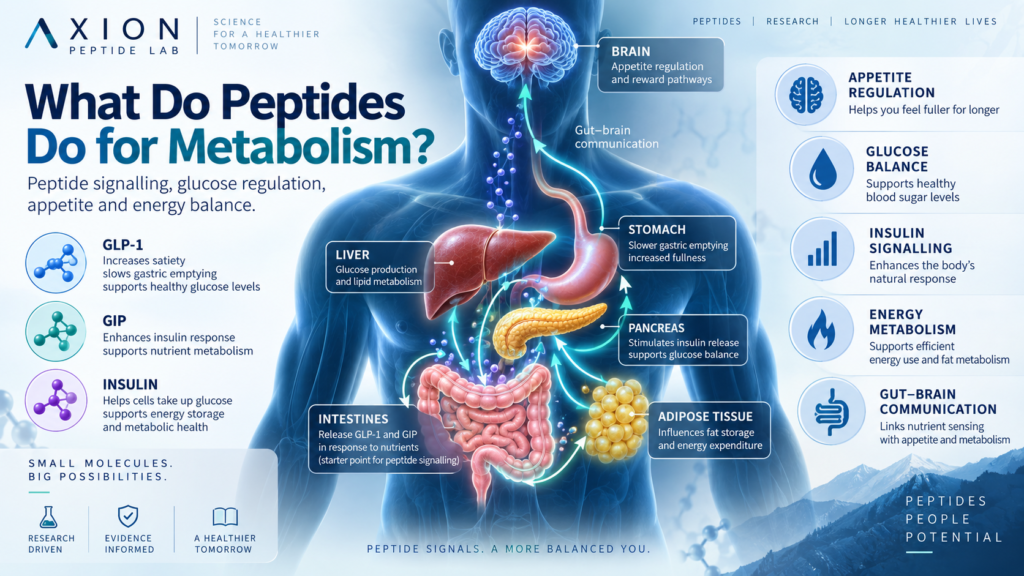
Metabolism refers broadly to the chemical processes through which the body obtains, stores and uses energy.
Peptides participate in several parts of metabolic regulation.
They can help communicate:
whether food has entered the digestive system,
how much glucose is available,
whether insulin should be released,
whether the brain should increase or decrease appetite,
and whether stored energy should be mobilised.
Modern metabolic research has identified peptide signalling as fundamental to communication between organs.
A 2025 review describes peptides as major regulators of metabolic and cardiovascular cross-talk and notes that improvements in mass spectrometry, proteomics, multi-omics and computational methods are expanding the discovery of metabolic peptides.
This is particularly relevant to obesity and diabetes research.
How Are Peptides Connected to Weight Regulation?
Body weight is regulated through a complex system.
The brain does not determine hunger in isolation.
The gut does not simply digest food without communicating with the rest of the body.
Instead, the gastrointestinal system, pancreas, liver, adipose tissue, nervous system and brain exchange hormonal signals.
Many of those signals are peptides.
Research into appetite regulation identifies a network involving hormones and peptides such as:
GLP-1,
GIP,
ghrelin,
peptide YY,
cholecystokinin,
insulin,
and other signalling molecules.
These signals interact with brain pathways involved in hunger, satiety and energy homeostasis.
Some signals promote eating.
Others contribute to fullness.
The system is dynamic rather than fixed.
For example, losing weight can itself produce hormonal adaptations that may increase appetite and make weight maintenance more difficult. A 2025 meta-analysis found changes in several appetite-related hormones following weight loss, including increases in total ghrelin in multiple study types.
This helps explain why biological weight regulation is more complicated than willpower alone.
How Metabolic Peptide Pathways Work
Metabolic peptide pathways often begin when nutrients enter the gastrointestinal tract.
Specialised cells detect those nutrients and release signalling molecules.
Those signals can influence:
the pancreas,
the brain,
the stomach,
the liver,
and other tissues. What do peptides do
One important communication system is the gut-brain axis.
Signals from the gastrointestinal tract travel through hormonal and neural pathways to regions of the brain involved in appetite.
A modern review of gut-brain signalling describes hormones including GLP-1, GIP, PYY, ghrelin and CCK as participants in pathways influencing appetite, insulin secretion and body weight.
Researchers have increasingly tried to reproduce or modify these signals pharmacologically.
That strategy has led to several generations of metabolic medicines.
What Is GLP-1 and What Does It Do?
GLP-1 stands for glucagon-like peptide-1.
It is a naturally occurring incretin hormone.
“Incretin” refers to hormones released around food intake that influence insulin-related responses.
GLP-1 has several physiological effects.
It can:
support glucose-dependent insulin secretion,
influence glucagon secretion,
slow gastric emptying,
and contribute to appetite and satiety signalling.
GLP-1 receptor agonist medicines reproduce important aspects of this signalling.
Research on GLP-1 receptor agonists indicates that their effects on body weight involve both central brain pathways and peripheral metabolic processes.
Because natural GLP-1 is broken down quickly, pharmaceutical scientists developed molecules capable of activating GLP-1 receptors for much longer.
Semaglutide is a major example.
What Is GIP and What Does It Do?
GIP stands for glucose-dependent insulinotropic polypeptide.
It is another incretin hormone associated with nutrient intake.
GIP influences glucose-dependent insulin secretion and participates in metabolic signalling.
For years, most pharmaceutical attention focused more heavily on GLP-1.
That changed with the development of tirzepatide.
Tirzepatide activates both GIP and GLP-1 receptors.
Its clinical success strengthened interest in multi-receptor peptide pharmacology.
Instead of asking whether one receptor can be targeted effectively, researchers increasingly ask whether coordinated signalling across several receptors may produce useful metabolic effects.
What Does Glucagon Do?
Glucagon is another peptide hormone.
It is frequently described as functioning in opposition to insulin because it can promote glucose release when blood glucose is low.
However, glucagon signalling is more complex than simply raising blood sugar.
Researchers are interested in glucagon-receptor activation because it can also influence:
energy expenditure,
substrate utilisation,
and lipid metabolism.
This became particularly relevant with the development of retatrutide.
Retatrutide combines glucagon-receptor activity with GIP and GLP-1 receptor activity in one investigational molecule.
Peptide-Based Compounds Commonly Discussed in Weight-Loss Research
The modern conversation around peptides and weight regulation frequently centres on three compounds:
semaglutide
tirzepatide
and
retatrutide
They should not be treated as interchangeable.
They target different combinations of receptors.
They have different evidence bases.
Most importantly, they currently have different regulatory status.
Semaglutide and tirzepatide are active ingredients in authorised prescription medicines.
Retatrutide remains investigational as of September 2026.
What Does Semaglutide Do?
Semaglutide is a GLP-1 receptor agonist.
It acts by stimulating GLP-1 receptors and reproducing several effects associated with natural GLP-1 signalling.
These include effects on appetite, insulin-related signalling and gastric emptying.
The NHS describes semaglutide as a prescription medicine used to treat obesity under the Wegovy brand and to manage type 2 diabetes under products including Ozempic and Rybelsus. It explains that semaglutide can reduce appetite, help people feel fuller for longer and support blood-glucose regulation. What do peptides do
Is Semaglutide Approved?
Yes, specific pharmaceutical products containing semaglutide are authorised for defined uses.
In the United States, Wegovy is an FDA-approved medicine.
The FDA approved an additional higher 7.2 mg Wegovy dose in March 2026 for defined adults with obesity or overweight with a weight-related condition.
In the UK, semaglutide is also included among licensed GLP-1 medicines, although individual branded products have different authorised indications.
This distinction matters.
A licensed pharmaceutical product containing semaglutide is not equivalent to an unrelated research-use material sold under the same molecular name.
What Does Tirzepatide Do?
Tirzepatide is a dual GIP and GLP-1 receptor agonist.
Rather than targeting only GLP-1 receptors, it activates both incretin pathways.
The FDA states that Zepbound works by activating GIP and GLP-1 receptors to reduce appetite and food intake.
Specific tirzepatide pharmaceutical products include:
Mounjaro, used for defined diabetes indications,
and
Zepbound, authorised in the United States for chronic weight management in eligible adults.
The FDA approved Zepbound for chronic weight management in 2023.
The agency later approved Zepbound for moderate-to-severe obstructive sleep apnoea in adults with obesity in December 2024.
In the UK, NICE recommends tirzepatide as a weight-management option for people who meet specified eligibility criteria, with updated guidance in January 2026. What do peptides do
What Does Retatrutide Do?
Retatrutide is an investigational molecule designed to activate three receptor systems:
GIP
GLP-1
and
glucagon
This is why it is called a triple hormone receptor agonist.
Lilly describes retatrutide as one molecule capable of activating all three receptor types.
Researchers are studying whether combining these pathways can influence:
appetite,
glucose regulation,
energy balance,
body weight,
and other cardiometabolic outcomes.
What Has Retatrutide Research Shown?
A Phase 2 obesity study published in the New England Journal of Medicine enrolled 338 adults.
At 48 weeks, the mean body-weight reduction in the highest-dose group was approximately 24.2%, compared with 2.1% with placebo.
The most common adverse events were gastrointestinal and were generally dose-related.
The compound later advanced into Phase 3 studies.
In May 2026, Lilly reported TRIUMPH-1 topline findings showing an average body-weight reduction of 28.3% at 80 weeks for participants assigned to the 12 mg group under the efficacy estimand.
In July 2026, Lilly reported additional Phase 3 TRIUMPH-2 and TRIUMPH-3 results involving populations with type 2 diabetes and established cardiovascular disease. The company stated that it plans to submit a Biologics License Application for retatrutide to the FDA in the first quarter of 2027.
Is Retatrutide Approved?
No.
As of September 2026, retatrutide remains investigational.
Lilly states that it is not currently approved by the FDA and remains under clinical evaluation.
The FDA also states that retatrutide is not a component of an FDA-approved drug and has not been found safe and effective for any condition.
Successful Phase 3 results are important scientific milestones.
They are not the same as regulatory approval.
Semaglutide vs Tirzepatide vs Retatrutide
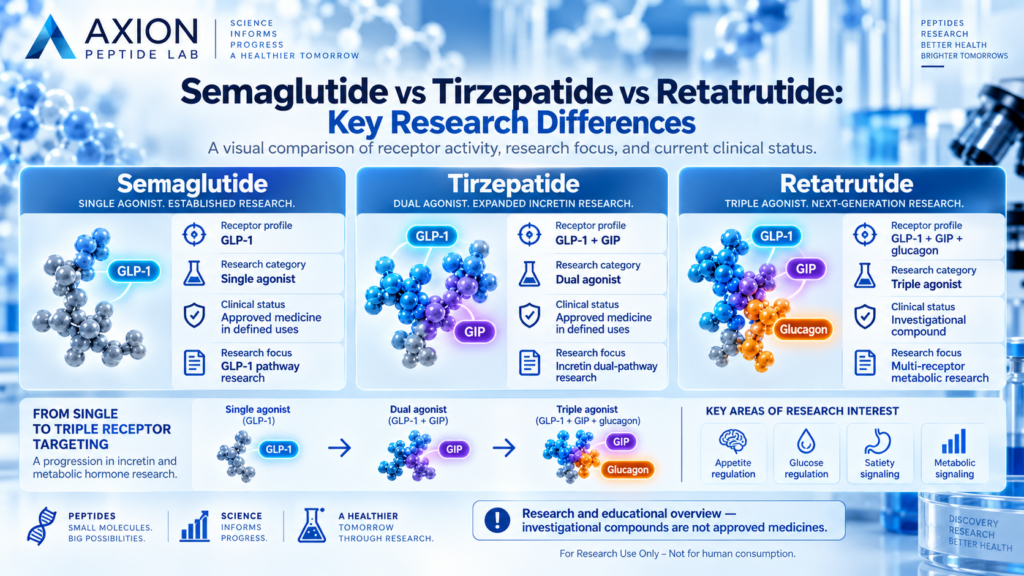
The three compounds can be compared by their receptor targets.
| Compound | Main receptor activity | Current status |
|---|---|---|
| Semaglutide | GLP-1 receptor agonist | Specific prescription products are authorised |
| Tirzepatide | GIP + GLP-1 receptor agonist | Specific prescription products are authorised |
| Retatrutide | GIP + GLP-1 + glucagon receptor agonist | Investigational; not approved as of September 2026 |
Semaglutide represents a single-receptor approach.
Tirzepatide represents a dual-receptor approach.
Retatrutide represents a triple-receptor strategy. What do peptides do
This does not mean adding more receptor targets automatically makes a compound “better.”
Biological responses depend on:
receptor balance,
dose,
pharmacokinetics,
tolerability,
study population,
and long-term safety.
Is Retatrutide Better Than Tirzepatide or Semaglutide?
There is not yet sufficient direct evidence to make a definitive overall conclusion.
One common mistake is comparing headline weight-loss percentages from separate trials.
That can be misleading.
Different trials can involve different:
populations,
durations,
dose-escalation schedules,
baseline characteristics,
statistical methods,
adherence patterns,
and endpoints.
A proper comparison ideally comes from a randomised head-to-head trial.
Until such evidence is available and fully analysed, cross-trial comparisons should be treated as informative but limited.
What Else Do Peptides Do Besides Affect Weight?
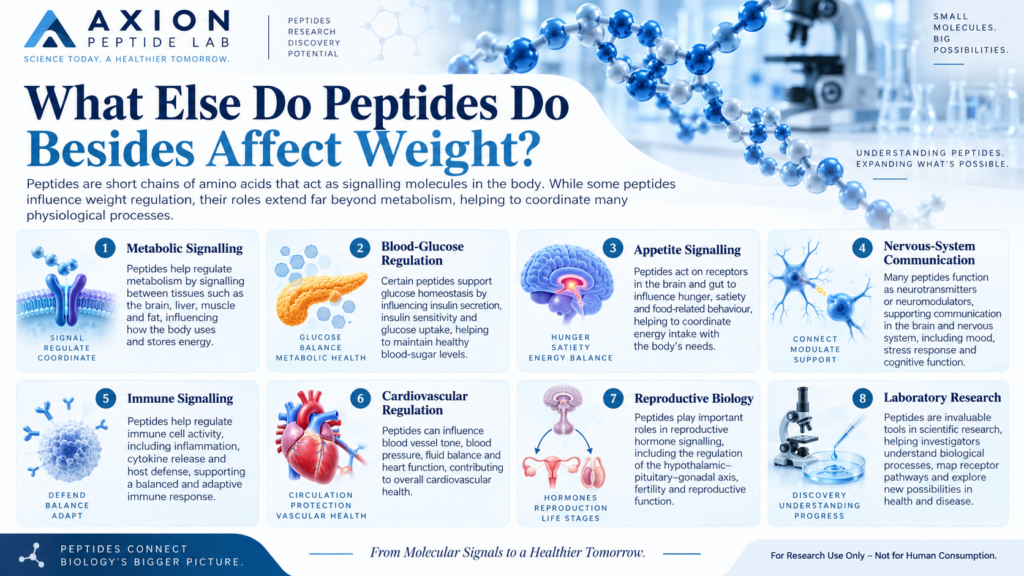
The popularity of GLP-1 medicines can create the impression that peptide research is mainly about obesity.
It is not.
Peptide biology is much broader.
Peptides and Blood-Glucose Regulation
Insulin itself is a peptide/protein hormone and one of the most important medicines in the history of endocrinology.
Other peptides influence insulin secretion, glucagon signalling and nutrient metabolism.
This makes peptide biology central to diabetes research.
Semaglutide and tirzepatide provide modern examples of engineered peptide-related molecules acting through incretin pathways.
Peptides and Appetite
Several peptide hormones help regulate appetite.
Some signals promote hunger.
Others promote fullness.
A 2026 review describes appetite regulation as a complex neuroendocrine network in which peripheral peptide signals interact with hypothalamic and brainstem pathways.
Examples include:
GLP-1,
PYY,
ghrelin,
and other gut-derived hormones.
The fact that these peptides have different—and sometimes opposing—effects again demonstrates why it is incorrect to ask whether “peptides cause weight loss” as though all peptides behave similarly.
Peptides and the Nervous System
Some peptides act as neuropeptides.
Neuropeptides help neurons communicate and can influence processes such as:
pain,
stress,
feeding behaviour,
reward,
sleep,
and autonomic function.
Their effects depend on the specific peptide and receptor system.
This area remains an active part of neuroscience and pharmacology. What do peptides do
Peptides and Immune Signalling
Peptides can also participate in immune communication.
Some are released as signalling molecules.
Others can have antimicrobial properties.
Therapeutic peptide research includes investigations into immune modulation, infectious disease and antimicrobial compounds.
Again, research activity should not be interpreted as evidence that every experimental peptide provides a clinically useful immune effect.
Peptides and Cardiovascular Regulation
Peptide hormones can participate in cardiovascular physiology.
Some influence:
blood-vessel tone,
fluid balance,
blood pressure,
or communication between metabolic and cardiovascular tissues.
Modern research increasingly studies metabolic and cardiovascular peptide signalling together because obesity, diabetes and cardiovascular disease are closely interconnected.
Peptides and Reproductive Biology
Several peptide hormones regulate reproductive functions.
Examples include hormones involved in:
pituitary signalling,
gonadal regulation,
pregnancy,
lactation,
and reproductive behaviour.
This demonstrates again that peptide biology extends far beyond metabolic research.
Why Are Peptides Interesting as Medicines?
Peptides occupy an interesting position between small-molecule drugs and much larger biological medicines.
One major advantage is target specificity.
A carefully designed peptide can interact strongly with a particular receptor or protein surface.
This can make peptides useful for targets that are difficult to address with traditional small molecules.
A recent review of peptide drug development notes their ability to access difficult targets and describes continuing chemical strategies for improving pharmacokinetics and potency.
Other potential advantages can include:
strong biological activity,
predictable sequence-based design,
and the ability to modify structures chemically.
But peptides also have important limitations. What do peptides do
Why Can Peptide Medicines Be Difficult to Develop?
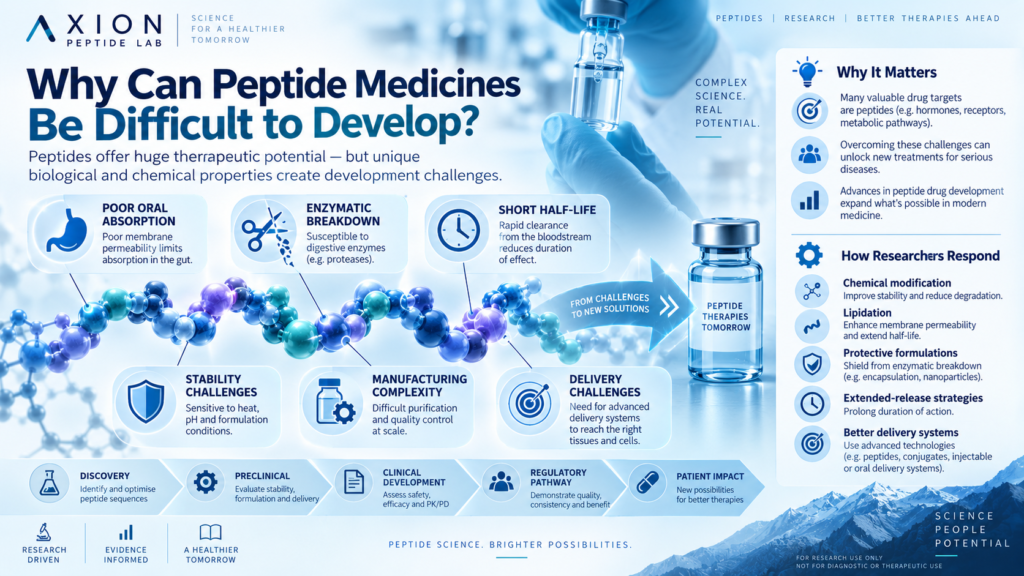
Natural peptides often have short biological half-lives.
The body contains enzymes designed to break peptide bonds.
This means a peptide can sometimes be degraded very quickly.
Peptides may also have difficulty crossing biological membranes.
Oral administration can be particularly challenging because the digestive system is designed to digest proteins and peptides.
Pharmaceutical scientists therefore use techniques such as:
amino-acid substitution,
lipid modification,
cyclisation,
protective formulations,
and extended-release technologies
to improve peptide stability and pharmacokinetics.
The success of modern GLP-1 receptor agonists is partly the result of this type of molecular engineering.
Natural Peptides vs Synthetic Peptides
A natural peptide is produced biologically.
A synthetic peptide is manufactured through chemical or biological techniques.
Synthetic does not automatically mean harmful.
Natural does not automatically mean safe.
The meaningful question is:
What is the molecule, how does it work, how pure is it, how was it studied and what evidence supports its intended use?
Many approved medicines are synthetic versions or modified analogues of naturally occurring biological molecules.
The modifications may deliberately improve:
stability,
receptor selectivity,
half-life,
or manufacturing consistency.
Are Peptides Safe?
There is no universal answer.
Safety depends on the specific peptide.
Some peptide medicines have long-established clinical safety profiles when used for approved indications.
Other compounds remain experimental.
Safety also depends on:
dose,
formulation,
route of administration,
patient characteristics,
other medicines,
manufacturing quality,
and clinical context.
A peptide with strong biological activity can produce adverse effects precisely because it changes physiology.
What Are the Safety Concerns With GLP-1 and GIP-Related Medicines?
Common adverse effects of GLP-1-related medicines often involve the gastrointestinal system.
These can include:
nausea,
vomiting,
diarrhoea,
constipation,
and abdominal symptoms.
Other warnings vary by medicine and individual circumstances.
FDA information for Zepbound includes warnings relating to pancreatitis, gallbladder problems, hypoglycaemia, acute kidney injury and other risks.
The UK’s MHRA updated its GLP-1 guidance in January and February 2026 with strengthened information concerning acute pancreatitis and other safety issues.
These risks are one reason prescription peptide-related medicines should be used within legitimate medical supervision rather than treated casually as general wellness products. What do peptides do
What Does “Research Peptide” Mean?
A research peptide is a material intended for scientific or laboratory investigation.
Possible legitimate uses include:
analytical method development,
receptor research,
chemical characterisation,
mass spectrometry,
chromatography,
assay development,
molecular studies,
and other laboratory experiments.
A research-use material is not automatically manufactured or authorised as a medicine.
That distinction is extremely important.
Research Peptides vs Prescription Medicines
A prescription medicine has undergone regulatory assessment for a defined formulation and medical use.
Regulators review evidence relating to:
quality,
manufacturing,
clinical safety,
efficacy,
formulation,
stability,
and labelling.
A laboratory research peptide does not automatically go through the same process.
Even if a research material contains a molecule with the same name as the active ingredient in a medicine, the products should not be treated as interchangeable.
For example:
Wegovy is an authorised semaglutide pharmaceutical product.
A separate vial labelled “semaglutide research peptide” is not Wegovy simply because both names contain semaglutide.
The same distinction applies to tirzepatide.
Retatrutide provides an even clearer example because no retatrutide medicine has yet been approved.
Why “Research Use Only” Does Not Override Human-Use Marketing
Regulators evaluate the overall way a product is presented. What do peptides do
Simply printing:
For Research Use Only
or
Not for Human Consumption
does not necessarily protect a seller if the surrounding website tells customers to use the product as a treatment.
The FDA states that it has warned companies selling semaglutide, tirzepatide and retatrutide products falsely labelled for research purposes while actually marketing them to consumers for human use.
FDA warning letters issued in 2026 also show that websites offering peptide products can be treated as marketing unapproved drugs when their claims establish intended human use.
For legitimate laboratory suppliers, this means the entire context should remain consistent.
Product pages, blog posts, images, FAQs and customer communications should not undermine the research-use designation by providing therapeutic dosing or administration claims.
What Does Peptide Purity Mean?
Research peptide websites often advertise numbers such as:
98% purity,
99% purity,
or
99.5% purity.
These commonly refer to chromatographic purity measured by HPLC.
HPLC stands for high-performance liquid chromatography.
The method separates compounds in a sample.
A detector records peaks corresponding to compounds emerging from the chromatography system.
The major target peptide ideally produces the dominant peak.
A purity result of 99% can mean that approximately 99% of the relevant integrated chromatographic response was assigned to the main peak under that method.
However:
99% HPLC purity does not automatically mean that 99% of everything physically present in the vial is peptide by total mass.
Peptide content and chromatographic purity are different measurements.
Purity Is Not the Same as Identity
A sample can produce a large chromatographic peak without the peak automatically proving that the compound is the intended molecule.
Researchers often use mass spectrometry to provide additional evidence of molecular identity.
Mass spectrometry measures mass-to-charge characteristics of ions.
When observed molecular mass corresponds closely with expected molecular mass, the result can support compound identification.
HPLC and mass spectrometry therefore answer complementary questions. What do peptides do
Purity Is Not the Same as Sterility
This distinction is especially important.
Chemical purity does not establish microbiological sterility.
A product can have:
99.5% HPLC purity
without any information about whether viable bacteria or fungi are present.
Sterility requires separate microbiological testing.
Likewise, HPLC purity does not establish endotoxin levels.
Different tests answer different analytical questions.
What Is a Peptide Certificate of Analysis?
A peptide Certificate of Analysis, or COA, is a document reporting analytical results for a tested material.
Depending on the tests performed, a COA may include:
product identity,
batch number,
test date,
HPLC purity,
mass spectrometry,
molecular weight,
appearance,
peptide content,
water content,
or other quality characteristics.
Researchers should check whether the COA corresponds to the actual lot being supplied.
A report from a previous batch does not automatically establish the characteristics of a new batch.
What Does Clinical Research Actually Show?
Clinical research examines specific questions under controlled conditions.
A trial result should always be interpreted in context. What do peptides do
Researchers define:
the participant population,
dose,
formulation,
duration,
comparison group,
primary endpoint,
secondary endpoints,
and safety monitoring.
Clinical evidence should therefore not be converted into vague claims such as:
“this peptide causes everyone to lose 30% of their body weight.”
A trial average does not guarantee an individual’s outcome.
Likewise, evidence from a regulated pharmaceutical development programme cannot automatically be applied to an unrelated material sold by another supplier.
Clinical Evidence vs Laboratory Evidence
Laboratory studies and clinical studies answer different questions.
Laboratory research can investigate:
receptor activation,
molecular binding,
stability,
chemical purity,
cellular effects,
or mechanisms.
Clinical research can investigate:
effects in humans,
safety,
efficacy,
dose response,
adverse effects,
and long-term outcomes.
A promising laboratory result is not the same as a proven clinical treatment.
This distinction is especially important in peptide research because many experimental compounds are widely discussed online before they have completed clinical development.
What Do Peptides Do for Weight Loss?
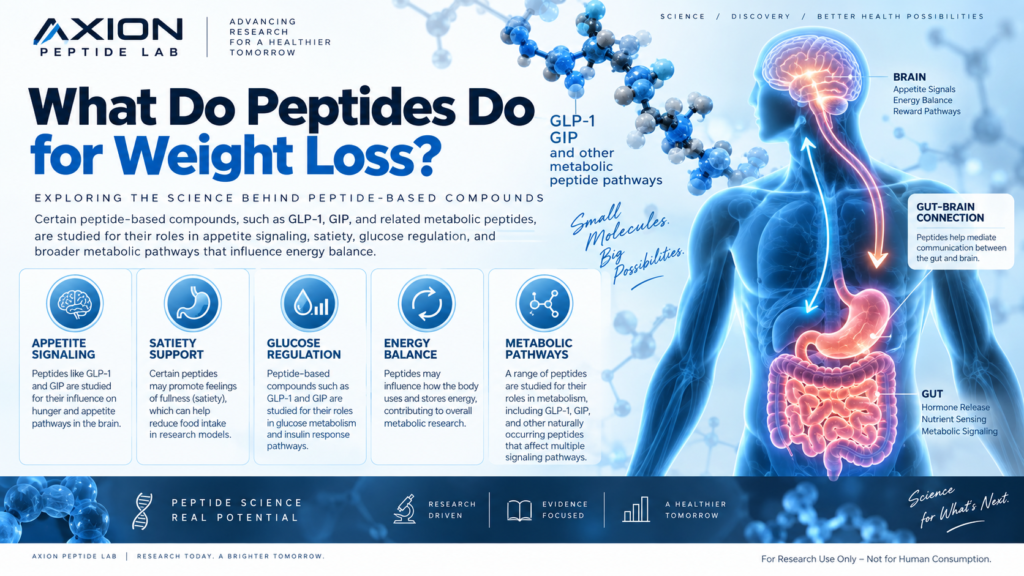
It is more accurate to say that certain peptide-related medicines can influence biological pathways involved in body-weight regulation.
Not every peptide causes weight loss.
GLP-1 receptor agonists such as semaglutide can affect appetite and satiety.
Dual GIP/GLP-1 agonism with tirzepatide influences overlapping metabolic pathways.
Investigational retatrutide adds glucagon-receptor activity. What do peptides do
The NHS describes GLP-1 and GIP agonist medicines as reducing appetite and helping people feel fuller for longer.
The effectiveness of these specific medicines should not be generalised to unrelated peptides.
Do Peptides Build Muscle?
This is another common search question.
The term peptide covers thousands of biological molecules, so it is inaccurate to say broadly that “peptides build muscle.”
Certain signalling pathways influence growth, protein metabolism or endocrine function.
That does not mean every peptide increases muscle mass.
Claims involving experimental peptides and muscle building should be evaluated individually and according to clinical evidence.
Research-use materials should not be promoted as bodybuilding medicines.
Do Peptides Help Skin?
Some naturally occurring peptides participate in extracellular matrix signalling and skin biology.
Peptides are also widely used as cosmetic ingredients.
However, topical cosmetic peptides, experimental laboratory peptides and injectable prescription medicines are very different categories.
A skincare product containing a peptide should be evaluated within the evidence and regulatory framework relevant to cosmetics.
It should not be treated as equivalent to pharmaceutical peptide therapy. What do peptides do
Do Peptides Affect Hormones?
Some peptides are themselves hormones.
Others influence hormonal pathways.
For example:
GLP-1 affects metabolic signalling.
GIP influences insulin-related responses.
Glucagon affects glucose and energy metabolism.
Oxytocin participates in reproductive and social biology.
Vasopressin affects water balance.
Therefore, peptides can have substantial endocrine effects.
That also means they should not automatically be assumed to be harmless. What do peptides do
Do Peptides Work Quickly?
The answer depends entirely on the peptide and the outcome being measured.
A signalling peptide may activate a receptor within seconds or minutes.
A clinical outcome such as sustained body-weight reduction may require months.
A laboratory measurement may occur immediately after receptor exposure.
A long-term health outcome may require years of study.
The word “works” therefore needs to be defined carefully.
Why Do Researchers Modify Natural Peptides?
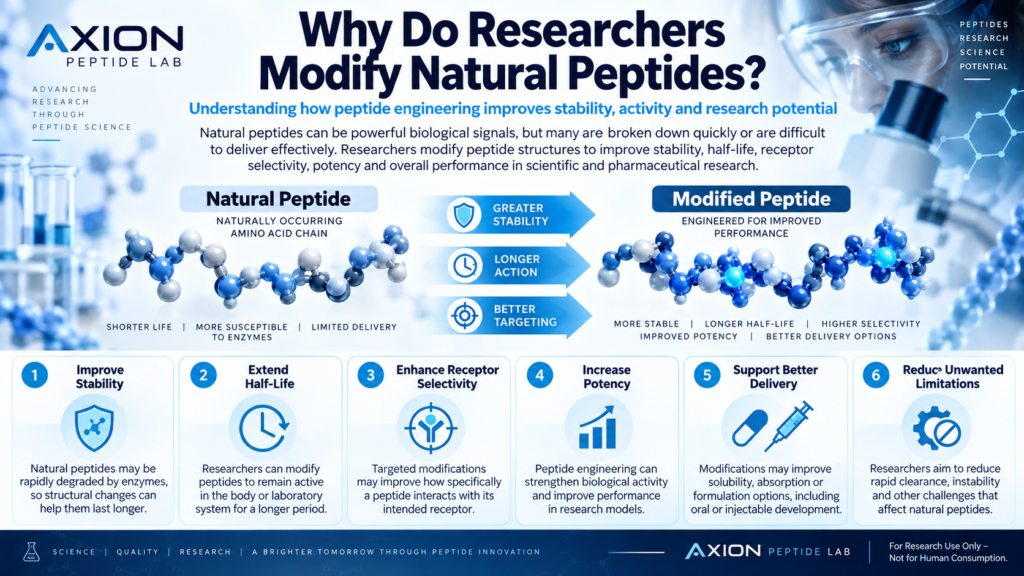
Natural peptides are often not ideal medicines.
They may be:
degraded too quickly,
cleared rapidly,
poorly absorbed,
or insufficiently selective.
Scientists can change amino acids or attach chemical groups to modify these properties.
These changes can make a peptide:
longer acting,
more stable,
or more suitable for pharmaceutical development.
Semaglutide is an example of a peptide analogue engineered to have a much longer duration than natural GLP-1.
Modern reviews of peptide therapeutics describe chemical modification as an important step in improving pharmacokinetics and turning peptide leads into practical medicines.
Current and Future Peptide Research
Peptide science is developing well beyond current metabolic medicines.
Important areas include:
Multi-Receptor Agonists
Retatrutide represents one example. What do peptides do
Researchers are exploring whether one molecule can target several complementary pathways.
This strategy may extend beyond obesity into other metabolic conditions.
Artificial Intelligence and Peptide Discovery
Computational tools can help scientists predict peptide structures and interactions.
AI-assisted design may help narrow large sequence libraries toward more promising candidates.
Oral Peptide Delivery
Researchers continue working on formulations capable of protecting peptides from digestive degradation and improving absorption through the gastrointestinal tract.
Peptide-Drug Conjugates
A peptide may act as a targeting component attached to another drug molecule.
This is particularly interesting in oncology.
Antimicrobial Peptides
Some peptides can interact with microbial membranes.
Scientists are researching whether peptide-based approaches could contribute to the fight against drug-resistant organisms.
Precision Targeting
Cyclic and engineered peptides may allow researchers to target receptors or proteins that traditional medicines struggle to reach.
The field therefore extends far beyond the current attention surrounding GLP-1 drugs.
UK Regulatory Considerations for Peptides
The UK’s MHRA evaluates products partly according to:
their ingredients,
pharmacological properties,
intended purpose,
and the claims made about them.
Its borderline-products guidance states that the regulator looks at both explicit and implicit claims, along with how products are presented through websites, social media, advertising, packaging and customer reviews.
This matters for research peptide businesses.
Calling something a “research product” is not enough if the rest of the site presents it as a treatment for obesity or another disease.
Licensed prescription medicines should also be clearly distinguished from investigational compounds.
The MHRA lists semaglutide and tirzepatide among licensed GLP-1-related medicines in the UK, while stressing that not every medicine within this broader group has the same authorised uses.
US Regulatory Considerations for Peptides
The FDA similarly distinguishes approved medicines from unapproved or investigational products.
This is particularly important in the metabolic peptide market.
The agency warns that unapproved versions of semaglutide and tirzepatide do not undergo FDA review for safety, effectiveness and quality before marketing.
FDA also states that retatrutide cannot currently be used in compounding under federal law and has not been found safe and effective for any condition.
Researchers and businesses therefore need to distinguish carefully between:
laboratory supply,
clinical development,
compounding,
and approved pharmaceutical products.
How Should Researchers Evaluate a Peptide Supplier?
For legitimate laboratory procurement, researchers should look beyond marketing language.
Useful questions include:
Is the compound clearly identified?
Does the product have a batch number?
Is a Certificate of Analysis available?
Does the COA match the actual batch?
Was HPLC testing performed?
Was molecular identity supported through mass spectrometry?
Is the testing laboratory identified?
Are storage conditions clearly stated?
Is the intended research use clear?
Does the website avoid contradictory therapeutic claims?
These questions are generally more informative than simply choosing whichever supplier displays the highest purity percentage.
Researchers looking for laboratory-use materials can explore relevant catalogue information at AxionPeptideLab.com, subject to applicable laws, regulations and institutional policies.
Frequently Asked Questions About What Peptides Do
What do peptides do?
Peptides perform many different functions. They can act as hormones, signalling molecules, neurotransmitters and regulators of metabolic, immune, digestive and endocrine processes. Their effects depend on the specific peptide and its receptor targets. What do peptides do
What are peptides made of?
Peptides are made from amino acids connected through peptide bonds.
Are peptides proteins?
Peptides and proteins are both made from amino acids. Peptides are generally shorter, while proteins tend to be larger and structurally more complex, although there is no universal numerical cutoff separating every peptide from every protein. What do peptides do
What do peptides do for weight loss?
Certain peptide-related medicines act on metabolic pathways that influence appetite, fullness, blood glucose and gastric emptying. Semaglutide and tirzepatide are examples of authorised medicines. This does not mean all peptides cause weight loss. What do peptides do
What does GLP-1 do?
GLP-1 participates in glucose-dependent insulin secretion, appetite signalling, glucagon regulation and gastric emptying. Pharmaceutical GLP-1 receptor agonists reproduce parts of this signalling.
What does GIP do?
GIP is an incretin hormone involved in nutrient-responsive metabolic signalling and glucose-dependent insulin secretion.
What is semaglutide?
Semaglutide is a GLP-1 receptor agonist and the active ingredient in authorised prescription medicines including Wegovy, Ozempic and Rybelsus, depending on the indication and jurisdiction.
What is tirzepatide?
Tirzepatide is a dual GIP and GLP-1 receptor agonist. Specific pharmaceutical products containing tirzepatide are authorised for defined diabetes, weight-management and other indications.
What is retatrutide?
Retatrutide is an investigational triple receptor agonist targeting GIP, GLP-1 and glucagon receptors. It remains unapproved as of September 2026.
Is retatrutide FDA approved?
No. FDA states that retatrutide is not an FDA-approved drug and has not been found safe and effective for any condition.
Are peptides safe?
Some peptide medicines have established safety profiles for authorised uses, while other peptides remain experimental. Safety depends on the specific molecule, dose, formulation, route of administration and individual patient factors.
Does 99% peptide purity mean the peptide is safe?
No. HPLC purity is a chemical measurement. It does not establish sterility, endotoxin status, biological potency, clinical effectiveness or safety.
Are research peptides medicines?
No. Research peptides are laboratory materials intended for scientific use. Prescription medicines have undergone regulatory review for defined formulations and medical indications.
How do scientists confirm peptide purity?
HPLC is commonly used to evaluate chromatographic purity. Researchers may also use mass spectrometry to support molecular identity and other tests to measure content, water, sterility or endotoxin when relevant.
What is a peptide COA?
A Certificate of Analysis is an analytical document associated with a particular sample or batch. It may report HPLC purity, identity data, molecular weight and other test results.
Final Thoughts: So, What Do Peptides Actually Do?
The simplest answer is:
Peptides carry biological information.
But the full answer is much broader.
Peptides help cells communicate.
They can act as hormones.
They can regulate metabolism.
They can influence appetite.
They can participate in glucose control.
They can affect nervous-system signalling.
They can participate in immune communication.
And they can serve as highly specific tools for modern pharmaceutical research.
This diversity explains why peptides have become such an important area of science.
However, it also explains why broad claims about “the benefits of peptides” are often misleading.
There is no single peptide effect.
The relevant questions are:
Which peptide?
Which receptor?
Which biological pathway?
Which formulation?
What evidence exists?
Is it an approved medicine or an investigational compound?
These questions are particularly important in metabolic research.
Semaglutide primarily targets the GLP-1 receptor and is an active ingredient in authorised prescription medicines.
Tirzepatide targets both GIP and GLP-1 receptors and is also used in authorised medicines.
Retatrutide targets GIP, GLP-1 and glucagon receptors, but remains investigational as of September 2026.
The fact that these molecules share some biological pathways does not make them interchangeable.
Nor does clinical evidence involving authorised or investigational pharmaceutical preparations automatically apply to unrelated laboratory materials.
For researchers, analytical quality also matters. What do peptides do
HPLC can provide information about chromatographic purity.
Mass spectrometry can support molecular identity.
Certificates of Analysis can provide batch-level documentation.
But none of these laboratory tools establish clinical safety or regulatory approval on their own.
The most useful way to think about peptides is therefore not as a single category of “beneficial compounds,” but as a diverse family of biological molecules whose effects must be evaluated individually.
For legitimate laboratory researchers, Axion Peptide Lab provides research-focused catalogue information and analytical documentation for applicable materials. What do peptides do
Medical treatment, on the other hand, should remain within authorised healthcare and pharmacy channels.
For Research Use Only – Not for human consumption.
References and Further Reading
Coassolo L, Wiggenhorn A, Svensson KJ. Understanding Peptide Hormones: From Precursor Proteins to Bioactive Molecules. Trends in Biochemical Sciences, 2025. Review of peptide-hormone production, processing and biological functions.
Therapeutic Peptides: Recent Advances in Discovery, Synthesis and Clinical Translation, 2025. Overview of current peptide-drug development and clinical translation.
From Lead to Market: Chemical Approaches to Transform Peptides Into Therapeutics, 2025. Review of medicinal-chemistry strategies used to improve peptide pharmacokinetics and potency.
Peptide Hormones in Appetite Regulation: A Complex Network, 2026. Review of peptide hormones and neural pathways involved in appetite and energy homeostasis.
Mechanisms of GLP-1 Receptor Agonist-Induced Weight Loss, 2025. Review of central and peripheral GLP-1 signalling pathways.
NHS — Semaglutide. Current UK information on prescription semaglutide and its authorised uses.
FDA — Higher-Dose Semaglutide Approval, March 2026. Current US regulatory information on Wegovy HD.
FDA — Zepbound Approval for Chronic Weight Management. US regulatory information concerning tirzepatide.
FDA — Zepbound for Obstructive Sleep Apnoea. US approval for tirzepatide in moderate-to-severe OSA in adults with obesity.
NICE — Tirzepatide for Managing Overweight and Obesity. Current UK guidance updated in 2026.
Jastreboff AM et al. Triple-Hormone-Receptor Agonist Retatrutide for Obesity. New England Journal of Medicine, 2023. Peer-reviewed Phase 2 retatrutide trial.
Eli Lilly — TRIUMPH-1 Phase 3 Results, May 2026. Sponsor-reported Phase 3 retatrutide obesity findings.
Eli Lilly — TRIUMPH-2 and TRIUMPH-3 Results, July 2026. Additional Phase 3 results and planned regulatory submission.
FDA — Concerns With Unapproved GLP-1 Drugs Used for Weight Loss. Current FDA guidance on unapproved semaglutide, tirzepatide and retatrutide products.
MHRA — GLP-1 Medicines for Weight Loss and Diabetes. Current UK regulatory and safety information.
MHRA — Borderline Products: How to Tell if Your Product Is a Medicine. UK guidance on intended use, claims and product presentation.