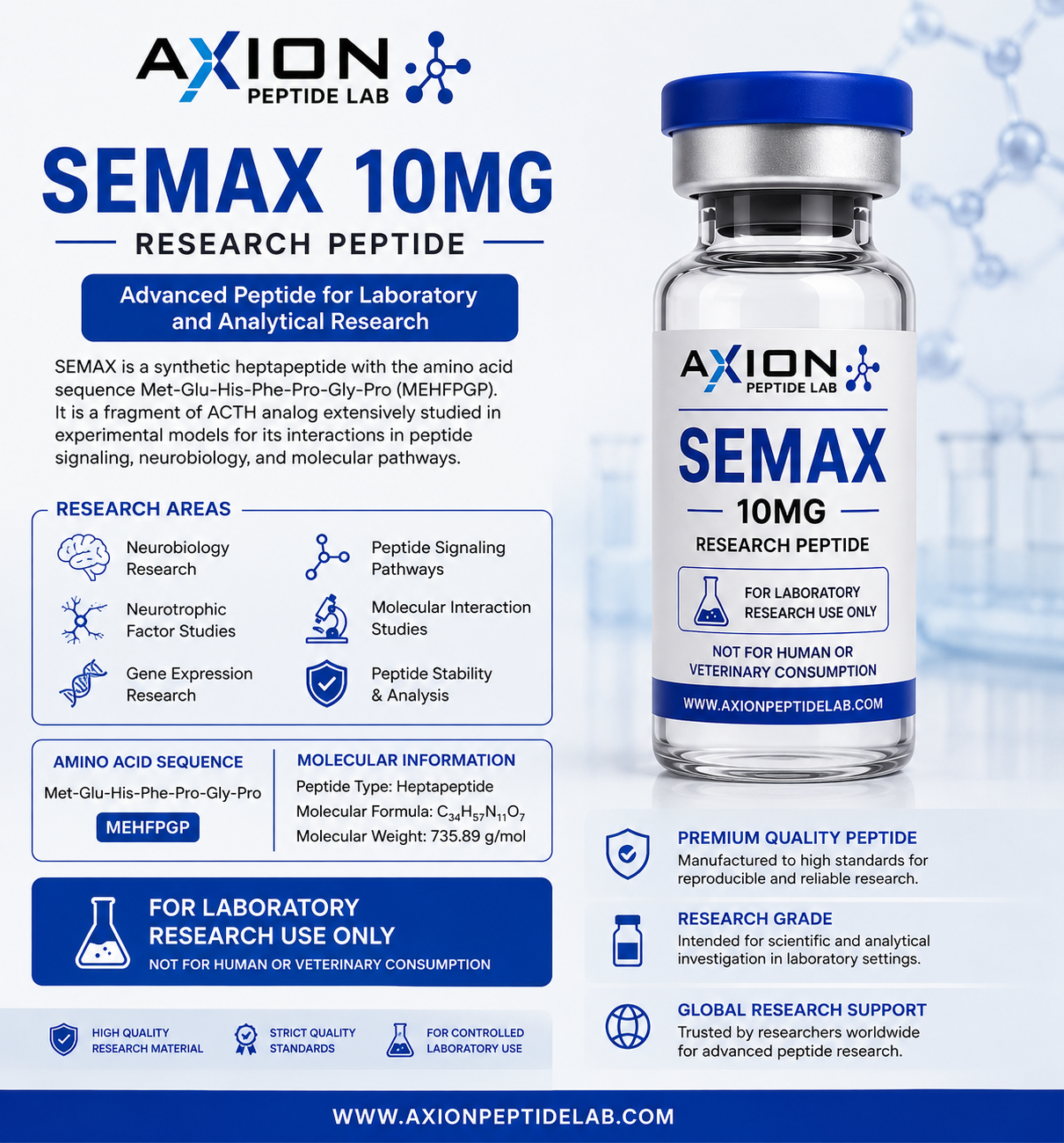
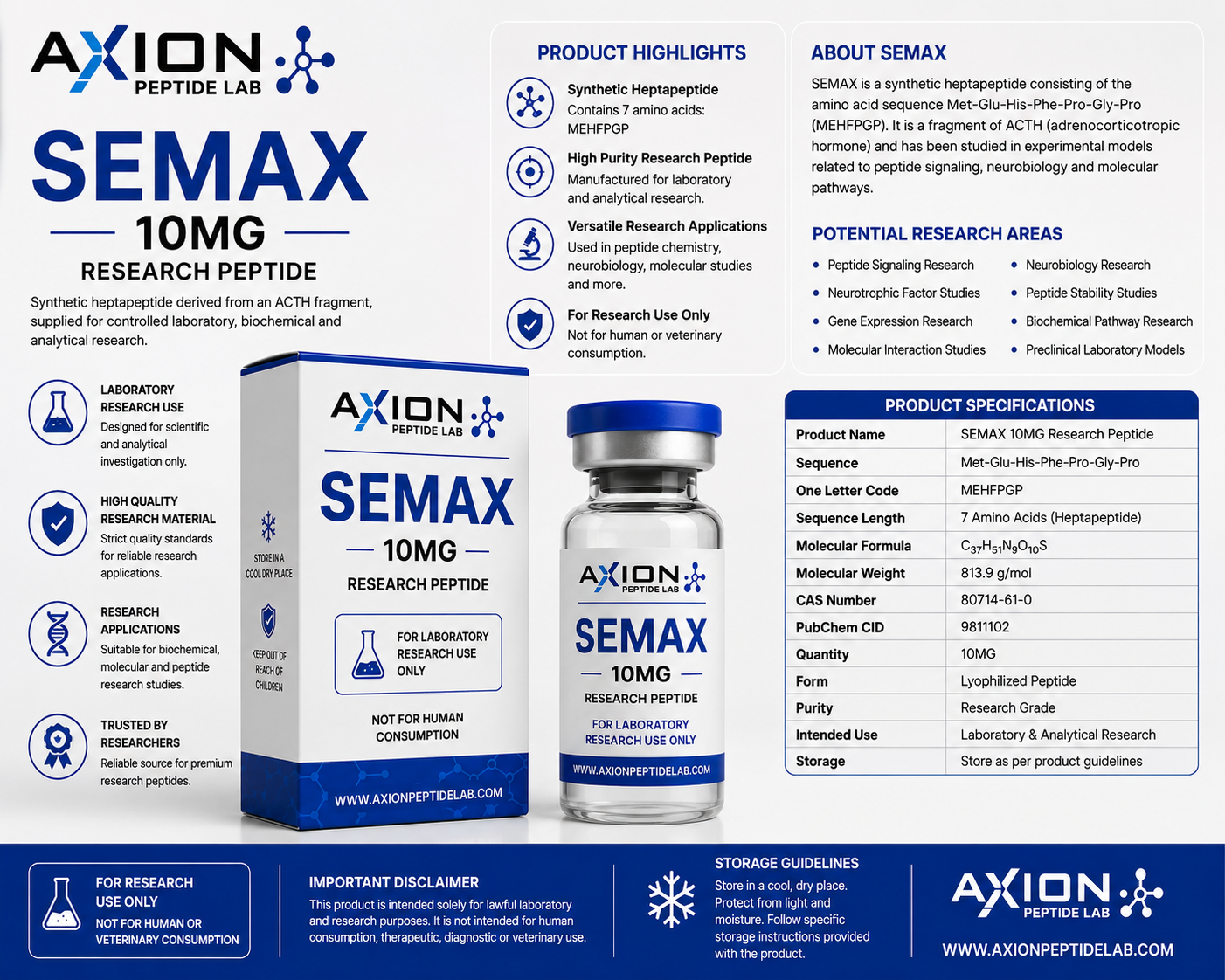
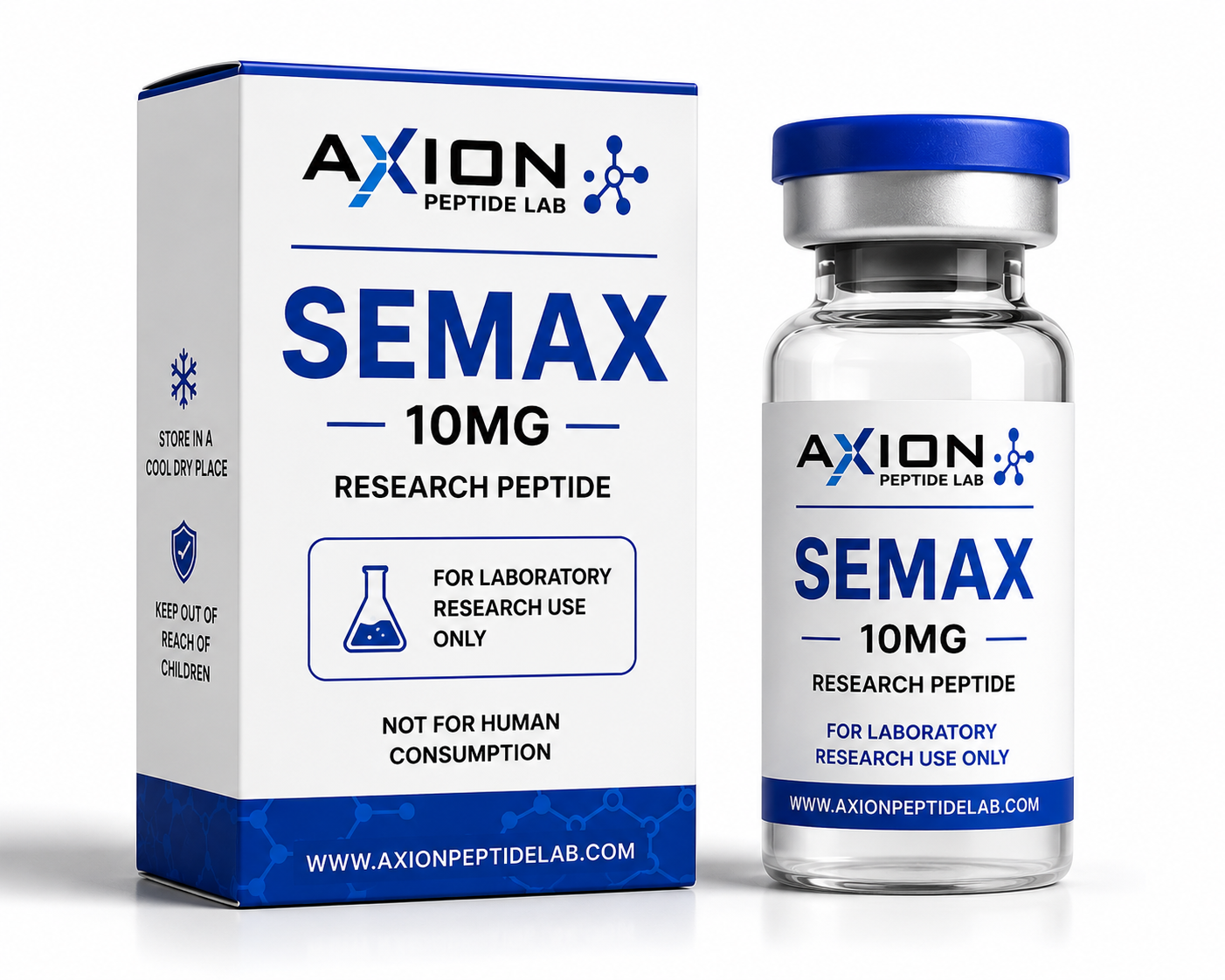
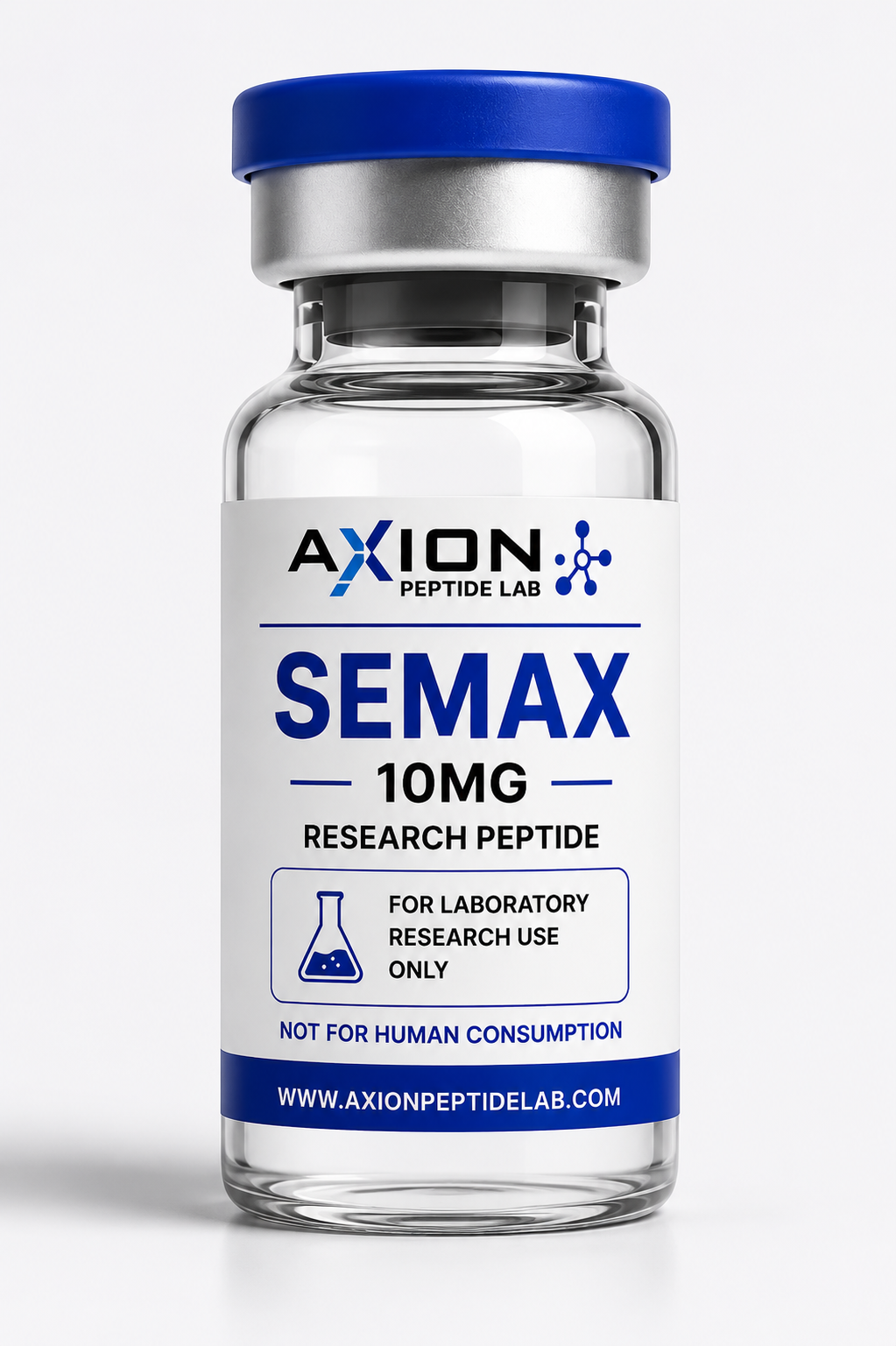
SEMAX 10MG Research Peptide is a synthetic heptapeptide supplied for controlled laboratory, biochemical and analytical investigation. Commonly represented by the sequence Met-Glu-His-Phe-Pro-Gly-Pro (MEHFPGP), SEMAX is studied experimentally in peptide signalling, neurobiology, molecular interactions, neurotrophic pathways, gene expression and peptide stability.
The 10MG designation represents the stated quantity of research material and is not a dosing recommendation.
For Research Use Only – Not for human or veterinary consumption.
$81.23 Original price was: $81.23.$75.82Current price is: $75.82.
SEMAX 10MG Research Peptide from Axion Peptide Lab is a specialised synthetic peptide supplied for controlled laboratory, biochemical and analytical research. SEMAX is a heptapeptide that has attracted scientific interest in peptide signalling, molecular interaction, peptide stability and experimental neurobiology research.
The molecule is commonly represented by the amino-acid sequence Met-Glu-His-Phe-Pro-Gly-Pro (MEHFPGP) and is structurally related to a fragment of adrenocorticotropic hormone (ACTH).
Its relatively compact seven-amino-acid structure makes SEMAX an interesting experimental material for laboratories investigating relationships between peptide sequence, molecular behaviour and biological signalling.
The 10MG designation identifies the stated quantity of research material supplied. It is not a human dosage or administration recommendation.
SEMAX supplied by Axion Peptide Lab is intended exclusively for legitimate scientific investigation.
For Research Use Only – Not for human or veterinary consumption.
SEMAX is a synthetic heptapeptide originally developed from research involving fragments of ACTH.
Unlike full-length ACTH, SEMAX represents a modified peptide sequence designed for experimental investigation.
Its sequence is commonly written as Met-Glu-His-Phe-Pro-Gly-Pro.
Researchers have investigated SEMAX and related peptides within experimental systems involving peptide signalling, molecular mechanisms and neurobiological pathways.
Its scientific value comes from its use as an experimental molecule rather than from consumer or therapeutic positioning.
For laboratories, SEMAX can provide a useful material for investigating how relatively short synthetic peptide sequences behave under controlled experimental conditions.
Understanding molecular characteristics is fundamental to peptide research.
SEMAX contains seven amino-acid residues and is therefore classified as a heptapeptide.
Researchers can investigate characteristics such as molecular identity, peptide sequence, degradation, stability and interactions with experimental biological systems.
The peptide’s structure can also be compared with ACTH-derived fragments and other synthetic peptide analogues.
Such comparative experiments can help scientists investigate how modifications to peptide sequences influence molecular properties and experimental activity.
Results should always be interpreted according to the specific assay, model and experimental conditions employed.
Peptides frequently function as signalling molecules within biological systems.
Consequently, understanding their interactions with cells, enzymes and molecular pathways remains an important area of biochemical research.
SEMAX has been investigated experimentally in relation to signalling pathways associated with neural and molecular processes.
Laboratories may use controlled models to examine changes in molecular markers, gene-expression patterns, signalling proteins or other experimental endpoints.
Research involving SEMAX should distinguish between observations generated in laboratory or preclinical systems and clinically established outcomes.
Findings from experimental models cannot automatically be translated into benefits for humans.
A substantial portion of scientific interest surrounding SEMAX relates to experimental neurobiology.
Researchers have investigated the peptide in laboratory and animal models examining molecular processes associated with neural tissues and signalling.
Published experimental work has explored pathways involving neurotrophic factors, gene expression and cellular responses.
These investigations make SEMAX potentially relevant to researchers examining how peptide-based experimental compounds interact with complex neural systems.
However, references to neurobiological research should not be interpreted as claims that the Axion Peptide Lab product diagnoses, prevents or treats neurological conditions.
The product remains a research material.
Another area of scientific investigation surrounding SEMAX concerns neurotrophic signalling.
Experimental studies have examined relationships between SEMAX exposure and molecular markers associated with neurotrophic systems.
Neurotrophic factors are signalling proteins involved in the development, maintenance and function of neural cells.
Research in this area may examine changes in molecular expression or signalling pathways under carefully controlled experimental conditions.
The interpretation of such findings depends heavily on the model, concentration, exposure conditions and analytical methodology used.
Axion Peptide Lab does not represent experimental observations as established human health effects.
SEMAX has also appeared in research investigating changes in gene-expression profiles.
Modern molecular biology allows researchers to examine how experimental compounds correlate with changes in transcription across different biological systems.
Laboratories interested in peptide-associated gene regulation may incorporate SEMAX into appropriately designed experimental models.
Potential endpoints can include comparative expression analysis, pathway mapping and molecular-response profiling.
These types of investigations can contribute to broader understanding of peptide signalling while maintaining the distinction between experimental findings and clinical conclusions.
Short synthetic peptides provide useful models for analytical research involving stability and degradation.
SEMAX may be studied under controlled laboratory conditions to examine how environmental or experimental variables affect peptide integrity.
Researchers may investigate degradation patterns, analytical characteristics and changes occurring under different controlled conditions.
Experimental variables can include time, temperature, solution composition and other parameters relevant to a specific protocol.
Laboratories should use validated analytical methodologies where appropriate and document all experimental conditions carefully.
Product- and batch-specific handling information should also be followed.
Analytical characterisation is an important component of peptide research.
Laboratories working with SEMAX may use suitable analytical techniques to investigate molecular identity, purity profiles, stability or degradation products depending on their equipment and research objectives.
The exact analytical methodology should be selected according to the scientific question being investigated.
Researchers requiring specific purity, identity or composition specifications should review documentation associated with the actual SEMAX batch before incorporating the material into an experiment.
General information about the SEMAX molecule should not be treated as evidence of specifications for an individual commercial batch.
The SEMAX 10MG presentation provides researchers with a clearly identified quantity of experimental peptide material.
The 10MG designation refers to the stated amount associated with the product and should be recorded as part of normal laboratory documentation.
It does not represent a recommended dose.
Researchers can incorporate the material into appropriately designed analytical, biochemical or preclinical workflows according to their institutional procedures.
Axion Peptide Lab does not provide instructions concerning self-administration, human dosing or personal use.
SEMAX may be relevant to appropriately designed research involving:
These are research categories rather than therapeutic indications.
Reliable scientific research requires accurate documentation.
Researchers should maintain records identifying the SEMAX material used, applicable batch information, experimental conditions and analytical procedures.
Traceability becomes especially important when comparing results across different experiments or research materials.
Availability of certificates and analytical documentation may vary by product and batch.
Researchers requiring particular specifications should verify available documentation before purchasing.
Claims regarding purity, sterility or other technical characteristics should only be made when supported by documentation for the actual material supplied.
SEMAX 10MG should be handled by appropriately trained personnel within suitable research environments.
Researchers should follow the handling and storage information associated with the specific product and batch.
Research materials should remain clearly labelled and separated from medicines, foods, supplements and consumer products.
Laboratories should implement suitable procedures to protect material integrity and minimise accidental contamination.
Customers are responsible for ensuring that acquisition, importation, possession and research use comply with applicable regulations and institutional policies.
Axion Peptide Lab provides research peptides and laboratory materials intended for controlled scientific and analytical applications.
The SEMAX 10MG Research Peptide listing provides researchers with a straightforward option for sourcing a clearly identified experimental peptide for legitimate R&D work.
Researchers can review product information and available documentation before selecting materials for their projects.
The research-only positioning also provides clear separation between scientific products and medicines intended for personal use.
Qualified researchers, laboratories and scientific organisations can buy SEMAX 10MG Research Peptide from Axion Peptide Lab for legitimate laboratory and analytical research.
Before ordering, researchers should determine whether the available product specifications are appropriate for their intended experimental protocol.
Product availability and delivery eligibility may depend on destination and applicable regulations.
The material is supplied exclusively for scientific research and should not be represented or used as a consumer health product.
For Research Use Only – Not for human or veterinary consumption.
SEMAX 10MG is a stated quantity of the synthetic heptapeptide SEMAX supplied for controlled laboratory, biochemical and analytical research.
SEMAX is commonly represented by the seven-amino-acid sequence Met-Glu-His-Phe-Pro-Gly-Pro, abbreviated MEHFPGP.
Yes. SEMAX is a synthetic heptapeptide, meaning its molecular structure contains seven amino-acid residues.
Experimental research has examined SEMAX in areas including peptide signalling, neurobiology, neurotrophic pathways, gene expression, molecular interactions and peptide stability.
10MG identifies the stated quantity of research material supplied. It is not a human dosage or administration recommendation.
SEMAX was developed from research involving an ACTH-derived peptide fragment and incorporates a modified seven-amino-acid sequence.
Yes. Appropriate laboratories may investigate molecular identity, stability, degradation and other peptide characteristics using suitable analytical methodologies.
No. Axion Peptide Lab supplies SEMAX strictly as a research material and does not provide human dosing or administration instructions.
Researchers should follow the product- and batch-specific storage information supplied with the material rather than relying on generic peptide storage assumptions.
Qualified customers can purchase SEMAX 10MG Research Peptide from Axion Peptide Lab for legitimate laboratory, biochemical and analytical research, subject to availability and applicable requirements.