Peptide Oxidation and Degradation: 7 Key Causes, Detection Methods and Stability Insights
Peptide oxidation and degradation are important considerations in the analytical characterisation and stability assessment of synthetic peptides. Changes to a peptide’s chemical structure can affect its chromatographic profile, molecular mass, physical properties and suitability for a particular laboratory research application.
Peptides are composed of amino acid residues connected through peptide bonds. Their chemical behaviour depends on the sequence, side-chain functional groups, terminal modifications, physical form and surrounding environment.
Certain amino acid residues are susceptible to oxidation, while other structural features may undergo hydrolysis, deamidation, isomerisation or additional chemical transformations.
Understanding peptide oxidation and degradation requires distinguishing the individual reaction pathways rather than treating every change as the same process.
Oxidation is one possible form of chemical degradation. Not all peptide degradation involves oxidation, and not every oxidation reaction produces the same molecular or analytical consequences.
Laboratories commonly use high-performance liquid chromatography (HPLC), liquid chromatography–mass spectrometry (LC-MS) and complementary techniques to investigate these changes.
This guide examines seven important factors associated with peptide oxidation and degradation, explains the underlying chemistry, describes how laboratories identify degradation products and discusses the limitations of stability testing.
What Is Peptide Oxidation and Degradation?
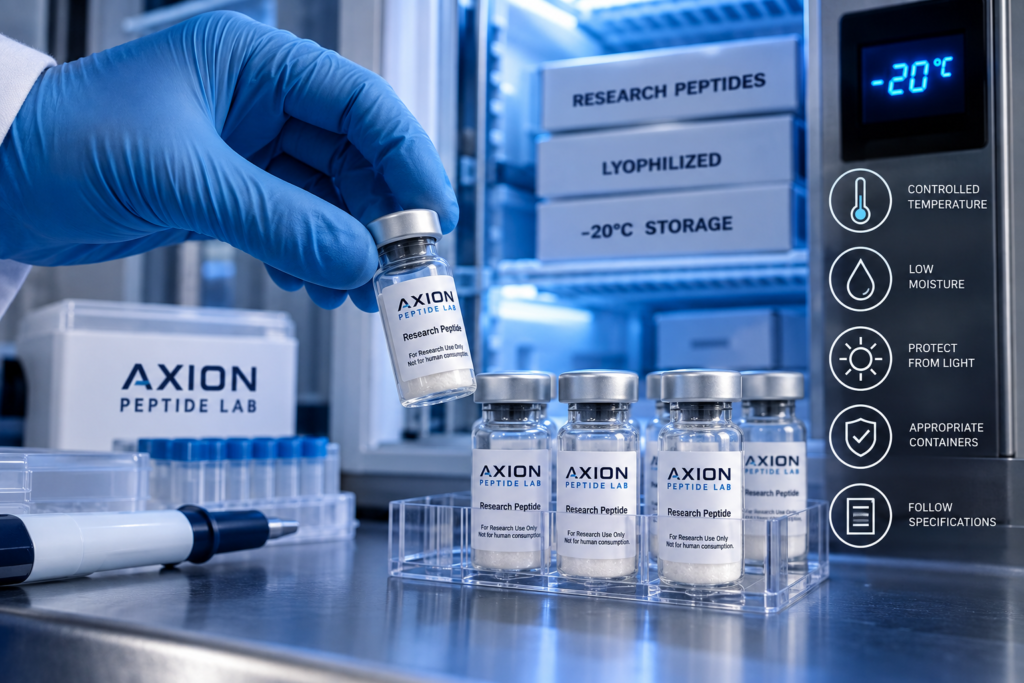
Peptide oxidation and degradation describe chemical changes that may occur in peptide molecules during synthesis, processing, storage or experimental handling.
Oxidation involves a change in the oxidation state of a chemical species. In peptide chemistry, oxidative reactions can modify susceptible amino acid side chains or other molecular features.
Degradation is a broader term covering chemical transformations that alter the original peptide structure.
These changes may include oxidation, deamidation, hydrolysis, bond cleavage or rearrangement.
What Is Peptide Oxidation?
Peptide oxidation refers to oxidative chemical modifications affecting a peptide molecule.
Some amino acid residues are more susceptible than others.
Methionine, cysteine, tryptophan, tyrosine and histidine can undergo oxidation-related reactions under particular conditions.
The products depend on the residue, reaction environment and oxidising species.
For example, oxidation of a methionine residue to methionine sulfoxide produces an increase in molecular mass of approximately 15.995 Da.
This characteristic mass difference can help researchers investigate oxidation using mass spectrometry.
However, a mass increase alone does not necessarily establish which residue was modified.
What Is Peptide Degradation?
Peptide degradation encompasses a wider range of chemical changes.
These may involve modification of side chains, cleavage of peptide bonds or rearrangement of molecular structures.
Not all degradation pathways result in the loss of an amino acid residue.
Some modifications change only a small part of the molecule.
Why the Distinction Matters
The distinction between oxidation and other degradation pathways matters because different analytical techniques may be needed to characterise the resulting products.
For example, LC-MS may detect a mass shift associated with oxidation, while certain isomerisation reactions can produce products with the same molecular mass as the original peptide.
A suitable peptide oxidation and degradation study must therefore consider more than intact molecular mass.
Why Peptide Oxidation and Degradation Matter in Laboratory Research
Synthetic peptide research depends on accurately characterised materials.
Chemical changes may complicate the interpretation of experimental findings if the composition of the tested material is uncertain.
Changes in Molecular Structure
Oxidation or degradation can alter a peptide’s chemical structure.
The consequences depend on the location and nature of the modification.
Changes in Chromatographic Behaviour
Modified peptides may interact differently with chromatographic stationary phases.
This can produce new peaks or changes in retention time.
Changes in Molecular Mass
Certain chemical modifications produce measurable mass differences.
Mass spectrometry can provide evidence relevant to these changes.
Changes in Physical Properties
Chemical modifications may influence solubility, aggregation behaviour or other physical characteristics.
These effects are peptide-specific.
Changes in Research Material Composition
A sample may contain increasing amounts of degradation products over time.
Peptide oxidation and degradation testing helps laboratories determine whether such changes are occurring under the conditions examined.
7 Key Factors Associated With Peptide Oxidation and Degradation
Several environmental and molecular factors can influence chemical stability.
The following seven factors are particularly relevant when studying peptide oxidation and degradation.
1. Exposure to Oxygen and Oxidising Species
Oxygen can participate in certain oxidative reactions.
However, the presence of oxygen alone does not mean every peptide will undergo rapid oxidation.
Reaction rates depend on molecular susceptibility and the chemical environment.
Reactive oxygen species may contribute to oxidation under relevant conditions.
Laboratory analysis can help establish whether oxidative products are present.
2. Amino Acid Sequence
The amino acid sequence strongly influences susceptibility to chemical modification.
Some residues contain side chains that are more readily oxidised than others.
The local molecular environment can also influence their reactivity.
Two peptides exposed to similar conditions may therefore exhibit different degradation behaviour.
3. Temperature
Temperature can influence chemical reaction rates.
Elevated temperatures may accelerate certain degradation pathways, although the relationship is not universal.
Thermal stress studies may help identify possible degradation products.
However, results obtained under elevated temperatures should not automatically be extrapolated to other storage conditions.
4. Light Exposure
Light can contribute to chemical changes in susceptible molecules.
Certain peptides may undergo photochemical reactions under particular exposure conditions.
Photostability studies can help determine whether light-related changes are relevant to the material.
5. Solution pH
Solution pH can influence the rates of several chemical reactions.
Some oxidation and degradation pathways are affected by acidic or alkaline conditions.
The effect depends on the peptide sequence and the reaction mechanism.
6. Trace Metals and Other Reactive Constituents
Certain metal ions may catalyse oxidative reactions under suitable conditions.
The significance depends on the chemical system and the peptide.
Other constituents may also influence oxidation or degradation pathways.
7. Moisture and Physical Form
Peptides may be studied as lyophilised solids or in solution.
The availability of water can influence chemical reactions and molecular mobility.
A dry preparation and a solution may therefore exhibit different stability behaviour.
However, lyophilisation does not guarantee the absence of degradation.
A reliable peptide oxidation and degradation assessment evaluates the actual material rather than assuming universal stability based on physical form.
Which Amino Acids Are Most Susceptible to Oxidation?
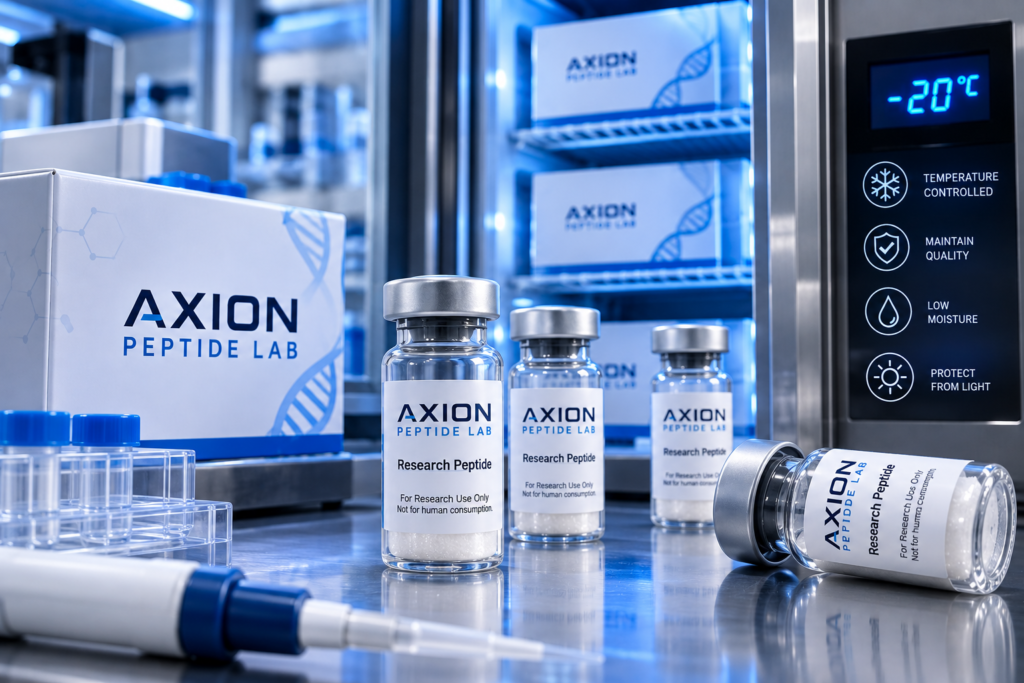
Amino acid composition is one of the most important considerations in peptide oxidative stability.
Different residues undergo different reactions.
| Amino acid | Possible oxidation-related change | Analytical consideration |
|---|---|---|
| Methionine | Formation of methionine sulfoxide or further oxidation products | Characteristic mass changes may be detected by MS |
| Cysteine | Disulfide formation or additional sulfur oxidation products | Redox state and connectivity may require specific analysis |
| Tryptophan | Formation of multiple oxidation products | Product identification can be complex |
| Tyrosine | Oxidative modification or coupling reactions | Some products may require additional structural evidence |
| Histidine | Oxidative modification of the imidazole-containing side chain | Reaction products depend on conditions |
These are examples rather than a complete list.
Methionine Oxidation
Methionine contains a sulfur-containing side chain.
Oxidation to methionine sulfoxide is a recognised chemical transformation.
The approximate mass increase of 15.995 Da can provide a useful analytical clue.
Further oxidation to a sulfone may produce an additional oxygen-related mass increase.
During peptide oxidation and degradation analysis, chromatographic separation and mass spectrometry can help investigate these species.
Cysteine Oxidation
Cysteine contains a thiol group that can participate in oxidation-related chemistry.
Two cysteine residues may form a disulfide bond.
Other sulfur oxidation products are also possible under suitable conditions.
Disulfide formation can influence peptide conformation and molecular connectivity.
Tryptophan Oxidation
Tryptophan contains an indole side chain.
It may undergo several oxidation-related transformations.
The resulting products can be structurally diverse, making analytical characterisation more challenging.
Tyrosine Oxidation
Tyrosine contains a phenolic side chain.
Certain oxidative reactions may modify the residue or produce coupling products.
The analytical consequences depend on the reaction pathway.
Histidine Oxidation
Histidine contains an imidazole ring.
It can undergo oxidation-related reactions under particular chemical conditions.
Identifying the products may require more than a simple intact-mass measurement.
Peptide Oxidation vs Hydrolysis vs Deamidation
Although these processes can all contribute to peptide degradation, they involve different chemistry.
| Degradation pathway | General chemical change | Possible analytical evidence |
|---|---|---|
| Oxidation | Oxidative modification of susceptible groups | Mass changes, altered chromatographic profile |
| Hydrolysis | Bond cleavage involving water | Fragments or other reaction products |
| Deamidation | Conversion of susceptible amide groups | Approximately +0.984 Da for common deamidation reactions |
| Isomerisation | Structural rearrangement | Retention changes, potentially unchanged mass |
| Disulfide rearrangement | Altered disulfide connectivity | Structural changes that may require specialised analysis |
These distinctions are important when interpreting peptide oxidation and degradation results.
A new HPLC peak should not automatically be classified as an oxidation product.
Similarly, an observed molecular-mass difference must be evaluated against multiple plausible chemical explanations.
How HPLC Detects Peptide Oxidation and Degradation
High-performance liquid chromatography is commonly used to monitor changes in peptide samples.
A suitable method separates components according to their interactions with the chromatographic system.
Detecting New Chromatographic Peaks
When a peptide undergoes chemical modification, the resulting product may exhibit different chromatographic retention.
This can produce additional peaks.
A stability study may compare chromatograms collected at different time points.
Monitoring Relative Peak Areas
Changes in relative peak areas can indicate alterations in the detectable composition of a sample.
However, area percentages depend on detector response and the integration method.
They should not automatically be interpreted as mass percentages.
Evaluating Chromatographic Resolution
A degradation product may co-elute with the intended peptide.
In such cases, the chromatogram may not clearly reveal the additional component.
Method suitability is therefore important.
Limitations of HPLC
Retention time alone does not establish molecular identity.
Some degradation products may be poorly detected under the selected conditions.
HPLC should therefore be interpreted alongside other analytical evidence when structural identification is required.
For further information, read HPLC Peptide Purity Testing.
How LC-MS Identifies Peptide Oxidation Products
LC-MS combines chromatographic separation with mass-spectral detection.
It is particularly useful when investigating chemical modifications that alter molecular mass.
Detecting Oxidation-Related Mass Shifts
Addition of an oxygen atom produces a mass increase of approximately 15.995 Da.
This can provide evidence consistent with certain oxidation reactions.
For example, a hypothetical peptide with a neutral monoisotopic mass of 2,000.000 Da might produce an oxidised species with a mass near 2,015.995 Da following the addition of one oxygen atom.
This is an illustrative example, not an actual peptide test result.
Charge States and Mass Deconvolution
Peptides can form multiply charged ions during electrospray ionisation.
A molecular-mass change may therefore appear as a smaller shift in the measured mass-to-charge ratio.
Mass deconvolution can help estimate the underlying neutral molecular mass.
Structural Ambiguity
Different modifications can sometimes produce similar mass changes.
A mass shift consistent with oxidation does not always establish the exact reaction product or modification site.
Quantitative Limitations
Mass-spectral signal intensity depends on ionisation efficiency and other factors.
A higher signal does not necessarily indicate a proportionally greater mass of material.
Peptide oxidation and degradation studies requiring quantitative conclusions need suitable analytical calibration and method performance.
Read LC-MS Peptide Analysis for a broader explanation.
Using Tandem Mass Spectrometry to Locate Oxidation Sites
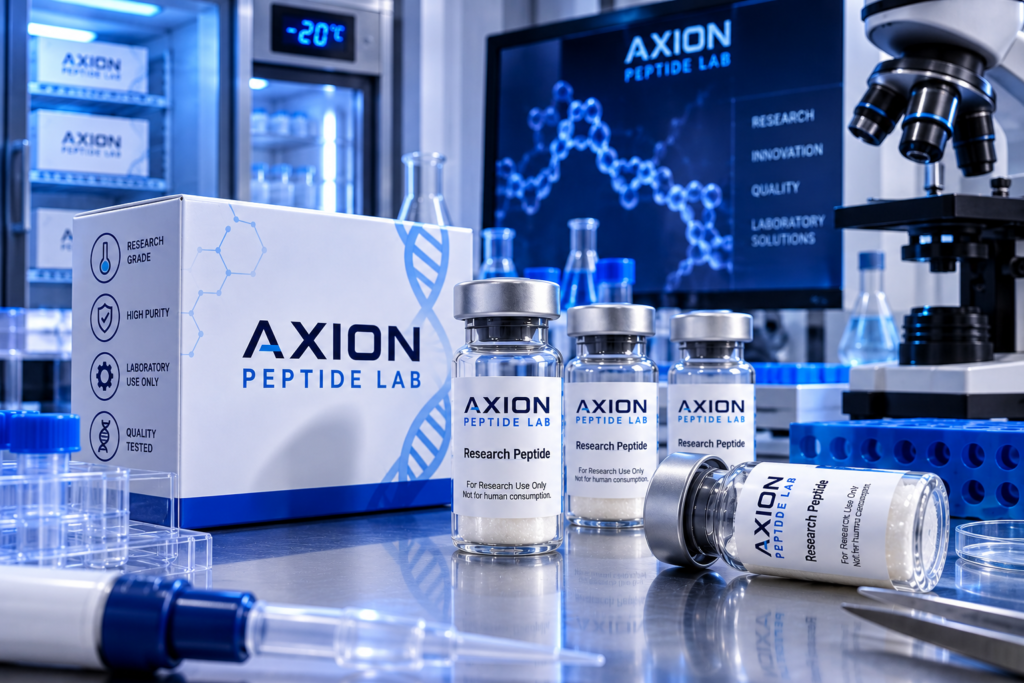
Tandem mass spectrometry, or MS/MS, can provide additional structural information.
Selected peptide ions are fragmented, and the resulting product ions are examined.
Fragmentation Evidence
Fragment ions may contain different portions of the peptide sequence.
Comparing modified and unmodified fragments can help investigate where a chemical change occurred.
Oxidation-Site Assignment
When the fragmentation data are informative, researchers may be able to associate a modification with a particular residue or sequence region.
However, not every spectrum provides sufficient information for a definitive assignment.
Multiple Possible Products
Some oxidation reactions generate several products.
Different products may share similar molecular masses.
Additional chromatographic separation or structural analysis may therefore be required.
MS/MS can strengthen peptide oxidation and degradation analysis, but it does not remove every form of structural ambiguity.
Peptide Oxidation and Degradation in Lyophilised Materials
Lyophilised peptides are produced through freeze-drying.
The process removes much of the water from a frozen preparation.
The resulting material may be more stable than certain corresponding solutions under some conditions.
However, stability is not guaranteed.
Residual Moisture
Lyophilised materials can retain residual water.
Moisture may influence chemical reactions or physical characteristics.
Oxygen Exposure
Oxidation-related changes may occur in susceptible materials under relevant conditions.
The significance depends on the peptide and its environment.
Temperature Effects
Temperature may influence reaction rates and physical behaviour.
The effect must be evaluated for the specific material.
Packaging Interactions
The container and closure system may influence the environment surrounding a sample.
Packaging characteristics can therefore be relevant to stability assessment.
Peptide oxidation and degradation testing of lyophilised materials should consider the actual preparation, packaging and study conditions.
Peptide Oxidation and Degradation in Solutions
Peptides in solution interact with the surrounding solvent and dissolved constituents.
These interactions can influence chemical reactions.
Solution Composition
The composition of a solution can affect peptide stability.
Relevant factors may include pH, ionic strength and other chemical characteristics.
Molecular Mobility
Molecules in solution can interact and undergo reactions under suitable conditions.
However, the rate of degradation depends on the specific chemical system.
Aggregation and Physical Changes
Some peptides may aggregate or undergo other physical changes in solution.
These processes are distinct from oxidation, although chemical and physical instability can sometimes occur together.
Material-Specific Behaviour
There is no universal solution stability duration applicable to every peptide.
Peptide oxidation and degradation should be evaluated using material-specific analytical evidence.
What Is Forced Degradation Testing?
Forced degradation testing involves exposing a material to selected stress conditions to investigate potential degradation pathways and analytical method suitability.
The purpose is to generate useful information about possible chemical changes.
It is not necessarily intended to reproduce ordinary storage conditions.
Oxidative Stress Studies
An oxidative stress study may investigate susceptibility to oxidation-related reactions.
The resulting products can be analysed using appropriate methods.
Thermal Stress Studies
Thermal stress can help reveal temperature-associated changes.
However, elevated-temperature behaviour does not automatically predict long-term stability under different conditions.
Photostability Studies
Photostability testing examines the influence of light exposure.
Its relevance depends on the material and intended analytical purpose.
pH-Related Stress Studies
Studies under different pH conditions may help investigate acid- or base-associated degradation pathways.
Interpreting Forced Degradation Results
Stress studies can reveal possible degradation products and help evaluate analytical separation.
However, the products formed under stress conditions may differ from those occurring during ordinary storage.
A reliable peptide oxidation and degradation programme distinguishes mechanistic stress-study findings from real-time stability evidence.
How Peptide Oxidation and Degradation Affect Purity Results
Chemical degradation can change a peptide’s chromatographic profile.
A modified component may produce a separate peak.
This can reduce the principal peak’s relative area percentage.
However, chromatographic area purity is not the same as absolute peptide content.
Example of a Hypothetical Chromatographic Change
| Time point | Principal peak area | Other included peak areas |
|---|---|---|
| Initial | 99.2% | 0.8% |
| Later analysis | 98.4% | 1.6% |
| Final analysis | 97.6% | 2.4% |
These values are illustrative.
They show how relative chromatographic response might change during a study.
The table does not establish that oxidation caused the changes.
Further analysis would be needed to investigate the additional components.
Why Purity Results Need Context
Different analytical methods can produce different results.
Detector response, chromatographic separation and integration procedures influence reported area percentages.
Peptide oxidation and degradation findings should therefore be interpreted according to the actual analytical methods used.
For a related explanation, see Peptide Purity vs Peptide Content.
Peptide Oxidation and Degradation in Impurity Profiling
Impurity profiling examines unwanted or unexpected components associated with a peptide sample.
Oxidation and degradation products may form part of that profile.
Identifying Related Components
HPLC can separate certain components.
LC-MS can provide molecular-mass evidence.
MS/MS may provide additional structural information.
Differentiating Synthesis Impurities From Degradation Products
A component detected in a peptide sample may have originated during synthesis rather than storage.
A degradation product, by contrast, may form through chemical change after the initial material was produced.
Distinguishing these origins may require process information and comparative testing.
Evaluating Changes Across Time
Repeated analyses can help establish whether particular components increase during a stability study.
Reporting Confidence
An impurity assignment should reflect the strength of the analytical evidence.
Some components may be confidently identified, while others remain tentative.
Peptide oxidation and degradation analysis should not present uncertain assignments as established facts.
Read Peptide Impurity Profiling for a detailed guide.
Peptide Oxidation and Degradation in Stability Testing
Stability testing examines changes in material characteristics under defined conditions over time.
Oxidation and degradation may be important stability attributes when the peptide is susceptible to these pathways.
Real-Time Stability Studies
Real-time studies examine materials under the conditions of interest.
They provide direct evidence about changes during the period examined.
Accelerated Stability Studies
Accelerated studies use selected conditions intended to increase the rate of certain changes.
They can help investigate possible degradation pathways.
However, accelerated results do not automatically establish long-term stability.
Stability-Indicating Methods
A stability-indicating method should detect relevant changes and distinguish the intended peptide from interfering degradation products.
Analytical Variability
Small differences between measurements may reflect method variability.
A stability conclusion should consider whether the observed change is analytically meaningful.
Material-Specific Conclusions
Different peptide sequences and preparations can behave differently.
A peptide oxidation and degradation study should not be generalised beyond the material and conditions supported by the evidence.
For more information, read Peptide Stability Testing.
How to Read Oxidation and Degradation Results on a Peptide COA

A certificate of analysis reports selected analytical findings associated with an identified sample or batch.
It may include chromatographic purity, molecular-mass information or other relevant test results.
However, not every COA includes a detailed degradation assessment.
Review the Batch Information
Confirm that the report identifies the tested material.
Examine the Analytical Methods
Determine whether HPLC, LC-MS or another technique was used.
Interpret the Purity Result Correctly
A chromatographic area percentage does not establish the absence of every degradation product.
Review Supporting Data
Chromatograms and mass spectra may provide useful context.
Identify the Testing Date
A result obtained at one time does not automatically establish stability over an extended period.
Distinguish Tested Results From Claims
A stated storage recommendation or shelf life should be supported by appropriate evidence.
Peptide oxidation and degradation conclusions should not exceed the scope of the reported testing.
Read Peptide Certificate of Analysis for a guide to COA interpretation.
Common Misconceptions About Peptide Oxidation and Degradation
Several misconceptions can lead to incorrect conclusions.
Misconception 1: Every Degradation Product Is an Oxidation Product
Oxidation is only one possible degradation pathway.
Other reactions include hydrolysis, deamidation and isomerisation.
Misconception 2: High HPLC Purity Means No Oxidation Has Occurred
A high chromatographic purity result does not guarantee that every modified species has been detected or resolved.
Misconception 3: A +16 Da Mass Shift Always Identifies the Oxidation Site
An oxygen-related mass increase can support an oxidation hypothesis.
It does not automatically establish the location or exact structure of the modification.
Misconception 4: Lyophilised Peptides Cannot Oxidise
Freeze-drying does not eliminate every possible oxidation pathway.
Misconception 5: Low Temperature Prevents All Degradation
Lower temperatures may slow certain reactions but do not universally prevent chemical change.
Misconception 6: One Mass Spectrum Establishes Long-Term Stability
A mass spectrum provides information about the analysed sample at the time of measurement.
Long-term stability requires appropriate longitudinal evidence.
Misconception 7: Chemical Purity Establishes Safety
Chemical purity does not establish sterility, endotoxin status or suitability for human or veterinary administration.
Understanding these limitations is essential to interpreting peptide oxidation and degradation results accurately.
How Laboratories Evaluate Peptide Oxidation and Degradation Data
Reliable analytical conclusions depend on method suitability and clear reporting.
Identify the Analytical Objective
The laboratory should establish whether the purpose is detection, structural identification, quantification or stability assessment.
Select Suitable Techniques
The methods should address the expected chemical changes.
Establish Analytical Performance
Where appropriate, method selectivity, precision, accuracy and detection capability should be evaluated.
Consider Multiple Possible Explanations
A new analytical feature may have more than one plausible chemical origin.
Document Sample Conditions
The material and analytical conditions should be recorded.
Evaluate Changes Across Measurements
Observed differences should be considered alongside analytical variability.
Report Findings According to Evidence
Confirmed structural assignments should be distinguished from tentative interpretations.
A reliable peptide oxidation and degradation report communicates both the findings and their limitations.
International Guidance Relevant to Peptide Oxidation and Degradation
Established analytical and stability guidance provides useful principles for evaluating chemical changes.
ICH Q1A(R2)
ICH Q1A(R2) concerns stability testing of new drug substances and products within its regulatory scope.
It provides principles relevant to study design and evaluation.
ICH Q1B
ICH Q1B addresses photostability testing within its applicable scope.
It is relevant when light-associated degradation is being evaluated.
ICH Q2(R2)
ICH Q2(R2) addresses validation of analytical procedures.
It helps explain the importance of analytical performance when measuring chemical changes.
ICH Q14
ICH Q14 concerns analytical procedure development.
It provides a framework for developing methods suitable for their intended purpose.
These guidelines do not automatically establish compliance for any particular research peptide material.
Frequently Asked Questions About Peptide Oxidation and Degradation
1. What causes peptide oxidation and degradation?
Peptide oxidation and degradation can be influenced by amino acid sequence, oxygen exposure, temperature, light, pH, moisture and other chemical conditions. The actual pathways depend on the specific peptide.
2. Which amino acids are most susceptible to oxidation?
Methionine, cysteine, tryptophan, tyrosine and histidine can undergo oxidation-related reactions under suitable conditions. The products and reaction rates vary.
3. Can HPLC detect peptide oxidation?
HPLC can detect certain oxidation products when they are adequately separated and detected. However, chromatographic retention alone does not establish the chemical identity of a component.
4. How does LC-MS identify oxidised peptides?
LC-MS can detect molecular-mass changes consistent with oxidation. Additional structural evidence may be required to determine the modification site and exact product.
5. Does peptide oxidation always increase molecular mass?
Not every oxidation-related process produces the same net mass change. Some reactions add oxygen, while others involve more complex chemical transformations.
6. Can lyophilised peptides undergo degradation?
Yes. Lyophilisation can improve stability for some materials, but chemical changes may still occur depending on the peptide, formulation and conditions.
7. Is peptide oxidation the same as peptide hydrolysis?
No. Oxidation involves oxidative chemical changes, while hydrolysis involves bond cleavage through reaction with water. They are distinct processes.
8. Can peptide oxidation and degradation testing establish shelf life?
Such testing can contribute to stability assessment, but shelf-life claims require suitable data covering the material, conditions and period being claimed.
Conclusion: Understanding Peptide Oxidation and Degradation
Peptide oxidation and degradation are important aspects of synthetic peptide chemistry and analytical quality assessment.
Oxidation can modify susceptible amino acid residues, while other degradation pathways may involve hydrolysis, deamidation, isomerisation or structural rearrangement.
The resulting chemical changes may influence molecular mass, chromatographic behaviour and physical properties.
HPLC provides useful information about chromatographic changes. LC-MS and MS/MS can contribute molecular-mass and structural evidence, while complementary analytical methods may be necessary for particular modifications.
However, no single analytical result establishes every characteristic of a peptide preparation.
Reliable peptide oxidation and degradation research depends on suitable methods, careful interpretation, traceable samples and evidence-based conclusions.
Understanding the underlying chemistry helps researchers evaluate analytical reports, investigate stability-related changes and distinguish supported findings from assumptions.
Scientific References and Further Reading
- International Council for Harmonisation (ICH). Q1A(R2): Stability Testing of New Drug Substances and Products.
https://www.ich.org/page/quality-guidelines - International Council for Harmonisation (ICH). Q1B: Photostability Testing of New Drug Substances and Products.
https://www.ich.org/page/quality-guidelines - International Council for Harmonisation (ICH). Q2(R2): Validation of Analytical Procedures.
https://www.ich.org/page/quality-guidelines - International Council for Harmonisation (ICH). Q14: Analytical Procedure Development.
https://www.ich.org/page/quality-guidelines - Manning, M. C., Chou, D. K., Murphy, B. M., Payne, R. W., Katayama, D. S. (2010). Stability of Protein Pharmaceuticals: An Update. Pharmaceutical Research, 27, 544–575. Background on oxidation and other instability mechanisms in protein pharmaceuticals.
https://doi.org/10.1007/s11095-009-0045-6 - Wang, W. (1999). Instability, Stabilization, and Formulation of Liquid Protein Pharmaceuticals. International Journal of Pharmaceutics, 185(2), 129–188. Background on chemical and physical instability in protein formulations.
https://doi.org/10.1016/S0378-5173(99)00152-0 - Steen, H., Mann, M. (2004). The ABC’s (and XYZ’s) of Peptide Sequencing. Nature Reviews Molecular Cell Biology, 5, 699–711.
https://doi.org/10.1038/nrm1468
Research information notice: This article is intended for laboratory education and analytical research. It does not represent verified testing of any commercial peptide batch, establish a universal storage period or demonstrate suitability for human or veterinary administration.
2 Responses