
Peptide Sterility Testing: How Laboratories Detect Microbial Contamination and Evaluate Sterility Test Results
Peptide Sterility Testing: 7 Critical Factors for Reliable Microbial Quality Assessment
Peptide sterility testing evaluates whether viable microorganisms can be detected in a peptide material or preparation using a defined microbiological test. It addresses a quality characteristic that cannot be established through routine HPLC purity testing, LC-MS identity analysis or visual inspection.
Sterility is an important concept in pharmaceutical microbiology and certain laboratory research applications. However, it is frequently misunderstood, particularly when product descriptions use terms such as sterile, sterility tested, microbial tested or endotoxin tested interchangeably.
These terms do not describe the same analytical property. peptide sterility testing
A sterility test examines whether viable microorganisms can be detected under specified test conditions. An endotoxin test measures bacterial endotoxin activity. HPLC evaluates selected chemical components, while LC-MS provides molecular information.
A peptide preparation can therefore produce a high chromatographic purity result without having undergone microbiological testing.
Likewise, a material may pass a sterility test while containing measurable bacterial endotoxin.
The methods used for sterility testing also have important limitations. No finite test can demonstrate the absolute absence of every microorganism from every unit in a batch.
A negative result means that no microbial growth was detected under the conditions and within the limitations of the test.
Established pharmacopoeial approaches include membrane filtration and direct inoculation, as described in USP General Chapter <71> and corresponding international pharmacopoeial standards.
Other microbiological techniques may be used for different analytical purposes, including bioburden determination and microbial identification. peptide sterility testing
This article examines seven critical aspects of peptide sterility testing, explains the scientific principles behind common methods and shows how researchers should interpret microbiological quality documentation.
What Is Peptide Sterility Testing?
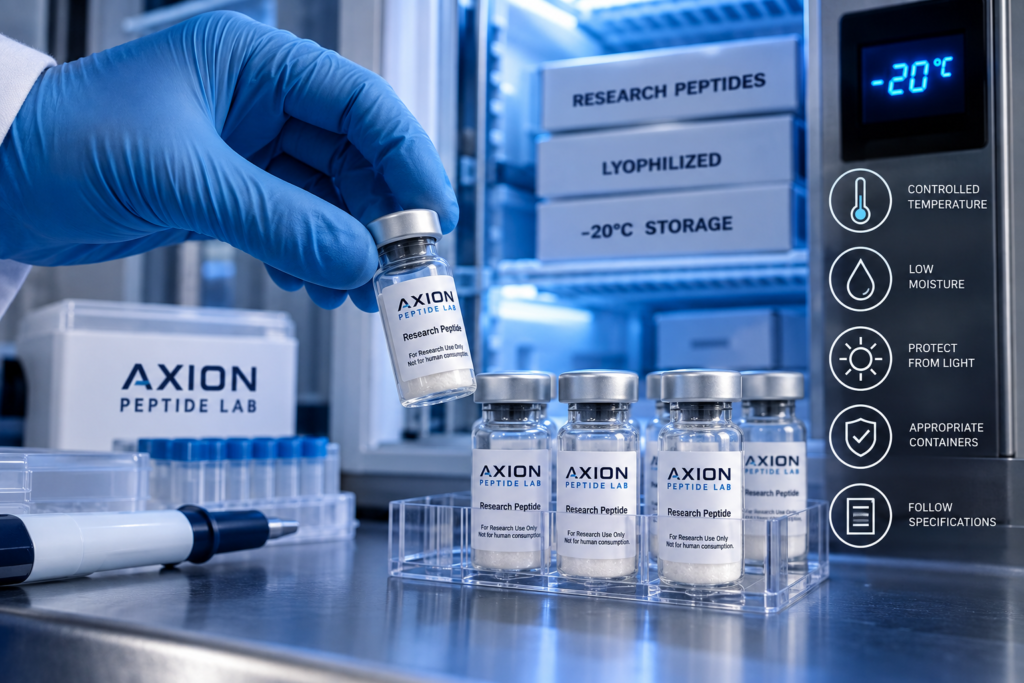
Peptide sterility testing is a microbiological procedure intended to detect viable microorganisms in a defined sample.
The test is performed under specified conditions using an appropriate method.
What Does Sterile Mean?
In microbiology, sterile refers to the absence of viable microorganisms.
However, sterility assurance is a broader concept than a single negative test result.
What Does a Sterility Test Measure?
A conventional growth-based sterility test examines whether microorganisms capable of growing under the selected conditions are detected.
What Does It Not Measure?
A sterility test does not directly establish:
- Peptide molecular identity.
- Chromatographic purity.
- Peptide content.
- Residual solvent concentrations.
- Water content.
- Bacterial endotoxin activity.
Why the Distinction Matters
These properties require different analytical methods. peptide sterility testing
A scientifically useful quality assessment should distinguish them rather than combining them into one general claim of purity.
Why Sterility Testing Matters for Peptide Materials
Microbial contamination can affect laboratory materials in several ways.
Research Reliability
Microorganisms may influence certain experimental systems.
Sample Integrity
Microbial growth can alter the chemical or physical characteristics of susceptible preparations.
Batch Quality
Microbiological testing may contribute to assessment of manufacturing and handling controls.
Contamination Investigation
Microbial findings can support investigations into possible contamination sources.
Documentation
A sterility result provides information not available from routine chemical testing.
Comparability
Differences in microbiological quality may complicate comparisons between materials.
Appropriate Interpretation
The significance of sterility testing depends on the material’s intended purpose and applicable quality framework.
A negative sterility test does not establish that a research-only peptide is suitable for human or veterinary administration. peptide sterility testing
7 Critical Factors in Peptide Sterility Testing
1. Potential Sources of Microbial Contamination
Microbial contamination may arise during manufacturing, processing, packaging, storage or laboratory handling.
Raw Materials
Certain incoming materials may introduce microorganisms.
Manufacturing Equipment
Equipment and product-contact surfaces can be potential contamination sources.
Water Systems
Water quality may be relevant to microbiological control.
Processing Environment
Environmental conditions can influence contamination risk.
Personnel and Handling
Human handling can contribute to contamination if appropriate controls are not maintained.
Containers and Closures
Packaging components may influence contamination control.
Post-Processing Exposure
Contamination can occur after earlier processing steps if suitable controls are not maintained.
Identifying possible sources does not prove that a particular peptide material is contaminated.
Peptide sterility testing provides evidence about the tested sample, while contamination-source investigations require additional information.
2. Membrane Filtration Sterility Testing
Membrane filtration is an established pharmacopoeial sterility testing method.
It is commonly considered when the material and sample characteristics are compatible with filtration.
Basic Principle
The method involves retaining microorganisms on a suitable membrane and evaluating their ability to grow in appropriate culture media.
Why Membrane Filtration Is Used
Filtration can help separate microorganisms from certain sample constituents that might interfere with microbial growth.
Sample Compatibility
The sample must be suitable for the procedure. peptide sterility testing
Method Suitability
The test must demonstrate that the material does not prevent detection of relevant microorganisms under the selected conditions.
Growth Detection
The procedure evaluates microbial growth during the defined incubation period.
Interpretation
A negative result means no growth was detected under the conditions of the test.
Limitations
Membrane filtration is not appropriate for every material, and the tested portion may not represent every unit in a batch.
3. Direct Inoculation Sterility Testing
Direct inoculation is another established sterility testing approach. peptide sterility testing
Basic Principle
A defined sample is introduced into suitable culture media and examined for microbial growth under specified conditions.
When It May Be Considered
Direct inoculation may be appropriate when the material and analytical requirements support its use.
Sample Characteristics
The sample must not prevent the method from detecting relevant microorganisms.
Antimicrobial Interference
Some substances can inhibit microbial growth. peptide sterility testing
This can create misleading negative results if method suitability is not demonstrated.
Culture Media
Appropriate media are selected according to the test framework.
Incubation
The test follows defined incubation conditions and observation periods.
Interpretation
A negative result is limited to the test conditions and sample examined.
Peptide sterility testing should not be considered reliable without evidence that the method can detect microorganisms in the presence of the material.
4. Method Suitability and Growth Promotion
A sterility test must be capable of detecting relevant microorganisms under its specified conditions.
Growth Promotion
Growth promotion testing demonstrates that culture media can support the growth of specified test microorganisms.
Method Suitability
Method suitability evaluates whether the sample interferes with the test’s ability to detect microorganisms.
Why Peptides May Matter
Some peptides have biological activities that can affect microorganisms.
Antimicrobial Peptides
Certain peptides are studied specifically for antimicrobial properties.
Such activity may interfere with growth-based testing.
False-Negative Risk
If a sample suppresses microbial growth, a contaminated material may produce a misleading negative result.
Controls
Appropriate controls are necessary for meaningful interpretation.
Documentation
Suitability findings should be recorded and traceable. peptide sterility testing
A sterility test result without relevant method suitability evidence may be difficult to interpret.
5. Incubation Conditions and Detection Capability
Growth-based sterility testing depends on conditions that permit relevant microorganisms to grow.
Culture Media
Different media support different groups of microorganisms.
Incubation Temperature
Temperature influences microbial growth.
Incubation Duration
The observation period affects which organisms may become detectable.
Aerobic and Anaerobic Organisms
Different microorganisms have different oxygen requirements.
Fungi
Yeasts and moulds may require appropriate culture conditions.
Slow-Growing Organisms
Some organisms may be difficult to detect within a particular test period.
Important Limitation
A negative test result does not prove that every possible microorganism was absent.
The result reflects the organisms and conditions addressed by the procedure.
6. Sampling and Statistical Limitations
Sterility testing typically examines only a defined portion of a batch.
Sample Size
The number of units tested influences the probability of detecting contamination.
Contamination Distribution
Microbial contamination may not be distributed uniformly.
Low-Level Contamination
Very low contamination levels can be difficult to detect through limited sampling.
Test Sensitivity
Detection depends on the analytical procedure and the microorganisms present.
Batch Interpretation
A negative result in tested samples does not establish that every unit in the batch is sterile.
Sterility Assurance
Sterility assurance involves manufacturing process controls, contamination prevention and other supporting evidence.
Why This Matters
Peptide sterility testing is one part of microbiological quality assessment, not an absolute guarantee of batch sterility.
7. Sterility Test Reporting and Batch Documentation
Sterility results should be reported clearly and without overstating their significance.
Sample Identification
The tested material should be identifiable.
Batch Number
Results should correspond to a defined batch.
Analytical Method
The method should be identified.
Test Conditions
Relevant conditions should be documented.
Method Suitability
Supporting suitability evidence should be available where applicable. peptide sterility testing
Result
The report should clearly state whether microbial growth was detected.
Laboratory Identification
The responsible laboratory should be identifiable. peptide sterility testing
Limitations
The report should not imply that a negative test proves absolute absence of microorganisms.
Comparison of Major Sterility Testing Approaches
| Characteristic | Membrane filtration | Direct inoculation |
|---|---|---|
| Basic principle | Microorganisms retained on a membrane are evaluated for growth | Sample is introduced into culture media |
| Sample suitability | Requires compatible material and filtration conditions | Requires compatibility with culture media |
| Interference considerations | Sample constituents may affect filtration or recovery | Sample constituents may inhibit growth |
| Growth detection | Yes | Yes |
| Method suitability required | Yes | Yes |
| Universal applicability | No | No |
| Negative result proves absolute sterility | No | No |
Both approaches require suitable controls, appropriate sample selection and careful interpretation.
USP <71> Sterility Testing: What Researchers Should Understand
USP General Chapter <71>, Sterility Tests, provides established pharmacopoeial procedures for sterility testing within its applicable scope. peptide sterility testing
Purpose
The chapter describes methods for detecting viable microorganisms in materials subject to sterility requirements.
Main Approaches
The chapter includes membrane filtration and direct inoculation methods.
Culture Media
Specified media and suitability requirements support the detection process.
Method Suitability
The test must be shown to function appropriately in the presence of the sample.
Incubation
The procedures include defined incubation requirements.
Interpretation
Results must be evaluated according to the applicable compendial framework.
Research-Only Peptides
Reference to USP <71> does not automatically establish that a research peptide is manufactured under pharmaceutical GMP or meets requirements for sterile medicinal products.
Any claim of compliance should be supported by appropriate documentation. peptide sterility testing
Sterility Testing vs Bioburden Testing
Sterility testing and bioburden testing address different microbiological questions.
Sterility Testing
Sterility testing examines whether viable microorganisms are detected under a defined test procedure.
Bioburden Testing
Bioburden testing estimates the quantity of viable microorganisms present in a sample under specified conditions.
Quantitative Difference
Bioburden testing may report microbial counts.
Qualitative Difference
A conventional sterility test commonly produces a growth or no-growth conclusion.
Manufacturing Applications
Bioburden testing may support process monitoring and contamination-control assessment.
Analytical Limitations
Both approaches have method-specific detection limitations.
Interpretation
A low bioburden result is not equivalent to a negative sterility test. peptide sterility testing
Similarly, a negative sterility test does not provide a comprehensive quantitative microbial profile.
Sterility Testing vs Endotoxin Testing
These two tests are often confused.
| Characteristic | Sterility testing | Endotoxin testing |
|---|---|---|
| Main target | Viable microorganisms | Bacterial endotoxin activity |
| Typical method | Growth-based microbiological testing | LAL or recombinant Factor C |
| Common result | Growth or no growth | EU/mL, EU/mg or other defined units |
| Detects dead bacterial endotoxin material | Not inherently | Yes, where the endotoxin is detectable |
| Establishes peptide purity | No | No |
| Establishes the other test’s result | No | No |
Why the Difference Matters
A material can contain endotoxin even when no viable microorganisms are detected.
Likewise, a negative endotoxin result does not establish sterility.
Read Peptide Endotoxin Testing.
Can a Peptide Be Sterile but Contain Endotoxin?
Yes.
Sterility and endotoxin content are separate properties.
Sterile Material
A material may contain no detectable viable microorganisms under a suitable sterility test.
Endotoxin Presence
Bacterial endotoxin may remain after bacteria are no longer viable.
Why This Occurs
Endotoxin is a chemical component rather than a living organism.
Analytical Consequence
Separate tests are needed.
Example
A hypothetical material might produce:
- No growth in a suitable sterility test.
- A measurable endotoxin result.
These findings are not necessarily contradictory.
Important Conclusion
Sterility should never be used as a synonym for endotoxin-free. peptide sterility testing
Can High-Purity Peptides Contain Microorganisms?
Yes.
Chemical purity and microbiological quality are different characteristics.
HPLC Purity
HPLC may assess peptide-related chromatographic components.
Molecular Identity
LC-MS may support the intended peptide molecular mass.
Microbial Contamination
Sterility testing evaluates viable microorganisms.
Example
A fictional sample may show a principal HPLC peak area of 99.1%.
That result does not establish whether microorganisms are present.
Why HPLC Is Insufficient
Routine peptide HPLC is not designed to function as a sterility test.
Quality Assessment
Chemical and microbiological characteristics require appropriate separate methods.
Read HPLC Peptide Purity Testing.
Does Lyophilisation Make a Peptide Sterile?
No.
Lyophilisation is a drying process, not inherently a sterilisation procedure.
Water Removal
Freeze-drying reduces water under controlled conditions.
Microbial Survival
Some microorganisms can survive drying processes.
Material Appearance
A white, uniform lyophilised cake does not demonstrate sterility.
Packaging
Sealed packaging does not independently establish that a material was sterile before sealing.
Contamination Control
Microbiological quality depends on the relevant manufacturing and handling controls.
Analytical Testing
Sterility claims require appropriate supporting evidence.
Important Distinction
A lyophilised peptide should not be described as sterile solely because it is freeze-dried.
Read Lyophilised Peptide Stability.
Sterile Filtration vs Sterility Testing
Sterile filtration and sterility testing are related but distinct concepts.
Sterile Filtration
Sterilising-grade filtration is a manufacturing or processing operation intended to remove microorganisms from suitable fluids under validated conditions. peptide sterility testing
Sterility Testing
Sterility testing is an analytical procedure used to detect viable microorganisms in tested samples.
Why the Distinction Matters
A filtration step does not automatically prove that the resulting material meets sterility requirements.
Process Validation
Sterilising filtration processes require appropriate validation and controls.
Container Integrity
Subsequent contamination control remains important.
Analytical Evidence
Testing provides supporting evidence but does not replace manufacturing controls.
Research Materials
A product description should not imply that a material is sterile merely because a filtration step was performed.
Can Peptides Interfere With Sterility Testing?
Some peptides may interfere with growth-based microbiological assays.
Antimicrobial Activity
Certain peptide sequences are studied for antimicrobial effects.
Growth Inhibition
A sample that inhibits microbial growth may interfere with detection.
Sample Matrix
Other constituents may influence microbial recovery.
Method Suitability
The procedure must demonstrate that relevant microorganisms can be detected in the presence of the sample.
Controls
Appropriate controls support interpretation.
False-Negative Results
Without suitable controls, growth inhibition may produce misleading findings.
Analytical Conclusion
Peptide sterility testing should be evaluated as a complete method, not simply a final growth or no-growth observation.
Rapid Microbiological Methods for Peptide Quality Assessment
Alternative microbiological technologies may be used in certain quality-control settings.
ATP-Based Methods
Some methods detect signals associated with microbial metabolic activity or cellular constituents.
Fluorescence-Based Detection
Fluorescent techniques may support detection of microorganisms under suitable conditions.
Flow Cytometry
Flow cytometric methods can assess selected cellular characteristics.
Molecular Methods
Nucleic acid-based methods can detect microbial genetic material.
Important Limitation
Detection of microbial DNA does not necessarily establish the presence of viable organisms.
Validation
Alternative methods require appropriate evidence of suitability and, where applicable, equivalence or non-inferiority to relevant compendial methods. peptide sterility testing
Regulatory Context
Acceptance depends on the analytical purpose and applicable quality framework.
Rapid methods should not automatically be represented as interchangeable with pharmacopoeial sterility testing.
What Does a Negative Sterility Test Mean?
A negative sterility test means that no microbial growth was detected under the specified conditions of the test.
It does not prove that the tested material is absolutely free of all microorganisms. peptide sterility testing
Sample Limitations
Only a defined sample is tested.
Method Limitations
The procedure may not detect every possible microorganism.
Growth Conditions
Detection depends on the ability of organisms to grow under the selected conditions.
Sample Interference
Some materials may inhibit growth.
Statistical Limitations
Low-level contamination may escape detection.
Batch Interpretation
A negative result is supporting evidence within a broader contamination-control framework.
Accurate Reporting
The wording should reflect what the method actually established.
Hypothetical Peptide Sterility Testing Report
Consider a fictional research peptide preparation identified as ST-EXAMPLE-021.
A laboratory performs a defined sterility test. peptide sterility testing
| Analytical characteristic | Hypothetical finding | Interpretation |
|---|---|---|
| Sample identification | ST-EXAMPLE-021 | Fictional material |
| Method | Membrane filtration | Growth-based sterility testing |
| Growth promotion | Meets predefined requirements | Supports media suitability |
| Method suitability | Meets predefined requirements | Supports microbial detection in the tested matrix |
| Sterility test result | No growth detected | Negative under the defined conditions |
| Endotoxin result | Not assessed | No conclusion about endotoxin content |
| HPLC purity | Separate analysis required | Not established by sterility testing |
These findings are entirely hypothetical.
They do not represent an actual Axion Peptide Lab batch, independent laboratory report or certificate of analysis.
The example illustrates the distinction between a negative sterility test and other quality attributes.
It also demonstrates why a negative result should be interpreted within the method’s limitations.
What Should a Peptide Sterility Testing COA Include?
A certificate of analysis may include sterility testing results when suitable testing has been performed.
Product Identification
The material should be clearly identified.
Batch Number
The result should correspond to the represented batch.
Testing Method
The analytical procedure should be stated.
Result
The report should indicate whether growth was detected.
Method Suitability
Relevant supporting evidence should be available.
Laboratory Details
The testing laboratory should be identifiable.
Test Date
The relevant analytical date may be included.
Supporting Records
Additional documentation may be needed to evaluate the claim.
A certificate should not use the term sterile without appropriate supporting evidence.
Read Peptide Certificate of Analysis.
Sterility Testing and Peptide Analytical Method Validation
Sterility testing requires evidence that the procedure performs suitably for its intended purpose.
Method Selection
The method must be appropriate for the sample.
Growth Promotion
The culture media must support the intended detection.
Sample Interference
The sample should not prevent microbial recovery.
Controls
Appropriate controls support interpretation.
Detection Capability
The method should be capable of detecting relevant microorganisms under the specified conditions.
Documentation
Method performance should be recorded.
Limitations
Conclusions should reflect the actual scope of the method.
Read Peptide Analytical Method Validation.
Sterility Assurance vs Sterility Testing
Sterility assurance is broader than the result of a single sterility test.
Manufacturing Controls
Contamination prevention depends on suitable manufacturing systems.
Environmental Monitoring
Monitoring may support understanding of the manufacturing environment.
Personnel Practices
Appropriate procedures and training can influence contamination control.
Equipment Qualification
Equipment suitability may be relevant.
Process Validation
Validated processes provide evidence of controlled manufacturing performance.
Container Closure Integrity
Packaging integrity may influence maintenance of sterility where applicable.
Testing
Sterility testing provides supporting evidence but does not replace process controls.
A negative test result alone should not be used to imply that an entire manufacturing system meets sterile pharmaceutical production requirements.
Peptide Sterility Testing and Batch Quality Control
Sterility testing may be one component of a broader quality programme.
Identity
Suitable methods may confirm peptide molecular identity.
Sequence
Structural analysis may support amino acid sequence assignment.
Chromatographic Purity
HPLC may examine related peptide components.
Quantitative Content
An assay may determine the amount of intended peptide.
Water Content
Karl Fischer titration may measure water.
Residual Solvents
Suitable methods may examine volatile solvent residues.
Endotoxins
An endotoxin assay measures bacterial endotoxin activity.
Sterility
A sterility test evaluates viable microbial growth under defined conditions.
Batch Documentation
Analytical results should correspond to identifiable material. peptide sterility testing
These characteristics require distinct evidence.
Read Peptide Batch Testing.
Common Mistakes in Peptide Sterility Testing

Mistake 1: Treating High HPLC Purity as Evidence of Sterility
Chemical purity does not establish microbiological quality.
Mistake 2: Assuming Endotoxin Testing Confirms Sterility
Endotoxin assays do not detect all viable microorganisms.
Mistake 3: Treating Lyophilisation as Sterilisation
Freeze-drying is not inherently a sterilisation process.
Mistake 4: Ignoring Sample Interference
Some peptides may suppress microbial growth in test media.
Mistake 5: Assuming a Negative Result Proves Absolute Sterility
A negative result is limited by sampling and method conditions.
Mistake 6: Confusing Bioburden With Sterility Testing
These procedures have different analytical purposes.
Mistake 7: Assuming Sterile Filtration Guarantees a Sterile Finished Product
Manufacturing controls and subsequent contamination prevention remain important.
Mistake 8: Claiming USP Compliance Without Evidence
Compliance claims require appropriate supporting documentation.
Mistake 9: Using Sterility Claims Without Batch Traceability
A result should correspond to the represented material.
Mistake 10: Treating a COA as Proof of Every Quality Attribute
A COA supports only the characteristics actually assessed and documented.
Avoiding these mistakes supports more accurate interpretation of peptide sterility testing results.
Frequently Asked Questions About Peptide Sterility Testing
1. What is peptide sterility testing?
Peptide sterility testing evaluates whether viable microorganisms can be detected in a peptide material using a defined microbiological procedure.
2. What is USP <71> sterility testing?
USP <71> is a pharmacopoeial chapter describing sterility testing procedures, including membrane filtration and direct inoculation, within its applicable scope. peptide sterility testing
3. What is the difference between membrane filtration and direct inoculation?
Membrane filtration retains microorganisms on a membrane for growth assessment, while direct inoculation introduces the sample into suitable culture media.
4. Does a negative sterility test mean a peptide is completely sterile?
A negative result means no microbial growth was detected under the test conditions. It does not prove absolute absence of every microorganism.
5. Is endotoxin testing the same as sterility testing?
No. Endotoxin testing measures bacterial endotoxin activity, while sterility testing evaluates viable microorganisms.
6. Can lyophilised peptides contain microorganisms?
Yes. Freeze-drying does not inherently guarantee sterility.
7. Can antimicrobial peptides interfere with sterility tests?
Yes. Some peptides may inhibit microbial growth, making method suitability testing important.
8. Does a sterile peptide automatically meet pharmaceutical requirements?
No. Sterility testing is only one part of a broader quality and regulatory framework, and a negative test does not establish suitability for human or veterinary administration.
Conclusion: Understanding Peptide Sterility Testing
Peptide sterility testing provides microbiological information that cannot be obtained from conventional peptide HPLC, LC-MS or chemical purity analysis.
Established methods such as membrane filtration and direct inoculation evaluate whether viable microorganisms can be detected under defined conditions.
However, the reliability of the result depends on appropriate sample selection, growth promotion, method suitability, controls and careful interpretation.
A negative sterility test does not demonstrate the absolute absence of every microorganism from an entire batch.
Sterility testing must also be distinguished from endotoxin testing, bioburden determination and broader sterility assurance.
For laboratory researchers, understanding peptide sterility testing supports more accurate interpretation of microbiological quality documentation and prevents unsupported conclusions about peptide purity, contamination or product suitability.
Scientific References and Further Reading
- United States Pharmacopeia (USP). General Chapter <71>: Sterility Tests.
https://www.usp.org/ - European Directorate for the Quality of Medicines & HealthCare (EDQM). European Pharmacopoeia, Chapter 2.6.1: Sterility.
https://www.edqm.eu/ - United States Pharmacopeia (USP). General Chapter <61>: Microbiological Examination of Nonsterile Products — Microbial Enumeration Tests.
https://www.usp.org/ - United States Pharmacopeia (USP). General Chapter <1223>: Validation of Alternative Microbiological Methods.
https://www.usp.org/ - U.S. Food and Drug Administration (FDA). Guidance for Industry: Sterile Drug Products Produced by Aseptic Processing — Current Good Manufacturing Practice.
https://www.fda.gov/regulatory-information/search-fda-guidance-documents/sterile-drug-products-produced-aseptic-processing-current-good-manufacturing-practice - International Council for Harmonisation (ICH). Q2(R2): Validation of Analytical Procedures.
https://www.ich.org/page/quality-guidelines - World Health Organization (WHO). Good manufacturing practices for sterile pharmaceutical products and related quality guidance.
https://www.who.int/
The applicability of pharmacopoeial and pharmaceutical manufacturing requirements depends on the material, intended purpose and regulatory framework. Citation of these standards does not establish compliance for any particular research peptide.
Research information notice: This article is intended for laboratory education and analytical research. It does not establish the sterility, endotoxin status, purity or regulatory compliance of any specific Axion Peptide Lab commercial batch. Research peptides are not represented as suitable for human or veterinary administration.
One Response