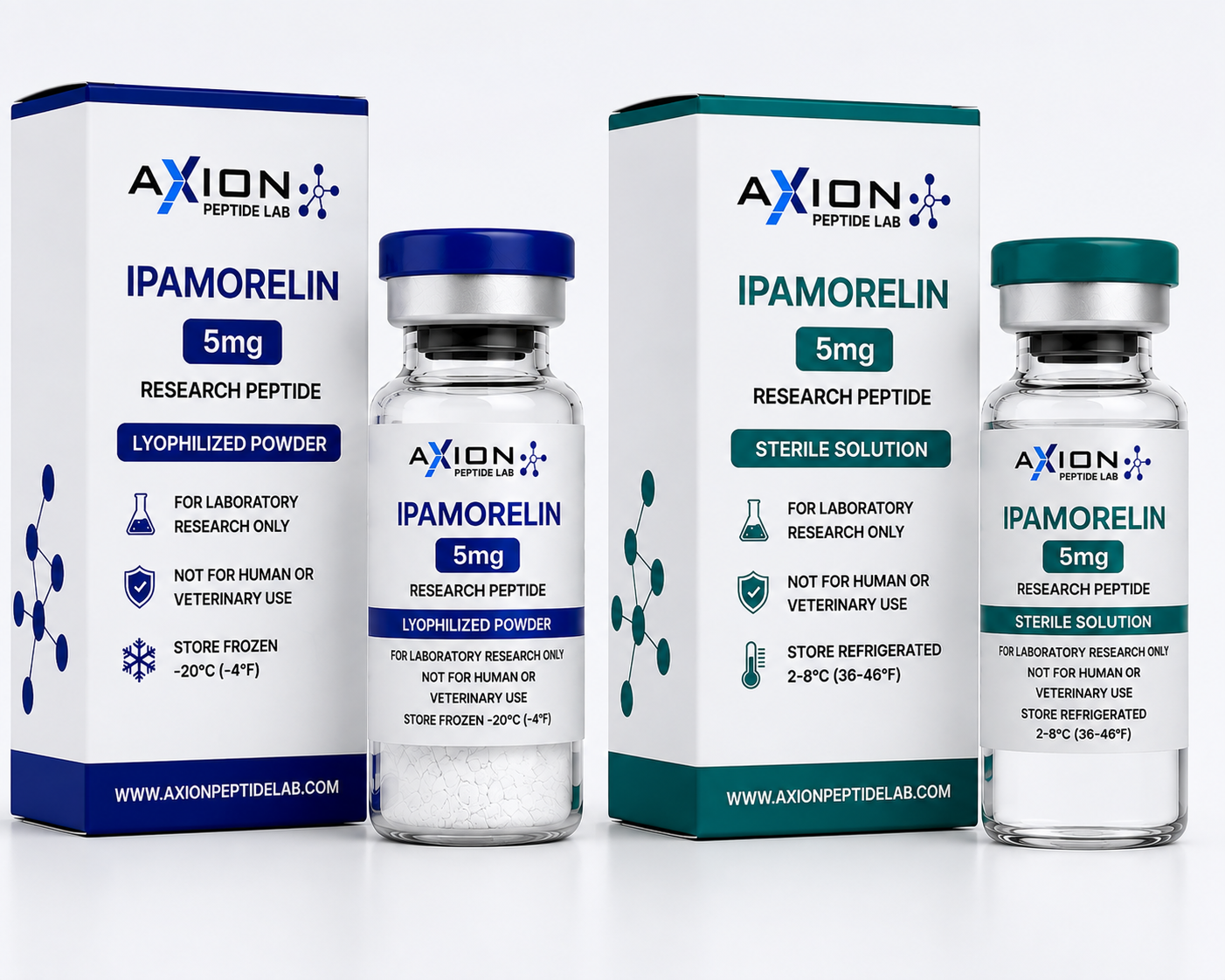
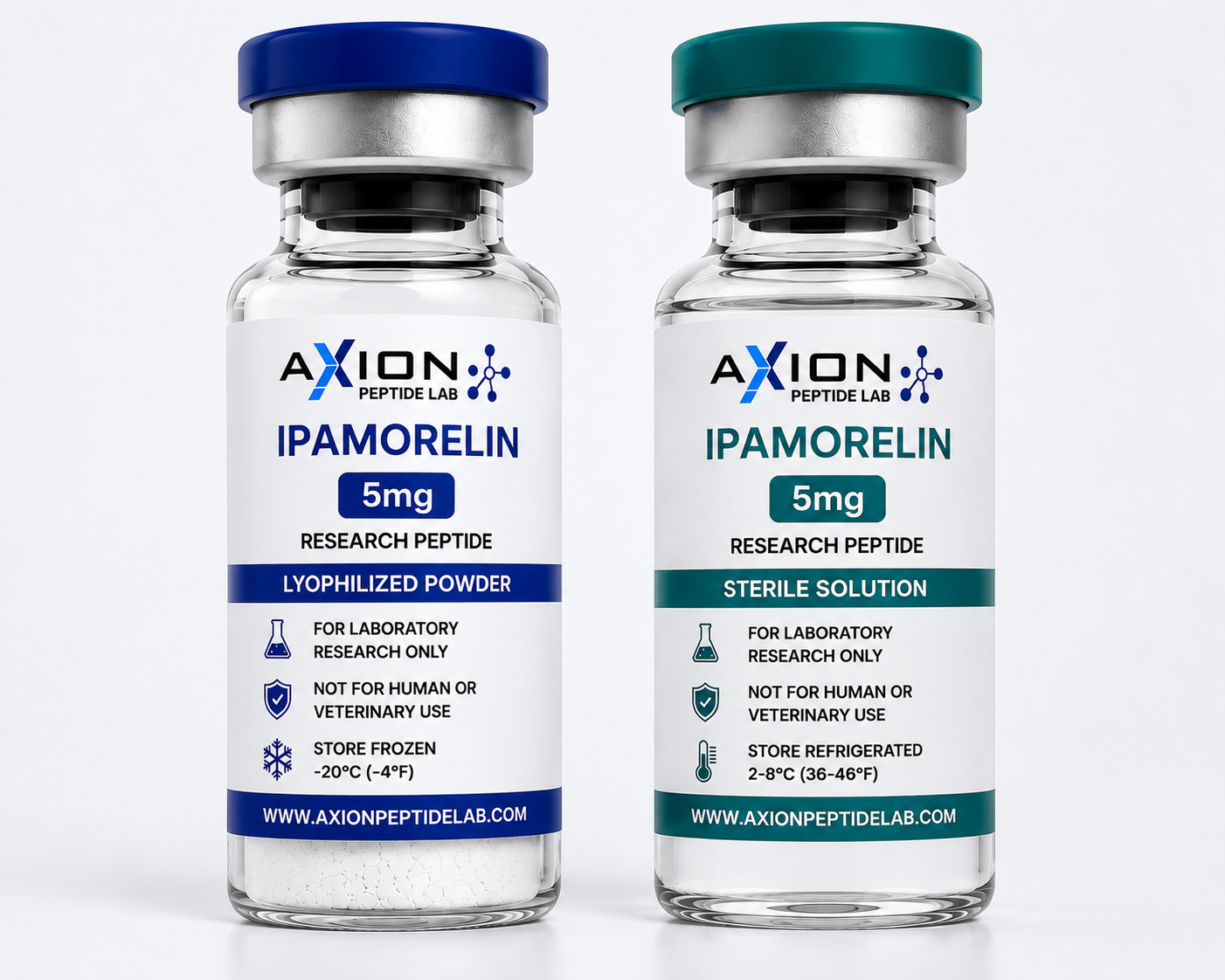
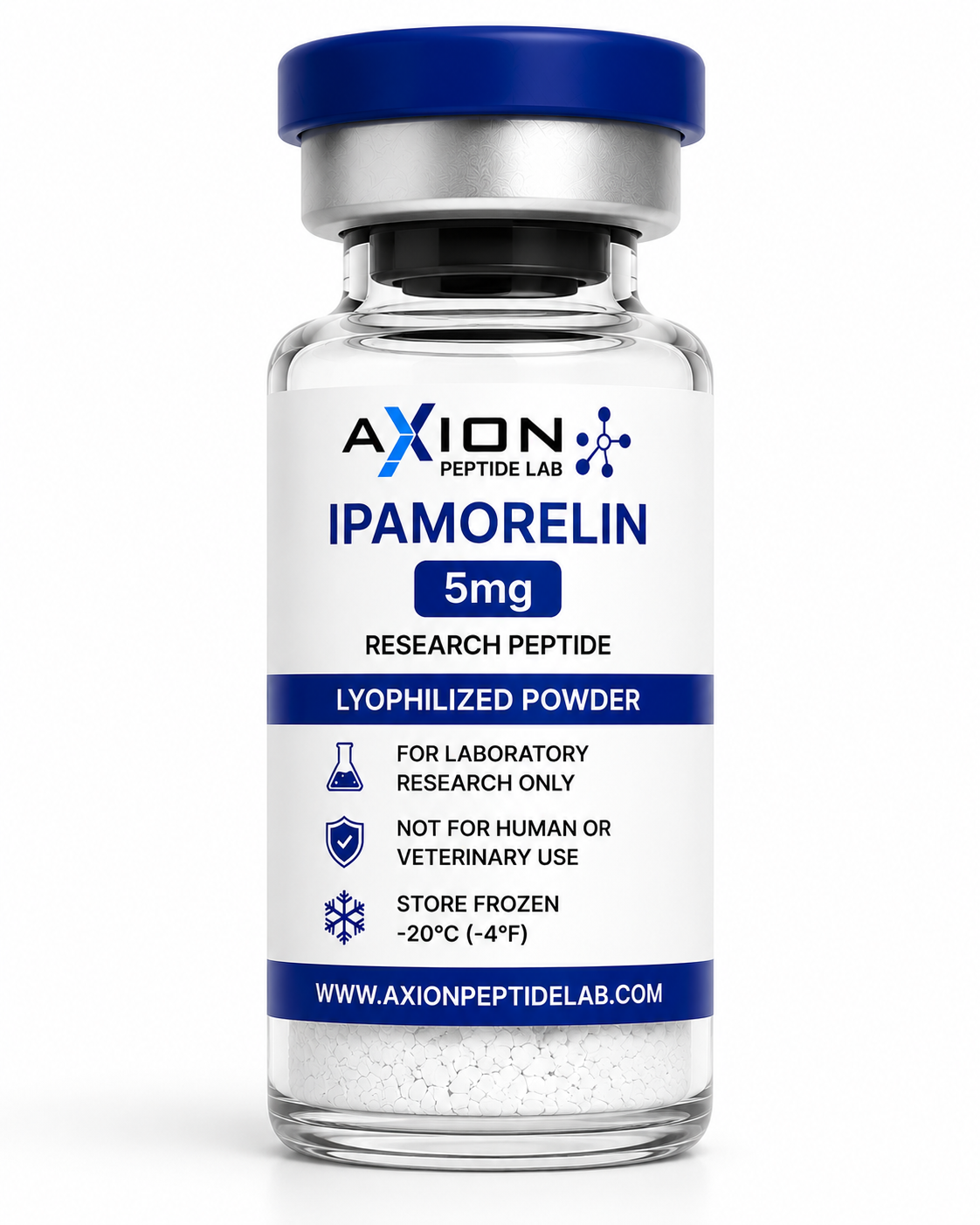
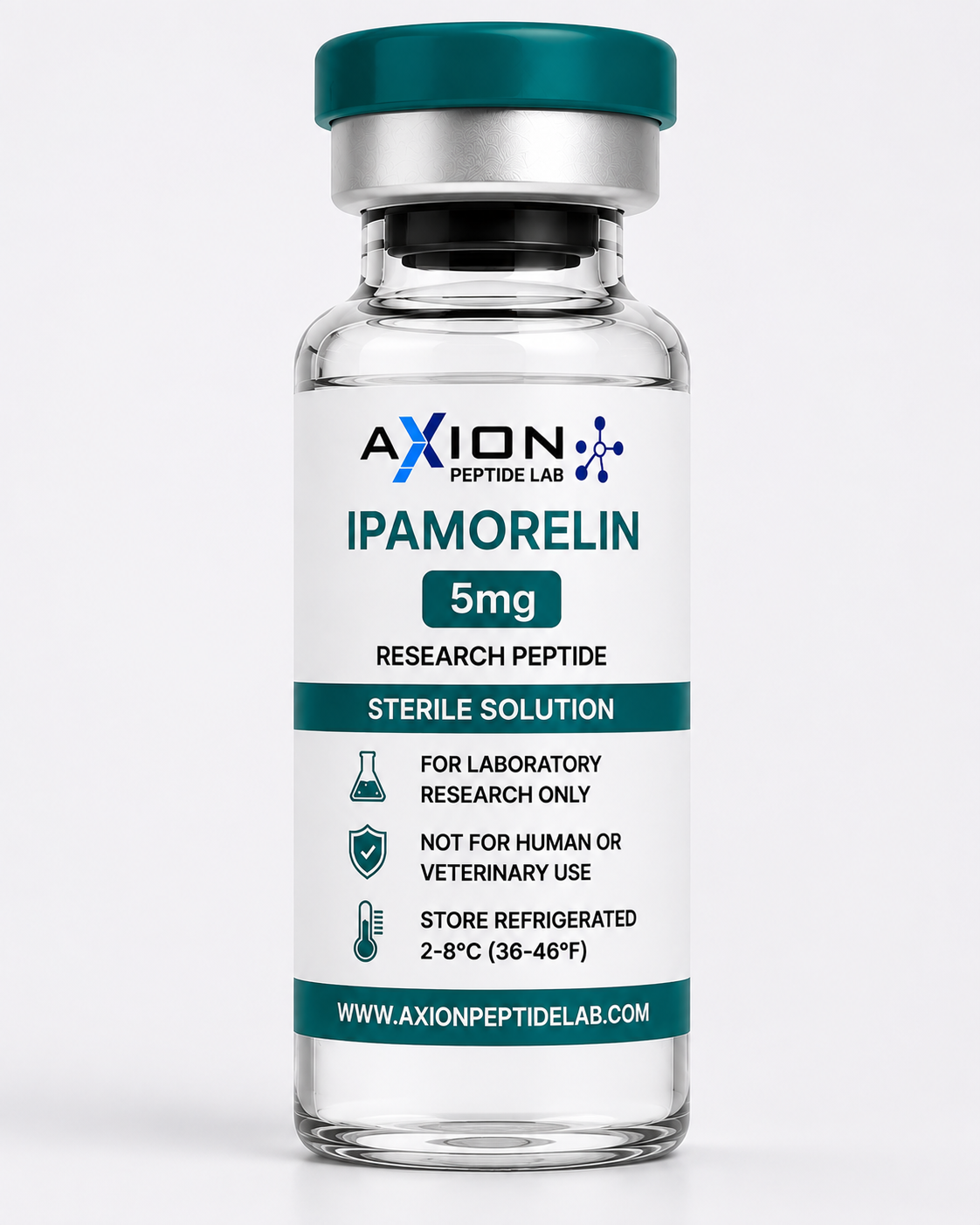
Ipamorelin 5mg Research Peptide is a synthetic pentapeptide supplied for controlled laboratory investigation involving growth hormone secretagogue receptor biology, GHS-R1a/ghrelin receptor signalling, GPCR interactions, receptor selectivity, peptide structure-function relationships, molecular pharmacology and analytical characterization.
The 5mg designation represents the stated research quantity and is not a dosage recommendation.
For Research Use Only – Not for human or veterinary consumption or administration.
$40.61 – $49.99Price range: $40.61 through $49.99
Ipamorelin 5mg Research Peptide from Axion Peptide Lab is a synthetic pentapeptide supplied for controlled laboratory, molecular, biochemical and analytical research.
Ipamorelin belongs to the growth hormone secretagogue peptide family and has been investigated experimentally for its interaction with the growth hormone secretagogue receptor system. Its compact five-residue structure makes it particularly interesting for receptor pharmacology, peptide structure-function research, molecular signalling and analytical characterisation.
Published research describes ipamorelin as a selective growth hormone secretagogue compared with several earlier compounds in the same experimental class.
The 5mg designation represents the stated quantity of research material and is not a dosage or administration recommendation.
For Research Use Only – Not for human or veterinary consumption or administration.
Ipamorelin is a synthetic peptide consisting of five amino-acid-related residues, making it a pentapeptide.
It was developed and characterised experimentally as part of research into growth hormone secretagogues.
Growth hormone secretagogues are molecules investigated for their ability to interact with receptor systems involved in endogenous signalling.
Ipamorelin is structurally different from endogenous growth hormone-releasing hormone and should not be classified as a GHRH analogue.
Instead, it belongs to the GHRP/ghrelin-receptor-related research category.
This distinction is important when comparing ipamorelin with research materials such as tesamorelin or CJC-related peptides.
Published literature describes the ipamorelin sequence as:
Aib-His-D-2-Nal-D-Phe-Lys-NH₂
This structure contains several non-standard or modified amino-acid components.
Aib refers to alpha-aminoisobutyric acid, while D-2-Nal represents D-2-naphthylalanine.
The inclusion of modified residues makes ipamorelin interesting for synthetic peptide chemistry and structure-function research.
Researchers may examine how these structural features influence receptor interactions, molecular stability and analytical behaviour.
Exact molecular form, counterion, salt form and batch-specific characteristics should be confirmed using the documentation associated with the supplied research material.
Ipamorelin belongs to a class of compounds known as growth hormone secretagogues, commonly abbreviated GHS.
These research molecules have been studied for their interactions with specific receptor pathways.
Ipamorelin’s experimental development contributed to research examining whether structural modifications could influence receptor selectivity.
Researchers may investigate ipamorelin alongside other secretagogue peptides to compare molecular behaviour under controlled conditions.
These studies are relevant to receptor pharmacology, ligand design and peptide chemistry.
Experimental findings should not be converted into claims that the Axion Peptide Lab material provides therapeutic, bodybuilding or performance effects.
The growth hormone secretagogue receptor is commonly known as GHS-R, with GHS-R1a representing a major signalling form.
This receptor is also widely known as the ghrelin receptor because ghrelin is an endogenous ligand.
Ipamorelin and other synthetic secretagogues can provide researchers with tools for investigating this receptor system.
Laboratory experiments may examine receptor activation, ligand-receptor interactions and downstream signalling.
Researchers can also compare synthetic peptide ligands with endogenous ghrelin to investigate differences in molecular structure and experimental behaviour.
The ghrelin receptor belongs to the G protein-coupled receptor, or GPCR, superfamily.
GPCRs represent one of the most extensively studied classes of cell-surface receptors.
Ipamorelin can therefore be incorporated into experimental systems examining peptide-GPCR interactions.
Researchers may investigate ligand binding, receptor activation, downstream signalling or comparative responses between different secretagogue compounds.
Such studies can contribute to broader understanding of receptor pharmacology.
Appropriate controls and validated experimental models are essential when interpreting signalling data.
One of the characteristics highlighted in early ipamorelin research was its experimental selectivity.
Published studies compared ipamorelin with earlier growth hormone secretagogues and examined differences in measured hormonal responses within experimental systems.
This makes ipamorelin relevant to research exploring how peptide structure can influence receptor-associated selectivity.
Researchers may compare ipamorelin with other GHRPs or synthetic ligands under controlled conditions.
Such comparisons can provide insight into ligand design and molecular pharmacology.
These historical experimental observations should not be interpreted as evidence of safety or efficacy for unapproved human use.
Structure-function investigation is an important part of peptide science.
Ipamorelin’s five-residue structure provides a compact model for examining relationships between chemical structure and experimentally observed molecular behaviour.
Researchers may compare modified residues, related peptides or synthetic analogues.
Experiments can examine how structural changes influence receptor interactions, stability or analytical properties.
Because ipamorelin contains non-standard residues, precise sequence documentation is particularly useful when interpreting analytical results.
Ipamorelin is relevant to molecular pharmacology because it acts as an experimental ligand for a defined receptor system.
Researchers may investigate concentration-response relationships, receptor-associated signalling and ligand selectivity.
Comparative pharmacology studies can include ipamorelin alongside ghrelin or other secretagogue peptides.
Such work can help scientists understand how synthetic ligands interact with receptor systems differently from endogenous molecules.
These experiments are mechanistic in nature and do not establish therapeutic benefits for a commercially supplied research peptide.
Several growth hormone-releasing peptides have historically been investigated, including GHRP-2 and GHRP-6.
Ipamorelin provides another structurally distinct research molecule within this broad experimental category.
Researchers may compare these compounds to examine differences in receptor activity, molecular structure and signalling characteristics.
Comparative experiments should use carefully standardised conditions.
The exact identity and purity of every research material should also be established through appropriate documentation where these parameters could influence experimental conclusions.
Although ipamorelin and GHRH-related peptides can appear in similar areas of endocrine signalling research, they act through different receptor systems.
GHRH analogues primarily relate to the GHRH receptor, whereas ipamorelin is associated with the growth hormone secretagogue/ghrelin receptor.
This distinction can be useful in experimental designs investigating pathway interactions.
Researchers may use different ligands to examine how receptor systems behave independently or interact under defined conditions.
Accurate terminology helps ensure that research conclusions reflect the correct molecular mechanisms.
Stability is an important variable in peptide experiments.
Researchers may investigate ipamorelin under controlled environmental conditions to determine how its molecular integrity changes over time.
Potential variables can include temperature, solution conditions, pH and experimental duration.
Chromatographic or mass-spectrometric methods may be used to monitor degradation.
Product-specific storage requirements should always follow documentation associated with the actual Axion Peptide Lab material rather than generic recommendations from unrelated suppliers.
Ipamorelin can be incorporated into analytical workflows involving peptide identity, molecular mass, chromatographic behaviour and degradation analysis.
Laboratories may use techniques such as HPLC or mass spectrometry where appropriate.
Analytical research can help distinguish ipamorelin from related peptides and identify changes occurring under different experimental conditions.
Researchers requiring specific purity percentages, molecular forms or salt information should review batch-specific documentation.
Generic online specifications should not substitute for analytical information associated with the actual product.
The 5mg designation identifies the stated quantity of ipamorelin research material supplied with this product.
It is not a recommended human or veterinary dose.
Researchers should establish experimental quantities according to validated laboratory protocols, assay requirements and institutional procedures.
Where experiments require molar concentration calculations, the confirmed molecular form and molecular weight of the supplied material should be used.
Axion Peptide Lab does not provide personal dosing, injection or administration instructions.
Controlled laboratory investigation may include:
These categories describe scientific research areas and not therapeutic indications.
Reliable research depends on accurate documentation.
Researchers should record product identity, batch information, experimental conditions and analytical methodology.
Where available, batch-specific analytical documentation can provide important information concerning identity and measured specifications.
Certificate of Analysis and independent testing availability may vary according to product and batch.
Claims concerning exact purity, sterility or other quality characteristics should only be made when supported by documentation for the supplied product.
Ipamorelin 5mg Research Peptide should be handled by appropriately trained personnel in suitable research environments.
The material should remain clearly identified and separated from medicines, foods, supplements and consumer products.
Researchers should follow product-specific storage and handling documentation.
Customers are responsible for ensuring that purchase, possession, importation and experimental use comply with applicable regulations and institutional requirements.
Axion Peptide Lab supplies specialised peptide materials intended for controlled laboratory and analytical applications.
Ipamorelin 5mg provides researchers with a compact synthetic secretagogue peptide suitable for appropriately designed experimental work involving receptor biology, GPCR signalling, molecular pharmacology and analytical peptide chemistry.
Researchers should review available product specifications and documentation before incorporating the material into their research workflow.
Qualified laboratories, researchers and scientific organisations can buy Ipamorelin 5mg Research Peptide from Axion Peptide Lab for legitimate laboratory and analytical investigation.
Its synthetic pentapeptide structure and relationship to the growth hormone secretagogue receptor system make ipamorelin relevant to receptor pharmacology, peptide signalling and structure-function research.
The product should not be marketed as a bodybuilding compound, anti-ageing product, fat-loss treatment, muscle-building product or human growth-hormone therapy.
For Research Use Only – Not for human or veterinary consumption or administration.
Ipamorelin is a synthetic pentapeptide supplied in a stated 5mg format for controlled laboratory, molecular and analytical investigation.
Ipamorelin is a pentapeptide containing five amino-acid-related residues.
The published structure is commonly represented as Aib-His-D-2-Nal-D-Phe-Lys-NH₂.
Ipamorelin is investigated in relation to the growth hormone secretagogue receptor, particularly GHS-R1a, also known as the ghrelin receptor.
No. Ipamorelin is a growth hormone secretagogue peptide associated with the ghrelin/GHS receptor system rather than a direct GHRH analogue.
Research areas include ghrelin receptor biology, GPCR signalling, receptor selectivity, peptide-receptor interactions, molecular pharmacology and analytical chemistry.
The 5mg designation represents the stated quantity of research material and is not a dosage recommendation.
Yes. Comparative research can examine structural and experimental differences among synthetic growth hormone secretagogues.
No. The product is intended exclusively for laboratory research, and human dosing, injection or self-experimentation guidance is not provided.
Qualified research customers can purchase Ipamorelin 5mg Research Peptide from Axion Peptide Lab for legitimate laboratory and analytical research, subject to availability and applicable requirements.