Best Place to Buy Peptide Online: Complete Guide to Research Peptide Suppliers
Finding the best place to buy peptide online requires more than comparing prices, product descriptions, and advertised purity percentages. For laboratories, biotechnology researchers, and scientific institutions, choosing a reliable peptide supplier involves evaluating compound identity, analytical testing, product traceability, and regulatory compliance.
Research peptides are widely investigated in molecular biology, biochemical analysis, receptor pharmacology, and pharmaceutical science. Their diverse chemical structures make them valuable materials for controlled scientific investigations.
However, the quality and suitability of research peptides can vary considerably between suppliers.
At Axion Peptide Lab, researchers can explore an online catalogue of research-use-only peptides, biochemical compounds, and related laboratory materials.
This guide explains what to look for when evaluating online peptide suppliers, how to assess laboratory product quality, and which factors matter most before purchasing research materials.
What Is the Best Place to Buy Peptide Online?
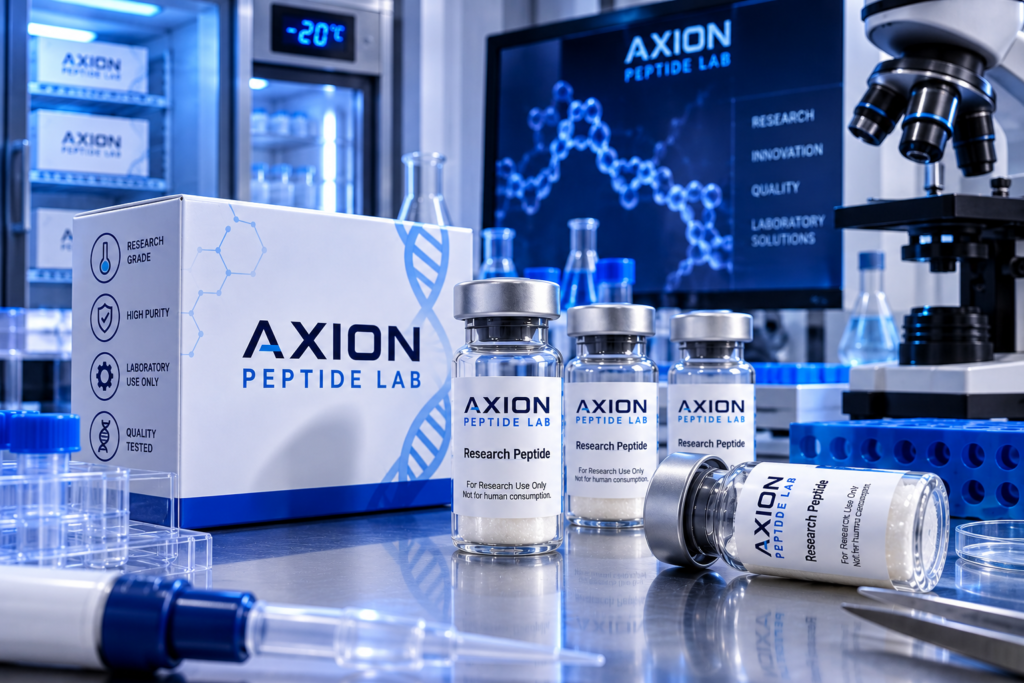
The best place to buy peptide online for legitimate laboratory research is a supplier that can demonstrate appropriate legal authorization, reliable compound identification, transparent analytical documentation, and suitable product handling procedures.
A professional laboratory supplier should provide sufficient information for researchers to determine whether its materials meet their experimental requirements.
Important considerations include:
- Accurate peptide identification
- Batch-specific Certificates of Analysis
- Appropriate analytical testing
- Clear product specifications
- Verified storage requirements
- Transparent supplier information
- Applicable regulatory compliance
- Suitable laboratory packaging
- Accessible technical documentation
- Clear purchasing and delivery policies
A supplier should not be considered reliable solely because it advertises high purity, low prices, or a large product catalogue.
The strongest purchasing decisions are based on verifiable scientific information and the requirements of the intended research application.
Why Researchers Buy Peptides Online

Online scientific catalogues allow laboratories to review peptide-related materials, compare specifications, and access technical information without relying exclusively on printed supplier catalogues.
For research institutions, online procurement may support laboratory planning, material comparison, and purchasing documentation.
Access to Research Information
Online product pages may contain molecular information, compound descriptions, available formulations, and laboratory handling guidance.
Product Comparison
Researchers can compare different peptide structures, analytical specifications, and intended laboratory applications.
Laboratory Procurement Planning
Digital catalogues can help scientific organizations identify suitable materials and prepare procurement requests.
Access to Scientific Documentation
Some suppliers make Certificates of Analysis, technical specifications, and other analytical documents available for review.
Researchers should verify that published documentation applies to the specific material batch under consideration.
Understanding Research Peptides Before Buying Online
Peptides are molecules formed when amino acids are connected through peptide bonds.
Their chemical properties depend on factors such as amino-acid sequence, molecular structure, chemical modifications, and environmental conditions.
Research peptides are investigated across several scientific disciplines.
Peptide Chemistry
Scientists study peptide synthesis, chemical bonding, molecular structure, and degradation mechanisms.
Molecular Biology
Peptide research contributes to understanding molecular interactions and biological signaling systems.
Receptor Pharmacology
Certain peptides interact with cellular receptors, making them subjects of investigations involving receptor activation and signaling pathways.
Analytical Chemistry
Laboratories use analytical techniques to characterize peptide identity, purity, stability, and related chemical properties.
Understanding these applications helps researchers select materials appropriate for their experiments.
Popular Categories of Research Peptides
Different research peptides have different molecular characteristics and scientific applications.
GLP-1 and Metabolic Research Peptides
GLP-1 receptor agonists and related compounds are studied in metabolic physiology and receptor pharmacology.
Semaglutide is a GLP-1 receptor agonist, while tirzepatide activates both GLP-1 and GIP receptors.
Retatrutide is an investigational compound studied for activity at GLP-1, GIP, and glucagon receptors.
These compounds have distinct regulatory statuses. Research-use-only versions are not substitutes for approved prescription medicines.
Copper-Binding Peptides
GHK-Cu is a copper-binding tripeptide complex studied in peptide chemistry and biological research.
Its molecular properties make it relevant to investigations involving peptide-metal interactions.
Experimental Peptide Compounds
Compounds such as BPC-157 and AOD-9604 have been investigated in experimental research.
The scientific evidence and regulatory status of individual peptides vary, and many experimental compounds are not approved medicines.
Peptide Blends and Formulations
Some research programmes investigate combinations of peptide compounds.
When evaluating blends, laboratories should consider the identity, compatibility, stability, and analytical characterization of each component.
How to Identify a Reliable Online Peptide Supplier
Choosing a research peptide supplier requires careful examination of scientific documentation and business transparency.
1. Verify Peptide Identity
The compound name should correspond to an accurately characterized chemical material.
Analytical methods such as mass spectrometry may help confirm molecular identity.
2. Review Certificates of Analysis
A batch-specific Certificate of Analysis may provide information about the tested characteristics of a peptide.
Researchers should check whether the document identifies the product batch, analytical methods, and relevant test results.
3. Evaluate Purity Testing
High-performance liquid chromatography is commonly used to evaluate peptide purity.
However, purity results must be interpreted alongside identity testing and other relevant specifications.
4. Check Storage Requirements
Peptide stability depends on formulation, temperature, moisture, light exposure, and other environmental conditions.
Suppliers should provide suitable handling information based on available stability data.
5. Confirm Supplier Transparency
Researchers should review contact information, business details, technical documentation, purchasing policies, and any applicable authorization requirements.
6. Verify Legal Compliance
The legality of acquiring and using a peptide depends on the compound, intended application, destination, and relevant regulations.
A research-use-only label does not automatically make a product lawful to market, distribute, or use.
Understanding Peptide Purity and Laboratory Quality
Peptide purity is one of several characteristics researchers evaluate before purchasing laboratory materials.
Impurities may arise during synthesis, purification, processing, or storage.
These impurities can influence analytical results and experimental reproducibility.
HPLC Analysis
High-performance liquid chromatography separates sample components and helps laboratories evaluate chromatographic purity.
Mass Spectrometry
Mass spectrometry provides information about molecular mass and can support compound identification.
Stability Testing
Stability testing examines how a material changes under defined conditions.
Batch Traceability
Lot numbers and analytical records help connect a material with its corresponding testing documentation.
Importantly, a purity percentage does not establish sterility, absence of all contaminants, or suitability for medical administration.
Comparing Research Peptide Suppliers Online
When comparing online peptide suppliers, laboratories should use a consistent evaluation process.
| Supplier feature | Why it matters |
|---|---|
| Compound identification | Supports accurate material selection |
| Batch-specific COA | Provides relevant analytical documentation |
| Purity testing | Helps characterize sample composition |
| Storage information | Supports material integrity |
| Traceable lot numbers | Supports inventory and research records |
| Transparent policies | Helps assess supplier accountability |
| Regulatory compliance | Supports lawful procurement |
| Technical support | Helps clarify product specifications |
The best supplier for one laboratory may not be the best choice for another.
Research objectives, analytical requirements, institutional policies, and local regulations should guide the final decision.
Explore Research Peptide Information at Axion Peptide Lab
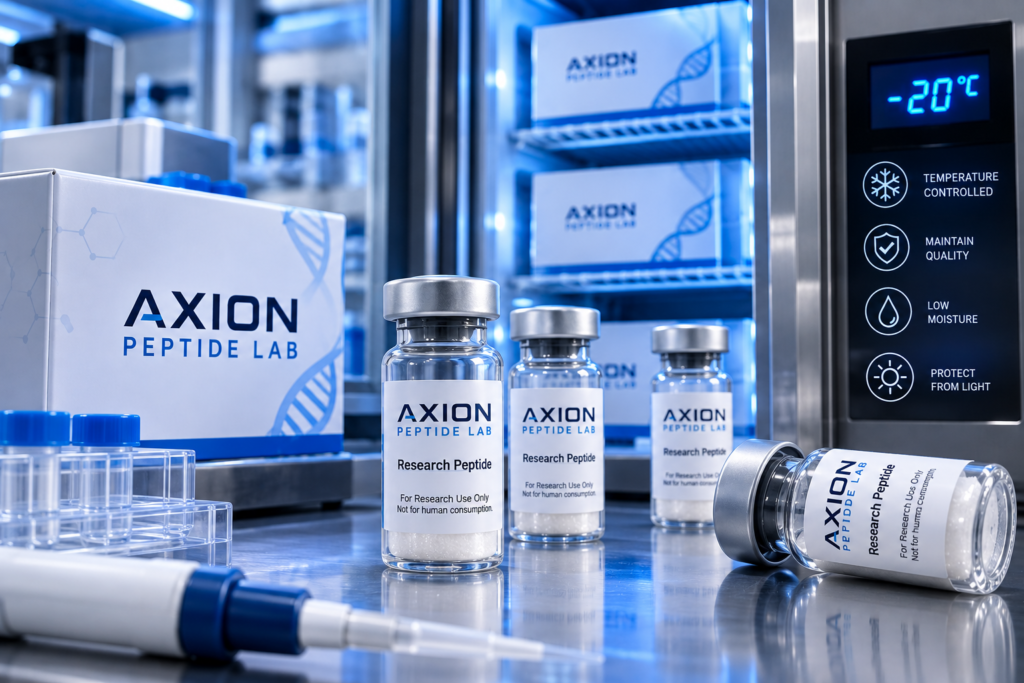
Researchers interested in peptide chemistry and laboratory research materials can explore the catalogue at Axion Peptide Lab.
The website features information about research-use-only peptides, biochemical compounds, and related laboratory supplies.
Before selecting any material, researchers should review the relevant product specifications, request applicable batch documentation, and confirm that the intended research activity is legally permitted.
Website: https://axionpeptidelab.com/
Laboratory enquiries: order@axionpeptidelab.com
Axion Peptide Lab should be evaluated using the same objective quality and compliance criteria applied to any other supplier. Product availability, testing claims, and delivery arrangements should be independently confirmed before ordering.
Research Peptides Versus Prescription Medicines
An essential distinction exists between laboratory research materials and approved pharmaceutical products.
Approved prescription medicines are subject to regulatory requirements relating to manufacturing, quality, safety, efficacy, and labeling.
Research-use-only peptides are not automatically evaluated to those same standards.
Some molecules investigated in research are also active ingredients in approved medicines, but laboratory materials containing those molecules must not be substituted for regulated pharmaceutical products.
The U.S. Food and Drug Administration has warned that some online peptide sellers market unapproved drugs despite using research-only disclaimers.
For personal medical treatment, consumers should use appropriately licensed healthcare providers and legitimate pharmacies.
Frequently Asked Questions About the Best Place to Buy Peptide Online
What Is the Best Place to Buy Peptide Online?
The best place to buy peptide online for legitimate scientific research is a supplier that provides transparent product information, reliable analytical documentation, verifiable business credentials, and appropriate laboratory research materials.
When searching for an online research peptide supplier, laboratories should consider several important factors, including compound identity, product specifications, purity testing, batch traceability, and compliance with applicable regulations.
A dependable supplier should provide sufficient information for researchers to determine whether the materials are suitable for their intended experimental applications.
Although competitive pricing and a broad product catalogue can be useful, these factors should not outweigh product quality and scientific documentation.
Researchers should also consider whether the supplier offers accessible technical information, appropriate storage recommendations, and clearly stated purchasing policies.
At Axion Peptide Lab, researchers can explore research-use-only peptide listings and educational information about biochemical compounds and laboratory materials.
Before selecting any supplier, laboratories should independently verify product documentation, regulatory compliance, and the suitability of the materials for their research objectives.
Ultimately, the best research peptide supplier is one that meets the laboratory’s specific scientific, analytical, and regulatory requirements.
How Can I Identify a Trustworthy Research Peptide Supplier?
Identifying a trustworthy research peptide supplier requires careful examination of product information, analytical documentation, and supplier transparency.
A reputable laboratory supplier should clearly identify the compounds it offers and provide accurate descriptions of their molecular characteristics, formulations, and intended research applications.
One important consideration is the availability of batch-specific Certificates of Analysis. These documents may provide information about peptide purity, molecular identity, and other tested characteristics.
Researchers should confirm that analytical reports correspond to the actual batches being supplied.
Supplier transparency is another important factor. Clearly stated business information, contact details, purchasing conditions, and product restrictions help laboratories evaluate supplier accountability.
Researchers should also examine whether storage recommendations are supported by appropriate technical information.
Independent analytical verification may be valuable when experimental accuracy is especially important.
Finally, laboratories should confirm that the supplier is legally permitted to distribute the requested compounds and that procurement complies with relevant institutional and national regulations.
What Is a Research Peptide Certificate of Analysis?
A research peptide Certificate of Analysis, commonly abbreviated as COA, is a document containing analytical information about a particular batch of peptide material.
A COA helps researchers understand the tested characteristics of a compound and determine whether it meets relevant analytical specifications.
Depending on the product and testing programme, a Certificate of Analysis may include:
- Product name and molecular identity
- Batch or lot identification number
- Analytical testing date
- High-performance liquid chromatography results
- Mass spectrometry results
- Reported chromatographic purity
- Relevant acceptance criteria
- Additional chemical characterization information
High-performance liquid chromatography, or HPLC, is commonly used to evaluate peptide purity and identify certain impurities.
Mass spectrometry may be used to support molecular identity testing.
Researchers should carefully review the testing methods and confirm that the COA applies to the specific material being purchased.
It is important to recognize that a Certificate of Analysis does not automatically establish sterility, absence of all contaminants, pharmaceutical quality, or suitability for human administration.
For reliable laboratory research, analytical documentation should be considered alongside product specifications, handling information, and the requirements of the intended experiment.
Why Is Peptide Purity Important When Buying Research Peptides Online?
Peptide purity is an important analytical characteristic because impurities can influence experimental measurements and complicate the interpretation of scientific results.
During peptide synthesis and processing, various impurities may be introduced. These can include incomplete peptide sequences, chemical by-products, residual processing materials, and degradation products.
The presence of impurities may affect the consistency of laboratory experiments, particularly when researchers are investigating specific molecular interactions or biochemical mechanisms.
High-performance liquid chromatography is frequently used to assess chromatographic purity.
However, purity results must be interpreted according to the analytical method used.
A peptide described as having high purity is not necessarily sterile, correctly identified, free from every contaminant, or appropriate for pharmaceutical use.
Researchers should therefore consider several quality indicators rather than relying exclusively on an advertised purity percentage.
These indicators may include molecular identity testing, batch-specific documentation, stability information, and relevant analytical specifications.
Choosing appropriately characterized materials helps laboratories reduce uncertainty and support reproducible scientific investigations.
Are Research Peptides the Same as Prescription Peptide Medicines?
No. Research peptides and approved prescription peptide medicines may sometimes contain molecules with the same chemical identity, but they are not automatically equivalent products.
Prescription medicines are subject to regulatory requirements involving manufacturing controls, quality assurance, safety evaluation, efficacy evidence, and approved labeling.
Research-use-only peptides are generally intended for laboratory investigation rather than medical treatment.
Their manufacturing processes, formulations, analytical testing requirements, and regulatory oversight may differ substantially from those of approved medicines.
For example, semaglutide and tirzepatide are active ingredients in certain approved prescription medicines. However, research-use-only materials containing these molecules must not be substituted for authorized pharmaceutical products.
Other experimental peptides have not received approval for human administration.
Researchers should distinguish between laboratory materials and regulated medicines when evaluating product specifications.
Research-use-only peptides must not be used for self-medication, human consumption, or unapproved medical treatment.
Individuals seeking peptide-based medical therapies should consult qualified healthcare professionals and obtain appropriately authorized pharmaceutical products.
Can Research Peptides Be Purchased Internationally?
International purchasing of research peptides depends on the compound involved, the intended scientific application, and the regulations governing the countries of origin and destination.
Different jurisdictions may apply different requirements to laboratory chemicals, active pharmaceutical ingredients, investigational compounds, and other research materials.
Before purchasing peptides internationally, laboratories should confirm whether the materials can legally be imported, possessed, and used for the intended research purpose.
Important considerations include customs requirements, product classification, import documentation, supplier authorization, and institutional purchasing policies.
Shipping conditions may also be important because some peptide formulations require specific environmental controls to maintain their integrity.
Researchers should review available stability documentation and confirm that the proposed transport conditions are appropriate for the material.
An online supplier’s statement that it offers international shipping does not independently establish that a particular compound can lawfully be delivered to every country.
For this reason, regulatory verification should be part of the procurement process.
What Are Lyophilized Research Peptides?
Lyophilized research peptides are peptide materials that have undergone freeze-drying, a controlled process designed to remove water from a formulation.
Lyophilization is widely used in pharmaceutical and biotechnology research because it can support the preservation of certain sensitive biological materials.
The process generally involves freezing the material and removing water under reduced pressure.
The resulting product is typically supplied in a dry form.
Lyophilized research peptides may be useful for certain laboratory applications, depending on their chemical structure, formulation, and stability characteristics.
However, freeze-drying does not guarantee that every peptide will remain stable under all storage conditions.
Factors such as residual moisture, temperature, packaging, and formulation composition can influence material stability.
Researchers should review product-specific technical documentation before selecting a lyophilized peptide for laboratory investigation.
They should also understand that lyophilization does not independently establish sterility or suitability for human administration.
How Should Research Peptides Be Stored?
Research peptide storage requirements depend on several factors, including molecular structure, physical formulation, packaging, chemical stability, and intended laboratory application.
Some peptides may require refrigerated or frozen storage, while others may have different validated storage conditions.
Temperature fluctuations, moisture exposure, oxidation, and light can influence the stability of certain compounds.
However, the effects of these factors vary between materials.
Laboratories should avoid assuming that all research peptides have identical storage requirements.
Instead, researchers should follow verified manufacturer documentation and establish appropriate inventory management procedures.
Useful laboratory records may include:
- Product name and chemical identity
- Batch or lot number
- Date of receipt
- Storage location
- Recommended storage conditions
- Expiry or retest date, where applicable
- Relevant analytical documentation
- Material usage records
Maintaining accurate inventory information supports traceability and helps researchers identify potential storage-related concerns.
Appropriate handling procedures are an important part of maintaining research material integrity.
Can I Buy Research Peptides for Personal Use?
Research-use-only peptides are intended for legitimate scientific and analytical investigations, not personal administration or self-medication.
Some peptides investigated in scientific research have attracted public attention because of their potential biological effects.
However, experimental research findings do not automatically establish that a compound is safe or effective for human use.
Many research peptides lack the clinical evidence and regulatory approval required for medical treatment.
Laboratory materials may also differ from approved pharmaceutical products in manufacturing standards, formulation, quality controls, and contamination testing.
For these reasons, research-use-only compounds should not be used for personal injections, oral consumption, or other forms of self-administration.
Individuals interested in peptide-based treatments should consult appropriately licensed healthcare professionals.
When a peptide-based medicine is medically appropriate, it should be obtained through authorized pharmaceutical channels.
Research suppliers should clearly communicate these distinctions to prevent confusion between scientific materials and medicines.
What Should I Check Before Ordering Peptides Online?
Before ordering research peptides online, laboratories should complete a structured evaluation of the product, supplier, analytical documentation, and applicable regulatory requirements.
The first step is confirming that the compound’s identity and specifications match the intended experimental application.
Researchers should then examine available analytical reports, including batch-specific Certificates of Analysis where appropriate.
Purity information can be useful, but it should not replace molecular identity testing or other relevant quality assessments.
Storage and transport conditions should also be reviewed to determine whether the material can be handled appropriately.
Additional considerations include supplier legitimacy, purchasing policies, technical documentation, and laboratory safety requirements.
Researchers should also verify whether the requested material is subject to pharmaceutical, chemical, import, or other regulatory restrictions.
A responsible purchasing decision should prioritize scientific suitability and verifiable documentation rather than promotional claims or price alone.
For more information about peptide research materials and laboratory product categories, explore Axion Peptide Lab.
Conclusion: Finding the Best Place to Buy Peptide Online
Finding the best place to buy peptide online requires careful evaluation of scientific quality, product transparency, analytical testing, and supplier reliability.
For laboratories and research institutions, choosing a peptide supplier is an important part of maintaining experimental consistency and supporting responsible scientific investigation.
Researchers should prioritize suppliers that provide accurate compound identification, relevant product specifications, appropriate batch documentation, and clearly stated research-use restrictions.
Analytical methods such as HPLC and mass spectrometry can provide valuable information about peptide purity and molecular identity.
However, laboratory quality should never be judged by a single advertised purity percentage.
Batch traceability, appropriate storage conditions, supplier accountability, and regulatory compliance are equally important considerations.
Online peptide catalogues can help researchers compare scientific materials and identify compounds relevant to their research objectives.
At Axion Peptide Lab, researchers can explore information about research-use-only peptides, biochemical compounds, and related laboratory supplies.
The website provides a starting point for reviewing peptide research categories and understanding the characteristics of different compounds.
Before making a purchasing decision, laboratories should verify product availability, relevant analytical documentation, and whether the material is legally suitable for their intended application.
Explore the Axion Peptide Lab research catalogue: https://axionpeptidelab.com/
Laboratory enquiries: order@axionpeptidelab.com
Choosing research materials based on verified scientific information helps support laboratory quality, responsible procurement, and reproducible experimental results.
For Research Use Only – Not for human consumption.
Scientific References and External Resources
- PubMed – Peptide Research Publicationshttps://pubmed.ncbi.nlm.nih.gov/?term=peptide+researchPeer-reviewed scientific publications about peptide chemistry, molecular biology, and research applications.
- Nature Portfolio – Peptideshttps://www.nature.com/subjects/peptidesScientific articles and reviews covering peptide research and molecular science.
- PubChem – Chemical Informationhttps://pubchem.ncbi.nlm.nih.gov/Chemical structures, compound identifiers, and molecular information.
- FDA – Concerns About Unapproved GLP-1 Drugshttps://www.fda.gov/drugs/drug-alerts-and-statements/fdas-concerns-unapproved-glp-1-drugs-used-weight-lossRegulatory and safety information concerning unapproved GLP-1 products.
- FDA – How to Buy Medicines Safely Onlinehttps://www.fda.gov/consumers/consumer-updates/how-buy-medicines-safely-online-pharmacyGuidance on identifying licensed online pharmacies and avoiding unsafe medicine sellers.
- National Center for Biotechnology Informationhttps://www.ncbi.nlm.nih.gov/Scientific literature and biomedical research databases.