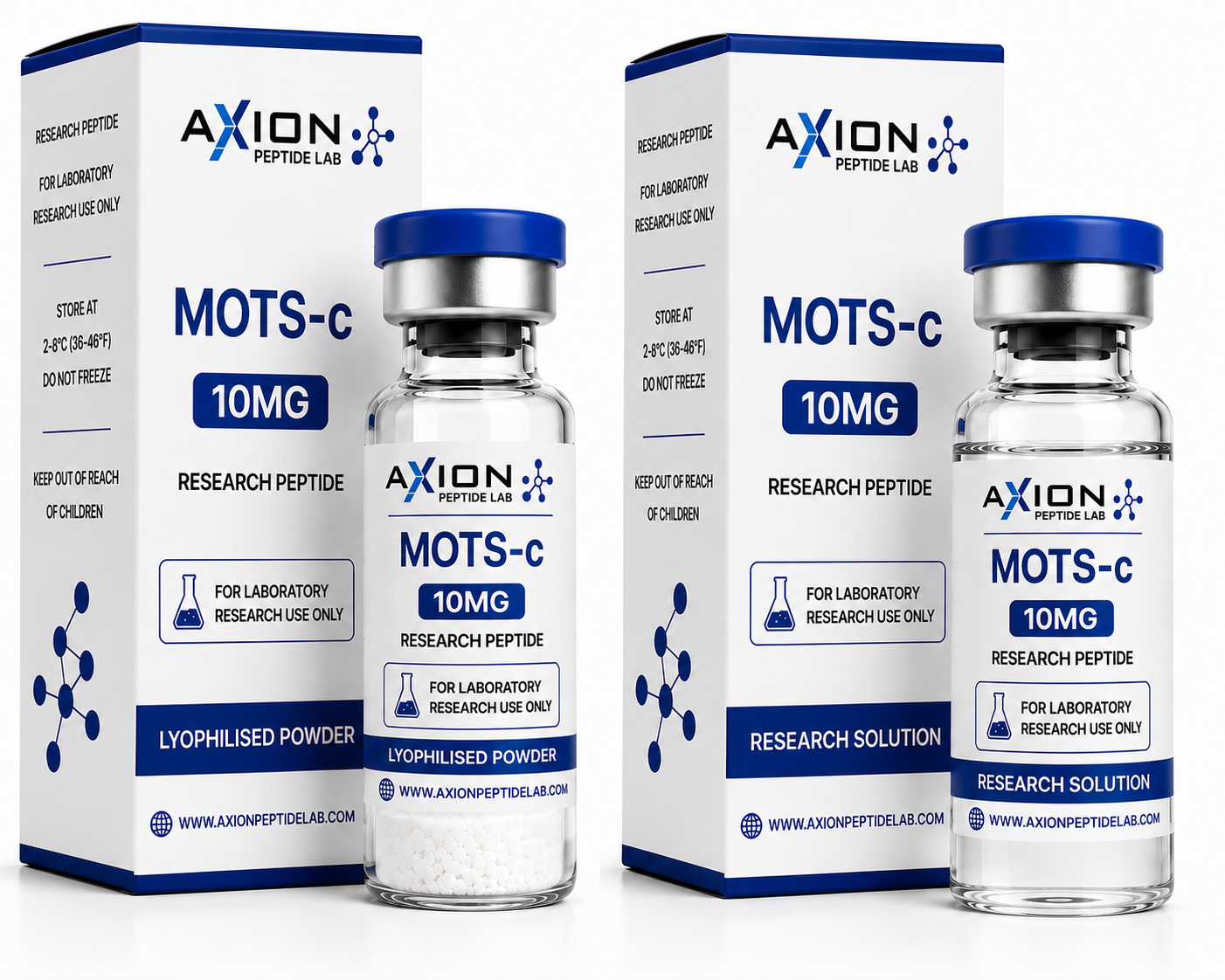
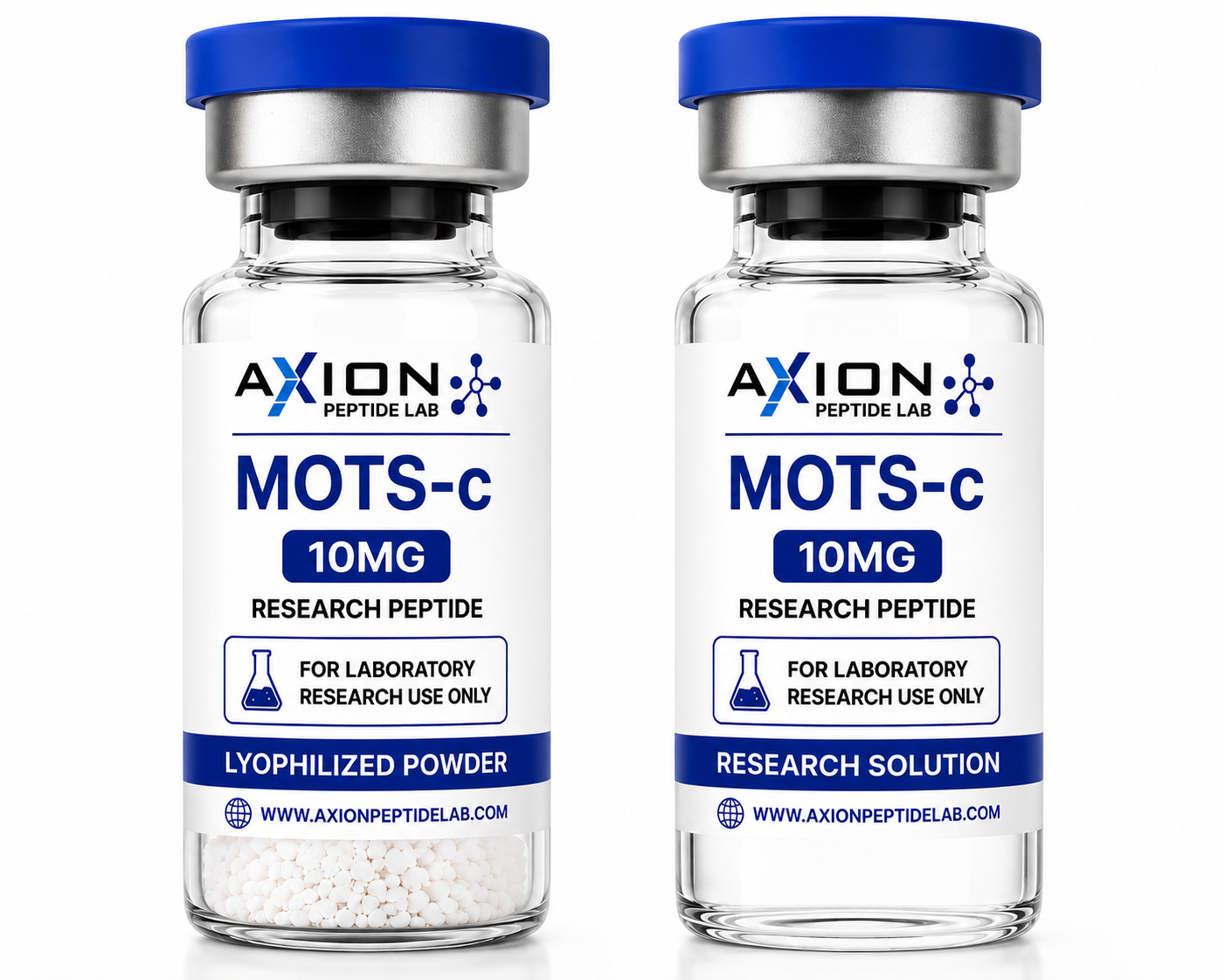
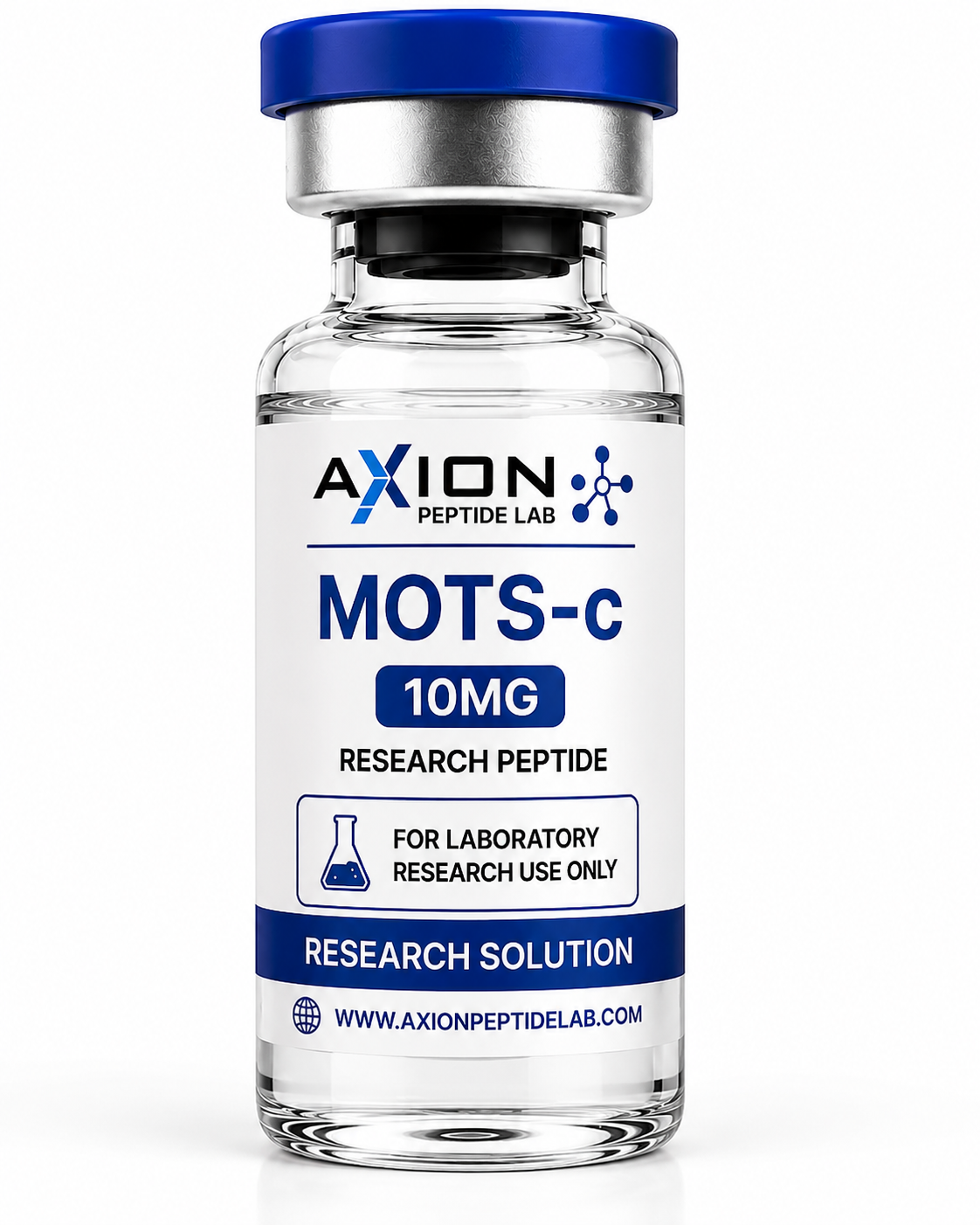
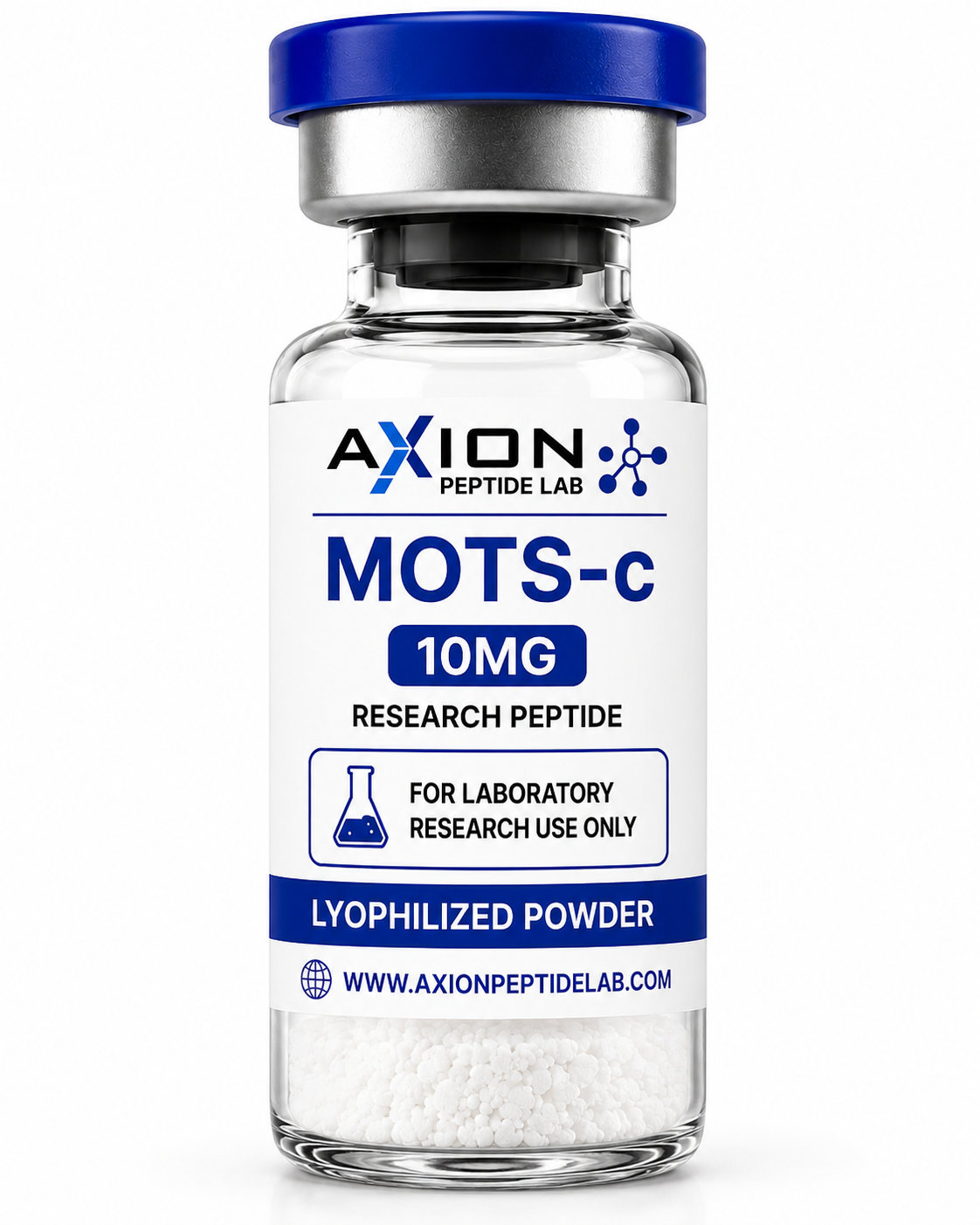
MOTS-c 10mg Research Peptide is a 16-amino-acid mitochondrial-derived peptide with the sequence MRWQEMGYIFYPRKLR. It is supplied for controlled laboratory investigation involving mitochondrial signalling, AMPK-associated pathways, mitonuclear communication, metabolic-stress responses, peptide structure-function relationships and analytical characterisation.
The 10mg designation represents the stated research quantity and is not a dosage recommendation.
For Research Use Only – Not for human or veterinary consumption.
$47.36 – $74.42Price range: $47.36 through $74.42
MOTS-c 10mg Research Peptide from Axion Peptide Lab is a mitochondrial-derived peptide supplied for controlled laboratory, biochemical and analytical investigation. Unlike conventional peptides whose genetic instructions originate from nuclear DNA, MOTS-c is associated with a short open reading frame located within the mitochondrial 12S ribosomal RNA region.
MOTS-c consists of 16 amino-acid residues with the sequence:
Met-Arg-Trp-Gln-Glu-Met-Gly-Tyr-Ile-Phe-Tyr-Pro-Arg-Lys-Leu-Arg
The one-letter sequence is:
MRWQEMGYIFYPRKLR
Its unusual mitochondrial origin has made MOTS-c an interesting experimental molecule for researchers investigating mitochondrial signalling, cellular energy regulation, metabolic-stress responses, AMPK-associated pathways and communication between mitochondria and the nucleus.
The 10mg designation represents the stated quantity of research material and is not a dosage or administration recommendation.
For Research Use Only – Not for human or veterinary consumption.
MOTS-c stands for Mitochondrial Open Reading Frame of the 12S rRNA type-c.
First described in scientific literature in 2015, MOTS-c belongs to a growing category of mitochondrial-derived peptides.
Mitochondria are traditionally known for their central involvement in cellular energy production. Research into mitochondrial-derived peptides has expanded this understanding by demonstrating that mitochondrial genetic information can also contribute to signalling molecules.
MOTS-c is especially interesting because research suggests communication can occur from mitochondria toward other cellular compartments, including the nucleus.
This provides scientists with an experimental model for studying mitochondrial communication and cellular adaptation.
MOTS-c contains 16 amino-acid residues.
Its sequence, MRWQEMGYIFYPRKLR, is an important identifying characteristic for analytical and molecular research.
The peptide is associated with a short open reading frame within the mitochondrial 12S rRNA region.
This molecular origin distinguishes MOTS-c from many commonly studied synthetic research peptides.
Researchers may investigate its sequence, molecular characteristics, stability and interactions under controlled laboratory conditions.
When exact molecular mass, salt form, purity or other analytical specifications are required, researchers should use documentation associated with the actual product and batch.
Mitochondria perform functions extending beyond ATP generation.
They participate in signalling networks that help cells respond to changes in nutrient availability, oxidative conditions and other forms of cellular stress.
MOTS-c research has contributed to scientific interest in mitochondria as active signalling organelles.
Researchers may use appropriate experimental models to investigate how mitochondrial-derived peptides participate in cellular communication.
This field can help scientists understand how mitochondrial signals influence broader cellular processes.
MOTS-c therefore provides an interesting experimental material for mitochondrial biology and molecular signalling research.
One of the most prominent pathways associated with MOTS-c research is AMP-activated protein kinase, commonly abbreviated AMPK.
AMPK functions as an important cellular energy sensor.
The original research describing MOTS-c reported changes involving the folate-methionine cycle and de novo purine biosynthesis, including accumulation of AICAR, which was associated with AMPK activation.
Researchers may therefore investigate MOTS-c in experimental models designed to examine AMPK-associated molecular pathways.
This does not establish MOTS-c as a treatment for metabolic conditions.
Instead, AMPK provides a measurable molecular pathway through which researchers can investigate the peptide’s experimental behaviour.
MOTS-c has also been studied in connection with the folate-methionine cycle.
This biochemical network forms part of cellular one-carbon metabolism and connects with processes involving nucleotide synthesis and other metabolic pathways.
Early MOTS-c research identified changes in metabolites associated with this system.
Researchers may investigate these relationships using metabolomic, biochemical or cellular methodologies.
Studying the interaction between a mitochondrial-derived peptide and one-carbon metabolism can provide insight into how mitochondrial signals interact with broader cellular metabolic networks.
These experiments should use appropriate controls and validated analytical techniques.
De novo purine biosynthesis is another pathway associated with early MOTS-c investigations.
Purines are essential molecular components involved in nucleic acids and cellular energy-related molecules.
Research reported that MOTS-c-related changes in the folate cycle were connected with alterations in de novo purine synthesis and accumulation of AICAR.
This provides an experimental framework for investigating relationships among mitochondrial signalling, metabolic intermediates and cellular energy-sensing pathways.
Laboratories may use suitable analytical methods to measure pathway-associated metabolites and compare experimental conditions.
A particularly interesting area of MOTS-c research involves communication between mitochondria and the nucleus.
Experimental research has reported that MOTS-c can translocate to the nucleus under metabolic-stress conditions.
Within experimental models, this process has been associated with changes in nuclear gene expression.
These findings have contributed to the study of mitonuclear communication, which examines how mitochondrial and nuclear systems exchange biological information.
MOTS-c may therefore be useful for researchers investigating retrograde signalling and stress-responsive gene regulation.
Cells constantly encounter changes in nutrients, energy availability and environmental conditions.
They must respond to these changes to maintain cellular homeostasis.
MOTS-c has been investigated in models involving metabolic stress.
Researchers may examine how experimental conditions influence MOTS-c localization, signalling pathways and molecular markers.
Studies can also investigate relationships between metabolic stress and AMPK-dependent signalling.
This research remains mechanistic and experimental.
Findings from cellular or animal models should not automatically be translated into claims of established effects in humans.
Research involving MOTS-c has extended beyond metabolic pathways to nuclear gene regulation.
Under experimentally induced metabolic stress, MOTS-c has been reported to interact with stress-responsive transcriptional systems and influence the expression of numerous genes.
Researchers interested in mitochondrial-to-nuclear signalling may investigate these relationships using gene-expression analysis, cellular assays or molecular techniques.
Comparative experiments may examine treated and untreated cells or explore how pathway inhibition changes experimental responses.
Such work contributes to understanding how mitochondrial-derived signals participate in broader cellular regulatory networks.
The compact 16-residue structure of MOTS-c also makes it useful for peptide structure-function studies.
Researchers may examine how individual amino-acid residues influence molecular behaviour.
Modified sequences, fragments or related mitochondrial-derived peptides may be compared with the complete MOTS-c sequence.
These experiments can help determine how peptide structure relates to stability, localization and experimentally measured molecular activity.
Sequence-based investigation is an important part of peptide science because relatively small structural modifications may significantly alter molecular characteristics.
Peptide stability can influence laboratory results.
Researchers may investigate MOTS-c under controlled conditions to determine how environmental variables affect molecular integrity.
Potential experimental endpoints include degradation patterns, chromatographic changes and time-dependent molecular alterations.
Careful documentation of experimental conditions helps improve reproducibility.
Researchers should use product-specific handling and storage documentation associated with the supplied material rather than assuming that specifications from unrelated MOTS-c products apply to the Axion Peptide Lab product.
MOTS-c can also be incorporated into analytical peptide research.
Depending on available instrumentation, laboratories may investigate molecular identity, chromatographic behaviour, molecular mass, purity profiles and degradation products.
Sequence information can provide an important reference point when conducting molecular characterisation.
Researchers requiring specific purity levels, salt forms or analytical specifications should consult documentation for the actual product and batch.
Generic information about MOTS-c should not be interpreted as verification of an individual commercial batch.
The MOTS-c 10mg Research Peptide format provides a clearly identified quantity of mitochondrial-derived peptide material for controlled experimental work.
The 10mg designation describes the stated amount associated with the research product.
It is not a human dosage recommendation.
Experimental quantities should be established according to validated laboratory protocols, research objectives and institutional requirements.
Axion Peptide Lab does not provide human dosing, injection, administration or self-experimentation instructions.
Controlled laboratory investigation may include:
These categories represent scientific research areas and not therapeutic indications.
Accurate documentation is essential for reproducible peptide research.
Researchers should record product identity, batch information, experimental conditions and analytical methodology.
Where available, batch-specific analytical documentation can provide additional information concerning material identity and measured specifications.
Certificate of Analysis and independent testing availability may vary according to product and batch.
Researchers requiring particular analytical specifications should review available documentation before incorporating MOTS-c into an experimental workflow.
Exact purity percentages should only be stated when supported by appropriate batch-specific analytical evidence.
MOTS-c 10mg should be handled by appropriately trained personnel in suitable research environments.
Research material should remain clearly identified and separated from medicines, foods, supplements and other consumer products.
Laboratories should follow suitable procedures to preserve material integrity and minimise contamination.
Storage and handling conditions should follow documentation associated with the actual supplied product.
Researchers are responsible for ensuring that purchase, possession, importation and experimental use comply with applicable regulations and institutional requirements.
Axion Peptide Lab supplies specialised peptide materials intended for controlled scientific, biochemical and analytical investigation.
MOTS-c 10mg provides researchers with a mitochondrial-derived peptide format suitable for appropriately designed experimental projects.
Researchers can incorporate the material into mitochondrial biology, AMPK signalling, metabolic pathway, gene-expression or analytical studies according to validated laboratory protocols.
Relevant product specifications and available documentation should be reviewed before purchase.
Qualified laboratories, researchers and scientific organisations can buy MOTS-c 10mg Research Peptide from Axion Peptide Lab for legitimate laboratory and analytical investigation.
Its mitochondrial origin and 16-amino-acid structure make MOTS-c particularly interesting for experimental research involving mitochondrial signalling, mitonuclear communication and cellular metabolic pathways.
MOTS-c should not be marketed as a weight-loss treatment, anti-aging medicine, exercise enhancer, metabolic therapy or human performance product.
For Research Use Only – Not for human or veterinary consumption.
MOTS-c 10mg is a stated quantity of a 16-amino-acid mitochondrial-derived peptide supplied for controlled laboratory, biochemical and analytical investigation.
MOTS-c stands for Mitochondrial Open Reading Frame of the 12S rRNA type-c.
The sequence is Met-Arg-Trp-Gln-Glu-Met-Gly-Tyr-Ile-Phe-Tyr-Pro-Arg-Lys-Leu-Arg, abbreviated MRWQEMGYIFYPRKLR.
MOTS-c contains 16 amino-acid residues.
Yes. MOTS-c was identified from a short open reading frame associated with the mitochondrial 12S rRNA region.
Published research has examined pathways including AMPK signalling, folate-methionine metabolism, purine biosynthesis, metabolic-stress signalling and mitonuclear communication.
Its mitochondrial genetic origin and reported signalling behaviour make it useful for investigating communication between mitochondrial processes and broader cellular regulatory pathways.
The 10mg designation represents the stated quantity of research material associated with the product. It is not a human dosage recommendation.
No. The material is intended exclusively for research, and human administration, injection or self-experimentation guidance is not provided.
Qualified research customers can purchase MOTS-c 10mg Research Peptide from Axion Peptide Lab for legitimate laboratory and analytical research, subject to availability and applicable requirements.
MOTS-c 10mg Research Peptide is a 16-amino-acid mitochondrial-derived peptide with the sequence MRWQEMGYIFYPRKLR. It is supplied for controlled laboratory investigation involving mitochondrial signalling, AMPK-associated pathways, mitonuclear communication, metabolic-stress responses, peptide structure-function relationships and analytical characterisation.
The 10mg designation represents the stated research quantity and is not a dosage recommendation.
For Research Use Only – Not for human or veterinary consumption.