
Tirzepatide Laboratory Research: Best Scientific Guide to GIP/GLP-1 Mechanisms, Peptide Purity and Quality Testing in 2026
Tirzepatide laboratory research has become an important subject in peptide chemistry, receptor pharmacology, molecular biology and analytical science. As a synthetic dual GIP and GLP-1 receptor agonist, tirzepatide offers researchers a distinctive molecular structure for investigating incretin signalling, peptide modifications and receptor-mediated cellular responses.
Scientific interest in tirzepatide extends beyond its established pharmaceutical applications. Researchers also examine its molecular identity, analytical purity, structural characteristics, degradation pathways and interactions with laboratory model systems.
For laboratories sourcing research materials, understanding these characteristics is essential. A product name or advertised purity percentage alone cannot establish molecular identity, analytical reliability or suitability for a specific experiment.
This comprehensive guide from Axion Peptide Lab explores the scientific foundations of tirzepatide laboratory research, explains relevant analytical techniques and outlines the documentation researchers should evaluate when reviewing laboratory materials.
What Is Tirzepatide Laboratory Research?
Tirzepatide laboratory research refers to scientific investigations involving the chemical, structural, analytical and pharmacological properties of tirzepatide.
Tirzepatide is a synthetic peptide containing 39 amino acid residues. Its structure is based on the glucose-dependent insulinotropic polypeptide sequence, with modifications that influence its receptor interactions and pharmacokinetic characteristics.
Unlike naturally occurring incretin hormones, tirzepatide has been engineered to activate both the GIP receptor and the GLP-1 receptor.
These receptors belong to the G protein-coupled receptor family and participate in complex metabolic signalling pathways.
Laboratory investigations may explore several scientific questions:
- How tirzepatide interacts with GIP and GLP-1 receptors.
- How receptor activation influences intracellular signalling.
- How chemical modifications affect peptide properties.
- How analytical methods support molecular identification.
- How chromatographic testing characterises purity.
- How storage conditions influence chemical stability.
- How batch documentation supports reproducible research.
Each question requires a different experimental approach.
A receptor pharmacology study, for example, is fundamentally different from an analytical chemistry investigation designed to establish molecular identity.
Understanding these distinctions helps laboratories select appropriate methods and interpret results accurately.
Tirzepatide Molecular Structure and Chemical Composition
The molecular structure of tirzepatide is central to understanding its scientific properties.
Tirzepatide has the molecular formula C225H348N48O68 and a molecular mass of approximately 4,813.53 daltons.
Its structure contains a modified amino acid sequence and a fatty diacid-containing side chain.
These features distinguish tirzepatide from endogenous incretin hormones.
Amino Acid Sequence
The primary structure of a peptide is determined by its amino acid sequence.
Sequence determines the arrangement of chemical groups and influences molecular recognition, stability and interactions with biological targets.
Small changes in amino acid composition may affect receptor activity or analytical behaviour.
For this reason, molecular identity should not be inferred from a product label alone.
Laboratories interested in sequence verification can explore our guide to Peptide Sequence Analysis.
Fatty Diacid Modification
Tirzepatide contains a C20 fatty diacid-containing modification that contributes to albumin binding.
Albumin association is relevant to the molecule’s prolonged pharmacokinetic characteristics.
This modification also influences the chemical properties of the peptide and must be considered during analytical characterisation.
Molecular Mass Verification
Mass spectrometry can provide evidence consistent with the expected molecular mass.
However, compounds with different structures can sometimes share similar masses.
Consequently, molecular mass agreement should be interpreted as one component of identity assessment rather than definitive proof of every structural feature.
Tirzepatide Laboratory Research and Dual Receptor Agonism
The most distinctive pharmacological characteristic of tirzepatide is its activity at two incretin receptors.
These are the GIP receptor, or GIPR, and the GLP-1 receptor, or GLP-1R.
Both are class B G protein-coupled receptors.
Their activation can influence intracellular signalling and downstream cellular responses.
Understanding GIP Receptor Activity
Glucose-dependent insulinotropic polypeptide is an incretin hormone involved in glucose-dependent insulin secretion.
GIPR is expressed in pancreatic beta cells and other tissues.
In laboratory research, investigators may examine receptor activation, ligand interactions and intracellular signalling responses.
Tirzepatide’s GIPR activity provides a molecular model for studying these processes.
Understanding GLP-1 Receptor Activity
The GLP-1 receptor is another important incretin receptor.
GLP-1R activation can influence intracellular signalling pathways involving cyclic adenosine monophosphate.
Researchers may investigate receptor activity using suitable biochemical and cellular assays.
Why Dual Agonism Matters
Dual receptor agonism means that a single compound can activate two receptor systems.
However, it does not mean that both receptors respond identically.
Receptor-specific potency, cellular context and signalling bias can influence observed experimental outcomes.
This makes tirzepatide particularly relevant to comparative receptor pharmacology.
GIP and GLP-1 Intracellular Signalling Pathways
Tirzepatide laboratory research frequently involves the study of intracellular signalling.
Both GIPR and GLP-1R can couple to Gs proteins, leading to activation of adenylyl cyclase.
This process can increase intracellular cAMP concentrations.
cAMP Production
Cyclic adenosine monophosphate is an important second messenger.
Its concentration may change following receptor activation.
Laboratories may measure cAMP responses as one indicator of receptor signalling activity.
However, cAMP measurements alone do not describe every downstream biological effect.
Protein Kinase A
cAMP can influence protein kinase A activity.
Protein kinase A participates in phosphorylation-dependent signalling processes.
The resulting cellular effects depend on the experimental system.
Beta-Arrestin Recruitment
Beta-arrestin proteins participate in GPCR regulation and may influence receptor internalisation and signalling.
Tirzepatide has been investigated for differences in signalling behaviour between GIPR and GLP-1R.
These characteristics contribute to scientific interest in receptor-biased signalling.
Experimental Limitations
Results from receptor-overexpression systems may differ from those obtained in cells expressing endogenous receptor levels.
Researchers should consider receptor density, assay design, cellular background and experimental controls.
Such factors are essential when comparing results across studies.
Why Tirzepatide Laboratory Research Is Scientifically Important
Tirzepatide provides a useful model for examining relationships between molecular structure and receptor pharmacology.
Its engineered sequence illustrates how chemical modifications may influence peptide behaviour.
Its dual receptor profile enables investigation of interactions across related signalling systems.
Its analytical characteristics also create opportunities to study peptide identity, chromatographic separation and molecular stability.
These areas connect several scientific disciplines.
Biochemists may focus on molecular interactions.
Analytical chemists may investigate identity and impurity profiles.
Cell biologists may examine receptor-mediated responses.
Quality-control specialists may evaluate batch traceability and analytical documentation.
Although these disciplines approach tirzepatide differently, they share a requirement for accurate material identification and reliable experimental methods.
HPLC Testing for Tirzepatide Laboratory Research
High-performance liquid chromatography is widely used in peptide analysis.
HPLC separates chemical components based on their interactions with chromatographic materials.
In tirzepatide laboratory research, suitable methods may help characterise the composition of a sample and detect certain related substances.
How HPLC Works
A sample passes through a chromatographic column containing a stationary phase.
A mobile phase carries sample components through the system.
Different components may interact differently with the stationary phase and therefore elute at different times.
A detector records the resulting chromatographic response.
Interpreting Chromatograms
A chromatogram displays detector response against time.
Individual peaks may represent the target compound or other detectable substances.
However, the presence of a dominant peak does not independently confirm the compound’s complete molecular identity.
Understanding Purity Results
A reported HPLC purity percentage often represents a relative chromatographic area measurement.
It should not automatically be interpreted as the absolute mass percentage of the desired peptide.
Detector response, co-elution and method conditions can influence the result.
Why Method Selection Matters
A suitable analytical method should distinguish the target compound from relevant impurities.
Methods developed for unrelated peptides may not provide adequate selectivity for tirzepatide.
Read our detailed guide to HPLC Peptide Purity Testing for further information.
Mass Spectrometry and Tirzepatide Identity Verification
Mass spectrometry is another important technique in peptide characterisation.
The method measures the mass-to-charge ratios of ions generated from a sample.
For tirzepatide, mass spectrometry may provide evidence consistent with the expected molecular mass.
Intact Mass Analysis
Intact mass analysis examines the molecular mass of the peptide without intentionally fragmenting the entire molecule into smaller sequence components.
Agreement between expected and observed mass supports the proposed identity.
Nevertheless, this result may not distinguish every possible structural isomer.
Tandem Mass Spectrometry
Tandem mass spectrometry, or MS/MS, can provide additional information through fragmentation.
Depending on the experimental method, fragment patterns may support sequence-related assignments.
LC-MS Analysis
Liquid chromatography coupled with mass spectrometry combines chromatographic separation with mass-based detection.
This approach can be particularly useful when investigating peptide-related impurities.
Researchers should still distinguish between molecular identification, impurity detection and quantitative content determination.
Explore LC-MS Peptide Analysis to understand the benefits and limitations of this analytical technique.
Tirzepatide Purity Testing and Research Material Quality
Peptide purity is an important quality characteristic, but it is only one component of material assessment.
Researchers should distinguish among several analytical concepts.
Identity concerns whether the material corresponds to the intended chemical structure.
Purity concerns the proportion of the desired component relative to impurities under a defined measurement approach.
Content concerns the quantity of the intended substance.
Stability concerns whether relevant characteristics remain acceptable under specified conditions.
These measurements are not interchangeable.
A high chromatographic purity percentage does not independently establish accurate quantitative content.
Similarly, molecular mass confirmation does not prove the absence of every impurity.
A comprehensive analytical assessment may therefore require complementary methods.
The appropriate level of testing depends on the research objective, material characteristics and applicable quality requirements.
Certificates of Analysis for Tirzepatide Research Materials
A Certificate of Analysis, commonly called a COA, reports selected analytical findings associated with a material or batch.
For laboratory procurement, COA information can support material evaluation and traceability.
A useful certificate may identify:
- The compound name.
- The batch or lot number.
- The analytical method.
- The testing date.
- The reported purity.
- Identity-related results.
- Relevant specifications.
- The testing laboratory.
Not every certificate includes every characteristic.
Why Batch Numbers Matter
Batch identification connects a physical material to associated records.
Researchers should confirm that the certificate corresponds to the actual lot being supplied.
A generic example certificate does not establish the characteristics of every production batch.
Evaluating Analytical Claims
A claim of independent testing should be supported by appropriate documentation.
Researchers should also examine what the testing actually established.
For example, an HPLC result does not necessarily demonstrate sterility or comprehensive sequence verification.
Visit Axion Peptide Lab’s Quality and COA Page to review the company’s quality documentation approach.
Batch Testing and Scientific Reproducibility
Batch-to-batch variation can complicate laboratory research.
Two lots of the same nominal compound may differ in impurity profiles, measured content or other characteristics.
These differences can influence experimental interpretation.
Maintaining Traceability
Laboratories should record material names, supplier information, lot identifiers and relevant analytical records.
Comparing Batches
When comparing materials from different lots, researchers should consider whether the analytical methods and reporting conventions are consistent.
Investigating Unexpected Results
If experimental results change unexpectedly, batch information can help researchers evaluate whether material differences may have contributed.
Documentation Practices
Appropriate records support reproducibility and quality management.
Our article on Peptide Batch Testing explains the importance of identity checks, purity assessment and lot traceability.
Tirzepatide Stability and Degradation Research
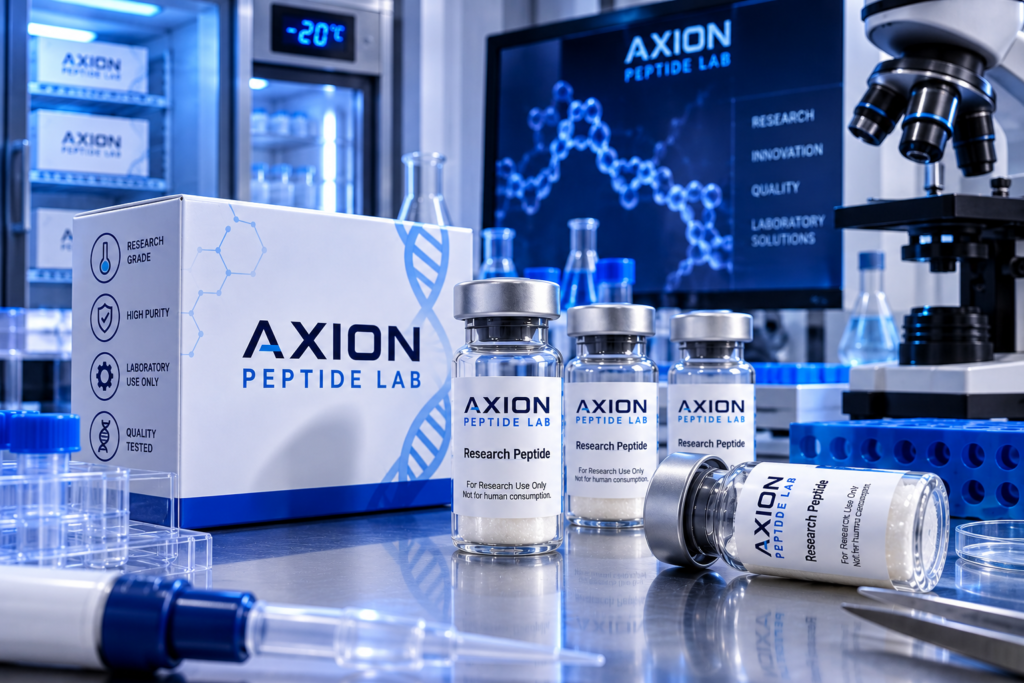
Peptide stability depends on molecular structure, formulation and environmental conditions.
Tirzepatide laboratory research may investigate how chemical or physical properties change under defined conditions.
Temperature Effects
Temperature can influence degradation rates.
However, appropriate storage conditions must be determined using product-specific information.
Moisture Exposure
Moisture can affect some dry peptide formulations.
Packaging and handling practices may influence exposure.
Solution Conditions
Solution composition and pH can influence peptide stability.
Findings obtained in one formulation should not automatically be generalised to another.
Oxidation and Hydrolysis
Chemical degradation pathways may involve oxidation, hydrolysis or other reactions.
The relevance of each pathway depends on the molecular structure and experimental conditions.
Stability-Indicating Analysis
Suitable analytical methods may help distinguish intact material from certain degradation products.
Researchers should use appropriate stability evidence rather than rely on universal storage assumptions.
Tirzepatide Structure–Activity Relationship Research
Structure–activity relationship research investigates how molecular changes influence experimentally observed activity.
Tirzepatide is particularly relevant because its engineered structure differs from naturally occurring incretin hormones.
Amino Acid Modifications
Changes in sequence can influence molecular recognition and receptor activity.
Lipid Modification
The fatty diacid-containing side chain contributes to albumin binding and influences pharmacokinetic behaviour.
Receptor Interactions
Different structural features may affect interactions with GIPR and GLP-1R.
Experimental Interpretation
Molecular changes must be evaluated experimentally.
Similar chemical structures do not guarantee identical receptor activity or biological effects.
For a broader explanation, read our Peptide Structure–Activity Relationship Guide.
Analytical Method Validation for Tirzepatide
Analytical results are meaningful only when the underlying methods are suitable for their intended purpose.
Method validation evaluates whether an analytical procedure performs adequately under defined conditions.
Important characteristics may include specificity, accuracy, precision, linearity, range and robustness.
Specificity and Selectivity
The method should distinguish the target analyte from relevant interfering substances.
Accuracy and Precision
Accuracy concerns agreement with an accepted reference value.
Precision concerns consistency among repeated measurements.
Robustness
Robustness evaluates the influence of deliberate changes in analytical conditions.
Method Transfer
A method developed in one laboratory may require additional evaluation before use in another.
Differences in equipment, consumables and procedures can influence performance.
Read Peptide Analytical Method Validation for more information.
Tirzepatide Versus Semaglutide in Laboratory Research
Tirzepatide and semaglutide are both peptide-based incretin receptor agonists.
However, their receptor profiles differ.
Semaglutide acts primarily as a GLP-1 receptor agonist.
Tirzepatide activates both GIPR and GLP-1R.
This distinction creates different research questions.
A laboratory studying GLP-1 receptor signalling may investigate either compound, depending on the experimental design.
A study specifically examining dual incretin receptor activation requires consideration of tirzepatide’s additional GIPR activity.
Researchers should not assume that differences observed in one experimental model will necessarily apply to every biological system. tirzepatide laboratory research
Tirzepatide Versus Retatrutide Research
Retatrutide is another modified peptide investigated in metabolic receptor pharmacology.
It has been designed to activate three receptor systems: GIPR, GLP-1R and the glucagon receptor.
Tirzepatide, by comparison, is a dual GIPR and GLP-1R agonist. tirzepatide laboratory research
This difference is important for scientific investigations of receptor selectivity and signalling.
Analytical comparisons should also account for differences in molecular structure and product-specific testing requirements.
Researchers interested in related compounds can explore the Retatrutide 10 mg Research Product at Axion Peptide Lab. tirzepatide laboratory research
Retatrutide remains investigational and should not be confused with an approved prescription medicine.
Tirzepatide Laboratory Research Product Specifications
Axion Peptide Lab maintains dedicated product pages for several tirzepatide research material quantities.
These listings provide information intended for laboratory procurement and scientific material evaluation.
Tirzepatide 10 mg Research Material
The Tirzepatide 10 mg Research Peptide page provides information about the material and relevant laboratory quality considerations.
Researchers should review current specifications and available batch documentation.
Tirzepatide 20 mg Research Material
The Tirzepatide 20 mg Laboratory Research Product listing describes a separate stated research quantity.
The quantity designation is not a medical dosage recommendation.
Tirzepatide 30 mg Research Material
The Tirzepatide 30 mg Research Peptide listing provides another product option for evaluating laboratory sourcing requirements. tirzepatide laboratory research
Researchers should confirm the actual product specifications and documentation associated with the relevant lot.
The presence of these research listings does not establish equivalence with approved pharmaceutical products.

How to Evaluate Tirzepatide Laboratory Research Suppliers
Laboratory procurement requires more than comparing product prices.
Researchers should consider material identity, documentation, analytical methods and regulatory suitability.
Confirm Product Identity
Review the compound name and available chemical specifications.
Review Analytical Documentation
Determine whether the supplier provides relevant testing information.
Check Batch Traceability
Verify that analytical documents correspond to the supplied lot.
Evaluate Storage Requirements
Confirm that the laboratory can maintain the required conditions.
Assess Regulatory Compliance
Ensure that procurement and intended use comply with applicable requirements.
Consider Supplier Communication
Clear responses to documentation and product questions can support informed sourcing decisions.
For additional assistance, visit the Axion Peptide Lab Contact Page.
Tirzepatide Research in the USA, UK and Europe
Tirzepatide is also the active ingredient in approved prescription medicines in several jurisdictions.
These regulated pharmaceutical products must be distinguished from materials marketed solely for laboratory research.
Research-use labelling does not automatically establish regulatory exemption.
In the United States, laboratories should consider applicable federal and state requirements.
In the United Kingdom, relevant medicines legislation, import requirements and institutional rules may apply.
European laboratories should review applicable EU and national requirements.
Researchers must determine whether a particular material can lawfully be sourced and used for the intended scientific purpose. tirzepatide laboratory research
Scientific References for Tirzepatide Laboratory Research
Reliable scientific interpretation requires appropriate primary literature and established technical references.
The following resources support further investigation.
PubMed provides access to biomedical research publications covering tirzepatide, incretin receptor biology and peptide analytical methods.
DailyMed provides regulated prescribing information for approved tirzepatide-containing medicines, including molecular and pharmacological information.
ICH Quality Guidelines include guidance relevant to analytical procedures and pharmaceutical quality.
IUPHAR/BPS Guide to Pharmacology provides curated information about receptor pharmacology.
IUPAC Gold Book provides standardised chemical terminology.
These sources offer scientific context but do not independently verify individual commercial research peptide batches.
Frequently Asked Questions About Tirzepatide Laboratory Research
What is tirzepatide laboratory research?
Tirzepatide laboratory research involves scientific investigations of the molecule’s structure, receptor activity, analytical characteristics and stability.
What receptors does tirzepatide activate?
Tirzepatide activates GIPR and GLP-1R.
Is tirzepatide a synthetic peptide?
Yes. Tirzepatide is a modified synthetic peptide containing 39 amino acid residues.
What is the molecular mass of tirzepatide?
Its molecular mass is approximately 4,813.53 daltons.
Why is HPLC used in tirzepatide analysis?
HPLC can help separate sample components and evaluate chromatographic purity under defined analytical conditions.
Can mass spectrometry confirm tirzepatide identity?
Mass spectrometry can provide supporting molecular mass evidence. Additional methods may be necessary for more complete structural characterisation.
What is a tirzepatide Certificate of Analysis?
A COA reports selected analytical information associated with a particular material or batch.
Does a high purity percentage guarantee complete quality?
No. Purity, molecular identity, quantitative content and stability are different analytical characteristics.
Why is batch traceability important?
Traceability connects a research material to relevant analytical records and laboratory experiments.
How does tirzepatide differ from semaglutide?
Tirzepatide activates GIPR and GLP-1R, while semaglutide acts primarily at GLP-1R.
How does tirzepatide differ from retatrutide?
Tirzepatide is a dual incretin receptor agonist, whereas retatrutide is an investigational triple GIPR/GLP-1R/glucagon receptor agonist.
Where can researchers find laboratory product information?
Researchers can explore the Axion Peptide Lab Research Catalogue and the dedicated tirzepatide product pages.
Conclusion: Tirzepatide Laboratory Research and Scientific Quality
Tirzepatide laboratory research connects modern peptide chemistry with receptor pharmacology, analytical testing and molecular science.
Its dual GIP and GLP-1 receptor activity makes it relevant to investigations of incretin signalling and engineered peptide structure.
At the same time, reliable laboratory research requires appropriate material identification, analytical methods and quality documentation.
HPLC, mass spectrometry, sequence analysis, batch testing and stability investigations each provide different types of scientific evidence.
Researchers should interpret these results carefully and avoid assuming that a single purity percentage establishes complete material quality.
At Axion Peptide Lab, our research catalogue and educational articles provide information about peptide materials, analytical testing and scientific quality considerations.
Explore the Tirzepatide 10 mg, Tirzepatide 20 mg and Tirzepatide 30 mg research product pages to review current specifications and available laboratory documentation.
All research-use products are intended for legitimate laboratory and analytical research only. They are not intended for human or veterinary administration and must not be represented as substitutes for approved prescription medicines.