What Is Amylin? Function, Weight Regulation, GLP-1 Research and Amylin Analogs Explained
If you have been following research into obesity, diabetes, GLP-1 medicines or next-generation metabolic peptides, you may increasingly encounter the word amylin.
But what is amylin?
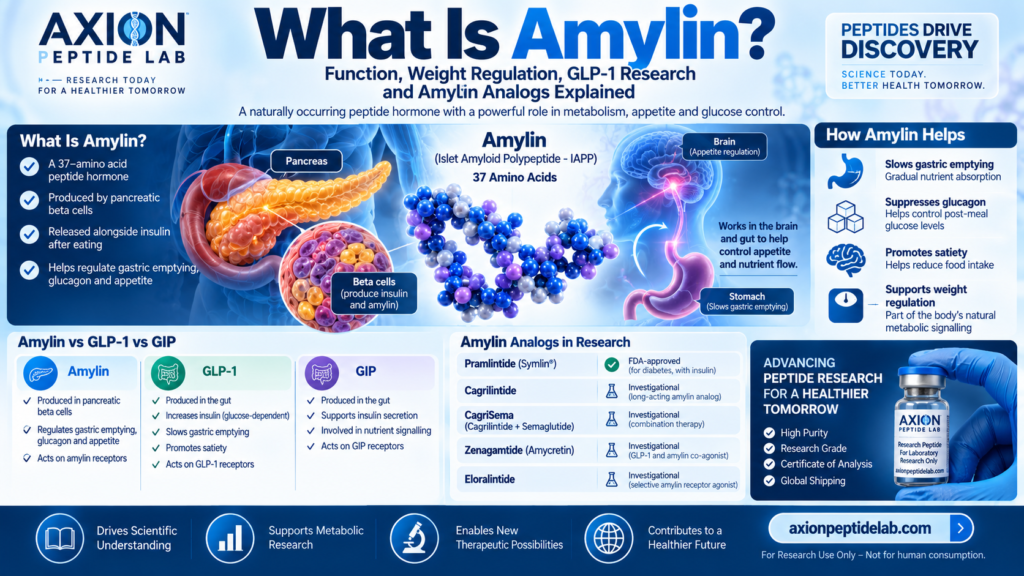
Amylin is a naturally occurring 37-amino-acid peptide hormone produced primarily by pancreatic beta cells. It is stored and released alongside insulin after food intake and helps coordinate several processes involved in post-meal glucose regulation and appetite.
Its major physiological actions include helping to:
- slow gastric emptying
- suppress inappropriate post-meal glucagon secretion
- promote satiation and meal termination
- regulate nutrient delivery from the stomach to the intestine
- participate in overall energy and glucose homeostasis
Modern reviews describe amylin as an increasingly important target in metabolic research because activating amylin receptors may influence both blood-glucose regulation and appetite.
Interest in amylin has expanded rapidly because researchers are developing longer-acting amylin analogues and combination therapies for obesity and diabetes.
One amylin analogue, pramlintide, is already an FDA-recognised amylin analogue used in diabetes treatment in the United States.
Other compounds—including cagrilintide, CagriSema, zenagamtide/amycretin and eloralintide—remain investigational.
Amylin research also intersects with the better-known incretin pathways involving GLP-1 and GIP.
That has created a new research question:
Could combining amylin signalling with GLP-1, GIP or other metabolic pathways produce broader effects than targeting one pathway alone?
Clinical-development programmes are now actively testing that idea.
This article explains what amylin is, what it does in the body, how it differs from GLP-1 and GIP, how amylin analogues work, what current clinical research shows and why investigational compounds must remain clearly distinguished from authorised prescription medicines.
What Is Amylin?
Amylin is also known as islet amyloid polypeptide, commonly abbreviated IAPP.
It is a peptide hormone consisting of 37 amino acids.
Amylin is produced primarily in the beta cells of the pancreas—the same cells responsible for producing insulin.
Inside healthy pancreatic beta cells, insulin and amylin are stored together in secretory granules.
When nutrients stimulate the beta cell after eating, both hormones are released.
This means insulin and amylin act as physiological partners, although they perform different jobs.
Insulin primarily helps coordinate nutrient storage and glucose disposal.
Amylin helps regulate the rate at which nutrients enter the circulation after a meal and contributes to signals associated with satiation.
A major 2025 review describes amylin as a pancreatic hormone involved in both glucose control and appetite regulation.
Understanding that partnership helps explain why researchers became interested in replacing amylin signalling in certain people with diabetes and, more recently, in harnessing amylin receptors for obesity research.
Why Is Amylin Also Called Islet Amyloid Polypeptide?
The name islet amyloid polypeptide (IAPP) originates from research into amyloid deposits found within the pancreatic islets.
Scientists discovered that these deposits contained a 37-amino-acid peptide produced by pancreatic beta cells. The same molecule later became widely known as amylin.
In its normal soluble form, IAPP acts as a metabolic hormone involved in appetite signalling, gastric emptying and post-meal glucose regulation.
Under certain conditions, however, the peptide can misfold and form amyloid aggregates. Researchers have studied these deposits because of their possible association with beta-cell stress and dysfunction in type 2 diabetes.
It is therefore important to distinguish between normal hormone signalling and pathological peptide aggregation. Although they involve the same underlying molecule, they represent very different biological processes.
This distinction is useful when discussing pancreatic physiology, peptide analogues and ongoing metabolic research.
What Are Peptides?
To understand amylin, it helps to understand what peptides are.
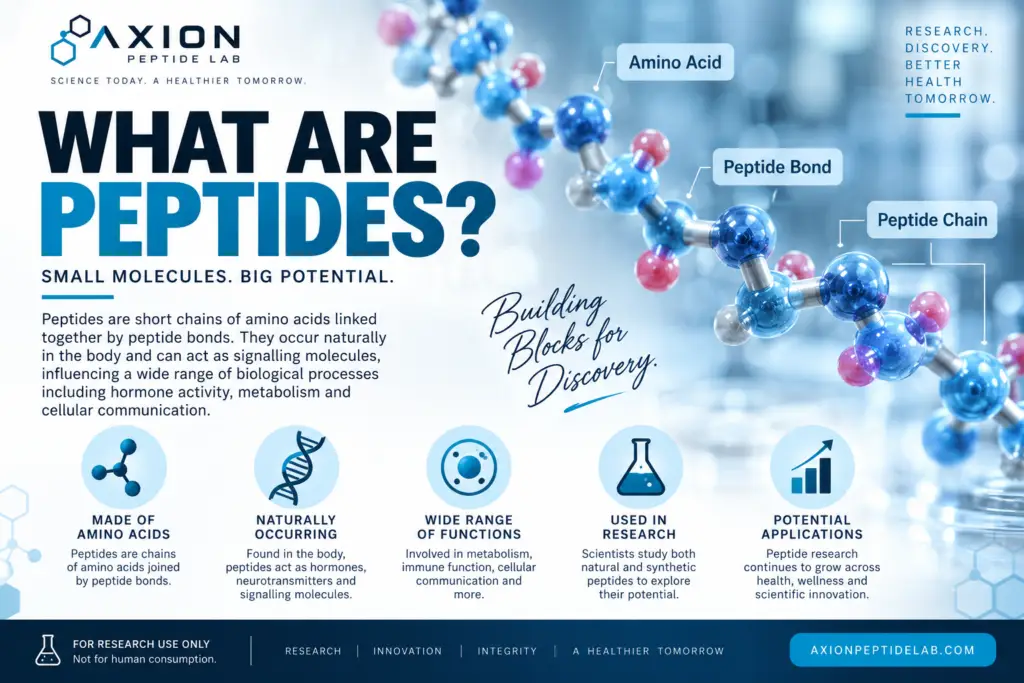
Peptides are chains of amino acids joined by peptide bonds.
Amino acids function as molecular building blocks.
When amino acids are connected in a specific sequence, the resulting peptide can acquire highly specific biological properties.
Some peptides function as:
hormones,
neurotransmitters,
immune signals,
metabolic regulators,
or pharmaceutical medicines.
Amylin is therefore one member of a much larger family of biological signalling molecules.
Its 37-amino-acid sequence creates a structure capable of interacting with amylin receptors.
Changing parts of that sequence can alter:
stability,
aggregation tendency,
receptor activity,
half-life,
and pharmaceutical behaviour.
This principle is central to the development of amylin analogues such as pramlintide and cagrilintide.
Where Is Amylin Produced?
The principal source of amylin is the pancreatic beta cell.
Beta cells are located within the pancreatic islets.
These cells produce insulin and release it in response to rising nutrient availability.
Amylin is co-stored and co-secreted with insulin.
This coordinated secretion means that after a meal, the body receives several metabolic messages at once.
Insulin helps tissues handle circulating nutrients.
Amylin helps regulate how rapidly those nutrients arrive from the gastrointestinal system and contributes to appetite-related signalling.
Earlier human physiology research established this relationship between insulin and amylin secretion, while more recent work has expanded understanding of amylin receptors and central nervous-system pathways.
What Does Amylin Do?
The major physiological effects associated with amylin can be grouped into three core functions:
slowing gastric emptying
reducing post-meal glucagon secretion
and
promoting satiation
These effects work together.
Rather than allowing nutrients from a meal to enter the circulation as rapidly as possible, amylin helps regulate the process.
That can reduce rapid post-meal changes in blood glucose.
At the same time, central amylin signalling contributes to the feeling that a meal has been sufficient.
This makes amylin both a glucoregulatory hormone and an appetite-regulating hormone.
Amylin and Gastric Emptying
One of amylin’s best-established physiological actions is slowing gastric emptying.
Gastric emptying refers to how quickly material leaves the stomach and enters the small intestine.
Why does this matter?
Carbohydrates and other nutrients cannot enter the bloodstream directly from the stomach in large amounts.
They must progress into the intestine, where digestion and absorption occur.
When gastric emptying slows, nutrient delivery to the intestine becomes more gradual.
That can help moderate the rate at which glucose appears in the bloodstream following a meal.
Research on amylin physiology describes inhibition of gastric emptying as an important component of its role in post-meal glucose regulation.
This is conceptually similar to—but biologically distinct from—some actions associated with GLP-1.
Amylin and Glucagon
Glucagon is a pancreatic hormone that can increase blood glucose, particularly by signalling the liver to release glucose.
Glucagon is essential to normal physiology.
The issue is not that glucagon is “bad.”
Instead, glucagon needs to be regulated appropriately according to metabolic circumstances.
After food intake, excessive or poorly timed glucagon signalling can contribute to higher post-meal glucose.
Amylin helps suppress postprandial glucagon secretion.
This is another reason amylin and insulin function as complementary hormones.
Insulin supports glucose disposal.
Amylin helps control the arrival of nutrients and suppress inappropriate glucagon release following food intake.
Amylin and Satiety
Amylin also participates in the control of food intake.
The term satiation refers to processes that help determine when an individual stops eating during a meal.
This differs somewhat from satiety, which generally describes the period of reduced hunger following a meal.
Amylin contributes to signals that can reduce meal size and promote meal termination.
Researchers have identified the central nervous system as an important location for these effects.
The area postrema, located in the hindbrain, is particularly relevant to amylin signalling.
Amylin receptors in brain regions associated with appetite and gastrointestinal regulation allow peripheral signals from the pancreas to influence feeding behaviour.
This central appetite pathway is a major reason amylin receptors have become targets in modern obesity research.
What Are Amylin Receptors?
Amylin does not act through one simple standalone receptor protein.
Amylin receptors are structurally unusual.
They are formed from a calcitonin receptor combined with a receptor activity-modifying protein, or RAMP.
Different RAMP proteins can produce distinct amylin-receptor subtypes.
This receptor architecture helps explain why amylin pharmacology can be complex.
A modern review describes amylin receptors as heterodimers formed by the calcitonin receptor and receptor activity-modifying proteins.
Researchers frequently refer to receptor subtypes such as:
AMY1,
AMY2,
and
AMY3.
These receptor systems can have different pharmacological characteristics.
This complexity has become increasingly relevant when scientists attempt to design amylin agonists that are both potent and selective.
Why Is the Area Postrema Important for Amylin?
The area postrema is a small region of the hindbrain that plays an important role in detecting signals circulating in the bloodstream.
Unlike many other parts of the brain, it is relatively accessible to certain hormones and metabolic signals. This allows it to act as a sensor for changes related to food intake, digestion and energy balance.
Research has identified receptors for this pancreatic peptide within the area postrema, linking the region to several physiological responses.
These pathways can influence:
- food intake
- feelings of fullness
- nausea-related responses
- gastrointestinal motility
This connection is important because it may help explain why activating this receptor system can affect both appetite regulation and gastrointestinal tolerability.
The hormone’s effects on the brain are therefore linked to identifiable neuroendocrine pathways rather than occurring through a single isolated mechanism.
What Happens to Amylin in Type 1 Diabetes?
Type 1 diabetes involves destruction of pancreatic beta cells.
Because beta cells normally produce both insulin and amylin, loss of beta-cell function results in deficiency of both hormones.
This provided part of the scientific rationale for developing pramlintide, an amylin analogue.
Replacing insulin corrects only one component of lost beta-cell endocrine signalling.
Researchers therefore investigated whether adding an amylin-like signal could improve post-meal glucose control.
Older and newer reviews identify amylin deficiency as an important feature of type 1 diabetes.
What Happens to Amylin in Type 2 Diabetes?
The situation is more complicated in type 2 diabetes.
Early in the disease, insulin resistance can cause beta cells to produce larger amounts of insulin.
Because amylin is normally co-secreted with insulin, amylin secretion can also be elevated.
Over time, beta-cell dysfunction can progress.
Amylin secretion may then become impaired.
At the same time, human amylin has a tendency to form amyloid aggregates under certain conditions.
Islet amyloid is a characteristic finding in many people with type 2 diabetes and has been investigated as a contributor to beta-cell dysfunction.
This means amylin biology in type 2 diabetes involves both:
physiological hormone signalling
and
potentially pathological aggregation.
Why Does Natural Human Amylin Aggregate?
Human amylin has physicochemical characteristics that make it relatively prone to aggregation.
This limits its usefulness as a straightforward pharmaceutical drug.
If native human amylin readily formed aggregates during preparation or administration, developing a stable medicine would be difficult.
Researchers therefore modified the amino-acid sequence to create more stable analogues.
This led to pramlintide.
A review of amylin pharmacology notes that human amylin’s tendency to form amyloid fibres made the native peptide unsuitable for ordinary pharmaceutical replacement, motivating development of the more stable analogue.
What Is Pramlintide?
Pramlintide is a synthetic analogue of human amylin.
It contains 37 amino acids, like natural human amylin, but includes amino-acid substitutions designed to reduce aggregation.
The FDA label describes pramlintide as differing from human amylin through proline substitutions at three positions.
These changes improve pharmaceutical stability while preserving important amylin-like activity.
Pramlintide is marketed under the brand name Symlin in the United States.
FDA materials classify it as an amylin analogue used in diabetes treatment alongside insulin in appropriate patients.
This is an important distinction:
Pramlintide demonstrates that amylin pharmacology is not purely experimental.
An amylin analogue has already been translated into an authorised medicine.
How Does Pramlintide Work?
Pramlintide is a synthetic analogue designed to reproduce several important actions of the natural pancreatic hormone.
Its main effects include:
- slowing gastric emptying
- reducing post-meal glucagon secretion
- promoting feelings of fullness after eating
These actions can influence how quickly nutrients enter the bloodstream and how glucose levels change after meals.
Because pramlintide affects post-meal glucose regulation, it is used alongside insulin in approved clinical settings rather than replacing it.
The FDA specifically states that Symlin should not be used as a substitute for insulin.
This highlights an important physiological distinction: insulin and the hormone pathway mimicked by pramlintide work together, but they perform different roles in metabolic regulation.
Why Has Pramlintide Not Become a Major Obesity Medicine?
Pramlintide provided important proof that amylin-receptor activation could affect food intake and body weight.
However, its pharmacological profile is not ideal for modern obesity treatment.
Limitations have included:
relatively short duration of action,
the need for frequent administration,
and gastrointestinal tolerability issues.
A 2026 review of amylin-based obesity therapies describes pramlintide as an important proof-of-concept compound but notes that modest efficacy and frequent dosing limited its role as an obesity treatment.
This created an obvious research goal:
Could scientists make longer-acting amylin analogues with stronger and more convenient metabolic effects?
That question led to compounds such as cagrilintide and eloralintide.
How Is Amylin Connected to Weight Regulation?
Amylin influences body-weight regulation primarily through its effects on food intake and metabolic signalling.
Unlike a stimulant that simply suppresses appetite through broad nervous-system activation, amylin operates within physiological meal-control pathways.
After a meal, amylin contributes to signals indicating nutrient arrival.
Its actions on the brain and gastrointestinal system can:
reduce meal size,
slow nutrient delivery,
and support post-meal metabolic regulation.
Modern obesity research therefore views amylin receptors as attractive targets alongside incretin pathways.
Amylin vs GLP-1: What Is the Difference?
Amylin and GLP-1 share some physiological effects.
Both can:
slow gastric emptying,
influence appetite,
reduce food intake,
and contribute to post-meal glucose control.
However, they are different hormones.
Amylin
Amylin is produced primarily by pancreatic beta cells and is co-secreted with insulin.
It acts through amylin receptors composed of calcitonin receptors plus RAMP proteins.
GLP-1
GLP-1 is produced primarily by specialised intestinal cells in response to nutrient intake.
It acts through the GLP-1 receptor.
GLP-1 can enhance glucose-dependent insulin secretion and affect glucagon, appetite and gastric emptying.
The overlapping yet distinct biology makes combination therapy scientifically interesting.
If both pathways reduce food intake through partially different circuits, activating them together may potentially produce additive or complementary effects.
Amylin vs GIP
GIP stands for glucose-dependent insulinotropic polypeptide.
GIP is an incretin hormone involved strongly in nutrient-responsive insulin signalling.
Unlike amylin, it is primarily associated with the gastrointestinal incretin system.
Amylin and GIP therefore occupy different positions within metabolic physiology.
Amylin is closely linked to pancreatic beta-cell output and satiation.
GIP is linked to nutrient-triggered incretin signalling.
Modern metabolic drug development increasingly explores combinations that target several of these systems simultaneously.
How Metabolic Peptide Pathways Work Together
Human appetite and glucose control are not governed by one hormone.
A meal can stimulate numerous signals, including:
insulin,
amylin,
GLP-1,
GIP,
PYY,
CCK,
and others.
The brain integrates these signals with information about:
energy stores,
previous food intake,
reward,
sensory cues,
and physiological need.
Pharmaceutical researchers are increasingly attempting to recreate this multi-hormonal biology.
This has led to:
dual agonists,
triple agonists,
fixed-dose combinations,
and single molecules designed to activate more than one receptor.
Amylin research fits directly into this broader movement.
What Is Cagrilintide?
Cagrilintide is a long-acting investigational amylin analogue developed for metabolic research.
It was engineered to provide a much longer duration of action than native amylin or pramlintide.
The goal is to allow less frequent administration while maintaining sustained amylin-receptor activity.
Clinical development has examined cagrilintide both:
alone,
and
in combination with semaglutide.
The combination is commonly known as CagriSema.
As of September 2026, cagrilintide and CagriSema remain investigational and should not be described as approved medicines.
What Is CagriSema?
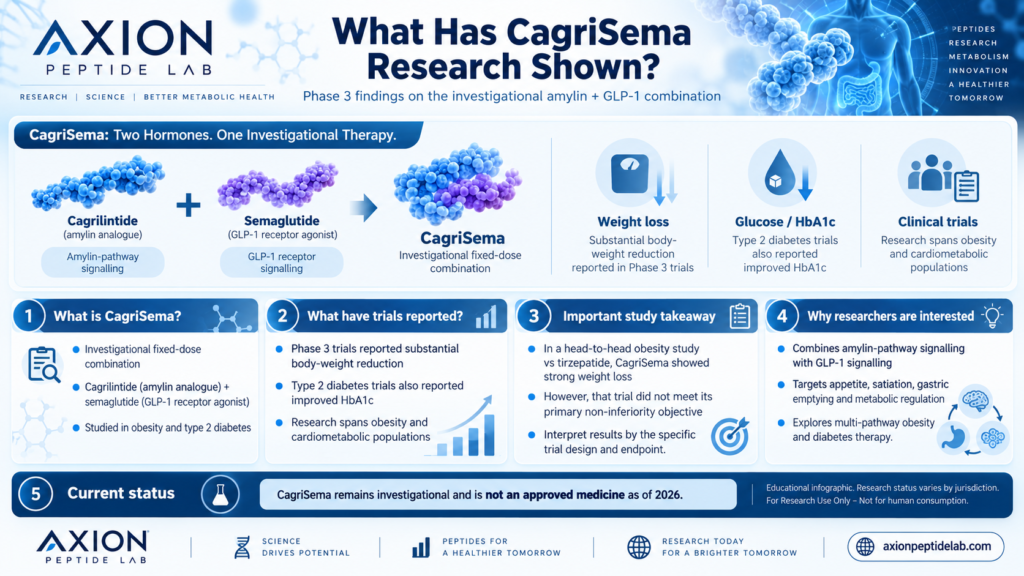
CagriSema is an investigational fixed-dose combination containing:
cagrilintide, an amylin analogue,
plus
semaglutide, a GLP-1 receptor agonist.
The scientific rationale is straightforward.
Cagrilintide engages amylin pathways.
Semaglutide engages GLP-1 pathways.
Because those systems influence food intake through overlapping but distinct mechanisms, combining them may generate stronger effects than either pathway alone.
This makes CagriSema one of the clearest examples of how amylin research is intersecting with GLP-1 science.
What Has CagriSema Research Shown?
CagriSema has undergone extensive Phase 3 development.
In February 2026, Novo Nordisk reported results from REDEFINE 4, an 84-week Phase 3 head-to-head trial comparing CagriSema with tirzepatide in people with obesity and associated conditions.
CagriSema produced approximately 23% mean weight reduction under the company’s reported analysis, but the study did not meet its primary objective of demonstrating non-inferiority to tirzepatide 15 mg.
This is an important example of why clinical research should be reported carefully.
A large reduction in body weight can still occur in a study that fails its specified primary statistical objective.
“Promising result” and “trial met its primary endpoint” are not interchangeable statements.
CagriSema Research in Type 2 Diabetes
Clinical research has also examined CagriSema in people living with type 2 diabetes.
During 2026, Novo Nordisk reported findings from its Phase 3 REIMAGINE programme, which evaluated changes in measures such as HbA1c and body weight across different diabetes populations.
Throughout these studies, CagriSema remained an investigational treatment rather than an approved medicine.
Additional topline findings from REIMAGINE 5 and REDEFINE 9 were announced in September 2026, adding to the growing evidence surrounding this combination approach.
The programme is particularly relevant because it combines two different metabolic pathways: cagrilintide targets the amylin receptor system, while semaglutide acts through the GLP-1 receptor.
However, company-reported topline results should still be distinguished from complete peer-reviewed publications, which provide more detailed information about study design, statistical analysis, safety and clinical outcomes.
What Is Amycretin?
Amycretin—now also referred to by Novo Nordisk as zenagamtide—takes a different approach.
CagriSema combines two separate molecules.
Zenagamtide is designed as one molecule capable of activating both GLP-1 and amylin receptors.
This is called a unimolecular co-agonist.
Instead of combining a GLP-1 analogue and amylin analogue in a fixed-dose formulation, researchers attempt to encode both activities within one engineered peptide.
That concept represents an important direction in next-generation peptide research.
What Has Zenagamtide Research Shown?
Novo Nordisk reported Phase 2 results in people with type 2 diabetes during 2025 and 2026.
In June 2026, the company reported that once-weekly subcutaneous zenagamtide produced significant reductions in HbA1c and body weight in a Phase 2 study, with the highest tested group showing reported weight reduction of up to 14.6% at 36 weeks.
Novo Nordisk stated that the programme would progress into Phase 3 development for type 2 diabetes.
Zenagamtide remains investigational.
Those Phase 2 findings should not be interpreted as regulatory approval or evidence supporting independently sold products claiming to contain the molecule.
What Is Eloralintide?
Eloralintide, previously known as LY3841136, is another investigational amylin-receptor agonist.
Research published in 2025 described its development from discovery through early clinical proof of concept for obesity.
Unlike CagriSema, eloralintide represents a strategy focused more selectively on amylin receptor pharmacology rather than simply combining semaglutide with an amylin analogue.
Researchers are investigating whether improved receptor selectivity and pharmacokinetics can produce useful appetite and weight-regulation effects.
Amylin Combination Research in 2026
One of the clearest trends in metabolic science is movement toward combination signalling.
Researchers are investigating combinations involving:
amylin + GLP-1,
amylin + GIP/GLP-1,
and other multi-receptor strategies.
In September 2026, Lilly announced that new Phase 2 data would be presented for eloraTZP, combining the selective amylin receptor agonist eloralintide with tirzepatide, a GIP/GLP-1 receptor agonist.
This research direction demonstrates how amylin is increasingly being viewed as another major metabolic pathway that could potentially complement incretin pharmacology.
Amylin vs Semaglutide
Semaglutide is not an amylin analogue.
It is a GLP-1 receptor agonist.
Amylin and semaglutide therefore work through different receptor systems.
Both can influence:
food intake,
gastric emptying,
and metabolic regulation.
But their receptor pharmacology is distinct.
This distinction matters when interpreting combination therapies.
Cagrilintide plus semaglutide is not simply “more GLP-1.”
It combines two different hormonal pathways.
What Is Semaglutide?
Semaglutide is a peptide-based GLP-1 receptor agonist and the active ingredient in several authorised pharmaceutical products.
In March 2026, the FDA approved an additional 7.2 mg Wegovy injection dose for weight reduction and long-term maintenance in defined adults with obesity or overweight plus a weight-related condition.
This makes semaglutide fundamentally different from experimental amylin compounds such as cagrilintide or zenagamtide.
Specific semaglutide products have regulatory approval.
Cagrilintide and zenagamtide do not.
What Is Tirzepatide?
Tirzepatide targets both:
GIP receptors
and
GLP-1 receptors.
It is therefore a dual incretin receptor agonist.
The FDA approved Zepbound containing tirzepatide for chronic weight management in eligible adults in November 2023.
Tirzepatide is particularly relevant to amylin research because current clinical programmes increasingly compare or combine amylin-based approaches with dual GIP/GLP-1 signalling.
What Is Retatrutide?
Retatrutide is an investigational molecule targeting:
GIP,
GLP-1,
and
glucagon receptors.
It therefore represents a triple receptor agonist.
Retatrutide does not primarily target amylin receptors.
However, it belongs in the same broader conversation because researchers are testing different ways to combine multiple metabolic pathways.
As of September 2026, Lilly states that retatrutide remains investigational and has not been approved by the FDA or another regulatory agency.
Phase 3 TRIUMPH trials have reported large changes in body weight across several populations, and Lilly has stated plans to submit a US regulatory application in 2027.
A planned submission is not the same as approval.
Semaglutide vs Tirzepatide vs Retatrutide vs Amylin-Based Therapy
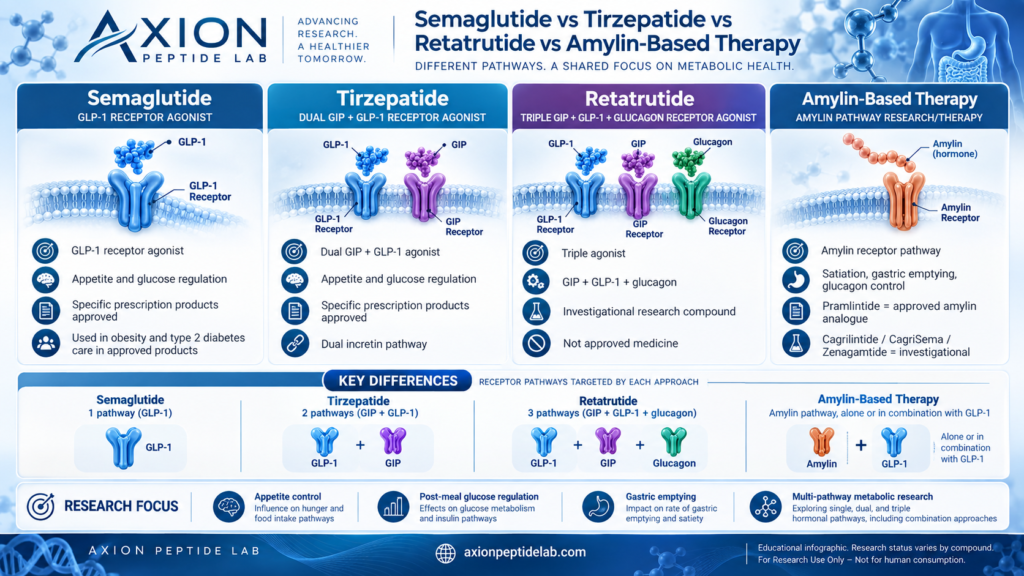
The simplest comparison is receptor biology.
Semaglutide
Targets GLP-1 receptors.
Tirzepatide
Targets GIP and GLP-1 receptors.
Retatrutide
Targets GIP, GLP-1 and glucagon receptors.
Cagrilintide
Investigational amylin analogue targeting amylin-receptor pathways.
CagriSema
Investigational combination of cagrilintide and semaglutide.
Zenagamtide
Investigational single-molecule GLP-1/amylin receptor co-agonist.
This illustrates where metabolic peptide research is heading.
Instead of asking only:
“What does GLP-1 do?”
researchers increasingly ask:
Which combination of appetite, incretin and energy-regulation pathways may produce the most useful balance of efficacy and tolerability?
Is Amylin a GLP-1?
No.
Amylin and GLP-1 are different peptide hormones.
Amylin is primarily released from pancreatic beta cells alongside insulin.
GLP-1 is primarily produced in the gastrointestinal system in response to nutrients.
They act through different receptors.
However, both can influence:
appetite,
gastric emptying,
and post-meal metabolism.
That overlap is why combining the two pathways has become a major research strategy.
Is Amylin the Same as Insulin?
No.
Although insulin and amylin are released from the same pancreatic beta cells, they perform different physiological functions.
Insulin primarily facilitates glucose uptake and nutrient storage while suppressing hepatic glucose production.
Amylin helps regulate post-meal nutrient appearance by slowing gastric emptying, suppressing glucagon and promoting satiation.
They are physiological partners rather than copies of the same hormone.
Is Amylin an Incretin?
Amylin is generally not classified as a classical incretin hormone.
The classical incretins are:
GLP-1,
and
GIP.
These are gut-derived hormones that increase insulin secretion in a glucose-dependent manner following nutrient intake.
Amylin is produced by pancreatic beta cells and functions through a different receptor system.
The pathways overlap functionally, but their origins and receptor pharmacology differ.
How Does Amylin Affect Appetite?
Amylin affects appetite mainly through central nervous-system signalling.
Circulating amylin can interact with brain regions involved in meal regulation, particularly the area postrema.
Those signals contribute to:
earlier meal termination,
smaller meal size,
and reduced food intake.
Recent amylin reviews also discuss interaction between homeostatic feeding signals and reward-related pathways.
This is one reason amylin research increasingly intersects with neuroscience as well as endocrinology.
Does Amylin Increase Metabolism?
It is more accurate to describe amylin primarily as a regulator of nutrient intake, gastrointestinal processing and glucose homeostasis than simply as a “metabolism booster.”
Some newer amylin-receptor drugs may influence broader energy balance.
However, claims that amylin simply “speeds up metabolism” oversimplify the biology.
The strongest established physiological functions are related to:
satiation,
gastric emptying,
and glucagon regulation.
Does Amylin Cause Weight Loss?
Natural amylin participates in physiological appetite regulation.
Pharmacological activation of amylin receptors can reduce food intake and has produced weight reduction in clinical studies of certain amylin analogues.
However:
natural amylin is not a weight-loss product.
Similarly, evidence involving one pharmaceutical amylin analogue should not be generalized to every substance described as an “amylin peptide.”
Clinical effects depend on the specific molecule, dose, pharmacokinetics and study population.
What Does Clinical Research Actually Show?
Clinical-trial evidence needs to be interpreted according to the exact product studied.
For amylin-based research, that means distinguishing:
native amylin,
pramlintide,
cagrilintide,
CagriSema,
zenagamtide,
eloralintide,
and other investigational compounds.
They are not interchangeable.
Pramlintide has an established regulatory history in diabetes.
Cagrilintide has undergone large obesity trials.
CagriSema has progressed through extensive Phase 3 programmes.
Zenagamtide remains in clinical development.
Eloralintide remains investigational.
A result from one cannot automatically be applied to another.
Why Study Amylin Alongside GLP-1?
GLP-1 drugs already produce substantial effects in diabetes and obesity.
Why add amylin?
One reason is that obesity is regulated by many biological systems.
Activating only one pathway may eventually produce diminishing returns.
Another reason is tolerability.
If two pathways can each contribute to appetite reduction, researchers may potentially be able to achieve a desired biological effect through a different balance of receptor activation.
A 2025 review of amylin receptor activators notes that combination therapy with other peptide drugs has produced greater weight reduction than amylin monotherapy in clinical development.
The optimal combination, however, remains a research question rather than a settled conclusion.
What Are the Potential Advantages of Amylin-Based Research?
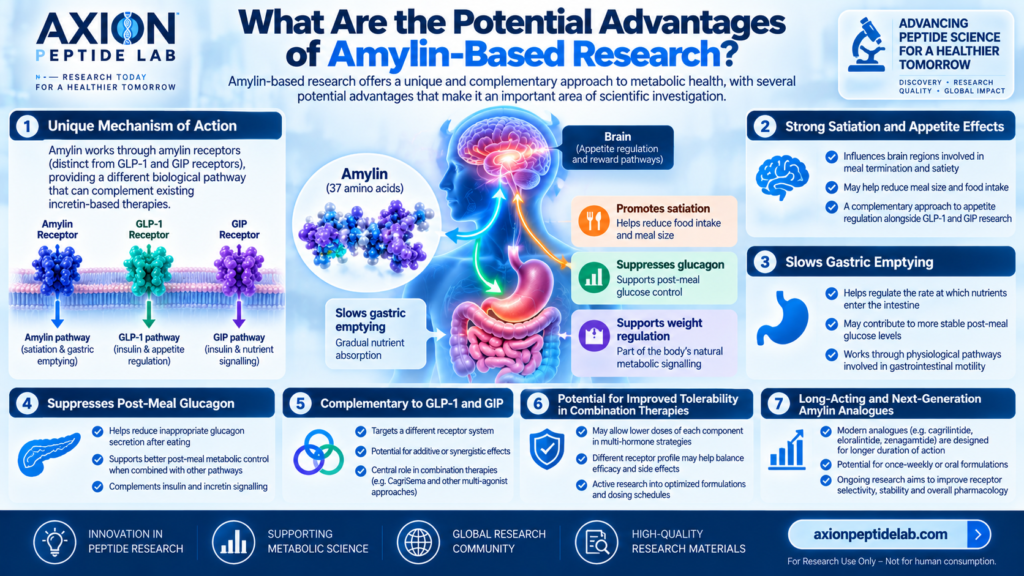
Potential scientific advantages include:
a biological pathway distinct from GLP-1,
strong satiation signalling,
complementarity with incretin agonists,
effects on gastric emptying,
and glucagon regulation.
Researchers are also interested in whether carefully designed amylin agonists can offer a different tolerability profile from high-dose incretin therapy.
However, potential advantages should not be confused with proven superiority.
Head-to-head evidence remains essential.
Safety and Reported Adverse Effects
Amylin-based pharmacology can produce adverse effects.
The most commonly discussed effects include gastrointestinal symptoms such as:
nausea,
vomiting,
reduced appetite,
and gastrointestinal discomfort.
Different molecules have different profiles.
Pramlintide also requires important precautions because of its effects on glucose when used with insulin.
The FDA-approved Symlin prescribing information includes a boxed warning regarding severe hypoglycaemia when used with insulin in people with type 1 diabetes.
This demonstrates an important principle:
A hormone-based medicine can be physiologically useful while still carrying clinically significant risks.
Why Can Amylin Agonists Cause Nausea?
The appetite and nausea systems overlap anatomically in parts of the hindbrain.
The area postrema plays roles in both:
meal-related signalling,
and
detection of potentially harmful substances.
Strong stimulation of these pathways can therefore produce gastrointestinal symptoms.
Drug developers attempt to optimize dosing and receptor profiles to preserve useful satiation signals while improving tolerability.
This remains an important objective in next-generation amylin research.
Does Amylin Cause Hypoglycaemia?
Natural amylin is not simply a glucose-lowering hormone in the same way as insulin.
However, amylin analogues used together with insulin can alter meal-related glucose dynamics.
That means insulin requirements may need careful adjustment in approved clinical use.
Pramlintide’s regulatory information contains detailed precautions around hypoglycaemia because of its use as an adjunct to insulin.
This is a medical-management issue and should not be extrapolated into self-administration guidance.
Why Is Native Amylin Not Commonly Used Directly as a Drug?
Natural human amylin has several disadvantages for pharmaceutical use.
Most importantly, it has a tendency to aggregate.
It also has a relatively short duration of action.
Drug developers therefore create analogues designed to:
reduce aggregation,
extend half-life,
improve stability,
and allow more practical dosing schedules.
Pramlintide addresses aggregation through sequence modification.
Newer compounds such as cagrilintide use additional molecular engineering to support longer-lasting exposure.
Amylin Research vs Prescription Medicines
It is essential to distinguish between:
natural hormone biology
investigational compounds
authorised medicines
and
laboratory research materials.
Pramlintide has authorised medical use in the United States.
Semaglutide and tirzepatide have authorised pharmaceutical products for defined uses.
Cagrilintide, CagriSema, zenagamtide, eloralintide and retatrutide remain investigational as of September 2026.
Research materials sold for laboratory investigation should not be represented as substitutes for any of these medicines.
Why Research Peptides Are Not Prescription Medicines
A prescription medicine undergoes formal regulatory evaluation.
That process examines:
manufacturing,
quality,
clinical efficacy,
safety,
stability,
formulation,
labelling,
and risk-benefit balance.
A laboratory research peptide may have analytical information such as:
HPLC purity,
mass spectrometry,
batch identification,
and molecular identity.
Those tests are valuable for laboratory work.
But they do not establish:
clinical safety,
therapeutic effectiveness,
or regulatory approval.
What Does Peptide Purity Mean in Amylin Research?
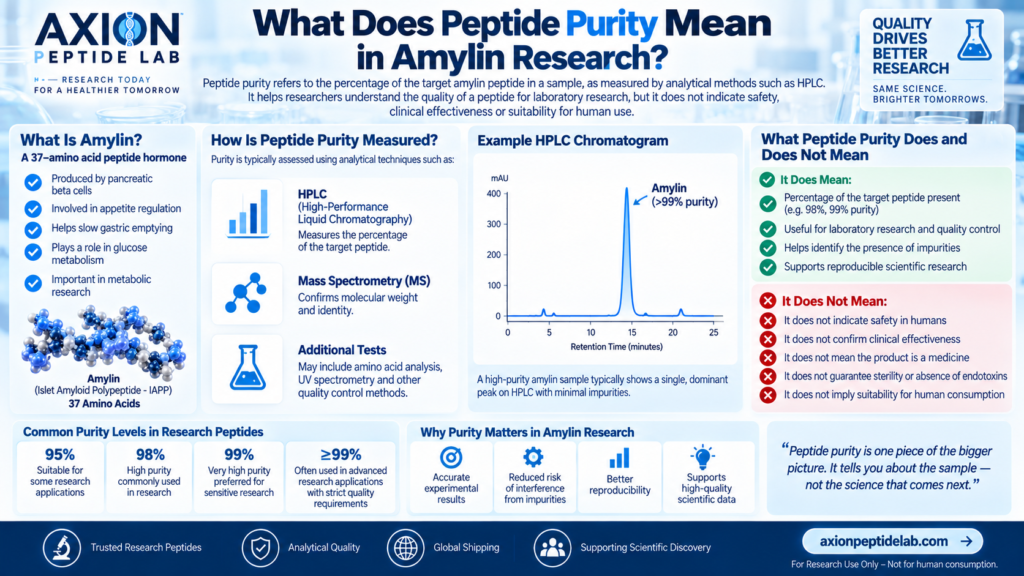
A research COA might report:
99% purity by HPLC.
That generally describes chromatographic purity under a defined analytical method.
It does not mean:
99% clinically effective,
99% safe,
sterile,
or suitable for human administration.
Purity, identity, content, sterility and endotoxin status are separate analytical characteristics.
This distinction applies to amylin-related research compounds just as it does to other research peptides.
Why a Certificate of Analysis Matters
For legitimate laboratory research, a COA can help document:
compound identity,
batch number,
analytical purity,
molecular mass,
test date,
and other quality attributes.
Researchers should verify that documentation corresponds to the actual batch being studied.
However, a COA should never be treated as a medicinal licence.
USA Regulatory Considerations
In the United States, FDA approval applies to specific drug products—not simply to molecular names.
Pramlintide is recognised by FDA as an amylin analogue medicine.
Semaglutide and tirzepatide also have authorised pharmaceutical products.
By contrast, investigational compounds such as retatrutide remain unapproved.
The same principle applies to investigational amylin compounds.
Clinical-trial participation and commercial marketing are not the same thing.
Research-use labels also should not be used to disguise intended consumer therapeutic use.
UK Regulatory Considerations
The UK MHRA determines whether a product is a medicine using factors including:
its pharmacological properties,
the claims made about it,
its intended purpose,
and how it is presented through websites, advertising, labels, packaging and social media.
The MHRA’s updated July 2026 borderline-products guidance makes clear that product classification depends on the overall presentation rather than simply the words placed on the packaging.
This is particularly relevant for research peptide businesses.
A product described as laboratory research material should not simultaneously be marketed as though it treats obesity, diabetes or another medical condition.
Licensed GLP-1-related medicines in the UK include defined semaglutide and tirzepatide products, but different products have different authorised uses.
Current and Future Amylin Research
Amylin research is moving rapidly.
Several major directions are particularly important.
Longer-Acting Amylin Analogues
Researchers are developing molecules that remain active much longer than native amylin.
Cagrilintide is a prominent example.
Longer duration can make once-weekly development programmes possible.
Amylin + GLP-1 Combinations
CagriSema combines cagrilintide with semaglutide.
This tests whether activating both amylin and GLP-1 pathways can provide complementary metabolic effects.
Single-Molecule Co-Agonists
Zenagamtide attempts to activate both GLP-1 and amylin receptors through one molecule.
This represents a more integrated approach than administering two separate peptides.
Selective Amylin Receptor Agonists
Eloralintide is part of another strategy seeking more targeted amylin-receptor pharmacology.
Amylin + GIP/GLP-1 Strategies
Research involving eloralintide plus tirzepatide shows how amylin is increasingly being combined with dual incretin receptor pharmacology.
Oral Delivery
Zenagamtide development has included both injectable and oral strategies.
Oral delivery remains difficult for peptide medicines because gastrointestinal enzymes and intestinal permeability create significant barriers.
Receptor Selectivity
As researchers learn more about AMY1, AMY2 and AMY3 receptors, more selective agonists could potentially emerge.
The goal would be to identify which receptor patterns produce the best balance of appetite reduction, metabolic activity and tolerability.
Could Amylin Become as Important as GLP-1?
It is too early to know.
GLP-1 pharmacology already has:
multiple approved medicines,
large cardiovascular outcome studies,
long-term safety databases,
and widespread clinical use.
Amylin-based obesity pharmacology is less mature.
Pramlintide proves that amylin can be translated into medicine, but current obesity programmes are still largely investigational.
Nevertheless, Phase 2 and Phase 3 programmes involving cagrilintide, CagriSema, zenagamtide and other amylin agonists show that the pathway has become one of the most important areas of next-generation metabolic research.
Amylin and the Future of Multi-Hormone Therapy
The future of obesity research may increasingly involve multi-pathway pharmacology.
Rather than maximising one receptor indefinitely, researchers may combine signals affecting:
satiation,
reward,
incretin signalling,
glucose regulation,
energy expenditure,
and nutrient processing.
The modern pipeline already demonstrates this shift.
Semaglutide targets GLP-1.
Tirzepatide targets GIP and GLP-1.
Retatrutide targets GIP, GLP-1 and glucagon.
CagriSema combines amylin and GLP-1 pharmacology.
Zenagamtide integrates amylin and GLP-1 receptor activity into one molecule.
Future medicines may become increasingly sophisticated combinations of these biological systems.
Frequently Asked Questions About Amylin
What is amylin?
Amylin is a 37-amino-acid peptide hormone produced primarily by pancreatic beta cells and released alongside insulin. It helps regulate gastric emptying, post-meal glucagon secretion and food intake.
Is amylin a hormone?
Yes. Amylin is a peptide hormone.
Where is amylin produced?
Amylin is produced mainly by pancreatic beta cells, the same cells that produce insulin.
Is amylin the same as insulin?
No. They are co-secreted from pancreatic beta cells but perform different physiological functions.
What does amylin do after eating?
Amylin helps slow gastric emptying, suppress excessive post-meal glucagon secretion and promote meal termination.
Does amylin reduce appetite?
Amylin participates in central appetite and satiation signalling and can reduce food intake through amylin-receptor pathways.
Does amylin affect body weight?
Amylin contributes to physiological appetite regulation. Pharmacological amylin-receptor agonists have produced weight reduction in clinical trials, but the effect depends on the specific drug.
Is amylin GLP-1?
No. Amylin and GLP-1 are separate peptide hormones acting through different receptors.
What is pramlintide?
Pramlintide is a synthetic analogue of human amylin and is recognised by FDA as an amylin analogue used in diabetes treatment alongside insulin in appropriately selected patients.
What is cagrilintide?
Cagrilintide is a long-acting investigational amylin analogue being studied in obesity and metabolic disease.
Is cagrilintide approved?
As of September 2026, cagrilintide remains investigational.
What is CagriSema?
CagriSema is an investigational fixed-dose combination of the amylin analogue cagrilintide and the GLP-1 receptor agonist semaglutide.
What is amycretin or zenagamtide?
Zenagamtide, previously commonly referred to as amycretin, is an investigational single molecule designed to activate both GLP-1 and amylin receptors. Novo Nordisk reported positive Phase 2 diabetes data in 2026 and plans continued clinical development.
What is eloralintide?
Eloralintide is an investigational selective amylin-receptor agonist undergoing metabolic and obesity research.
Is amylin an incretin?
Amylin is not usually classified as one of the classical incretin hormones. GLP-1 and GIP are the main classical incretins.
Final Thoughts: What Is Amylin and Why Does It Matter?
So, what is amylin?
At its core, amylin is a pancreatic peptide hormone.
It is made by beta cells.
It is released alongside insulin.
And it helps the body coordinate what happens after food is consumed.
Amylin slows gastric emptying.
It helps restrain post-meal glucagon.
It contributes to satiation.
And it communicates nutrient-related information to the nervous system.
These actions make amylin a natural partner to insulin.
They also make the amylin receptor an attractive target for modern metabolic research.
The history of amylin pharmacology demonstrates how scientific understanding evolves.
Native human amylin has useful physiological activity but poor pharmaceutical properties because of its tendency to aggregate.
Researchers modified its amino-acid sequence and created pramlintide.
That provided proof that amylin biology could be translated into an approved medicine.
Modern researchers are now going much further.
Cagrilintide is testing long-acting amylin signalling.
CagriSema combines amylin with GLP-1 pharmacology.
Zenagamtide places GLP-1 and amylin receptor agonism into one molecule.
Eloralintide explores selective amylin-receptor activation.
Other programmes are investigating how amylin could work alongside dual incretin agonists such as tirzepatide.
At the same time, other metabolic approaches continue to develop.
Semaglutide targets GLP-1.
Tirzepatide targets GIP and GLP-1.
Retatrutide targets GIP, GLP-1 and glucagon.
Amylin provides another physiological pathway that could complement these systems.
This does not mean amylin will necessarily replace GLP-1 therapies.
It may instead become part of a broader generation of multi-hormonal metabolic medicines.
The evidence must still be interpreted carefully.
Pramlintide has established regulatory status in the United States.
Semaglutide and tirzepatide have authorised prescription products.
Cagrilintide, CagriSema, zenagamtide, eloralintide and retatrutide remain investigational as of September 2026.
Clinical-trial results involving those development programmes do not automatically apply to separately manufactured laboratory products.
For legitimate laboratory researchers, analytical information such as HPLC, mass spectrometry and batch-specific Certificates of Analysis can help characterise research materials.
But analytical purity does not establish medicinal safety or approval.
Researchers interested in laboratory peptide science can explore relevant educational resources and research catalogue information through AxionPeptideLab.com, subject to applicable laws and institutional requirements.
Human medical treatment should remain within authorised healthcare and pharmaceutical channels.
For Research Use Only – Not for human consumption.
References and Further Reading
Lee S. A Review of Amylin Peptide Receptor Activators for Obesity Pharmacotherapy, 2025. Review covering natural amylin, receptor architecture and emerging amylin agonists for metabolic research.
Amylin Analogs: The Next Major Class of Weight Loss Therapy, 2026. Current review of amylin physiology, pramlintide and investigational amylin-based obesity therapies.
Amylin Revisited: A 5-Year Perspective on Its Emerging Role in the Treatment of Diabesity, 2026. Review of amylin physiology, glucose regulation and new long-acting analogues.
Amylin: A Multi-Functional Pancreatic Hormone, 2026. Current review of amylin’s role in satiation, gastric emptying, glucagon and beta-cell pathology.
FDA — Symlin / Pramlintide Regulatory Information. US regulatory documentation for the approved amylin analogue pramlintide.
Novo Nordisk — REDEFINE 4, February 2026. Phase 3 comparison of investigational CagriSema and tirzepatide.
Novo Nordisk — Zenagamtide Phase 2 Results, June 2026. Current clinical-development information for the investigational GLP-1/amylin receptor co-agonist.
Novo Nordisk — CagriSema REIMAGINE Phase 3 Data, June 2026. Clinical research involving cagrilintide/semaglutide combination therapy in type 2 diabetes.
Briere DA et al. Eloralintide, a Novel Amylin Receptor Agonist. Molecular Metabolism. Published research describing development and proof of concept for eloralintide.
FDA — Higher-Dose Wegovy Approval, March 2026. Current US regulatory information on semaglutide.
FDA — Zepbound Approval. US regulatory information on tirzepatide and GIP/GLP-1 receptor agonism.
Eli Lilly — Retatrutide Development Status, July 2026. Current information confirming that retatrutide remains investigational.
MHRA — Borderline Products Guidance, updated July 2026. UK guidance explaining how medicinal-product status depends on intended use, claims and product presentation.
MHRA — GLP-1 Medicines for Weight Loss and Diabetes, updated February 2026. UK information on licensed semaglutide and tirzepatide medicines.