Amino Acids vs Peptides: Differences, Functions, Metabolism and Research Explained
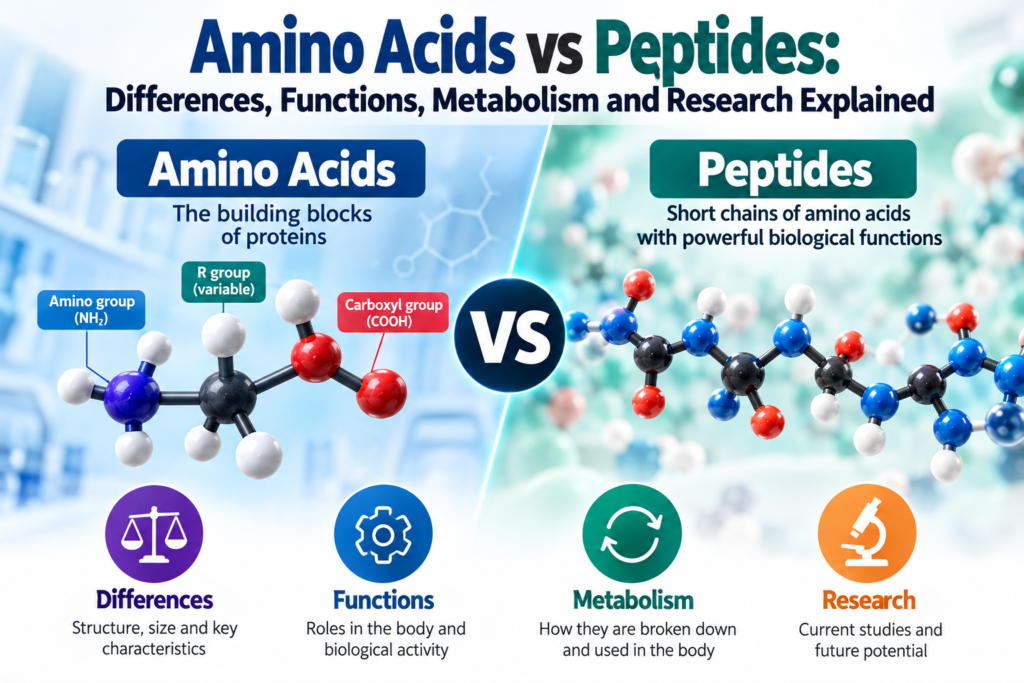
What is the difference between amino acids vs peptides?
The simplest answer is that amino acids are individual molecular building blocks, while peptides are chains made by linking amino acids together.
That distinction may sound straightforward, but it has major consequences for biology.
Individual amino acids participate in protein synthesis, energy metabolism, cellular signalling and the production of many biologically important molecules.
When amino acids are connected in a particular sequence through peptide bonds, however, the resulting peptide can acquire completely new properties.
Peptides may function as:
- hormones
- signalling molecules
- neurotransmitters or neuromodulators
- metabolic regulators
- immune-system signals
- research tools
- therapeutic medicines
This is why an individual amino acid such as glycine or leucine should not be considered equivalent to a peptide hormone such as GLP-1.
Both are connected through amino-acid chemistry, but their structures and biological functions can be dramatically different.
Modern peptide pharmaceutical research increasingly takes advantage of this relationship. Scientists can select and modify amino-acid sequences to create peptides with specific receptor targets, improved stability, longer duration of action or other useful characteristics. Research published in 2025 notes that amino acids are both biologically important molecules in their own right and the fundamental building blocks of peptides and proteins; the use of non-canonical amino acids can also help researchers optimise peptide stability, selectivity and potency.
Understanding amino acids vs peptides therefore provides a useful foundation for understanding everything from dietary protein and metabolism to GLP-1, GIP, semaglutide, tirzepatide, retatrutide and modern peptide drug discovery.
This guide explains the chemistry, biological functions, digestion, metabolic roles and research applications of amino acids and peptides, while also distinguishing approved peptide medicines from investigational and laboratory research compounds.
What Are Amino Acids?
Amino acids are organic molecules that contain characteristic chemical groups, including an amino group and a carboxyl group.
In proteins and most biological peptides, amino acids connect together to form larger molecular chains.
The human body uses amino acids for much more than protein construction.
Amino acids can contribute to:
protein synthesis,
enzyme production,
hormone synthesis,
neurotransmitter production,
energy metabolism,
nitrogen metabolism,
cell signalling,
and the formation of other biologically important molecules.
Recent research on human nutrition describes amino acids as central not only to macromolecule synthesis but also to ATP production, cell signalling and regulation of gene expression.
That means an amino acid is not simply an inactive brick waiting to become a protein.
Individual amino acids can have important metabolic roles of their own.
How Many Amino Acids Are Used to Make Human Proteins?
Human proteins are primarily constructed from 20 standard proteinogenic amino acids encoded through the genetic code.
These include familiar amino acids such as:
leucine,
lysine,
glycine,
alanine,
valine,
tryptophan,
phenylalanine,
serine,
glutamate,
and others.
Scientists also work with non-canonical amino acids.
These are amino-acid structures outside the standard proteinogenic set.
They are particularly interesting in modern peptide research because replacing a natural amino acid with a modified residue can alter how a peptide behaves.
Researchers may use non-canonical amino acids to improve:
resistance to enzymatic degradation,
receptor selectivity,
binding strength,
structural stability,
or duration of action.
A 2025 review describes non-canonical amino-acid incorporation as an increasingly important strategy in peptide drug discovery.
Essential vs Non-Essential Amino Acids
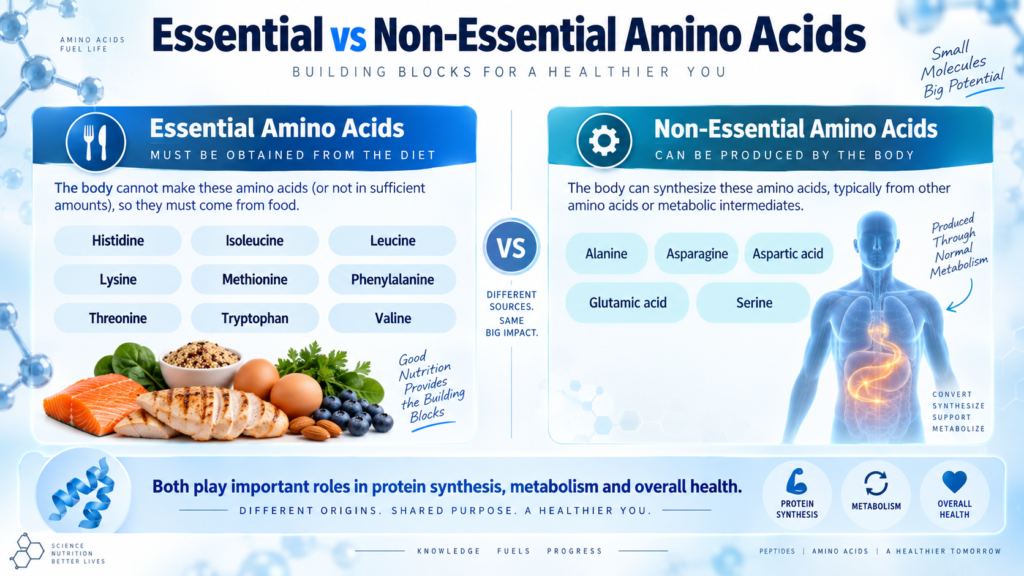
Amino acids are often grouped nutritionally according to whether the human body can produce enough of them.
Essential Amino Acids
Essential—or indispensable—amino acids must be obtained from the diet in adequate amounts because the body cannot synthesize enough to meet normal physiological requirements.
Examples include:
leucine,
isoleucine,
valine,
lysine,
methionine,
phenylalanine,
threonine,
tryptophan,
and histidine.
Non-Essential Amino Acids
These can generally be synthesized by the body under normal circumstances.
Examples include several amino acids such as alanine and glutamate.
Conditionally Essential Amino Acids
Some amino acids can become more dependent on dietary availability in certain developmental or physiological situations.
The terminology is more nuanced than simply dividing everything into essential and non-essential categories, because metabolic needs change depending on age, nutritional status and physiological circumstances.
This classification applies to amino-acid nutrition.
It should not be confused with whether a peptide is medically necessary, clinically useful or biologically essential.
What Are Peptides?
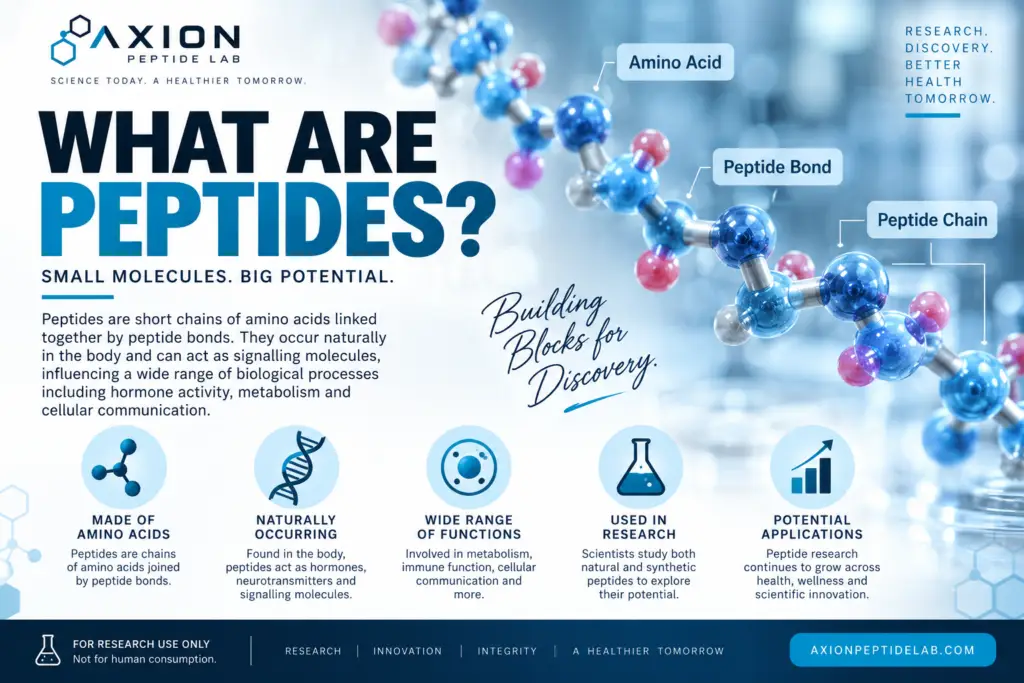
Peptides are molecules composed of multiple amino acids connected by peptide bonds.
When two amino acids join, they can form a dipeptide.
Three connected amino acids form a tripeptide.
Longer chains may be referred to as oligopeptides or polypeptides depending on length and context.
There is no single universally accepted numerical cutoff separating every peptide from every protein.
In general, however:
amino acid = individual building unit
peptide = relatively short amino-acid chain
protein = typically a larger amino-acid chain or collection of chains with more extensive three-dimensional structure
The distinction becomes more biologically important as sequence length and structural complexity increase.
A peptide can behave completely differently from the individual amino acids from which it is built.
What Is a Peptide Bond?
A peptide bond is the chemical connection linking one amino acid to another within a peptide or protein.
The amino acids do not simply sit beside each other.
They become part of a continuous molecular backbone.
The order of the amino acids is called the amino-acid sequence.
Sequence matters enormously.
Consider a peptide containing ten amino acids.
Changing only one amino acid can potentially alter:
its shape,
its stability,
its receptor affinity,
its susceptibility to enzymes,
or its biological activity.
Modern peptide drug development exploits this principle deliberately.
Researchers alter amino-acid sequences and chemical structures to improve pharmacological characteristics. A 2025 review of therapeutic peptides describes sequence modification, cyclisation and other chemical approaches as important tools for improving peptide stability, pharmacokinetics and biological activity.
Amino Acids vs Peptides: The Main Differences
The easiest way to understand amino acids vs peptides is to compare their basic characteristics.
| Feature | Amino Acids | Peptides |
|---|---|---|
| Basic structure | Individual molecular units | Chains of amino acids |
| Relationship | Building blocks | Built from amino acids |
| Bonds | Can form peptide bonds | Amino acids linked by peptide bonds |
| Size | Smaller | Larger and more structurally complex |
| Main biological roles | Protein synthesis, metabolism, signalling | Hormones, signalling, receptor activity, research and therapeutic functions |
| Sequence | Single amino acid has no peptide sequence | Biological properties depend heavily on amino-acid sequence |
| Digestion | Can be absorbed as free amino acids | Small peptides may be absorbed intact; many larger peptides are broken down |
| Drug development | Used as individual molecules and building blocks | Major platform for modern therapeutics |
| Research use | Metabolism, nutrition, chemistry | Receptors, signalling, pharmacology, therapeutic development |
The critical idea is that peptides acquire properties from the arrangement of amino acids, not simply from the presence of amino acids themselves.
Amino Acids vs Peptides vs Proteins
People frequently confuse all three terms.
They are related but not interchangeable.
Amino Acids
Amino acids are the individual building units.
Peptides
Peptides contain multiple amino acids connected in a defined sequence.
Proteins
Proteins are typically longer amino-acid chains that fold into complex three-dimensional structures.
Proteins may contain:
hundreds of amino acids,
multiple structural domains,
multiple peptide chains,
or sophisticated cellular functions.
Enzymes, antibodies and many structural molecules are proteins.
However, biology does not provide a perfectly sharp boundary between a long peptide and a small protein.
The distinction is partly conventional.
Does Combining Amino Acids Automatically Create a Functional Peptide?
Not necessarily.
Simply connecting amino acids does not guarantee meaningful biological activity.
A functional peptide generally needs a sequence and structure capable of interacting with a relevant biological target.
Researchers therefore investigate:
sequence,
charge,
hydrophobicity,
three-dimensional conformation,
receptor binding,
stability,
and pharmacokinetics.
Modern peptide discovery can involve screening enormous libraries containing different amino-acid sequences.
Computational methods and artificial intelligence increasingly help researchers predict which sequences may have useful properties.
Why Does Amino-Acid Sequence Matter?
Imagine three peptides made from exactly the same types of amino acids but arranged in different orders.
Their molecular composition might appear similar.
Their biological activity could be completely different.
Why?
Because biological receptors recognize molecular shape and chemistry.
Changing the order of amino acids can change how the peptide folds or interacts with the receptor.
It may:
increase receptor binding,
eliminate receptor binding,
cause interaction with another receptor,
increase degradation,
or improve stability.
This is why sequence design is central to peptide research.
Do Amino Acids Act as Signals Too?
Yes.
The amino acid versus peptide distinction should not be interpreted to mean amino acids only build proteins while peptides perform all signalling.
Individual amino acids can participate directly in signalling and metabolism.
For example, amino-acid availability can affect cellular nutrient-sensing pathways.
Certain amino acids can also serve as precursors for other biologically active molecules.
Research published in 2026 emphasises that amino acids participate in ATP production, signalling and metabolic regulation as well as macromolecular synthesis.
The difference is that peptides can encode much more complex biological information through their sequence.
How Does the Body Digest Amino Acids, Peptides and Proteins?
Dietary protein is broken down progressively through digestion.
Large proteins are first reduced into smaller fragments.
Those fragments become peptides of various sizes.
Peptides can then be further broken down into:
smaller peptides,
dipeptides,
tripeptides,
and individual amino acids.
The small intestine absorbs these digestion products through several transport systems.
Importantly, the intestine does not absorb nutrients exclusively as free amino acids.
Small dipeptides and tripeptides can be transported through the peptide transporter PEPT1.
A 2025 review describes PEPT1 as a major intestinal transport mechanism for bioactive dipeptides and tripeptides.
After absorption into intestinal cells, many small peptides are further hydrolysed into amino acids.
This means dietary peptides and pharmaceutical peptides must be considered very differently.
A peptide medicine designed to remain active in the body often needs specific engineering to resist normal digestive or enzymatic breakdown.
Why Are Many Peptide Medicines Not Easily Taken Orally?
One major difference between amino acids and larger therapeutic peptides involves oral bioavailability.
Individual dietary amino acids can generally be absorbed using amino-acid transport systems.
Peptide medicines often face much greater obstacles.
The digestive tract contains enzymes whose job is to break peptide bonds.
Large or chemically complex peptides can also have difficulty crossing the intestinal wall.
For many peptide therapeutics, oral delivery is therefore difficult because of:
enzymatic degradation,
low membrane permeability,
chemical instability,
and relatively large molecular size.
Current reviews identify metabolic instability and limited bioavailability as major challenges in therapeutic peptide development.
Researchers address these problems through molecular modification and advanced delivery technologies.
Why Researchers Modify Amino Acids Inside Peptides
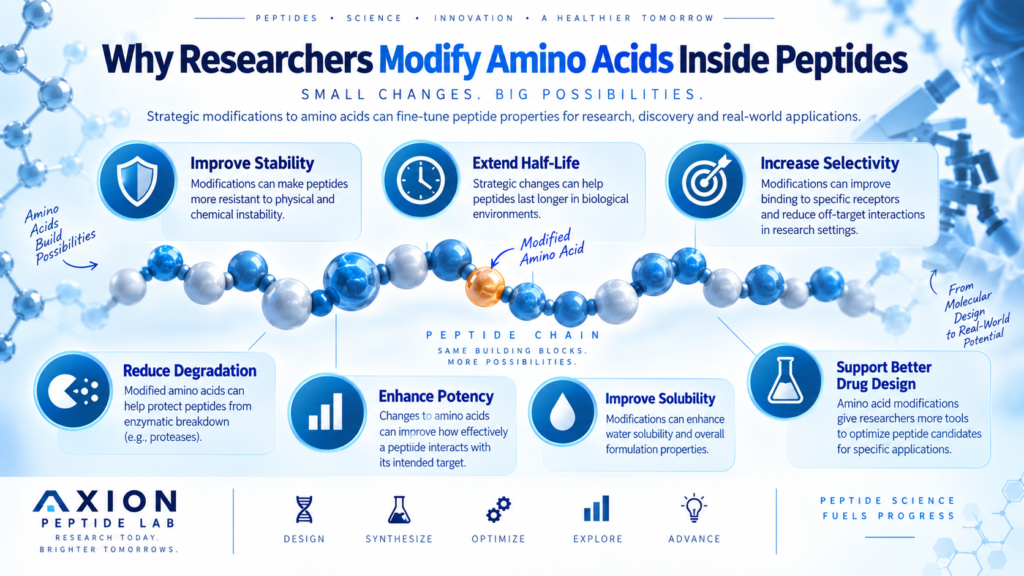
A natural peptide can have powerful biological activity yet still make a poor medicine.
It may disappear from circulation too quickly.
Researchers can modify individual amino acids within the sequence.
They can also add other chemical groups.
The goal may be to:
extend biological half-life,
increase receptor selectivity,
reduce enzymatic degradation,
improve potency,
alter solubility,
or improve manufacturing characteristics.
This explains why a pharmaceutical peptide analogue may behave differently from the natural peptide that inspired it.
Modern therapeutic-peptide research increasingly incorporates modified and non-canonical amino acids for exactly this purpose.
What Do Peptides Do in the Human Body?
Peptides can perform numerous biological functions.
Many act as messengers.
A peptide produced in one tissue can bind to receptors in another tissue and alter cellular activity.
Peptides participate in:
metabolic regulation,
hormonal signalling,
appetite regulation,
reproduction,
immune responses,
cardiovascular regulation,
digestion,
nervous-system communication,
and numerous other processes.
This enormous functional diversity separates peptides from the simplistic idea that they are merely “small proteins.”
Peptide Hormones
Many important hormones are peptides.
Examples include:
insulin,
glucagon,
GLP-1,
GIP,
oxytocin,
vasopressin,
and numerous hypothalamic or pituitary signalling molecules.
Each peptide hormone is defined by a specific amino-acid sequence.
Change that sequence and its biological behaviour may change.
Pharmaceutical research often begins with natural hormone sequences and modifies them to create longer-lasting analogues.
How Are Peptides Connected to Weight Regulation?
Weight regulation provides one of the clearest examples of the difference between individual amino acids and biologically active peptides.
Individual amino acids contribute to nutrition and metabolism.
But certain peptide hormones function as signals telling the brain and other tissues about food intake and energy availability.
The gastrointestinal tract releases several peptide hormones after food is consumed.
These signals communicate with:
the pancreas,
brain,
liver,
stomach,
and other tissues.
They can affect:
appetite,
satiety,
insulin secretion,
glucagon activity,
gastric emptying,
and glucose regulation.
GLP-1 and GIP are two important examples.
How Metabolic Peptide Pathways Work
Metabolic regulation depends on networks of signals rather than one molecule acting alone.
After food intake, specialised gastrointestinal cells release hormones.
Those hormones bind to receptors.
The resulting signals influence organs involved in nutrient processing.
For example:
the pancreas can alter insulin secretion,
the brain can adjust hunger signalling,
the stomach can alter gastric emptying,
and the liver can change metabolic activity.
Pharmaceutical research attempts to interact with these natural systems using engineered molecules.
This has led to single-, dual- and triple-receptor agonists.
What Is GLP-1?
GLP-1 means glucagon-like peptide-1.
It is a naturally occurring peptide hormone and incretin.
GLP-1 participates in:
glucose-dependent insulin signalling,
appetite regulation,
glucagon signalling,
and gastric emptying.
Natural GLP-1 does not remain active for very long.
Scientists therefore developed modified molecules that activate the same receptor for longer periods.
These are known as GLP-1 receptor agonists.
Semaglutide is a well-known example.
What Is GIP?
GIP means glucose-dependent insulinotropic polypeptide.
It is another naturally occurring incretin peptide.
GIP responds to nutrient intake and participates in insulin-related and metabolic signalling.
Modern researchers discovered that combining GLP-1 and GIP receptor activity within one pharmaceutical molecule could produce clinically important metabolic effects.
Tirzepatide is the best-known example of this dual-receptor strategy.
Amino Acids vs GLP-1 and GIP Peptides
This comparison illustrates the central difference between amino acids and peptides.
An amino acid is one building block.
GLP-1 contains a defined sequence of amino acids arranged into a biologically active signalling molecule.
Those amino acids together generate a three-dimensional and chemical structure capable of activating the GLP-1 receptor.
Removing or rearranging residues can alter that activity.
Therefore:
individual amino acids ≠ GLP-1
and
individual amino acids ≠ GIP
The biological message lies partly in the sequence.
Peptide-Based Compounds Commonly Discussed in Weight-Regulation Research
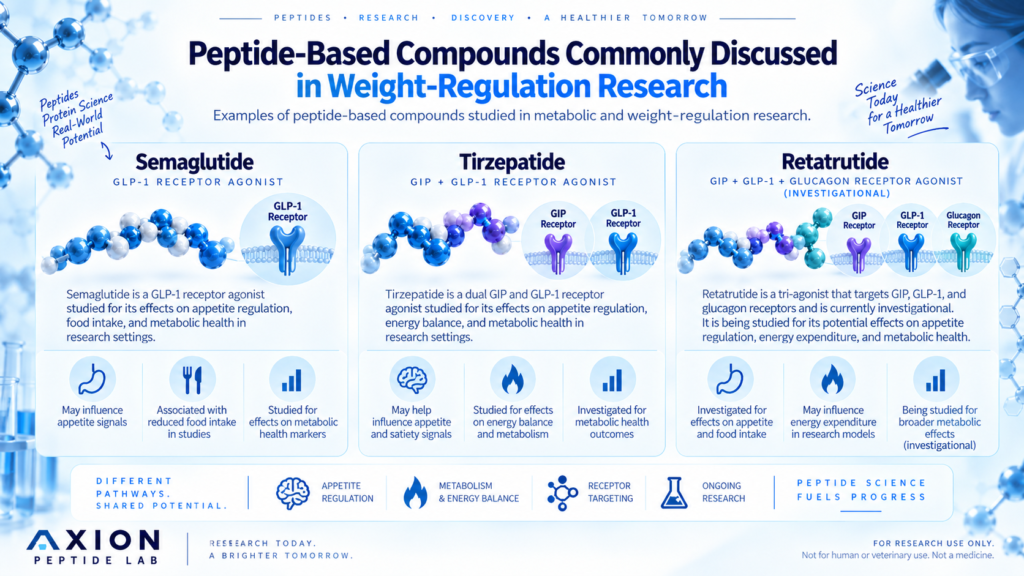
Modern metabolic research frequently discusses:
semaglutide
tirzepatide
and
retatrutide
These molecules are useful examples of how researchers modify amino-acid sequences and peptide structures to interact with metabolic pathways.
However, their regulatory status is not the same.
Semaglutide and tirzepatide have authorised pharmaceutical products.
Retatrutide remains investigational as of September 2026.
Semaglutide
Semaglutide is an engineered GLP-1 receptor agonist.
It is based on peptide-hormone biology but has been modified to improve pharmaceutical properties.
Specific semaglutide products are licensed prescription medicines.
In March 2026, the FDA approved a higher 7.2 mg version of Wegovy for defined adult weight-management indications. The FDA identifies Wegovy as a GLP-1 receptor agonist.
The important distinction for a research-focused article is that:
an approved semaglutide pharmaceutical product is not equivalent to every laboratory material labelled semaglutide.
Regulatory approval applies to the defined pharmaceutical product, manufacturing controls, formulation and indication.
Tirzepatide
Tirzepatide activates both:
GIP receptors
and
GLP-1 receptors.
It therefore represents a dual-receptor strategy.
The FDA approved Zepbound containing tirzepatide for chronic weight management in eligible adults in 2023. The agency explains that tirzepatide activates both GIP and GLP-1 receptors and reduces appetite and food intake.
Again, authorised pharmaceutical tirzepatide should be distinguished from laboratory material offered solely for research.
Retatrutide
Retatrutide represents another stage in multi-receptor peptide development.
It activates:
GIP
GLP-1
and
glucagon receptors.
It is therefore described as a triple hormone receptor agonist.
Retatrutide remains investigational.
Lilly states that the molecule is still being evaluated in clinical trials and has not been approved by any regulatory agency.
The FDA likewise states that retatrutide is not a component of an FDA-approved drug and has not been found safe and effective for any condition.
What Has Retatrutide Research Shown?
A Phase 2 study published in the New England Journal of Medicine evaluated 338 adults with obesity or overweight plus a weight-related condition.
At 48 weeks, average body-weight reduction reached approximately 24.2% in the 12 mg study group compared with approximately 2.1% with placebo.
Gastrointestinal adverse effects were the most commonly reported, and increases in heart rate were also observed.
Retatrutide subsequently moved into Phase 3.
In July 2026, Lilly reported positive TRIUMPH-2 and TRIUMPH-3 topline results and stated that it plans to submit a Biologics License Application to the FDA in the first quarter of 2027.
That planned submission does not mean retatrutide is already approved.
Semaglutide vs Tirzepatide vs Retatrutide
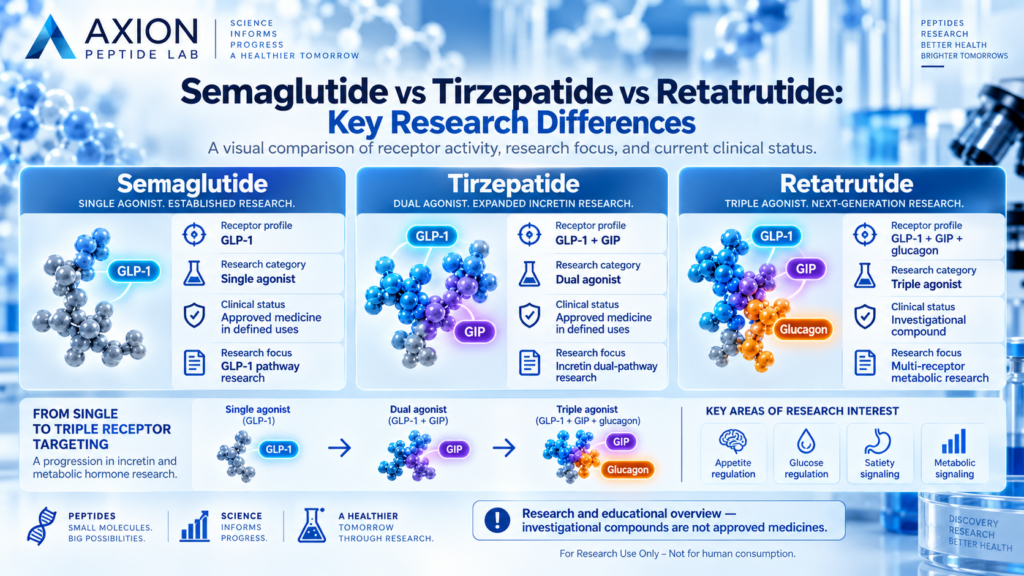
Their receptor profiles differ:
Semaglutide
GLP-1 receptor agonist.
Tirzepatide
GIP + GLP-1 receptor agonist.
Retatrutide
GIP + GLP-1 + glucagon receptor agonist.
The progression from one to two to three receptor pathways demonstrates how peptide drug research uses molecular engineering to alter biological signalling.
It does not mean that more receptor targets automatically make a compound superior.
Clinical benefits and risks must be evaluated through controlled trials.
What Do Clinical Trials Actually Tell Us?
Clinical trials study a specific product under defined conditions.
They evaluate:
dose,
formulation,
study population,
duration,
effectiveness,
adverse effects,
and other outcomes.
Results should not automatically be transferred from one product to another.
For example, clinical evidence involving pharmaceutical-grade semaglutide cannot automatically establish anything about an unrelated laboratory research material containing a molecule with the same name.
Likewise, results from Lilly’s investigational retatrutide programme should not be interpreted as evidence supporting independently manufactured products sold outside that programme for human use.
Amino Acids vs Peptides in Nutrition
Amino acids are particularly important in nutrition because dietary protein ultimately supplies amino acids needed for human metabolism.
Peptides are present during the digestion process as intermediates.
Proteins are broken into peptides.
Many peptides are then broken into free amino acids.
Some dipeptides and tripeptides can also be transported through intestinal cells intact using PEPT1.
This means the body can handle dietary amino acids and small peptides through different absorption systems.
However, this should not be confused with pharmaceutical peptide delivery.
Amino-Acid Supplements vs Peptide Medicines
Another common source of confusion is comparing amino-acid supplements with peptide medicines.
They are fundamentally different products.
An amino-acid supplement might contain compounds such as:
leucine,
glycine,
arginine,
or other individual amino acids.
A peptide medicine contains a specific amino-acid chain designed to produce a defined pharmacological effect.
Taking the individual amino acids that appear inside a therapeutic peptide does not recreate that peptide.
For example, consuming the separate amino acids found in GLP-1 would not reproduce GLP-1 receptor pharmacology.
The sequence and molecular structure are essential.
Can Amino Acids Turn Into Peptides in the Body?
Yes—but not simply because amino acids happen to be present together.
Cells use highly controlled biological machinery to produce peptides and proteins.
Genes provide instructions.
Messenger RNA carries those instructions.
Ribosomes assemble amino acids into defined sequences.
Some peptide hormones are initially produced as larger precursor molecules and then enzymatically processed into their final active forms.
Therefore, amino acids are raw materials.
Biological machinery determines how those raw materials are assembled.
Can Peptides Be Broken Back Down Into Amino Acids?
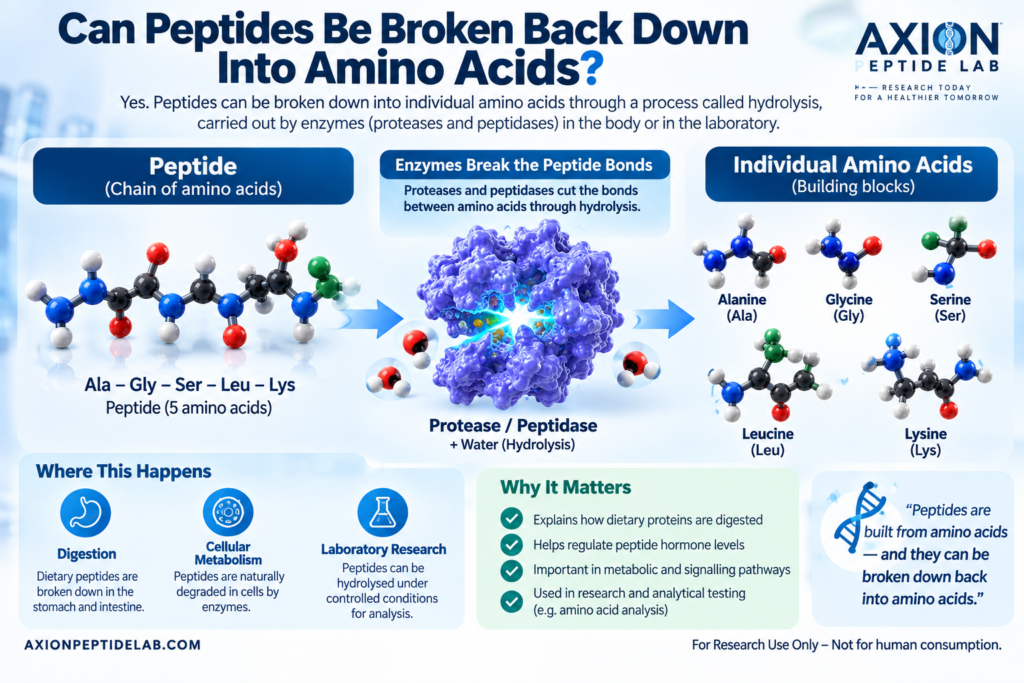
Yes.
Enzymes called proteases and peptidases can break peptide bonds.
This allows peptides to be degraded into smaller fragments and eventually individual amino acids.
This process occurs during digestion and also throughout normal cellular metabolism.
Rapid enzymatic breakdown is one reason many naturally occurring peptides have short biological half-lives.
It is also one reason pharmaceutical researchers modify peptide structures.
Why Are Peptides Often More Targeted Than Individual Amino Acids?
An amino acid is relatively small.
Its biological roles can be broad.
A peptide provides much more structural information.
Its sequence creates a molecular surface that can interact selectively with particular receptors or proteins.
This can make peptides attractive drug-development candidates.
A 2025 review notes that peptides can access biological targets that may be difficult to address with conventional small-molecule drugs, though chemical modification is often required to improve drug-like properties.
Why Are Peptides Difficult to Develop as Medicines?
Peptides have advantages, but they also create challenges.
These include:
short biological half-life,
rapid enzymatic degradation,
limited cellular permeability,
poor oral bioavailability,
manufacturing complexity,
and formulation challenges.
A natural peptide might show excellent receptor activity in a laboratory assay but disappear rapidly in the bloodstream.
Researchers therefore modify peptide chemistry to make potential medicines more practical.
Why Do Researchers Use Non-Canonical Amino Acids?
Natural biology primarily uses the standard proteinogenic amino acids.
Drug designers are not limited to them.
Adding a non-canonical amino acid can allow researchers to create a peptide that enzymes recognise less easily.
It might also:
improve receptor selectivity,
change charge,
alter shape,
increase stability,
or modify potency.
Modern peptide drug discovery increasingly treats non-canonical amino-acid chemistry as an important optimisation tool rather than an unusual exception.
Amino Acids vs Peptides for Metabolism
Both amino acids and peptides can influence metabolism, but they do so differently.
Individual amino acids can:
serve as substrates,
participate in nutrient signalling,
contribute to energy production,
and support protein synthesis.
Peptides can function as higher-level signalling molecules coordinating activity across organs.
For example, GLP-1 can carry information about nutrient intake to receptors influencing the pancreas, gastrointestinal system and brain.
This is a fundamentally different role from an amino acid acting primarily as a metabolic substrate.
Amino Acids vs Peptides for Weight Regulation
It would be inaccurate to claim that either amino acids or peptides generally “cause weight loss.”
Specific molecules have specific biological effects.
Some amino acids can influence nutrient-sensing pathways or satiety in particular contexts.
Some peptide hormones directly participate in appetite and metabolic regulation.
The major pharmaceutical examples—semaglutide and tirzepatide—are engineered peptide-related receptor agonists developed through extensive clinical research.
Their effects should not be generalized to all peptides.
Research Peptides vs Prescription Medicines
This distinction matters greatly for websites discussing peptide science.
A prescription medicine has undergone regulatory review for a particular formulation and indication.
Regulators evaluate:
manufacturing,
quality,
stability,
safety,
clinical effectiveness,
labelling,
and other factors.
A research peptide is supplied for laboratory investigation.
Possible applications include:
analytical chemistry,
receptor assays,
chromatography,
mass spectrometry,
molecular studies,
and other controlled research.
A research-use product does not become a medicine because it contains the same named compound as a pharmaceutical product.
Why “Research Use Only” Must Match the Actual Marketing
Writing “Research Use Only” on a vial does not automatically determine a product’s legal classification.
In the UK, the MHRA explains that classification can depend on:
the claims made about a product,
its pharmacological properties,
its intended use,
and how it is presented through websites, advertisements, social media, packaging and other materials.
The same practical issue exists in the United States.
FDA has taken action involving peptide sellers whose products were labelled for research while surrounding marketing indicated intended human use.
For legitimate research businesses, laboratory positioning therefore needs to remain consistent throughout the site.
UK Regulatory Considerations
The UK MHRA distinguishes authorised medicines from unlicensed and research products.
Its February 2026 guidance identifies licensed GLP-1-related medicines including semaglutide and tirzepatide while noting that different medicines have different authorised uses.
This is important when discussing peptide research.
Educational content can explain published clinical science.
But a laboratory research product should not be represented as though it were the approved pharmaceutical product studied in those trials.
US Regulatory Considerations
The FDA similarly distinguishes approved drugs, compounded products and investigational compounds.
The agency states that compounded drugs are not FDA approved and therefore are not reviewed for safety, effectiveness or quality before marketing in the same way as approved drugs.
FDA also specifically states that retatrutide cannot currently be used in compounding under federal law and is not a component of an FDA-approved drug.
That makes accurate terminology particularly important.
Amino Acids vs Peptides in Laboratory Research
Researchers study amino acids and peptides for different reasons.
Amino-Acid Research
Researchers might investigate:
metabolic pathways,
protein synthesis,
nutritional requirements,
cellular nutrient signalling,
or amino-acid modifications.
Peptide Research
Researchers may investigate:
receptor binding,
peptide stability,
molecular identity,
chromatographic purity,
cell signalling,
pharmacology,
or drug-development candidates.
Both fields overlap heavily because peptides are constructed from amino acids.
What Is Peptide Purity?
Peptide research frequently involves purity measurements.
A common method is high-performance liquid chromatography, or HPLC.
A chromatographic purity result such as:
99.2% HPLC purity
generally refers to the proportion of the relevant detector response associated with the main peptide peak under the method used.
It does not automatically mean:
99.2% of total vial mass is peptide,
the sample is sterile,
the sample has low endotoxin,
or the compound is clinically safe.
These characteristics require separate tests.
What Is Peptide Identity?
Purity and identity are separate.
A sample might produce a large HPLC peak.
Researchers still need evidence that the peak corresponds to the expected molecule.
Mass spectrometry is often used to support peptide identity.
It measures mass-to-charge characteristics.
Observed molecular mass can then be compared with the expected mass.
This provides a useful example of how amino-acid sequence directly influences analytical chemistry.
Changing one amino acid changes molecular mass and can sometimes be detected analytically.
What Is a Peptide Certificate of Analysis?
A Certificate of Analysis—COA—summarises analytical testing associated with a sample or batch.
A peptide COA may contain:
compound name,
batch number,
HPLC purity,
mass-spectrometry data,
molecular weight,
testing date,
appearance,
or other analytical results.
Researchers should verify that the batch listed on the COA matches the material being studied.
The presence of a COA does not make a research peptide an approved medicine.
Peptide Purity vs Amino-Acid Composition
These concepts are also different.
Amino-acid composition describes which amino acids are present within a molecule.
Peptide purity asks how much of the relevant analytical signal corresponds to the target peptide rather than detectable impurities.
A peptide could theoretically have the correct amino-acid composition overall while containing unwanted sequence variants.
This is why modern peptide characterisation can involve several complementary techniques rather than one test alone.
Safety: Are Amino Acids Safer Than Peptides?
Neither category should be declared universally safer.
Normal dietary amino acids are essential components of human nutrition.
But concentrated supplementation can have physiological effects, and excessive amounts are not automatically harmless. Research into amino-acid supplementation emphasises that usefulness and safety depend on nutritional context and dose.
Peptide safety varies even more dramatically because individual peptides may produce strong receptor-mediated effects.
The correct comparison is not:
“amino acids are safe and peptides are dangerous.”
The correct question is:
Which specific molecule, at what exposure, for what purpose, and supported by what evidence?
Are Naturally Occurring Peptides Automatically Safe?
No.
“Natural” describes origin, not safety.
Biologically powerful hormones occur naturally.
So do toxins.
A natural peptide can have potent biological effects.
Synthetic modifications can either increase or decrease certain activities.
Safety therefore requires molecule-specific evidence.
Are Synthetic Peptides Automatically Dangerous?
No.
Synthetic simply means manufactured.
Many authorised medicines are synthetic molecules or modified versions of natural compounds.
The relevant issues are:
identity,
purity,
formulation,
dose,
manufacturing controls,
clinical evidence,
and intended use.
The same principle applies to amino acids.
Current and Future Peptide Research
The relationship between amino-acid chemistry and peptide biology remains one of the most important areas of modern drug development.
Several trends are especially significant.
AI-Assisted Sequence Design
Artificial intelligence can help researchers evaluate enormous numbers of potential amino-acid sequences.
Models can assist with predicting:
structure,
binding,
stability,
and other properties.
The final molecules still require laboratory and clinical validation.
Non-Canonical Amino Acids
Researchers are increasingly moving beyond the standard 20 proteinogenic amino acids to create peptides with improved pharmaceutical properties.
Cyclic Peptides
Connecting parts of a peptide into a ring can increase rigidity and sometimes improve stability.
Multi-Receptor Peptides
Retatrutide demonstrates increasing interest in engineering one molecule to interact with several receptors.
Improved Oral Delivery
Researchers continue to develop strategies designed to protect peptides from digestion and improve intestinal absorption.
Peptide-Drug Conjugates
Peptides can potentially act as targeting components carrying therapeutic payloads to specific tissues.
Antimicrobial Peptides
Researchers are investigating peptides as possible tools against drug-resistant microorganisms.
Precision Oncology
Peptides are being investigated as targeting ligands, imaging agents and therapeutic components in cancer research.
The peptide clinical pipeline is now highly diverse: a 2025 review catalogued hundreds of peptides undergoing clinical evaluation across fields ranging from infectious disease to oncology.
Why Understanding Amino Acids vs Peptides Matters for Researchers
The difference affects:
molecular design,
analytical testing,
storage,
biological activity,
absorption,
metabolism,
and interpretation of experiments.
If researchers treat an amino acid like a peptide—or assume all peptides behave similarly—they risk misunderstanding the experimental system.
The amino-acid sequence of a peptide is not merely a list of ingredients.
It is part of the molecule’s biological information.
Frequently Asked Questions About Amino Acids vs Peptides
What is the main difference between amino acids and peptides?
Amino acids are individual molecular building blocks. Peptides contain two or more amino acids connected through peptide bonds in a defined sequence.
Are peptides made from amino acids?
Yes. Peptides are chains of amino acids linked by peptide bonds.
Are amino acids smaller than peptides?
Generally, yes. An individual amino acid is smaller than a peptide composed of multiple amino-acid residues.
Are peptides proteins?
Peptides and proteins are both chains of amino acids, but peptides are generally shorter. Proteins are typically longer and form more complex folded structures. There is no universally accepted exact length dividing all peptides from proteins.
Can amino acids become peptides?
Yes. Biological systems and laboratory synthesis methods can join amino acids into defined peptide sequences.
Can peptides be broken down into amino acids?
Yes. Proteases and peptidases can hydrolyse peptide bonds, producing smaller peptides and eventually individual amino acids.
Are amino acids absorbed differently from peptides?
Yes. Free amino acids use amino-acid transport systems, while small dipeptides and tripeptides can use transporters such as PEPT1.
Are peptide supplements the same as amino-acid supplements?
No. Individual amino-acid supplements contain free amino acids, whereas peptides contain amino acids linked in sequences. Their digestion, biological activity and intended uses can differ.
Why does peptide sequence matter?
The amino-acid sequence influences molecular shape, stability and receptor interaction. Changing one amino acid can alter a peptide’s biological behaviour.
Is GLP-1 an amino acid or a peptide?
GLP-1 is a peptide hormone composed of amino acids arranged in a defined sequence.
Is semaglutide an amino acid or peptide?
Semaglutide is a peptide-based GLP-1 receptor agonist engineered from peptide-hormone biology. Specific pharmaceutical semaglutide products are approved medicines.
Is tirzepatide a peptide?
Tirzepatide is a peptide-based dual GIP/GLP-1 receptor agonist used in specific authorised pharmaceutical products.
Is retatrutide a peptide?
Retatrutide is an investigational peptide-based triple agonist targeting GIP, GLP-1 and glucagon receptors. It remains unapproved as of September 2026.
Are amino acids safer than peptides?
There is no universal comparison. Normal dietary amino acids are essential nutrients, but concentrated supplementation can still have physiological effects. Peptide safety depends heavily on the specific peptide, formulation and use.
What are research peptides?
Research peptides are materials supplied for laboratory investigation. They are different from prescription medicines and should not be represented as therapeutic products solely because the same molecule has been studied clinically.
Final Thoughts: Amino Acids vs Peptides
The difference between amino acids vs peptides begins with a simple chemical principle:
amino acids are building blocks; peptides are chains built from those blocks.
But the biological implications extend much further.
Individual amino acids participate in nutrition, metabolism, cellular signalling and the construction of proteins.
When amino acids are connected in defined sequences, the resulting peptides can become highly specific biological messages.
Peptides can act as hormones.
They can activate receptors.
They can influence appetite.
They can regulate glucose signalling.
They can participate in immune, cardiovascular, reproductive and nervous-system biology.
And they can serve as starting points for sophisticated pharmaceutical medicines.
This relationship also explains modern metabolic peptide research.
GLP-1 is a peptide hormone built from amino acids.
GIP is another.
Semaglutide was engineered around GLP-1 receptor biology.
Tirzepatide combines GIP and GLP-1 receptor activity.
Retatrutide is being investigated as a GIP, GLP-1 and glucagon triple agonist.
The molecules become increasingly sophisticated, but amino-acid chemistry remains at their foundation.
Researchers are now pushing that chemistry further through modified amino acids, non-canonical residues, cyclic structures, computational design and artificial intelligence.
The result is a rapidly expanding peptide research field.
However, accurate distinctions remain essential.
An amino acid is not a peptide.
A peptide is not automatically a medicine.
A laboratory research peptide is not automatically equivalent to a prescription product.
High analytical purity is not the same as safety.
And promising clinical research is not the same as regulatory approval.
Researchers interested in laboratory peptide science can explore relevant research materials and analytical information at AxionPeptideLab.com, subject to applicable laws and institutional research requirements.
For Research Use Only – Not for human consumption.
References and Further Reading
Grob NM. Beyond the Canonical 20: Peptide Discovery with Non-Canonical Amino Acids, 2025. Review explaining the role of standard and non-canonical amino acids in peptide design and optimisation.
Li Q, Chao W, Qiu L. Therapeutic Peptides: Chemical Strategies Fortify Peptides for Enhanced Disease Treatment Efficacy, 2025. Review of chemical strategies used to improve stability and biological activity of therapeutic peptides.
Therapeutic Peptides: Recent Advances in Discovery, Synthesis and Clinical Translation, 2025. Overview of peptide production, modification, delivery and clinical development.
From Lead to Market: Chemical Approaches to Transform Peptides Into Therapeutics, 2025. Review of peptide pharmacokinetics, potency and chemical optimisation.
Intestinal Epithelial Transport of Bioactive Di/Tripeptides Through PEPT1, 2025. Review of intestinal peptide transport and absorption.
FDA — Higher-Dose Semaglutide Approval, March 2026. Current regulatory information concerning Wegovy HD.
FDA — Zepbound Approval for Chronic Weight Management. Regulatory information on tirzepatide and its GIP/GLP-1 receptor activity.
Jastreboff AM et al. Triple-Hormone-Receptor Agonist Retatrutide for Obesity. New England Journal of Medicine, 2023. Peer-reviewed Phase 2 retatrutide study.
Eli Lilly — Retatrutide Development Status, updated July 2026. Current information confirming retatrutide remains investigational.
FDA — Concerns With Unapproved GLP-1 Drugs Used for Weight Loss. Current FDA guidance covering unapproved products and retatrutide.
MHRA — GLP-1 Medicines for Weight Loss and Diabetes. Current UK information distinguishing licensed medicines and their authorised uses.
MHRA — Borderline Products: How to Tell if Your Product Is a Medicine. UK guidance concerning product claims, intended use and presentation.