Research Peptide for Sale: Complete Guide to Quality Laboratory Peptides and Scientific Suppliers
Searching for research peptide for sale online can lead to a wide range of scientific suppliers, laboratory compounds, peptide formulations, and biochemical research materials. However, choosing suitable research peptides requires more than comparing product names, prices, or advertised purity percentages.
For laboratories, biotechnology researchers, analytical chemists, and scientific institutions, the most important considerations include compound identity, analytical documentation, material stability, batch traceability, and regulatory compliance.
Research peptides are used to investigate molecular interactions, biological signaling, chemical structure, and peptide-related scientific processes. Their applications extend across biochemistry, molecular biology, analytical chemistry, and pharmaceutical development.
At Axion Peptide Lab, researchers can explore a catalogue of research-use-only peptides and related laboratory materials, alongside educational information about peptide chemistry and analytical quality.
This comprehensive guide explains what research peptides are, the major categories studied in laboratories, how peptide quality is evaluated, and what researchers should consider when reviewing online peptide suppliers.
Whether your research involves peptide characterization, receptor pharmacology, molecular stability, or biochemical analysis, understanding laboratory quality standards is essential for responsible procurement.
What Are Research Peptides?
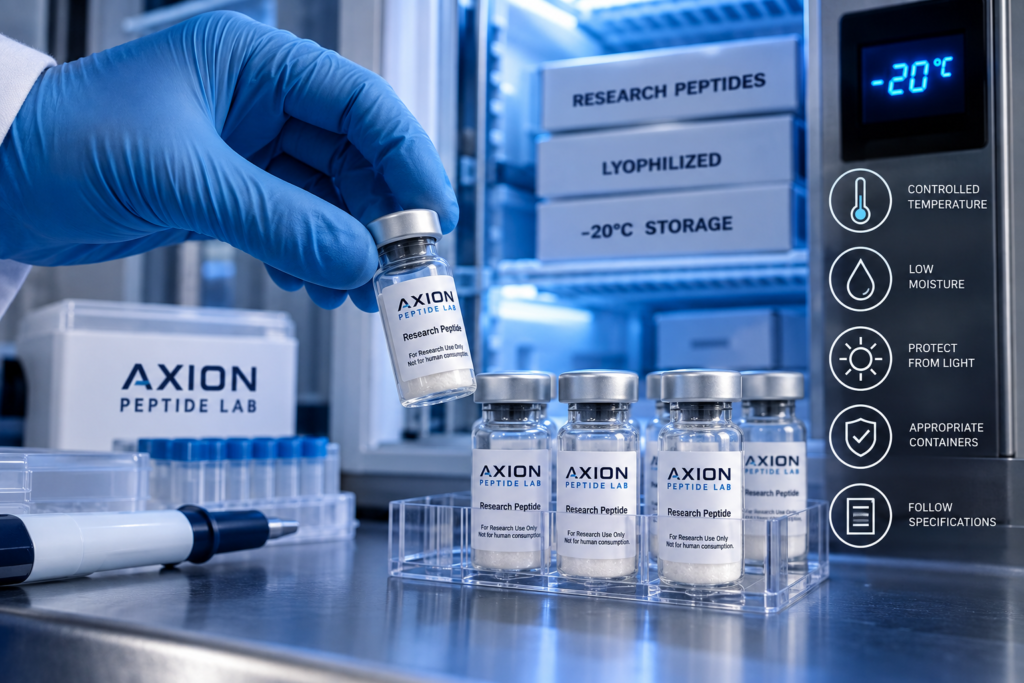
Research peptides are molecules composed of amino acids connected through chemical bonds known as peptide bonds.
Amino acids are the fundamental structural units of peptides and proteins. When two or more amino acids become linked, they form a peptide chain.
The sequence, length, structure, and chemical modifications of a peptide influence its molecular characteristics and potential interactions.
Some peptides occur naturally in biological systems, while others are synthesized for controlled scientific investigations.
Synthetic peptide chemistry allows researchers to study specific molecular structures and investigate how modifications influence chemical stability, receptor interactions, and other measurable properties.
Understanding Peptide Structure
Peptides vary considerably in molecular size and complexity.
Some contain only a few amino acids, while others consist of longer chains with additional structural modifications.
Peptide characteristics may be influenced by:
- Amino acid sequence
- Molecular weight
- Three-dimensional structure
- Chemical modifications
- Solubility
- Environmental stability
- Interaction with other molecules
- Formulation composition
Researchers study these characteristics to understand the relationship between molecular structure and scientific function.
Research Peptides Versus Proteins
Peptides and proteins are both composed of amino acids.
The distinction between them is not always defined by a universal numerical cutoff, although proteins are generally larger and often possess more complex folded structures.
Short peptides may serve as useful models for investigating molecular interactions and chemical behavior.
Larger peptide and protein systems can involve additional structural considerations, including folding, aggregation, and conformational stability.
Understanding these differences helps laboratories select appropriate analytical methods.
Why Are Research Peptides Important in Scientific Research?
Research peptides are valuable because they allow scientists to investigate molecular processes using chemically defined materials.
Their relatively specific structures can make them useful for studying biological recognition, chemical modifications, and peptide-related analytical techniques.
Molecular Biology Research
Peptides are involved in numerous biological processes, including cellular communication and molecular recognition.
Researchers investigate how peptide structures interact with biological molecules and influence measurable cellular responses.
Biochemical Research
Biochemical studies examine peptide properties, molecular reactions, and interactions with enzymes or other chemical systems.
These investigations contribute to understanding fundamental biological chemistry.
Receptor Pharmacology
Certain peptides interact with cellular receptors.
Researchers investigate receptor-binding characteristics, signaling pathways, and the relationship between molecular structure and biological activity.
Analytical Chemistry
Research peptides are used in studies involving chromatographic separation, molecular identification, purity assessment, and stability analysis.
Analytical investigations help scientists develop and evaluate methods for characterizing peptide materials.
Pharmaceutical Science
Peptide chemistry plays an important role in modern pharmaceutical development.
Researchers investigate peptide structure, formulation challenges, chemical stability, and other characteristics relevant to drug discovery.
Research-use-only materials, however, must not be confused with approved pharmaceutical products.
Research Peptide for Sale: Understanding Different Peptide Categories
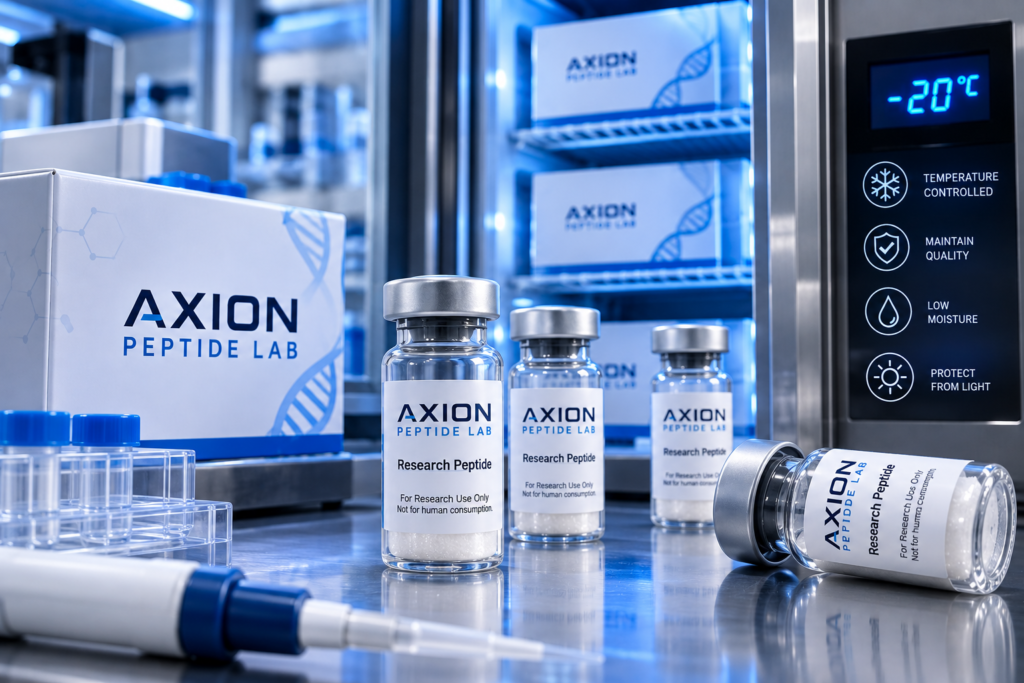
Online research peptide catalogues may contain compounds associated with several scientific disciplines.
Each compound has its own molecular structure, research background, analytical requirements, and regulatory status.
Understanding these differences helps researchers evaluate which materials are relevant to their investigations.
GLP-1 and Incretin Research Peptides
GLP-1 receptor agonists and related compounds are studied in metabolic physiology and receptor pharmacology.
GLP-1 is a naturally occurring incretin hormone involved in several physiological processes, including glucose-dependent insulin signaling.
Researchers investigate the molecular characteristics of GLP-1-related compounds and their interactions with biological receptors.
Examples of compounds associated with incretin research include semaglutide, tirzepatide, and retatrutide.
These compounds have different receptor activity profiles and regulatory statuses.
Semaglutide primarily acts through the GLP-1 receptor.
Tirzepatide activates both GLP-1 and GIP receptors.
Retatrutide is an investigational compound designed to activate GLP-1, GIP, and glucagon receptors.
Research-use-only materials containing these compounds are not substitutes for authorized prescription medicines.
GHK-Cu and Copper-Binding Peptide Research
GHK-Cu is a copper-binding tripeptide complex studied in peptide chemistry and biological research.
Its molecular structure involves the tripeptide glycyl-L-histidyl-L-lysine associated with copper.
Researchers investigate copper-peptide interactions, molecular coordination, and related biochemical characteristics.
The compound is also relevant to analytical investigations involving peptide-metal complexes.
Scientific evaluation should distinguish experimental findings from established clinical applications.
BPC-157 Research
BPC-157 is a synthetic peptide investigated in experimental research.
Published studies have explored various biological mechanisms, but much of the available evidence is preclinical.
The compound is not an approved medicine for human treatment.
Laboratories studying BPC-157 should consider its chemical identity, analytical characteristics, available scientific evidence, and applicable regulatory restrictions.
TB-500 and Thymosin-Related Research
Thymosin-related peptide materials have been investigated in biochemical and experimental research.
Commercial products described as TB-500 may not always represent the same molecular material, making precise chemical identification especially important.
Researchers should confirm the exact peptide sequence and specifications rather than relying solely on a commercial name.
AOD-9604 Research
AOD-9604 is a synthetic peptide fragment associated with research involving growth hormone-derived sequences.
Scientific investigations have explored aspects of its biological activity and molecular characteristics.
It should not be represented as an approved weight-loss treatment.
Research laboratories should evaluate the quality and relevance of available evidence when considering experimental compounds.
Semax and Neuropeptide Research
Semax is a synthetic peptide investigated in neurobiological and biochemical research.
Research involving neuropeptides may examine molecular signaling, receptor interactions, and experimental biological responses.
Findings from laboratory or preclinical studies should not be interpreted as proof of safety or effectiveness for personal medical use.
MOTS-c and Mitochondrial Peptide Research
MOTS-c is a mitochondrial-derived peptide studied in research involving cellular metabolism and molecular signaling.
Researchers investigate mitochondrial biology, metabolic regulation, and peptide-related signaling pathways.
The compound remains an experimental research subject rather than an approved medical treatment.
How to Choose Quality Research Peptides for Laboratory Use
Choosing appropriate research peptides requires evaluating whether the material is suitable for the intended scientific application.
A professional procurement process should begin with an understanding of experimental requirements.
Confirm the Correct Compound
The first step is confirming molecular identity.
Peptides with similar commercial names may have different sequences, chemical modifications, or formulations.
Researchers should examine the compound’s scientific name and available molecular specifications.
Review Analytical Documentation
Laboratories should evaluate the analytical information supplied with a research material.
Relevant documentation may include Certificates of Analysis, chromatographic reports, mass spectrometry results, and product specifications.
Evaluate Purity Information
Peptide purity can influence experimental reproducibility.
However, purity should be interpreted alongside identity testing and other analytical characteristics.
Understand Material Formulation
Research peptides may be supplied in different physical forms.
These may include lyophilized materials and solutions prepared for specific laboratory applications.
Different formulations can have different stability and handling requirements.
Confirm Regulatory Compliance
Before acquiring a peptide, laboratories should verify that its procurement and intended use are permitted under applicable laws and institutional policies.
Research-use-only labeling does not automatically exempt a compound from pharmaceutical or other regulatory requirements.
Understanding Research Peptide Purity
Purity is one of the most frequently discussed characteristics of research peptides.
It describes a particular aspect of sample composition, usually measured through an analytical method.
During peptide synthesis and processing, impurities may be introduced.
These can include incomplete peptide sequences, chemical by-products, and degradation products.
Such impurities may influence analytical measurements or complicate the interpretation of experimental results.
What Does a Peptide Purity Percentage Mean?
A reported purity percentage generally reflects the results of a particular analytical test.
For example, chromatographic purity may describe the relative area of a target peak under defined HPLC conditions.
This does not necessarily represent the complete chemical composition of the sample by mass.
Different analytical methods may detect different types of impurities.
Therefore, purity figures should always be interpreted in the context of the testing procedure.
Does High Purity Mean Pharmaceutical Quality?
No.
High chromatographic purity does not independently establish sterility, absence of endotoxins, accurate concentration, pharmaceutical manufacturing quality, or suitability for human administration.
Research laboratories should evaluate the full set of relevant specifications rather than relying on one advertised number.
Why Does Purity Matter in Research?
Impurities can introduce unwanted variables into experiments.
For studies involving molecular interactions, analytical measurements, or biochemical characterization, this may affect reproducibility.
Appropriately characterized research materials can help reduce uncertainty.
What Is a Research Peptide Certificate of Analysis?

A Certificate of Analysis, or COA, is a document reporting selected analytical characteristics of a material batch.
For peptide research, a COA can provide information about the identity and composition of a particular product.
Information Commonly Found on a COA
Depending on the testing programme, documentation may include:
- Product name
- Chemical identity
- Batch or lot number
- Testing date
- Analytical method
- Purity result
- Molecular mass information
- Relevant specifications
- Testing laboratory information
- Additional observations
The exact content varies according to the material and applicable quality requirements.
Why Batch-Specific Documentation Matters
A Certificate of Analysis should correspond to the material actually being supplied.
A report from a different batch does not necessarily establish the quality of a new batch.
Researchers should confirm that lot identifiers and product information are consistent.
How to Evaluate a COA
Laboratories should examine the testing methods, results, specifications, and traceability information.
Where necessary, researchers may seek independent analytical verification.
A COA should be treated as evidence of the tests performed, not as a universal guarantee of product safety or suitability.
Laboratory Methods Used to Test Research Peptides
Analytical characterization is a central part of peptide research.
Different laboratory techniques provide different types of information.
High-Performance Liquid Chromatography
High-performance liquid chromatography, commonly called HPLC, separates components within a sample.
It is frequently used to evaluate peptide purity and detect certain impurities or degradation products.
The accuracy and relevance of the results depend on the analytical method and its validation.
Mass Spectrometry
Mass spectrometry provides information about molecular mass.
It can support peptide identity testing and help characterize certain molecular features.
Liquid Chromatography–Mass Spectrometry
LC-MS combines chromatographic separation with mass spectrometric detection.
This approach can provide complementary information about sample composition and molecular characteristics.
Stability-Indicating Methods
Stability-indicating methods help researchers investigate whether a material changes under defined conditions.
These studies may involve monitoring degradation products or changes in chemical composition.
Additional Characterization
Depending on the research objective, laboratories may use other analytical techniques to examine structure, formulation properties, or molecular behavior.
No single method establishes every aspect of peptide quality.
Lyophilized Research Peptides Versus Peptide Solutions
Research peptides may be supplied in different physical forms.
Two commonly discussed categories are lyophilized materials and peptide solutions.
What Are Lyophilized Peptides?
Lyophilization is a freeze-drying process used to remove water from a material under controlled conditions.
The process is widely used in biotechnology and pharmaceutical research.
For certain peptide formulations, removing water may help address specific stability challenges.
However, the effect depends on the peptide and formulation.
Lyophilization itself can also introduce physical or chemical stresses.
Researchers can explore lyophilized peptide listings for additional product-category information.
What Are Peptide Solutions?
Peptide solutions contain peptide material dissolved in a suitable solvent system.
Their characteristics depend on the peptide, solvent, concentration, pH, and other formulation factors.
The presence of water or other solvents may influence chemical stability.
Which Form Is Better for Research?
Neither form is universally superior.
The appropriate choice depends on experimental objectives, available stability data, analytical requirements, and validated laboratory procedures.
Researchers should avoid assuming that a solution is sterile or suitable for administration merely because it is supplied in liquid form.
Research Peptide Storage and Stability
Storage conditions are important because peptides may undergo chemical or physical changes over time.
The stability of a peptide depends on its molecular structure and formulation.
Environmental conditions can influence degradation processes.
Temperature
Temperature may affect reaction rates and molecular stability.
However, the appropriate storage temperature varies between materials.
Laboratories should follow verified product-specific technical documentation.
Moisture
Moisture may influence the chemical behavior of certain peptide formulations.
For lyophilized materials, residual moisture can be an important stability parameter.
Light Exposure
Some compounds may be sensitive to light.
Researchers should evaluate relevant photostability information where applicable.
Oxidation and Degradation
Certain peptide structures may be susceptible to oxidation, hydrolysis, or other chemical transformations.
These processes can affect material composition.
Inventory Management
A research laboratory should maintain records of:
- Product identity
- Lot number
- Date received
- Storage location
- Validated storage conditions
- Expiry or retest information
- Material usage
- Relevant analytical documents
Accurate inventory management supports traceability and experimental reproducibility.
How to Evaluate a Research Peptide Supplier Online
When searching for research peptide for sale, researchers may encounter suppliers with different product catalogues, documentation practices, and business policies.
A structured evaluation can help identify whether a supplier meets laboratory requirements.
Supplier Transparency
A supplier should provide clear business information and accessible product descriptions.
Researchers should be able to identify the intended application and relevant restrictions.
Product Documentation
Available analytical documentation should correspond to the material being offered.
Batch-specific information is particularly important.
Scientific Accuracy
Product descriptions should accurately distinguish laboratory research findings from established medical applications.
Unsupported therapeutic claims should be treated cautiously.
Technical Information
Researchers may need access to chemical identity, formulation, stability, and analytical information.
Legal Requirements
The supplier and purchaser should comply with applicable laws.
Certain peptide compounds may be regulated as active pharmaceutical ingredients or unapproved drugs.
Pricing and Procurement Policies
Price is one consideration, but it should not override scientific suitability.
Laboratories should review purchasing conditions, documentation requirements, and applicable delivery restrictions.
Research Peptide Supplier Comparison Checklist
| Evaluation factor | What researchers should examine |
|---|---|
| Compound identity | Correct scientific name and molecular specifications |
| Analytical purity | Relevant method and reported results |
| Certificate of Analysis | Batch-specific documentation |
| Traceability | Consistent lot identification |
| Formulation | Appropriate physical and chemical characteristics |
| Stability information | Verified storage requirements |
| Supplier information | Business transparency and accountability |
| Regulatory status | Lawful procurement and intended use |
| Technical support | Availability of relevant product information |
| Documentation quality | Clear, consistent scientific records |
The best supplier for one research programme may not be the best choice for another.
Material requirements should always be determined by the scientific application.
Explore Research Peptide Materials at Axion Peptide Lab
Axion Peptide Lab provides an online catalogue featuring research-use-only peptide compounds and related laboratory materials.
Researchers can explore information about different peptide categories and the scientific considerations associated with their characterization.
The catalogue includes categories associated with metabolic research, peptide chemistry, biochemical investigation, and other laboratory applications.
Researchers should review individual product descriptions and confirm relevant specifications before considering procurement.
Where appropriate, laboratories should request batch-specific analytical documentation and verify the suitability of materials for their intended experiments.
Research Information and Product Enquiries
Researchers seeking additional information can visit the website or contact the business through its published laboratory enquiry channel.
Website: https://axionpeptidelab.com/
Email: order@axionpeptidelab.com
Product availability, analytical testing, legal authorization, and delivery arrangements should be confirmed rather than assumed. research peptide for sale
Research Peptides and Regulatory Compliance
Regulatory compliance is an essential consideration in peptide procurement.
Some peptides are associated with approved prescription medicines.
Others remain investigational compounds with limited clinical evidence.
The regulatory status of a peptide depends on the compound, jurisdiction, intended use, and manner in which it is marketed or distributed.
Research-Use-Only Labeling
A research-use-only label communicates an intended laboratory application.
However, labeling alone does not automatically determine a product’s legal status.
Regulators may consider the substance, promotional claims, distribution practices, and other evidence of intended use. research peptide for sale
Approved Medicines Versus Experimental Compounds
Approved medicines undergo regulatory review for specific indications and formulations.
Experimental research compounds may not have undergone equivalent evaluation.
Research-use-only products must not be substituted for authorized medicines.
International Research Procurement
International transactions may involve additional customs, pharmaceutical, chemical, or institutional requirements.
Laboratories should verify these obligations before purchasing materials across borders.
Responsible Scientific Communication
Suppliers and researchers should avoid presenting preliminary findings as established medical benefits.
Scientific claims should accurately reflect the available evidence. research peptide for sale
Why Scientific Documentation Matters More Than Marketing Claims
Online product descriptions may emphasize purity, molecular characteristics, or research applications.
However, marketing language is not a substitute for verifiable analytical evidence.
Researchers should distinguish between a supplier’s claims and the results of documented testing.
A meaningful quality assessment may involve reviewing several sources of information.
These can include product specifications, batch records, analytical reports, stability data, and independent scientific literature.
A product described as high purity may still require additional characterization.
Similarly, the presence of a COA does not automatically establish every relevant quality attribute.
For research institutions, documentation helps support accountability and reproducibility.
It also allows scientists to identify the exact material used in an experiment. research peptide for sale
Common Mistakes When Looking for Research Peptide for Sale
Several purchasing mistakes can create uncertainty for laboratory researchers.
Choosing Solely by Price
Low prices do not necessarily indicate suitable research quality.
Laboratories should consider the complete set of scientific requirements.
Trusting Unverified Purity Claims
A purity percentage should be supported by appropriate analytical documentation.
Ignoring Molecular Identity
Similar commercial names do not always refer to identical compounds.
Researchers should confirm chemical identity.
Overlooking Storage Requirements
Improper storage can affect the characteristics of some peptide materials.
Confusing Research Products With Medicines
Research-use-only compounds should not be treated as approved pharmaceutical products.
Ignoring Regulatory Restrictions
Laboratories should verify applicable legal requirements before acquiring materials.
Relying on Generalized Scientific Claims
The research evidence for one peptide should not automatically be applied to another.
Each compound requires its own scientific evaluation.
The Future of Peptide Research
Peptide research continues to develop across several scientific disciplines.
Advances in synthesis, analytical characterization, molecular modeling, and formulation science are helping researchers investigate increasingly complex peptide systems. research peptide for sale
Advances in Peptide Synthesis
Modern peptide synthesis methods allow researchers to construct and modify defined amino-acid sequences.
Scientists continue to investigate approaches for improving synthetic efficiency and analytical control.
Improved Analytical Techniques
Developments in chromatography and mass spectrometry support more detailed characterization of peptide materials.
Peptide Stability Research
Formulation scientists continue to investigate how environmental conditions and molecular modifications influence peptide stability. research peptide for sale
Molecular Modeling
Computational methods contribute to research involving peptide structure and molecular interactions.
Expanding Research Applications
Peptide-related investigations span molecular biology, biochemical analysis, receptor pharmacology, and pharmaceutical science.
Future progress will depend on reliable experimental methods, reproducible findings, and appropriate regulatory oversight. research peptide for sale
Frequently Asked Questions About Research Peptide for Sale
What Is a Research Peptide?
A research peptide is a molecule composed of amino acids connected through peptide bonds and studied for scientific or analytical purposes.
Research peptides may be naturally occurring, chemically modified, or synthetically produced.
Laboratories investigate their molecular structures, chemical properties, biological interactions, and stability characteristics.
Their applications include peptide chemistry, molecular biology, receptor pharmacology, and pharmaceutical research.
The suitability of a particular peptide depends on its identity, formulation, analytical quality, and intended experimental application.
Where Can Laboratories Find Research Peptide for Sale?
Eligible laboratories may obtain research peptides through scientific chemical suppliers, biotechnology distributors, and specialized laboratory procurement channels.
Before selecting a supplier, researchers should evaluate compound identity, analytical documentation, business legitimacy, and applicable regulatory requirements.
A supplier should provide accurate information about the materials it offers and any restrictions associated with their use.
Researchers can explore educational information and research peptide listings at Axion Peptide Lab.
However, laboratories should independently verify product specifications, availability, and legal suitability before purchasing. research peptide for sale
What Makes a Research Peptide High Quality?
Research peptide quality depends on several characteristics rather than one advertised specification.
Important factors may include correct molecular identity, appropriate purity, relevant impurity characterization, batch traceability, and suitable stability information.
The importance of each characteristic depends on the intended scientific application.
For example, an analytical investigation may require different specifications from a study focused on molecular interactions. research peptide for sale
Researchers should evaluate documented evidence and determine whether the material meets their experimental requirements.
Why Is a Certificate of Analysis Important?
A Certificate of Analysis provides information about selected analytical tests performed on a material batch.
It may include molecular identity, purity, testing methods, and relevant specifications.
Researchers should confirm that the COA corresponds to the actual batch being supplied.
A COA is useful for material evaluation, but it does not automatically establish sterility, safety, or pharmaceutical suitability.
Are All Research Peptides the Same?
No. Research peptides differ in amino-acid sequence, molecular structure, chemical modifications, stability, and biological characteristics. research peptide for sale
Some are investigated in metabolic research, while others are relevant to peptide chemistry, molecular biology, or receptor pharmacology.
Different peptides also have different levels of scientific evidence and regulatory oversight.
Researchers should evaluate each compound individually rather than assuming that findings about one peptide apply to another.
What Is the Difference Between Lyophilized Peptides and Peptide Solutions?
Lyophilized peptides are freeze-dried materials produced through controlled removal of water.
Peptide solutions contain material dissolved in a suitable solvent system.
The physical form can influence stability, handling, and analytical requirements.
Neither formulation is universally superior.
Researchers should select materials according to validated technical information and the needs of their experiments.
How Is Research Peptide Purity Tested?
High-performance liquid chromatography is commonly used to evaluate chromatographic purity.
Mass spectrometry may provide additional information about molecular identity.
Other analytical techniques can be used to investigate chemical structure, degradation, and formulation characteristics.
The choice of method depends on the peptide and intended research application.
Can Research Peptides Be Used for Personal Treatment?
No. Research-use-only peptides are intended for legitimate scientific investigations, not personal administration or self-medication.
Some research compounds lack sufficient clinical evidence or regulatory approval for human treatment.
Even when a molecule is associated with an approved medicine, research-use-only materials are not automatically equivalent to the authorized pharmaceutical product.
Individuals seeking medical treatment should consult qualified healthcare professionals.
Can Research Peptides Be Purchased Internationally?
International procurement depends on the compound, supplier authorization, intended use, and relevant import and export regulations.
Certain peptides may be subject to pharmaceutical or other legal restrictions.
Laboratories should verify destination-country requirements and institutional policies before arranging purchases. research peptide for sale
How Should Research Peptides Be Stored?
Storage requirements depend on molecular structure, formulation, packaging, and validated stability information.
Some peptide materials may be sensitive to temperature, moisture, light, or other environmental factors.
Laboratories should follow product-specific technical documentation and maintain accurate inventory records.
What Should Researchers Check Before Ordering Peptides Online?
Researchers should confirm compound identity, analytical specifications, batch documentation, supplier legitimacy, storage requirements, and applicable regulatory restrictions.
The purchasing decision should be based on scientific suitability and verifiable information.
Price and product availability are relevant considerations, but they should not replace appropriate quality assessment.
Why Is Batch Traceability Important?
Batch traceability allows researchers to connect a material with its analytical documentation and inventory records.
This can help laboratories identify which materials were used in specific experiments.
Traceability is valuable for quality management, reproducibility, and the investigation of unexpected analytical results.
Are Research Peptides Approved by the FDA?
Research peptides are not automatically FDA-approved medicines.
Some peptide molecules are active ingredients in approved pharmaceutical products, but approval applies to specific regulated products and uses. research peptide for sale
Many experimental peptides have not received approval for human administration.
Researchers should verify the regulatory status of each compound and avoid assuming that research-use-only labeling provides an exemption from applicable laws.
What Is the Best Way to Compare Research Peptide Suppliers?
The most effective approach is to compare suppliers using consistent scientific criteria.
These include compound identification, analytical documentation, batch traceability, storage information, business transparency, and regulatory compliance.
Researchers should also consider whether the supplier’s materials meet their specific laboratory requirements.
A supplier with a large catalogue or attractive pricing is not necessarily the most suitable choice.
Why Are Peptides Important in Modern Biotechnology?
Peptides are important because their molecular structures allow scientists to investigate biological recognition, chemical interactions, and signaling processes.
They are relevant to research in biochemistry, molecular biology, analytical chemistry, and pharmaceutical development.
Advances in peptide synthesis and characterization continue to expand the range of scientific questions researchers can investigate.
Conclusion: Research Peptide for Sale and Responsible Laboratory Procurement
Searching for research peptide for sale should begin with an understanding of peptide chemistry, analytical quality, supplier transparency, and the requirements of legitimate scientific research.
Peptides are valuable molecular tools studied across biotechnology, biochemical analysis, receptor pharmacology, and pharmaceutical science.
Their diverse structures and chemical characteristics make them relevant to a wide range of experimental investigations. research peptide for sale
However, choosing suitable research materials requires careful evaluation.
Researchers should prioritize correct compound identification, relevant analytical testing, batch-specific Certificates of Analysis, and appropriate stability documentation.
High-performance liquid chromatography and mass spectrometry can provide valuable information about peptide purity and molecular identity.
These methods should be interpreted alongside other quality indicators and the requirements of the intended experiment.
Supplier transparency and regulatory compliance are equally important.
Research-use-only materials should not be confused with approved prescription medicines or represented as suitable for personal treatment.
At Axion Peptide Lab, researchers can explore an online catalogue of research peptide compounds and laboratory materials, along with educational information about peptide science.
Before selecting any material, laboratories should verify relevant specifications, available documentation, supplier authorization, and applicable purchasing requirements. research peptide for sale
Explore research peptide information: Axion Peptide Lab
Laboratory enquiries: order@axionpeptidelab.com
Responsible research procurement supports scientific reliability, accurate documentation, and reproducible experimental results.
For Research Use Only – Not for human consumption.
Scientific References and External Resources
1. PubMed – Peptide Research Publications
https://pubmed.ncbi.nlm.nih.gov/?term=peptide+research
Explore peer-reviewed scientific publications covering peptide chemistry, molecular biology, analytical techniques, and biochemical investigations.
2. Nature Portfolio – Peptides
https://www.nature.com/subjects/peptides
Scientific research and reviews covering peptide structure, molecular interactions, and advances in peptide-related science.
3. PubChem – Chemical Compound Information
https://pubchem.ncbi.nlm.nih.gov
Chemical structures, molecular properties, compound identifiers, and scientific information about biochemical substances.
4. National Center for Biotechnology Information
Access biomedical literature, molecular databases, and scientific research resources.
5. FDA – Drug Information
Regulatory information concerning pharmaceutical products, drug quality, and drug development.
6. ClinicalTrials.gov
Search registered clinical studies involving pharmaceutical compounds and biomedical investigations.